James Forsyth

James Forsyth

James Forsyth is former political editor of The Spectator.

Theresa May offers a lame defence of Louis Smith

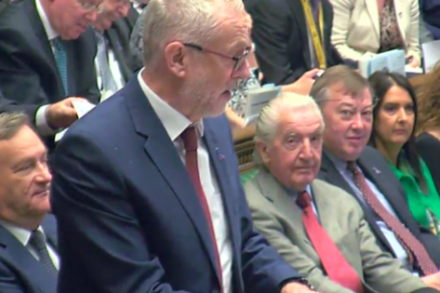
Neither Jeremy Corbyn nor Theresa May are PMQs naturals. The jokes and the ad-libs that have become such a feature of the session don’t come easily to them. In recent weeks, Corbyn has started with a parish notice to try and win the chamber over. Today, he congratulated Labour MP Conor McGinn on the birth of his daughter. But the PM got the wrong end of the stick and congratulated Corbyn on the birth of his grandchild, cue much hilarity. But it was all very in-joke. In many ways, this was the most memorable moment of a distinctly unmemorable PMQs. Corbyn and May clashed over universal credit, but the exchange didn’t reveal anything we didn’t know already.
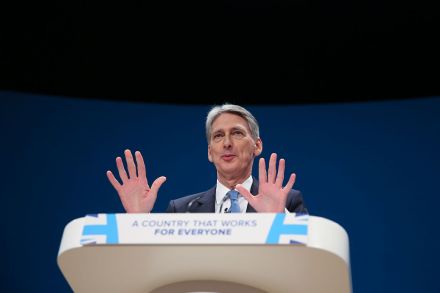
What does Philip Hammond have planned for the autumn statement?

The City and Westminster are waiting to see what Philip Hammond does in the autumn statement next month. I write in The Sun this morning, that they are looking to see what the new Chancellor’s strategy is for guiding the economy through the uncertainty that will exist until we know what the Brexit deal is. In a private meeting with Tory MPs this week, Hammond gave some indications as to what he plans to do on November 23rd. He was clear that it won’t be a give-away statement. He warned that the deficit remains ‘eye wateringly large’, that the debt to GDP ratio is getting close to the level at which the markets start to get concerned and that there needed to be a discipline on departmental spending to reassure the markets.

Nissan’s boost for Brexit Britain

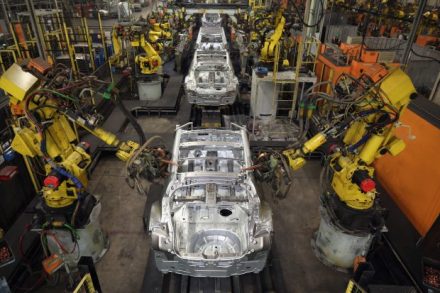
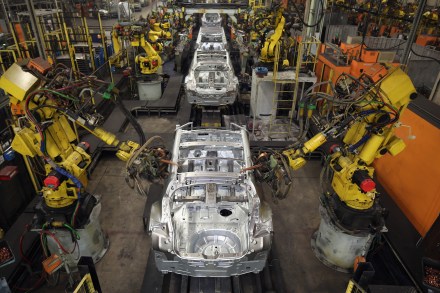
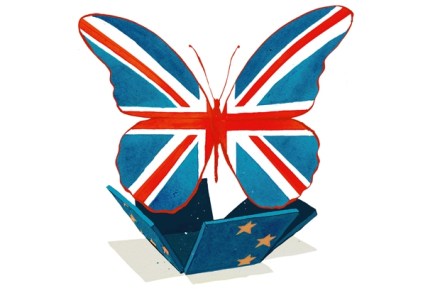
Nissan’s announcement that it will build the new Qashqai in Sunderland is a boost to Brexit Britain. If the decision had gone the other way, critics would have been quick to claim this was proof that Brexit was going to total the British car industry and that the people of Sunderland had self-harmed when they voted to leave. But Nissan has decided to not only build the new Qashqai in Sunderland—as we reported it would on Saturday—but also the X-Trail SUV. Theresa May has been straight out of the traps to hail the decision as a ‘vote of confidence’ that ‘shows Britain is an outward looking, world leading nation’.

The absent opposition

Oppositions don’t win elections — governments lose them. This has long been the Westminster wisdom. But the truth is that oppositions can lose elections, too: they must pass a basic competency test to be considered for office. Today, however, no party resembles a credible opposition to the Tories, let alone a government in waiting. What makes this absence so striking is that the government is in such a perilous position. It must somehow implement Brexit. Leaving the EU will crowd out Theresa May’s domestic priorities and reveal all the divisions in the Tory party over what kind of relationship with the EU the UK should seek. As one Tory with good links to No.

Jeremy Corbyn lets Theresa May off the hook again at PMQs

Today’s PMQs could have been a tricky affair for Theresa May. Her decision on Heathrow has seen one Tory MP resign his seat and the Guardian’s story about a private speech she gave to Goldman Sachs during the EU referendum campaign clashes with her conference speech rhetoric about being the scourge of unaccountable global elites. But May got through the session fine, Heathrow wasn’t raised until well after 12.30 and no one mentioned her behind closed doors, Goldman's address. Corbyn’s delivery at PMQs has improved. But he still can’t go through the gears. He started off using the frustration of the devolved First Minister following their meeting with May on Monday to attack her lack of a Brexit plan.

The LibDems will make the Richmond Park by-election into a referendum on Brexit

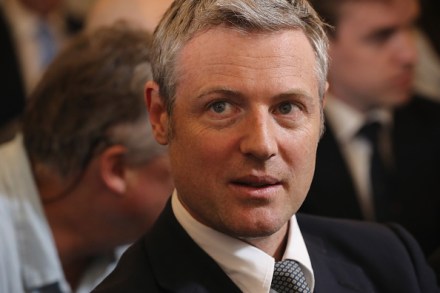
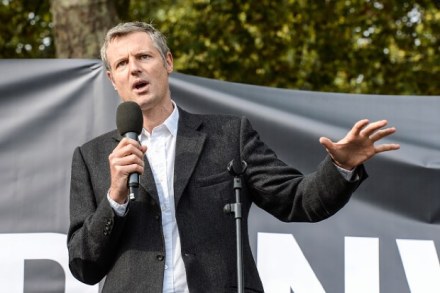
Zac Goldsmith has announced this evening that he’ll be standing as an independent in the Richmond Park by-election he has triggered over Heathrow expansion. The Tories don't seem too alarmed and will not be fielding a candidate against him. This means that the by-election will turn into a fight between Goldsmith and the Liberal Democrats (who held the seat until 2010). Goldsmith says he is asking his constituents to give him a mandate to continue his fight against Heathrow and that he wants the by-election to be a referendum on a third runway. But the Liberal Democrats will try and turn it into a vote on Brexit. Lib Dems can point out that they too oppose the third runway and that—unlike Goldsmith—they were against leaving the EU.

Can the Lib Dems profit from Zac Goldsmith’s resignation?

The political fallout is now coming from Theresa May’s decision to approve a third runway at Heathrow. Boris Johnson and Justine Greening have been granted the right to oppose the decision by Number 10. West London Tories are making clear that they are unhappy and Zac Goldsmith has already told his local constituency party that he’ll resign and trigger a by-election. For his part, London Mayor Sadiq Khan has made it clear he is looking at how he can be part of any legal challenge to Heathrow expansion.  A Richmond Park by-election will be interesting, because although Goldsmith backed Brexit, the area voted heavily to Remain and was a Lib Dem seat until 2010.

Theresa May’s Brexit plan slowly trickles out

A pattern is emerging in the Government’s statements on Brexit to the House of Commons. The initial statement, today by Theresa May on the European Council, says little. But then, in answer to questions, some information slips out. Today’s most interesting nugget was May’s response that staying in the customs union is not a yes or no question. This will add to the sense in Westminster that the Government is looking to stay in the customs union in certain sectors, for instance-car manufacturing, while leaving it in most areas. It is also worth noting when Gisela Stuart, the Labour co-chair of Vote Leave, asked about a 2020 deadline for being out of free movement and the like, the Prime Minister refused to endorse it.

Brexit relief as government insiders expect Nissan to announce it is building its new car in Sunderland

Government insiders expect Nissan to announce that it is building the new Qashqai in Sunderland in the next week or so. As I write in The Sun today, the Business Secretary Greg Clark has been in Japan to see Nissan high-ups and the government is now optimistic the deal will be done. This news will be a major relief for the government. It shows that the British car industry isn’t being written off by Brexit and given how some in Brussels seem to think that bad economic news will send this country scurrying back to the EU, will strengthen the UK’s negotiating hand. One can also just imagine how Brexit’s critics would have reacted if Nissan had announced it was moving production away from Sunderland, which voted heavily to leave, to an EU-27 location.

Order, order! It’s up to May to stop this ministerial bickering

Even by the accelerated standards of modern politics, this is fast. Three months after the Chancellor was appointed, the Treasury has had to deny that he has threatened to resign. No. 10, for its part, has had to declare that the Prime Minister has ‘full confidence’ in Philip Hammond. It is telling that neither felt that they could just laugh off the reports. So what is going on? The most innocent explanation is that Westminster is still adjusting to the return of normal relations between Downing Street and the Treasury. David Cameron and George Osborne did everything but actually merge the two. Indeed, until the coalition came along, they planned to work out of the same office in No. 10.

Philip Hammond and the gap between No 10 and 11 Downing Street

98 days into the Theresa May government and Philip Hammond is the Cabinet Minister under the most scrutiny. The reports of tensions both between him and the Cabinet’s Brexit Ministers, and him and Number 10, mean that his words are parsed particularly carefully. In front of the Treasury select committee today, Hammond refused to say whether or not he had seen the section of Theresa May’s conference speech that criticised the effects of the Bank of England’s monetary policy. This was effectively an admission that he had not. Given that one well-placed insider told me that May’s comments produced ‘serious trouble’ between her and Hammond this is not that surprising.

Steven Woolfe’s departure shows how far off becoming a well-run political party Ukip is

Steven Woolfe isn’t just dropping out of the Ukip leadership race tonight, he’s quitting the party altogether. He has left with an attack on those who make Ukip ‘ungovernable’; echoing Arron Banks and Nigel Farage’s criticisms of the party’s National Executive Committee. (Though, given that Woolfe ended up in a fight in the European Parliament, he is perhaps not best placed to lecture on behaviour) Woolfe’s departure—and the circumstances of it—shows how far off becoming a well-run political party Ukip is.

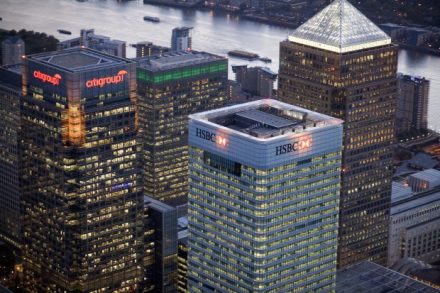
Will Brexit butcher the banks? | 16 October 2016

The financial crisis defines our age. It helps explain everything from the presidential nomination of Donald Trump to Jeremy Corbyn’s leadership of the Labour party after 30 years on the political fringe. Certainly, the Brexit vote wouldn’t have happened without it. The crash of 2008 created a sense of unfairness that is still roiling our politics, as well as calling into question the competence of the West’s ruling class. The soi disant ‘experts’ were easily dismissed during the EU referendum campaign because nearly all of them had got the economic crisis so wrong. The Brexiteers asked: why should the public listen to the arguments of organisations and businesses that had made such disastrous misjudgments?

Britain shouldn’t stay in the customs union after Brexit

A Brexit deal that would end free movement and see UK goods able to access the EU market without tariffs or the need to jump through any additional hoops sounds, superficially, attractive. These arrangements could also be in place by the 2020 general election, as I say in my Sun column. But this idea of leaving the EU single market, but staying in the customs union is a bad one—however keen some in the Treasury and Whitehall are on it. For if Britain remains in the customs union, then it can’t do proper trade deals with non-EU countries. Instead, it will have to continue to apply the EU’s Common External Tariff. This is designed to protect the EU’s most politically sensitive industries: imposing a 10 percent tariff on cars, an 11.

Will Brexit butcher the banks?

The financial crisis defines our age. It helps explain everything from the presidential nomination of Donald Trump to Jeremy Corbyn’s leadership of the Labour party after 30 years on the political fringe. Certainly, the Brexit vote wouldn’t have happened without it. The crash of 2008 created a sense of unfairness that is still roiling our politics, as well as calling into question the competence of the West’s ruling class. The soi disant ‘experts’ were easily dismissed during the EU referendum campaign because nearly all of them had got the economic crisis so wrong. The Brexiteers asked: why should the public listen to the arguments of organisations and businesses that had made such disastrous misjudgments?

Jeremy Corbyn gives Theresa May a tougher time at PMQs

PMQs isn’t the total walk over it once was. Jeremy Corbyn has improved, albeit from a low base, and Theresa May hasn’t yet developed the mastery of the chamber that David Cameron had. Today, Corbyn led on the whole confusion over whether or not businesses would have to list their foreign workers. But May was fairly comfortable on her old Home Office turf. Corbyn then moved to Brexit, using May’s pre-referendum warnings about leaving the single market against her. May, however, had a decent line about a second referendum, saying that Labour MPs should know that you can ask the question again and still get the answer you don’t want.

David Davis, parliamentary poacher turned executive gamekeeper

David Davis batted away demands for parliament to be given a vote on the timing of Article 50 or the government’s negotiating stance. Whenever his opponents—who included Ed Miliband and Nick Clegg—brought up how Davis himself had previously said there should be a white paper on the government’s negotiating stance, Davis side-stepped the issue. He also claimed that his views on how the executive should be accountable to parliament hadn’t changed, but that there was a difference between scrutiny and micro-managing. What the government wanted out of the Brexit talks, said Davis, was control of the UK’s borders and laws, co-operation on justice and security matters that is at least as good as it is now and barrier-free access to the European market.

Corbyn leaves Ukip an open goal, and they miss it

Jeremy Corbyn is taking Labour ever further away from its traditional working class voters in the north and the midlands. As I say in The Sun today, the party now has a leader who didn’t sing the national anthem at St Paul’s, a shadow Chancellor who has praised the IRA, a shadow Home Secretary who thinks promising ‘controls on immigration’ is shameful and a shadow Foreign Secretary who sneers at those who fly the English flag. This presents Ukip with an open goal and a chance to do to Labour in the north and the midlands what the SNP did to in Scotland following the independence referendum. Indeed, half of Labour supporters who backed Brexit already say they won’t vote for the party again.

Corbyn tightens his grip

Jeremy Corbyn’s shadow Cabinet reshuffle is all about strengthening, and demonstrating, his control over the party. Jonathan Ashworth, a Corbyn-sceptic, has lost his place on the party’s National Executive Committee and is replaced by Corbyn backer Kate Osamor. The word in Westminster is that Ashworth was told he could take shadow Health and lose his seat on the NEC, or reject it and lose it anyway. Ashworth made the deal. In an email to Labour MPs, the chair of the Parliamentary Labour Party John Cryer makes clear that the leader’s office started the reshuffle while talks on shadow Cabinet elections were still ongoing. Cryer complains that ‘the party leadership did not engage in the talks in any constructive way.

Jeremy Corbyn’s London-centric shadow cabinet

Jeremy Corbyn has sacked the Labour chief whip Rosie Winterton in his shadow cabinet reshuffle. Winterton was attempting to broker a deal that would see a shadow cabinet elections return, allowing some of those who resigned from the front bench to return with some dignity intact. Her sacking indicates that Corbyn doesn’t want to compromise on this. Winterton’s dismissal also suggests that Corbyn feels emboldened by his re-election, and is now even less interested in placating the Parliamentary Labour Party. Diane Abbott has also been made shadow home secretary. This will mean that there are Corbynites in the three major shadow cabinet positions for the first time—chancellor, foreign and home.