James Ball

James Ball is the Global Editor of the Bureau of Investigative Journalism, which last month launched a two-year project looking into Russian infiltration of the UK elite and in London’s role in enabling overseas corruption

The R-number – and the danger of false certainty

From our UK edition

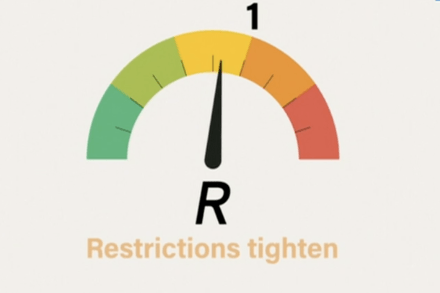
Not much about Boris Johnson's Sunday night television address was clear. The one definite new measure – one which will shape coverage for weeks to come – is the UK's new ‘COVID Alert Level’, a five-stage measure that the prime minister said would be determined primarily by ‘the R’ – the rate at which the virus grows. There's just one problem with that. It’s a figure few people think we have any real ability to track day-to-day. In making its decisions, the government has very little scope for error: it knows lockdown comes at a huge economic toll. But it also knows that spotting a rise in cases just a few days too late could end in calamity, if it lifts restrictions too early.

Can we trust Neil Ferguson’s computer code?

From our UK edition

Newspapers aren’t the place to debate expert advice on a crisis. Advisors advise, ministers decide. We should keep politics out of science. These three cries – and numerous variations upon them – have become common refrains as the UK’s increasingly fractious debate on the lockdown, the science behind it, and the best way to lift its various restrictions rolls on. At first, they sound completely reasonable and unarguable: people are stepping up to the plate to help the government make life-or-death decisions in a time of crisis. That’s an admirable thing to do. What’s more, they’re doing it with years of expertise in their field behind them. Of course we should leave them to their work, and let them help guide our course.

The perverse world of immunity passports

From our UK edition

Usually, if a government is reported to be working on a new policy reliant on sweeping new – largely untested – surveillance technology, we’re in the world of sci-fi or dystopias. At a minimum, we would expect the rollout of state surveillance to be the central issue at play, the focus of debate and objections, at the heart of a major national conversation. It says a lot, then, that even for many of us concerned about civil liberties, that when it comes to so-called 'immunity passports' these concerns – though serious – are largely secondary. That’s how significant an issue such a document could become.

The price of oil just hit $0 a barrel. What’s going on?

From our UK edition

If you’ve ever wanted to own a barrel of oil, today might be your lucky day – for the first time in modern history, there are traders across the world who’ll let you have it for free. On Monday evening the price of oil futures plummeted, with one key oil price in the USA hitting $0 per barrel shortly after 7pm UK time. It sounds unbelievable – and illogical. Why go to such great efforts to extract oil, which was selling for $60 a barrel just three months ago – only to give it away for free? How did we get here?The collapse in the world economy has led to a collapse in demand for oil, and pretty big problems for those who are trying to sell it.

Modelling coronavirus is an imperfect science

From our UK edition

We don’t know if our model for estimating immigration into the United Kingdom works. It’s a long-standing dataset, produced by the Office for National Statistics – one of the best at what it does in the world. The model measures people entering and leaving the UK, something tracked at ports and airports. It’s a model of high political interest and concern. And despite all of that, we’re still not sure it’s good enough to be classed as a gold-standard ‘national statistic’. In the modern era, almost any number we ‘know’ – be it population, immigration, unemployment, inflation, or GDP – is actually an estimate produced by complicated statistical modelling. Coronavirus is no exception.

Don’t be deceived by Covid stats – we know a lot less than the numbers suggest

From our UK edition

There is a concept at least as old as computing itself — Charles Babbage, the father of the field, expressed the sentiment, if not the words themselves — ‘garbage in, garbage out’. The idea is not a complicated one: no matter how advanced the calculation machine, no matter how good the statistical model, no matter how intricate the formulae, if the data on the way in isn’t reliable, the calculation that comes out will be suspect at best — and is liable to be outright wrong. We are regularly told that figures for economic growth were wrong and have to be dramatically revised. So what hope do we have of predicting coronavirus?

We Remainers need to stop trying to convince ourselves the referendum was stolen

From our UK edition

Anyone looking at the Independent’s front page the other day – or at least its electronic mock-up, made primarily for social media and TV paper reviews – will have seen a bombshell of a headline: 'Illegal Facebook spending "won 2016 vote for Leave”'. That’s a seismic claim if it can be confirmed: the once-in-a-generation vote to leave the EU was won through what we now know was an illegal overspend of £500,000 or so. Except the Independent adopted an old newspaper trick: the biggest news is in quotes, suggesting that it’s not the newspaper claiming it, but rather someone else. At first, that someone looks credible.

Pandora’s Box

On 25 April 2005, Jawed Karim sent an email to his friends announcing the launch of a new video site — intended for dating — called youtube.com. Within 18 months, the site was being used to view 100 million videos a day. Last year it had more than a billion users, watching five billion videos every day, with creators uploading 300 hours of video to YouTube every minute. Given this almost incomprehensible scale, it’s fitting that the word Videocracy — the title of YouTube Head of Trends Kevin Allocca’s history of the site — evokes the idea of an authoritarian dystopia. Like any approved account from such a regime, its analysis never strays far from the realms of the vapid or tepid.