James Ball

James Ball is the Global Editor of the Bureau of Investigative Journalism, which last month launched a two-year project looking into Russian infiltration of the UK elite and in London’s role in enabling overseas corruption

What is the metaverse, actually?

From our UK edition

There is a concept in tech and innovation – branded by an expensive consultancy company, naturally – known as the Gartner Hype Cycle. Any innovation, be it NFTs (a means of owning ‘unique’ digital art), blockchains (the technology powering crypto-currencies like bitcoin), self-driving cars or wearable tech, will go through distinct (buzzword-heavy) stages before it is adopted by the mainstream. First, it will head to a ‘peak of inflated expectations’, before entering the ‘trough of disillusionment’. As people then work out what the tech might actually deliver it climbs the ‘slope of enlightenment’ to the ‘plateau of productivity’.

Will there ever be a reliable lie detector?

From our UK edition

For as long as we have been human we have looked for some way of telling when we are being told the truth. We tried dunking witches, only to find that buoyancy is not connected to the supernatural. We tried torture, but discovered that people will eventually say just about anything to make it stop. We experimented with scopolamine and sodium pentathol, to learn that ‘truth serums’ do little more than make their targets susceptible to suggestion. And we’re still trying – with scientists pushing MRI scans and ECGs alongside AI as a ‘brain fingerprinting’ technique. The jury is out as to whether the latest ideas will prove any more reliable than those that went before.

Russia had nothing to do with Brexit

From our UK edition

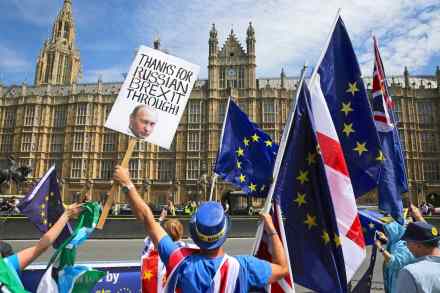
In light of Russia’s abhorrent invasion of Ukraine, certain corners of the internet have become obsessed – yet again – with Russia’s supposed involvement in the 2016 Brexit referendum. The connections are always left necessarily tenuous: there is very little in the way of logical reasoning that could really connect the two. Plenty of pro-Brexit figures have been hawkish on Russia since long before the 2016 referendum. Plenty of liberal remainers have, intentionally or not, acted as apologists to Russian wrongdoing. There is nothing to suggest Brexit enhanced Russia’s ability to invade Ukraine, either. The EU is not Europe’s primary security alliance, Nato is.

What motivates Peter Thiel apart from the desire for more wealth?

From our UK edition

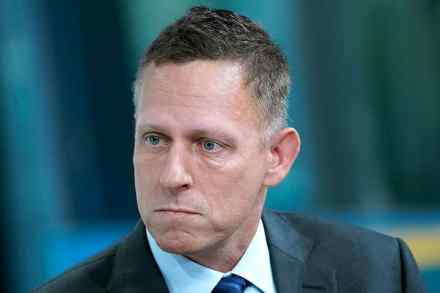
If you’ve only heard one thing about Peter Thiel (and many have heard nothing at all) it is that he is a believer in the power of young blood. The tech multibillionaire and founding investor of the surveillance company Palantir is a public advocate of parabiosis, an experimental field of biology investigating whether transfusions of blood from young people to older ones can stall or even reverse ageing. Rumours that Thiel himself has received such transfusions have persisted for years. When asked about them directly in a rare interview, he replied simply: ‘I’m not a vampire.’ Max Chafkin’s The Contrarian makes for deeply uncomfortable reading.

Priti Patel’s war on encryption is doomed

From our UK edition

The modern world has an unfortunate habit of making life difficult for those working to keep us safe. For the police, security services and others, so many inventions seem to be created just to make it more difficult for them to see who’s up to no good.  Take envelopes, for one. Envelopes make it much fiddlier to see what’s in the letters we send to one another – and they could show anything: that envelope could contain financial fraud, revenge porn, or even be plotting a murder. What is it hiding? Modern Britain is unreasonable to state snoopers in so many other ways too. Inconsiderately we put locks on our doors, with no regard for how much more difficult this will make things if the authorities need to get into our home.

TikTok intifada: what’s the role of new media in old conflicts?

From our UK edition

34 min listen

In this week’s podcast, we talk to James Ball, author of this week’s cover story on the ‘TikTok Intifada’ about the themes he uncovers in his analysis of the impact of social media on the conflict in the Middle East. The conversation with James continues with our next guest, Professor Gabriel Weinmann of Haifa University in Israel, the author of an in-depth report on the rise of incendiary, unregulated material on TikTok. As Arab and Israeli youngsters create and consume violent footage on the app, is it time that it was reined in - or is it a lost cause? (00:55)'This is a platform that targets young audiences.

TikTok intifada: the role of new media in old conflicts

From our UK edition

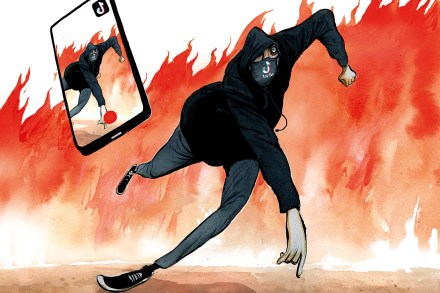
In Israel last month, a video on the social media platform TikTok encouraged users to film themselves assaulting Orthodox Jews. That video became a spark that ignited outrage across the country. A band of Jewish extremists, Lehava, organised a march in response. They clashed with Arab groups at Damascus Gate. In a situation that was already a tinderbox, things escalated from there. Why did it happen? Why would any ordinary person get pleasure from assault? ‘There is a competition for likes and views,’ a 15-year-old victim told an Israeli news organisation. ‘A video of an Arab slapping an ultra-Orthodox man will get you both.’ A violent riot set off by teenage longing for likes. Welcome to the TikTokisation of global politics.

Life on Earth is too tame for eccentric American billionaires

From our UK edition

For many of us, Elon Musk is a hard man to like. He’s the richest man in the world (or second richest, as he and Amazon founder Jeff Bezos whirr back and forth in top spot), but acts online like a bratty teenager astonished by his own intelligence. He proposes underground tunnel networks as a transport solution for Miami (which is a swamp less than 10ft above sea level), moots takeovers of his companies with 420-themed weed jokes and hypes cryptocurrencies. Yet as you read Liftoff you can see what so many people find to admire in the man — at least for a while.

Cashing in on Covid: the traders who thrive on a crisis

From our UK edition

When we think of those lurching moments last spring when it became clear that much of the world, not just one or two regions, would grind to a halt, for most of us it is anything but a fond memory. But the traders of Glencore probably remember the time differently: they saw it as an unprecedented opportunity to cash in. Anticipating a global slowdown, they bought up all the space they could to store oil, including tankers capable of holding 3.2 million barrels. When the markets caught up with the scale of the pandemic, the price of oil dropped to zero and below, and in they swooped. They took the oil for free, stored it at sea, and sold it a few months later. While we worried about our livelihoods, Glencore’s traders made $1.3 bn trading energy.

Facebook has called the Australian media’s bluff

From our UK edition

In 2021, it’s not uncommon to hope that everyone involved in an argument can lose, or to suspect that pretty much everyone is in the wrong. So it is with the long-running saga involving Australia’s mainstream media outlets, its government, and the tech giants, which has led this week to Facebook banning users from sharing posts from Australian media on its platform. The ban has been badly implemented: it has led to performative outrage at the apparent censorship from the outlets themselves, and has clumsily also included official government agencies and some of Facebook’s own pages. But, leaving aside the errors in the rollout, the wails from Australia’s media should be ignored. They have got exactly what they asked for.

Papers please: what will immunity passports look like?

From our UK edition

40 min listen

On this week's episode, we talk vaccine passports (1:10), Nord Stream 2 (14:55) and the appeal of chess (30:50).With entrepreneur Louis-James Davis, journalist James Ball, analyst Wolfgang Münchau, academic Kadri Liik, chess columnist Luke McShane and chess streamer Fiona Steil-Antoni.

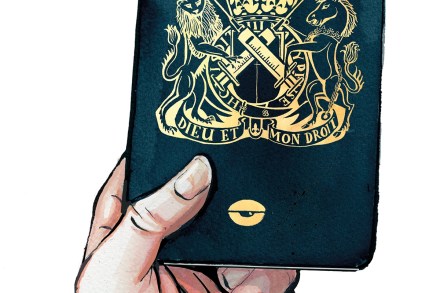
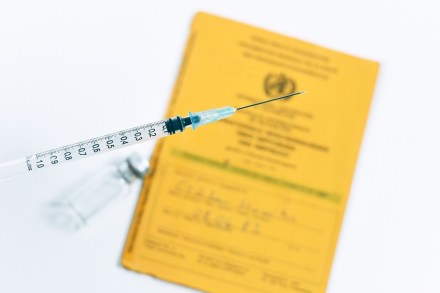
The problem with ‘immunity passports’

From our UK edition

Just a few months ago it was not certain that we would find a vaccine for Covid-19. Now, we have three, with potentially more on the way — and the rollout of the Pfizer jab due to begin next week. It’s an extraordinary achievement for the research community, our best hope of restoring normal life and a bloody relief after a year of disappointments. But the government, at least, should beware of geeks bearing gifts. To get us to herd immunity, they have to persuade somewhere between 60 per cent to 90 per cent of us to get vaccinated. You can see Boris Johnson’s problem. If he makes vaccination completely voluntary, we may never hit the target we need for herd immunity. It’s not just anti-vaxxers.

The EU’s muddled approach to encryption

From our UK edition

The EU would like you to know that it doesn’t want to ban encryption. In fact, it correctly recognises that encryption is absolutely essential for our privacy and financial safety on the internet. That’s why a draft resolution – due to be tabled in front of EU leaders at a pivotal summit later this month – spends paragraphs extolling the virtues of online encryption, before setting out the EU’s complaint: they would really like to be able to read encrypted messages. And they want technology companies to do something about it. On the surface, the EU’s argument might seem quite reasonable: most of us would generally believe that with warrants or similar safeguards, authorities should be able to read the messages of serious criminals or terrorists.

The real story of Cambridge Analytica and Brexit

From our UK edition

In July 2018, Elizabeth Denham – the woman in charge of enforcing the UK’s laws on data protection – appeared on the Today programme, and made a stark allegation. 'In 2014 and 2015, the Facebook platform allowed an app… that ended up harvesting 87 million profiles of users around the world that was then used by Cambridge Analytica in the 2016 presidential campaign and in the referendum,' she told the show’s seven million listeners. The UK’s Information Commissioner – who is in charge of enforcing data protection rules – Elizabeth Denham, said this as she announced her intention to fine Facebook £500,000 for its role in failing to protect users’ data.

The Russia report proves it – Britain’s spies have failed

From our UK edition

As the long-overdue intelligence and security committee report into Russian interference in the UK is finally published – after a needless and politicised delay – most eyes are (rightly) focused on claims around Brexit, Russian infiltration of the British establishment and killings on UK soil. But there’s a section of the report that, while less immediately startling, must not be missed and it comes as the report discusses potential threats to UK elections, referendums and our broader political process. There’s some reassurance in the fact that our low-tech election system, which is still primarily based on manually counting paper ballots marked by pencil (or pens, if you bring your own), is remarkably hard to hack directly.

Sunak’s Job Retention Bonus is a catastrophe

From our UK edition

Such is the polarised state of the UK in 2020 that to unite the policy wonks of the left and the right a government policy must be either magnificent, or magnificently stupid. Unfortunately for the otherwise fêted chancellor Rishi Sunak, his policy to encourage companies to keep their furloughed workers in employment has managed to fall into the second category. Like many truly stupid policies, the Job Retention Bonus sounds quite sensible when it’s first set out: for every furloughed employee who is brought back to work and who still has a job by the end of January 2021, the government will pay the company that employs them a £1,000 bonus. On the face of it, that sounds reasonable – why not reward companies for sticking with their workers?

Unplugging Huawei will be harder than it looks

From our UK edition

There is nothing some Conservatives like talking about more than Huawei. Each new development in global politics is a new chance to talk about the Chinese telecoms giant and the rollout of 5G. China and the US having a trade row? Huawei. Coronavirus originating in China? Huawei. The day of the week rhymes with Huawei? Perfect. Reports of a new review by the UK's National Cyber-Security Centre (NCSC) on Huawei and security have, then, found a welcome audience among Conservatives looking for an excuse to pull the plug. But even the new NCSC review shows things are more complicated than they first appear: the agency is warning that US sanctions on Huawei might force the UK to use insecure third-party replacement spare parts, making it a security risk.

Anatomy of a fiasco: how Britain’s pandemic defences failed

From our UK edition

In October, a panel of 21 experts from across the world gathered for the first of what promised to be a series of reports assessing readiness for pandemics. ‘Infectious diseases know no borders,’ warned the Global Health Security Index. ‘So all countries must prioritise and exercise the capabilities required to prevent, detect and rapidly respond to public health emergencies.’ Every country was called to be transparent about its capabilities ‘to assure neighbours it can stop an outbreak from becoming an international catastrophe’. Two countries were held up as the best examples: Britain and the United States. If a league table were drawn up of countries that most failed to contain Covid deaths, the US and the UK would be pretty near the top.

The UK isn’t taking the risk of contact tracing fraud seriously

From our UK edition

Experts have a get-out clause of which politicians can only dream when they are speaking from the podium at press briefings. While ministers are expected to be able to answer questions on any matter, there and then, and have details at their fingertips, advisors can escape most tricky questions with a simple few words: that’s outside my area of expertise. That makes it all the more baffling that when asked by journalists about the risk of fraudsters exploiting the government’s new track and trace system, not one, but two deputy chief medical officers decided to comment and belittle the risks involved. Deputy chief medical officer Dr Jenny Harries was particularly sanguine.

Britain’s contact tracing conundrum

From our UK edition

If there is hope, it lies in contact tracing. The countries that have successfully managed Covid-19 outbreaks and reopened without second peaks (at least so far) have done so through extensive track and trace infrastructure to prevent recurring outbreaks, sometimes after instituting general lockdown. The UK plan is no different: for weeks, ministers have been talking up efforts to build a UK infrastructure to handle the difficult task of rapidly testing every suspected case of Covid-19, and then quickly contacting everyone they may have recently come into contact with, and testing them too.