Jake Wallis Simons

Jake Wallis Simons

Jake Wallis Simons is a columnist, broadcaster and foreign correspondent. His latest book, Never Again? How the West Betrayed the Jews and Itself, is out now

How the Arab world turned against Hamas

From our UK edition

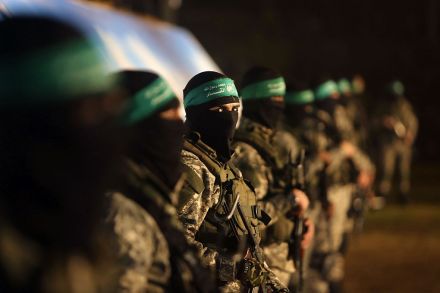
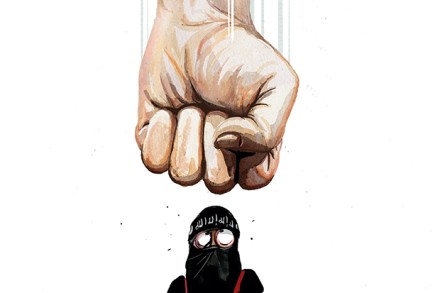
What do people think of Hamas? In recent days, this has been something of a vexed question for many in the West, particularly those on the left. Among progressives, Jeremy Corbyn’s ‘friends’ have long been romanticised as Robin Hood types. But Robin Hood didn’t burn babies, didn’t rape and mutilate young women, didn’t take toddlers hostage, didn’t execute Holocaust survivors in the manner of Islamic State. The events of 7 October brought many liberals face-to-face with an uncomfortable test: do they have the mental agility to revise their opinions?  By comparison, let’s look at how the Arab world has answered that same question.

Calling a terrorist a terrorist

From our UK edition

Last night, after a suspected Islamist fanatic gunned down two Swedish football fans in Brussels to ‘avenge Muslims’, the BBC ran a headline calling it a ‘terror’ attack. This should seem entirely unremarkable. After all, it was a terror attack, so the language had the benefit of being accurate. The problem, of course, is that the corporation has a policy of refusing to describe the butchers of Hamas in the same terms.  It is true that the BBC amended the headline pretty quickly after realising its error. The broadcaster has insisted in its guidelines that its journalists should use descriptive terms like ‘bomber’, ‘attacker’, ‘gunman’, ‘kidnapper’, ‘insurgent’ and ‘militant’ by default.

Hamas is not long for this world

From our UK edition

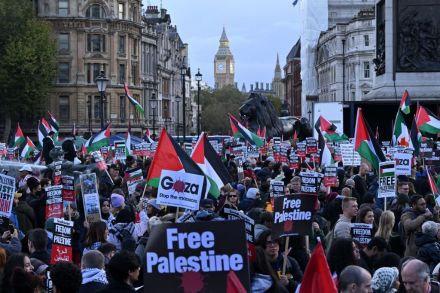
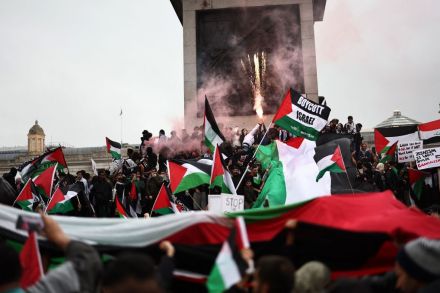
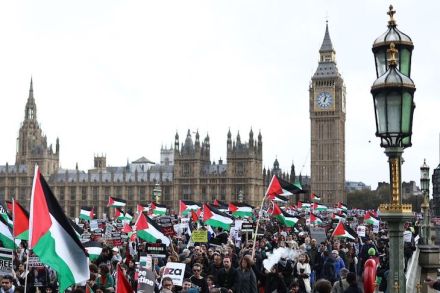
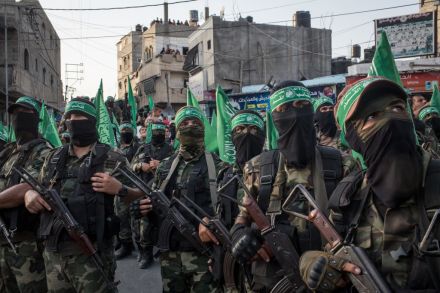
There was long been a swell of sympathy for Hamas in the West. A certain leader of the opposition, you will remember, referred to them as his ‘friends’ and said that the UK government classifying them as a ‘terrorist organisation’ was a ‘big, big historical mistake’. He did not condemn Hamas this week. And he is not alone. The mass rallies on the streets of Britain in recent days have shown the level of support for a barbarism that for years has been quietly accommodated in this country.  If Gaza is an ‘open-air prison’, the true jailers are Hamas It is depressing how few people on that side of the argument have changed their position in the light of the savagery in Israel.

For too long, the UN has been gripped by Israelophobia

From our UK edition

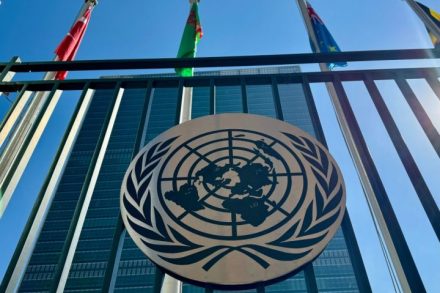
It is something of an understatement to say that there has been no shortage of shocking posts on social media in recent days. Up there has been the footage of the mobs chanting ‘gas the Jews’ outside Sydney Opera House and those flying the Hamas flag in London. But one above all stood out. Step forward the United Nations Human Rights Council (UNHRC). Yesterday, as scenes of medieval anti-Semitic savagery were playing out across southern Israel, it put out this message: ‘On Monday afternoon, [we] observed a moment of silence for the loss of innocent lives in the occupied Palestinian territory and elsewhere.’ The only thing more conspicuously absent from that statement than the word ‘Israel’ was a general sense of reality.

Why are Jews being blamed for Hamas’s attack on Israel?

From our UK edition

'Victim blaming' is one of the sins that is most deplored by the social justice movement. When it comes to the Jews, however, different rules seem to apply, at least when it comes to rape, murder and mutilation. The events of the past few days could not have been more clear-cut. This was an unprovoked assault by Islamist fanatics who rampaged across southern Israel, revelling in savagery against the innocent. The atrocities you have seen on television have been the tip of the iceberg. Women have been butchered, their bodies paraded and desecrated, while grandmothers have been kidnapped with their carers and executed. Families have been gunned down in bomb shelters. Babies and children have been dragged away into captivity in Gaza. There has been at least one apparent beheading.

How Canada’s parliament ended up celebrating a former Nazi

From our UK edition

Vladimir Putin invaded Ukraine in February last year. By the end of March, the streets of cities all over the world were spontaneously draped in blue and yellow. It was a moving moment. The outpouring of solidarity seemed to reveal that the instinct to stand up to tyranny has not yet been forgotten in the complacent and self-indulgent decades that followed the second world war. But it also felt rather vicarious. We live in an age in which the drive to express national pride has been driven underground by memories of empire in Europe and the shadow of slavery and segregation in America. For many, especially on the left, imported Ukrainian nationalism has become a kind of patriotism by proxy, a sublimated expression of a repressed desire.

Why do cyclists insist on making drivers angry?

From our UK edition

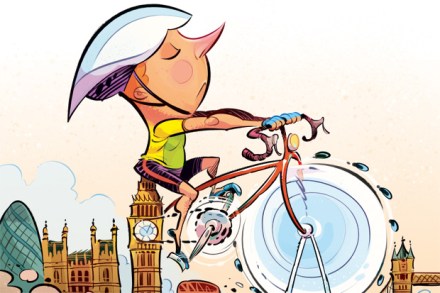
Picture the scene. I’m in the New Forest, riding in a bicycle race. It looks like I’m on course for a personal best, perhaps even first place. I’m well-fuelled and feeling strong. Then I hit traffic. The road is too narrow to slip alongside the line of five or six cars in front of me. I stand on the pedals and crane my neck for a view of the holdup. There it is: a bunch of my fellow competitors, riding quite slowly, two abreast. Nobody honked, revved or attempted a dangerous overtake. But a fair few of them must have cursed into their windscreens Now this wasn’t exactly a race. It was a sportive, which is timed, but supposed to be non-competitive. You couldn’t get any more amateur than that. But to a middle-aged man like me, with a boy’s imagination, it was a race.

London’s e-bikes are out of control

From our UK edition

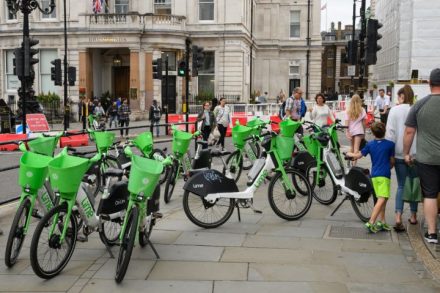
I don’t know if you’ve noticed, but rental electric bicycles are becoming a bit of a scourge in London. Unlike the old Boris bikes (can we still call them that?), they do not need to be docked, meaning that they are frequently abandoned on the pavement, to the annoyance of pedestrians. Neither do they need to be left in designated parking zones, like e-scooters. More infuriatingly, their motors often cut out when you pass from one borough into the next, so they are often dumped on the border. Yes, seriously.  The current Wild West arrangement is damaging the experience for the consumer and hollowing out the market The reason for this chaos is that while Transport for London (TfL) rules govern e-scooter hire, the e-bike market is so far unregulated.

The police can’t be trusted to track our e-bikes

From our UK edition

In more innocent times, I’d have responded to the news that police wished to fit tracking devices to electric bicycles with a grunt of approval. Finally, I’d have thought. Plod has come up with a practical, apparently technologically literate yet relatively inexpensive method to fight low-level crime. Makes a change from the rainbow helmets. Why stop at e-bikes? Track all the cars, too. These days, however, I cannot help but view such measures with cynicism. But let me first explain. Sarah Kennedy, the chief constable of Merseyside police, has said that policing risked being ‘behind the curve’ because muggers are using e-bikes to carry out their assaults. Scousers were stealing them, she said, in order to rob people and speed away.

Banning Iran’s IRGC makes more sense than cracking down on Wagner

From our UK edition

Is the Wagner Group a terror threat to Britain? Until this morning, the thought had probably never occurred to most people as they went about their lives. The mercenary group has indeed done terrible things in Ukraine and Africa. But a threat to British subjects on our own soil? Today, however, the government will add Wagner to its list of proscribed organisations, which includes groups like Islamic State and al-Qaeda. This means that joining or supporting the organisation carries a penalty of up to 14 years in prison. Officials will be able to seize Wagner’s assets more easily, and members of the group will be barred from silencing journalists and campaigners in British courts. The move was unprecedented because Wagner is in effect an arm of the Russian state.

What’s wrong with calling food Israeli?

From our UK edition

The service was stylish, the menu superb, the vibe effortlessly chic. This was the Coal Office, one of London’s best Israeli restaurants, situated in the old Victorian goods yard at King’s Cross. My fiancée and I dined there last week. It was a blast. But something didn’t feel right.  Fish and chips was invented by an Ashkenazi Jew, and we all like a good kedgeree or a korma, yet British food is no fiction In many ways, you couldn’t find a more Israeli establishment. Weeks earlier, In Jerusalem, I had taken my children to the Coal Office’s sister restaurant, Machneyuda. The same type of stuff was on the plate: Sephardi spices, chickpeas and aubergines, matched with Ashkenazi bread and fish. The atmosphere was similar, too.

Why Iranians don’t hate Israel

From our UK edition

One is an oppressive regime that guns down its own people, promotes a radical Islamist theology and hangs gay people from cranes. The other is a liberal democracy that protects the rights of minorities, upholds the freedoms of speech and assembly, and grants equality to women and gay people. Yet when weightlifters from the two countries shook hands after a tournament, it was the oppressive regime that reacted with fury. Courage is readily found among Iranian sportspeople, as it is found among the Iranian people themselves I speak, of course, of Iran and Israel.

What Jeremy Vine gets wrong about cyclists

From our UK edition

I can’t believe we need to say this, but here goes: Motorists should not pull over to allow cyclists to overtake. I know it’s obvious, but the cycling elites have been agitating for this ridiculous rule-change, led by Jeremy Vine. In an interview yesterday, he upped the ante in his general campaign to turn the country’s drivers into a second-class citizens. ‘I’m starting to think I want cars to pull over if they see me behind them because they know I’m faster,’ he told the Sunday Times. Thus the shark was jumped. I’m a cyclist myself and I’d wager I’m quite a lot faster than Vine. I’m younger, for a start, and in addition to commuting daily on my Brompton, on weekends I am a fully paid-up member of the Lycra brigade.

The dangers of cargo bikes

From our UK edition

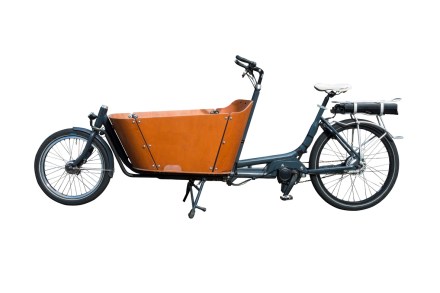
My first encounter with the cargo bicycle came more than ten years ago. I was a features writer at the Sunday Telegraph and had three very small children; my assignment was to spend a few weeks trying out three different designs for ferrying kids and shopping and then reach a verdict on which was best. What is a cargo bike, I hear you ask? Put simply, it is a monumental pain in the arse What is a cargo bike, I hear you ask? Put simply, it is a monumental pain in the arse. It is either a bicycle or a tricycle with a box bolted to the front, in which you put your children and other things.

Yes, Bradley Cooper’s fake nose is anti-Semitic

From our UK edition

Bradley Cooper is not anti-Semitic. If he was, he’d surely have let it slip by now; as Mel Gibson proved (‘The Jews are responsible for all the wars in the world!’), it can be hard to hold such things in. And Cooper certainly wouldn’t be portraying a Jewish composer sensitively and affectionately on screen if he was. No, his decision to use a rubber nose when playing the role of Leonard Bernstein – to nose up, if you will – was likely not animated by the anti-Semitism of Hitler or Gibson. But it was animated by something and it is useful to consider what it was. Why was it necessary to nose up? Did Cooper fear that we’d miss Bernstein’s ethnicity without it? Yesterday, Bernstein’s children rushed to the actor’s defence.

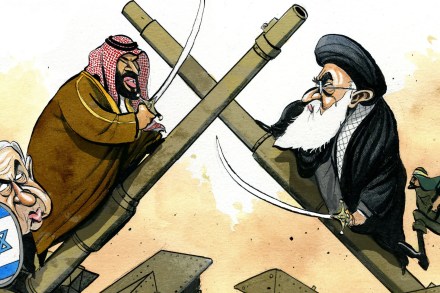
A Saudi-Israel peace deal would be a game-changer

From our UK edition

It emerged this week that the head of the Mossad, David Barnea, slipped quietly over to Washington in July to hold secret talks about the prospect of an Israel-Saudi peace deal. This was part of a drip-drip of stories suggesting that an agreement may be back on the cards after an Iran-Saudi deal brokered by China complicated things in March. Israel is far from finished as a beacon of hope in the Middle East In another significant development, the respected Saudi newspaper Arab News published an editorial this week selling a possible deal to its readers. This followed a study finding that Saudi Arabia has scrubbed ‘practically all’ antisemitism and Israelophobia from its school textbooks.

Not all cyclists support Sunak’s war on traffic control

From our UK edition

My fiancée wants to put a sign up outside our house demanding that the speed limit be reduced to 20mph. I’d rather she didn’t. Drivers have enough to cope with already. Such is the peer pressure emanating from the neighbours, however, in collaboration with my fiancée, that the decision is likely to be taken out of my hands. Shortly, I fear, I’ll be master of a house with '20 is plenty' sign on the gate, accompanied by a picture of a snail. Just because sticking up for motorists worked in Uxbridge doesn’t mean it will work across the country I offer this vignette because the government is reportedly mulling a crackdown on councils that seek to impose 20mph speed limits, 'bus gates' – bus-only shortcuts – and 'low-traffic neighbourhoods' (LTNs).

Netanyahu’s judicial reforms are not the end of Israeli democracy

From our UK edition

Watching Israel tear itself apart this week has been like seeing your best friend embarrass himself at a party. The world has looked on while the Netanyahu government, in hock to a small cabal of religious chauvinists, pushed through the first stage of its judicial reform agenda, sparking the biggest street protests the country has ever seen. Whatever happened to the start-up nation? Last night and this morning was the Jewish fast of Tisha B’Av, which commemorates the destruction of the Temple in 70 AD and the subsequent exile from Israel. To mark it, firebrand minister Itamar Ben-Gvir visited the Western Wall to the sound of messianic songs before provocatively ascending Temple Mount, the place where tensions are highest.

The Coutts scandal shows the trouble with going cashless

From our UK edition

The outrage over the cancelling of Nigel Farage’s bank account has uncovered the lengths to which elements of the British establishment will go to mould society in their ideological image. Those who speak out publicly in support of unfashionable causes – whether Brexit, gender self-identification, Israel or abortion – now face being cancelled not just on social media but on an institutional level as well.  It is eerily evocative of China’s notorious 'social credit system', a state-sponsored credit rating and blacklist that awards greater freedoms to those citizens and businesses who behave themselves and fall in line with their rulers. There but for the grace of God?

Children need to fight back against political indoctrination

From our UK edition

There's something troubling happening in our schools. In art class, my children have been instructed to make Black Lives Matter posters. Their assemblies in recent years have been a dreary parade of presentations on sexuality, identity and race politics. They have been subjected to workshops involving LGBTQI+ flash cards and printouts of tweets about transgenderism, and taught that Sam Smith – who is obviously overweight and wears provocative bondage clothing – is a shining example of ‘body positivity.’ The government, until very recently, has effectively conceded the education system to a cabal of zealots It’s not that I object to them being exposed to this stuff at school.