Jake Wallis Simons

Jake Wallis Simons

Jake Wallis Simons is a columnist, broadcaster and foreign correspondent. His latest book, Never Again? How the West Betrayed the Jews and Itself, is out now

Egypt has questions to answer over Rafah

From our UK edition

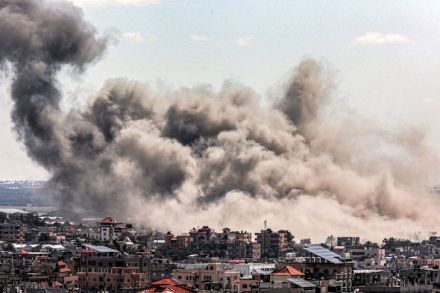
Why have all eyes been on Rafah? We have been led to believe that the intense focus on a town the size of Rochdale in southern Gaza derives from purely humanitarian concerns, as if any Israeli operation there would trigger a civilian catastrophe on the scale of Rwanda or Darfur. Take a closer look, though, and this narrative quickly falls apart. The Israeli operation taking place as I write is remarkable. According to Colonel Richard Kemp, the former commander of British forces who is closely following the conflict in Gaza, the current casualty ratio in Rafah is about one civilian for every ten combatants killed, which is several orders of magnitude more humane than any conflict in history.

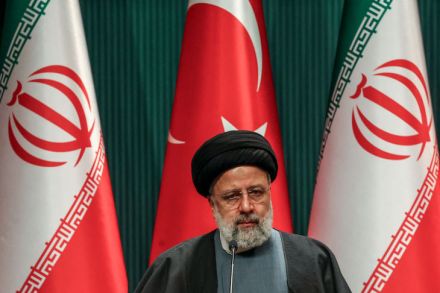
Ebrahim Raisi’s successor could be worse

From our UK edition

It is doubtful that Ebrahim Raisi, the 'butcher of Tehran', would have experienced a moral epiphany had he been shown in life the reaction that his demise would evoke from his own people. So it goes with fanatics, especially one who presided over the murder of thousands of political opponents by bundling them into forklift trucks and hanging them from cranes. Nevertheless, the jubilation affirms – as if it was needed – that the Iranian people have no truck with the Iranian regime.

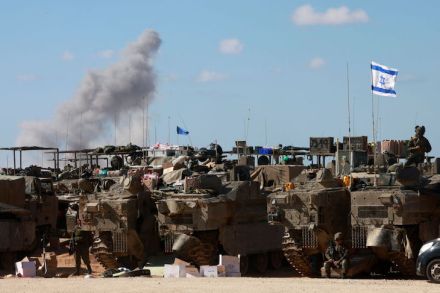
Israel’s Rafah operation is tragically necessary

From our UK edition

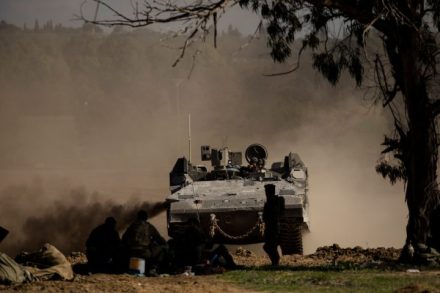
There is, as Ecclesiastes reminded us, a time for war and a time for peace. In its 76-year history, Israel has rarely selected the time for war, almost always reinforcing its position and responding in self-defence to Arab attacks. The invasion of Rafah will be another such tragic chapter in the tragic history of the Jewish state. Hamas has made it a time for war. The tanks went in after volleys of rockets were fired by Hamas Has it started already? Last night, Israeli tanks entered the southern town after a last-ditch ceasefire proposal from Hamas was rejected as inadequate. But the operation has so far fallen short of a full invasion.

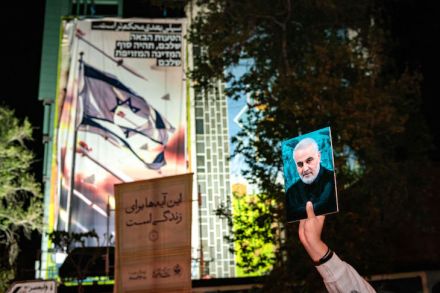
Sunak has no excuse to not proscribe the IRGC

From our UK edition

Lord Renwick, the Labour peer and former Foreign Office mandarin, used to say that young diplomats of a certain breeding suffered from the ‘Wykehamist fallacy’. This, he said, was the tendency to assume that even the most bloodthirsty despot had an inner civilised chap of the sort one might find at Winchester College. Treat him decently and the inner fair-minded fellow would come out. ‘Actually’, Renwick would point out, ‘they’re a bunch of thugs.’ Given Rishi Sunak’s own schooling, the Wykehamist fallacy came to mind when the prime minister’s spokesman made clear that the government would not be banning Iran’s terrorist arm, the Islamic Revolutionary Guards Corps (IRGC).

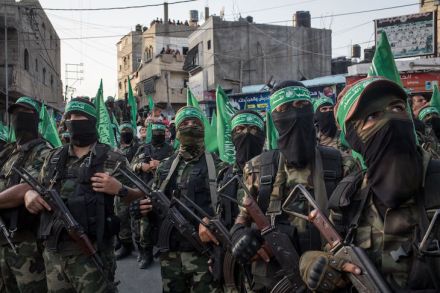
Hamas has all but won

From our UK edition

It would be hard to imagine that almost exactly six months after October 7, I would find myself saying this, but Israel is either on a path to defeat or has lost the war already. The way in which the Jewish state – the regional military superpower, enjoying huge military support from the global superpower – is being forced to snatch defeat from the jaws of victory is a cautionary tale for the West. It is often correctly said that Israel is on the frontline of the struggle against jihadism. Well, pay attention: the collapse of Israel’s campaign in Gaza, which after the October atrocities was the most justified imaginable, is a harbinger of what may lie ahead. Let’s look at the facts on the ground. At the height of the war, there were hundreds of thousands of troops in Gaza.

Is London the ‘most anti-Semitic city in the West’?

From our UK edition

The last time I saw Amichai Chikli, he was struggling to put on a suit jacket at the Israeli embassy in London. 'Do I really have to wear one of these things just to make a speech?' he muttered. He got it on by hoiking it over his shoulders like a rucksack.  That was last September, when the Israeli diaspora affairs minister visited London to mark Rosh Hashanah. Chikli had sparked controversy with comments about Tel Aviv’s gay pride parade ('vulgar'), the Palestinian Authority ('neo-Nazis') and George Soros ('his actions and investments are feeding the flames of anti-Semitism'). But the hotheaded minister finds it as easy to restrain his rhetoric as he does to put on a jacket.

Biden’s Rafah plan will only help Hamas

From our UK edition

The fathers, brothers and sons who are risking their lives for their country do not want to go into Rafah, on the Egyptian border of the Gaza strip. The ordinary Palestinians who hate Hamas and wish for a swift Israeli victory – and there are more of them than you think – do not want a battle in Rafah. There are more than a million human shields there. The question is not one of wants. The question is one of needs. If Rafah remains untouched, Israel will have lost the war Attacking the terrorists’ last redoubt is not some kind of genocidal indulgence, as many in the west would shamefully have you believe. It would have a single objective. If Rafah remains untouched, Israel will have lost the war.

The Rochdale by-election has exposed the worst of British politics

From our UK edition

If the by-election in Rochdale, one of the poorest constituencies in the country, is about anything other than Gaza, it is about the Labour party. After all, it is being contested by three former members of the faithful who went, each in his own inimitable way, off the rails. George Galloway, the bookies’ favourite, was booted out of Labour after railing against 'Tony Blair's lie machine' and calling on British troops to disobey orders in Iraq. His subsequent career has burrowed ever deeper into the cesspit of Muslim-adjacent firebrand posturing, expressed in regular appearances on Iranian and Russian state television (and once in the Big Brother House where he pretended to be a cat).

Will we ever learn the lessons of the Holocaust?

From our UK edition

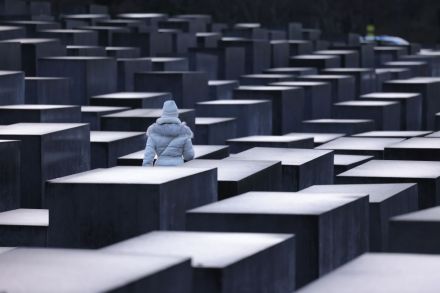
As a child, I had to wash my hands before I was shown books of photographs depicting the ghettos and death camps so that I didn’t leave fingerprints on the pages. This wasn’t a Jewish custom, just the way things were done in our house. Looking back, however, it felt part of the rituals of memorial designed to prevent the atrocities of previous generations from slipping into the sands of time. The Jews – the only people to have been persecuted in every single century of their existence – hold a culture rich in traditions of remembrance, all freighted with duty. Never mind books of photographs. On Passover we stayed up all night to relate the story of the enslavement in Egypt and the redemption.

Israel shows why conscription works

From our UK edition

Take a step back and it’s a no-brainer: If you want a healthy society, you need a spirit of unity. As we saw in London during the Blitz – often romanticised for its fabled ability to 'pull together' – if citizens feel they are part of a national family, they can maintain their morale even in the face of great adversity. The same is true in modern times. It must surely be the case that, the more people feel a meaningful part of a nation, the less alienation, disenfranchisement, discrimination and resentment there will be. Deaths of despair from drug abuse or suicide will reduce, as will poverty, depression and family breakdown. Productivity, optimism and wellbeing will increase.

Why the West should target Iran as well as the Houthis

From our UK edition

Peace cannot always be won by peaceful means. This is a truth that is as tragic as it is perennial. When history forges an enemy that cannot be placated, the blind pursuit of 'peace in our time' only shores up an even more devastating conflict in the future. This lesson, learned so painfully by previous generations, has faded in the somnambulant years of postwar Britain. It is one that we are starting to remember. Today, the defence secretary Grant Shapps pledges 20,000 British personnel to take part in a major Nato exercise to prepare for a potential Russian invasion of Europe. His words are unvarnished. 'We are in a new era and we must be prepared to deter our enemies,' he will say in a speech in London. 'The foundations of the world order are being shaken to the core.

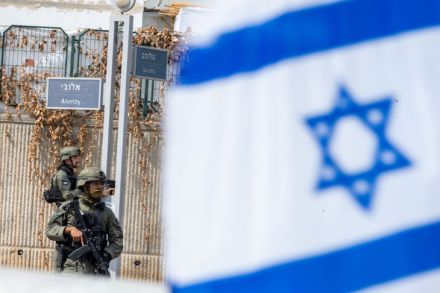
Israel is heading for war with Hezbollah

From our UK edition

Saleh al-Arouri may have been a senior member of the Palestinian group Hamas, but the drone strike that brought his story to an early close took place last night in Beirut, Lebanon. Pictures from the scene show a devastatingly precise hit, which also reportedly eliminated senior members of other factions. The leaders of Hezbollah, the Lebanese terror group founded by Iran, will not have been surprised that Israel’s reach extends so easily into their country. Likewise, it will have been no surprise to Israel that al-Arouri and other Hamas officials were to be found in Beirut.

Hamas is trying to go global

From our UK edition

For some years, there has been speculation in security circles about what will replace Islamic State. The terror group was smashed by an American-led coalition five or so years ago – a campaign that incurred, by the way, a heavy civilian death toll but provoked no protests in the west. Although it remains active in Africa and the Middle East, it is no longer the threat that it was. Its absence left a vacuum. The question was what would fill it. Now we may have the answer. Welcome to the era of Hamas International, a period which is likely only beginning. Yesterday, it was revealed that a plot by the terror group to kill Jews in Europe was foiled by German and Danish police, with Denmark’s prime minister saying it was 'as serious as it gets'. Hamas, it seems, is going global.

It’s no surprise Palestine marches have drained the Met’s coffers

From our UK edition

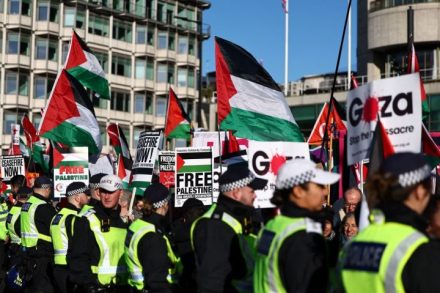
Much has been made of the supposedly peaceful nature of the weekly Palestine marches. But public order comes at a price. Yesterday, it emerged that the Mayor of London, Sadiq Khan, wrote to the Home Secretary to request more funds for police officers, pointing out that Scotland Yard was facing a £240 million funding gap because of the demonstrations. Since 7 October, he wrote, more than 28,000 officer shifts had been consumed by policing the protests in London.

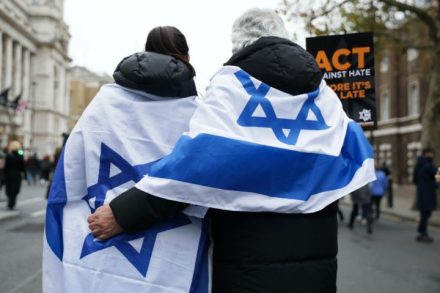
The stakes are high at London’s anti-Semitism march

From our UK edition

Whether Muslim, Jewish, Christian or atheist – and whatever your nationality – there is ample reason to stand up to the death cult that has worn the face of Al Qaeda, Islamic State and Hamas. We’ve had suicide bombs of our own in Manchester and London. We’ve also had our fair share of beheadings and stabbings on our streets. Muslims have, globally, been the biggest victims of jihadist attacks; now is the time for all people of good will to stand against such gratuitous nihilism in the streets of London.  We have seen this already in Israel. On 7 October, up to 70 Arab-Israelis were murdered by the Islamist killers. That same day, Bedouin Arabs from the nearby town of Rahat risked their lives to save scores of Jews from the music festival and Kibbutz Be’eri.

A ceasefire leaves Israel in a dangerous position

From our UK edition

A four-day pause and the release of 150 Palestinian prisoners. Seen from London or New York, this seems like a reasonable measure to secure the return of 50 Israeli hostages. Pause the fighting; allow humanitarian aid to reach Gaza; satisfy the Americans, who were reportedly pushing hard for the deal; get a good number of your citizens back. What’s not to like? The reality, however, is somewhat more complicated. A four-day pause in fighting is not a static affair. At least, it may be for the IDF, but it isn’t for Hamas. They will spend the time resupplying, including seizing as much aid as they need from humanitarian convoys entering the territory.

A potential hostage deal shows the weakness of Hamas

From our UK edition

Details are sketchy and the deal is far from done, but all the signs are pointing towards a hostage agreement in which up to 50 Israelis are released by Hamas in return for a ceasefire of several days. Make no mistake: this indicates that both tactically and strategically, the war is moving decisively in Israel’s favour. This much seems obvious when the prospective, Qatar-brokered deal is held against the hostage playbook that has been followed by both sides over the years. By that old equation, one Israeli captive was worth up to a thousand Palestinians. That was seen most vividly during the Gilad Shalit prisoner exchange in 2011, when 1,027 Palestinian convicts were released in exchange for Shalit, a cousin of a friend of mine, who had been held in Gaza for five years.

Hamas and the narcissism of the progressive left

From our UK edition

A prominent member of Hamas’s political bureau has been causing something of a stir on the internet in recent days. In an interview with the Lebanese television channel LBC, Ghazi Hamad vowed that given the chance, his group would repeat the October 7 massacre until Israel ceased to exist. It went viral. To many people, the habits of bears in woods might spring to mind. But the context made the clip fly. In recent weeks, the public debate in the West has descended into an appalling maelstrom in which gullible westerners insist on projecting their own values onto Hamas, while increasingly small ranks of the sane try to snap them out of it.

Is Suella Braverman wrong about pro-Palestine ‘hate marches’?

From our UK edition

Supporting the Palestinians is a reasonable thing to do. Flying their flag is not an act of hatred. Expressing sympathy for their hardships is not bigotry. There is nothing invalid about arguing for their national self-determination.  The problem has always been the proximity of the Palestinian cause to the Jews. Is accusing the ‘Zionist lobby’ of pulling the strings of politics a reasonable expression of support for the Palestinians? Is accusing Jews of ‘white supremacy’, even though a majority of Israelis are non-white? Is trying to lynch them at an airport? If, as I argue, Israelophobia is the newest version of the oldest hatred, then it is as adept as it always has been at using the language of legitimacy as a Trojan horse.

Jews feel abandoned by the British left

From our UK edition

Like 9/11, the massacre in southern Israel changed everything. From the great movements of Middle Eastern geopolitics and international alliances to the sweep of modern Israeli and Arab history, life has been split into the before and the after.  In Britain, nowhere has this been felt more keenly than the Jewish community. There have been a great many bitter lessons, but one overshadows all the others. Before the massacre, we thought we had many more friends here.  In the aftermath of the massacre, it is finally dawning on Jewish progressives that their oldest friend doesn’t care for them at all I’m talking about the political left. In recent decades, the Jewish electorate has been drifting rightwards.