Jackson Ford

The haus Montblanc built

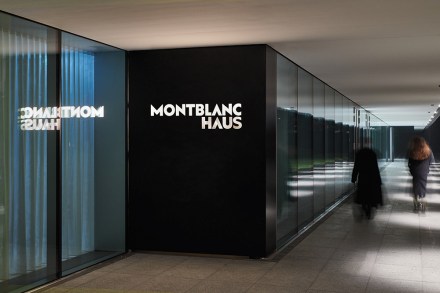
There is a room in the Montblanc factory in Hamburg that is soundproof and almost entirely silent. All you can hear is the sound of nib on paper, and the people who sit there, visible through glass windows to their coworkers, have one task. To test each and every new Montblanc pen nib to see if it comes up to scratch, so to speak. They are not only feeling the flow of the ink and how the metal moves as they apply pressure to it, but listening for the sound it makes. A well-fashioned nib will perform in a certain way, while one that needs adjustment will alert the writer through feel as well as through auditory cues.

Superiority complex

American biker culture is dominated by the idea of extensive stretches of blacktop, straight and open, which leads to motorcycle design that produces machines suited to long, steady rides. The British tradition, which imagines its bikes navigating twisting country lanes and cities where the only grid is the electrical one, means that the products that roll off the line in Blighty are, to borrow an equestrian phrase, more “skittish”. The difference between, say, a Harley Davidson and a Triumph owes much to this contrast of road geography. Riding position, cornering, acceleration, breaking, comfort and the rest are all influenced by the idea that one is made for cruising the Pacific Coast Highway and the other the A303 and its web of B roads.

For under-the-radar, innovative watches that retail for under $1,000, turn to Time+Tide

As the saying goes, “Time and tide wait for no man.” Perhaps this is why Australian Andrew McUtchen is in such a hurry to spread the word about what he calls watch “microbrands.” These are the product of young watchmakers who have developed small runs of interesting and innovative watches and are challenging the hegemony of the traditional Swiss horology titans. Typical is Studio Underd0g, a British outfit founded in 2020 with the aim of making quirky, colorful timepieces. Its Watermel0n chronograph is a striking creation, with a dial that replicates the look of the fruit.

The Coral Gardeners are rewilding the oceans, one reef at a time

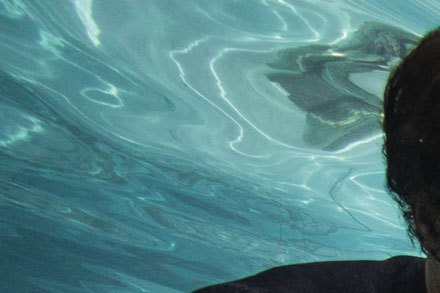
“What is a coral?” If you can answer that question, you are smarter than I am. My interlocutor is a 27-year-old Tahitian called Titouan Bernicot, and you should note that name, because this young man is doing remarkable things. We are in Thailand at the HQ of Coral Gardeners on the small island of Koh Mak in the Gulf of Thailand, in the South China Sea. This is where Bernicot and his team are innovating techniques of coral rewilding, a mission he has been on since he was 16 years old. “I grew up in French Polynesia in a little house built on coral. There was no school, no supermarket, no anything, just the sea. It was my playground,” he explains. He describes playing with his friends in the waters, while his family collected pearls to sell for a living.