Isabel Hardman

Isabel Hardman

Isabel Hardman is assistant editor of The Spectator and author of Why We Get the Wrong Politicians. She also presents Radio 4’s Week in Westminster.

Boris Johnson shows what it means to be an upbeat Conservative

From our UK edition

Boris Johnson's speech to Conservative Party conference was disloyal to the Prime Minister in the sense that unlike Theresa May, the Foreign Secretary finds it easy to be upbeat and persuasive about the benefits of Conservatism. As this morning's round of interviews showed, the Prime Minister's definition of ‘upbeat’ is talking faster. Johnson, meanwhile, uses his command of the English language and confidence in public speaking to cheer up party members who were so desperate for something to take their minds off their current general misery that they were queuing in long lines to get into the conference hall. But members already love Johnson.

Forget the Nasty Party. This is the Knackered Party.

From our UK edition

Tory conference is yawning on with neither furious fights nor much evidence that anyone knows how to fix the party's problems. The most energetic bit of it so far has been Theresa May's round of media interviews this morning, in which the Prime Minister appeared to have been turned on to 1.5x speed as she nervously gabbled her answers and tried to sound happy. Other spots of colour come from non-MPs, such as Ruth Davidson. The hall isn't packed, the atmosphere flat, and members and MPs look bewildered and miserable. The Tories are starting to resemble Labour at the end of its last spell in government. The party was exhausted.

Ruth Davidson: Tory party needs to man up

From our UK edition

Where can Conservatives go if they're looking to cheer themselves up at their rather nervous, doleful conference? A fringe with Ruth Davidson seems to be the answer. The Scottish Tory leader gave an interview to the Times in a totally packed room at the Midland Hotel this lunchtime, and it was clear that Tory members were there hoping to hear from a Conservative who is doing well and in good cheer. There's something about Davidson's blunt approach to politics that Tory members seem to like. She tells them they're in a miserable state and need to pull themselves together, and gives the impression that she's already got it together - rather like the sports teacher who shouted at them a lot at school, or the army officer who turned up to take cadets.

Nicky Morgan interview: EU rebels can’t have anything to do with the Labour frontbench

From our UK edition

Theresa May took just 15 seconds to sack Nicky Morgan as Education Secretary. Morgan’s revenge has taken a little longer. First, she criticised the Prime Minister’s expensive trousers, but once she’d apologised for that, the Loughborough MP then set herself up as something far more troublesome in the long-term than a fashion critic. Not only is she a prominent campaigner against a Hard Brexit, Morgan is also the chair of the Treasury Select Committee, one of the most powerful backbench operations around. When we meet in her Commons office, Morgan is busy planning how to make the government’s life uncomfortable through a series of select committee hearings and through a series of amendments to the EU Withdrawal Bill which have landed ministers in a spin.

Theresa May’s tense conference

From our UK edition

A few weeks ago, Theresa May seemed surprisingly stable as Tory leader, given the mess of the snap election. Her cabinet had finally stopped squabbling about Brexit and Conservative backbenchers were largely backing her to continue. But on the eve of party conference, things don't look so great. Firstly, the Cabinet unity has disappeared again. The Prime Minister's Florence speech opened up a war of bids for her attention from Brexiteers and Brexitsceptics alike, all of whom believed that the Prime Minister is so malleable on policy that she just needs to hear the same thing over and over again before she believes it.

Corbyn cannot just condemn the abuse of those he is friends with

From our UK edition

Jeremy Corbyn was generous to the Shadow Cabinet in his conference speech, especially to Diane Abbott, who had a terrible election campaign personally, suffering from problems with her diabetes and horrendous racist and misogynist abuse. The Labour leader led a standing ovation to the Shadow Home Secretary, followed by a rendition of 'happy birthday'. He told the hall that 'the campaign by the Tories and their loyal media was nasty and personal. It fuelled abuse online and no one was the target of that more than Diane Abbott.' Let's just recall the abuse of Diane Abbott during the election campaign. She said she had been called a 'n***** bitch', sent rape and death threats and received 45 per cent of all abusive tweets sent to female MPs during the election campaign.

Jeremy Corbyn’s speech showed how much of Labour’s power comes from the Tories’ mess

From our UK edition

What is Jeremy Corbyn's vision for Labour in government? Before the snap election, that question seemed so very irrelevant and hypothetical, but the 2017 result and the way the Tories have behaved since makes a Jeremy Corbyn premiership far more likely than anyone could have imagined. So his speech at Labour conference was quite understandably upbeat, confident, and well-received. It was the best speech he's ever given - fluent, well-structured and unapologetic. Though of course it went on a bit too long. It included the mandatory pops at the media, and repetitions of crowd-pleasing policy announcements on nationalising various industries. Labour feels so powerful now that it doesn't need to worry that its policies will upset the public.

David Lammy: We should be more like Farage

From our UK edition

Brexit has been an odd sideshow to the Labour conference, with pro-Corbyn factions such as Momentum working hard to keep the topic away from any awkward votes on the floor of the Brighton Centre hall. Perhaps that’s why it took more than an hour for anyone to mention it as a potential issue the party needed to think about at tonight’s Fabian Question Time fringe. By this point, we had run over the same arguments for solving the housing crisis that are wheeled out and then packed away without much progress, tax avoidance, and the Labour Party’s problem with anti-semitism (none of the speakers tried to claim this didn’t exist, by the way).

Labour’s lost moderate MPs adopt ‘sleeping crocodile’ strategy

From our UK edition

One of the reasons this seems to be the happiest Labour Party conference in a long time is that there is very little conflict between the two very different factions in the party. Before the snap election, it seemed as though Labour was going to split - or at least that what was left of it after an electoral drubbing was going to split. But the result meant that the Corbynites have won the argument and sealed their ownership of the party. The factions aren't at war any more. The most obvious symbol of this victory is the way MPs haven't been given passes for the conference floor. Some argue that conference has always been about the chance for members to speak, rather than parliamentarians to pontificate at even greater length than they do in Westminster.

How ‘safe spaces’ make life harder for people with mental illness

From our UK edition

Oh, how wonderfully hilarious: Labour conference has a safe space. It's exactly what you'd expect from a Party now led by eccentric former rebel backbenchers who'd probably still rather be making jam in peace in Islington, isn't it? I ventured into the room marked 'safe space' in the Brighton Centre this week, half expecting to find a group of Blairites huddled in one corner and a group of members who just couldn't cope with the idea of a debate on continuing single market membership in the other. Disappointingly, it was just a bare room with a few chairs and an odd hatstand which seemed to be brandishing a bin.

John McDonnell’s speech showed Labour is now comfortable in its new skin

From our UK edition

If you wanted a clue to how much the Labour Party has changed over the past few years, you wouldn't have had to sit through much more than the first few lines of John McDonnell's conference speech. He started it with the words 'I'd like to thank Ken Loach for that wonderful film'. Loach hasn't been the most loyal supporter of the Labour Party over the years, but is now firmly back in the fold thanks to Jeremy Corbyn. Party members, normally tribally opposed to those who set up rival parties, gave the veteran filmmaker a standing ovation. The Labour Party has been changing for a while, but this conference is showing that it is now comfortably settled into its new Corbynite skin.

Labour’s Soft Left goes on the offensive

From our UK edition

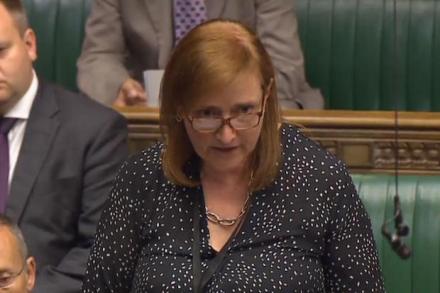
The Labour Party is starting this conference season in its most confident mood for years - even though it still isn’t in government. It’s not just the confidence of the party’s leader as he makes demands on public spending which would previously have been dismissed, but also what MPs and activists are now calling for as they stand up at fringe meetings. They may not have won an election, but they have started to regain the political narrative, and so they are in a considerably less defensive mood than over the past few years. Take tonight’s Open Labour fringe rally. Open Labour is a ‘soft left’ pressure group in the party, though there was nothing soft about tonight’s event. It kicked off with a passionate speech from newly-elected MP Emma Hardy.

Jeremy Corbyn’s Brexit confusion continues

From our UK edition

One of the daily rituals in British politics at the moment is each of the main parties sending out press releases about how 'hopelessly divided' the other is on Brexit. There are so many facets on which politicians can bicker that this ritual won't end with the negotiations, or the transition period (however long that ends up being) or indeed with the eventual relationship with the EU that Britain settles into. "There will be a lot of movement" of workers after Brexit - @jeremycorbyn tells #marr pic.twitter.

Befriending Laura Pidcock: an interview with a Labour firebrand

From our UK edition

Have you heard the one about the new Labour MP who refuses to be friends with Tories? When Laura Pidcock dropped into an interview with a left-wing website that she has ‘absolutely no intention of being friends with’ any Tories, she was surprised by the fuss that followed. It might have seemed odd to her, but within Parliament it’s well known that friendships that cross the divide spring up the whole time. Sometimes it’s personal: Kezia Dugdale, leader of the Scottish Labour Party, caused headlines when she started dating a nationalist MSP. But more often, political: to achieve something, MPs from different parties often have to work together. But the new member for North West Durham sounds as if she is appalled at the whole system.

Can we be friends?

From our UK edition

Have you heard the one about the new Labour MP who refuses to be friends with Tories? When Laura Pidcock dropped into an interview with a left-wing website that she has ‘absolutely no intention of being friends with’ any Tories, she was surprised by the fuss that followed. It might have seemed odd to her, but within Parliament it’s well known that friendships that cross the divide spring up the whole time. Sometimes it’s personal: Kezia Dugdale, leader of the Scottish Labour Party, caused headlines when she started dating a nationalist MSP. But more often, political: to achieve something, MPs from different parties often have to work together. But the new member for North West Durham sounds as if she is appalled at the whole system.

Jeremy Corbyn is getting better at political point-scoring

From our UK edition

This week marks two years since Jeremy Corbyn was announced as the Labour leader. When he took over, he promised to shake up the way Prime Minister’s Questions was done, to make it more about the voters and less about the political point-scoring. But interestingly, he has now settled into a rather effective political routine. Corbyn now runs through a series of policy areas on which the Tories look weak, almost regarding Theresa May’s answers as incidental to the process rather than the prompt for him to probe more and point out that she hasn’t answered the question at all. This is probably a wise move, given Theresa May tries to make her answers as incidental and irrelevant as possible.

These late night sittings will make Parliament much less productive

From our UK edition

One of the most noticeable things about MPs as they amble around Westminster today is how tired so many of them look. They’ve been kept up late the past two nights by unusually long sittings of the House of Commons, with the final three-line whipped votes not taking place before 10pm on both days. On Monday, it was the second reading of the EU Withdrawal Bill, and last night a prolonged debate on the Finance Bill meant everyone had to hang about until later to vote on Andrea Leadsom’s plan to make the Conservatives appear to have won the election outright after all by guaranteeing the government a majority on all public bill and secondary legislation committees.

Why social care could be heading for the long grass once again

From our UK edition

How are ministers going to deal with the social care crisis? This could be a weekly question on Coffee House for the next few years, along with what is Labour’s policy on Brexit and when will Theresa May decide to stand down. As I wrote last week, the different parties are all claiming they want cross-party talks but not really doing much talking to one another. Now, I understand that ministers are planning to do a lot more talking before they make any sort of decision on how to create a long-term financial settlement for the sector. As she started to unpick her disastrous manifesto proposal for a ‘dementia tax’, Theresa May promised a ‘consultation paper, a government green paper’ on social care funding.

The most half-baked thing about the anti-transgender Christian couple isn’t their approach to gender

From our UK edition

We live in a society with a tendency towards liberal intolerance, in which the fury of the mob turns on anyone who dares hold a different belief to the mainstream particularly if they are from an unpopular group such as conservative Christians. But we also live in a society where some people who hold non-mainstream beliefs don’t feel they really have to think them through. Last week, I wrote about the difference between directing scorn at Jacob Rees-Mogg for holding unpopular beliefs which he is happy to justify, and directing scorn at those who hold unpopular beliefs which they aren’t prepared to debate in public, possibly because those beliefs are in fact half-baked.

Grayling holds talks with Tory MPs in Northern transport row

From our UK edition

The Tories are starting their series of U-turns on the public sector pay cap, but after so much see-sawing over whether they would drop the cap or not, the party will get very little political credit for doing so. It now looks as though ministers are yielding to pressure from Labour and Conservative backbenchers, rather than deciding that the time for pay restraint has come to an end. As I wrote last week, the decision to end the pay freeze is only the latest in a line of concessions to disgruntled MPs following the snap election and the DUP deal. The next political row could well be Northern transport infrastructure.