Isabel Hardman

Isabel Hardman

Isabel Hardman is assistant editor of The Spectator and author of Why We Get the Wrong Politicians. She also presents Radio 4’s Week in Westminster.

The Budget shows the Tories are still ignoring some big problems

From our UK edition

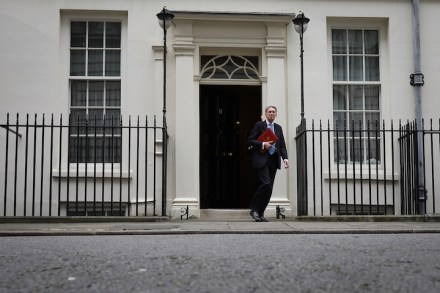
On Budget Day, MPs and journalists joke about it being a ‘quiet day’ and ‘not much going on’ as they pass one another in the corridors of Westminster (this is an accurate representation of how utterly hilarious the corridors of power normally are). Today’s Budget was in a number of respects rather quiet, especially in the things it totally missed out.  Philip Hammond didn’t even mention social care, despite the sector's concerns about whether it can afford a massive back pay bill that has come up partly as a result of a court judgement and partly as a result of government dithering.

Jeremy Corbyn says the B word during PMQs

From our UK edition

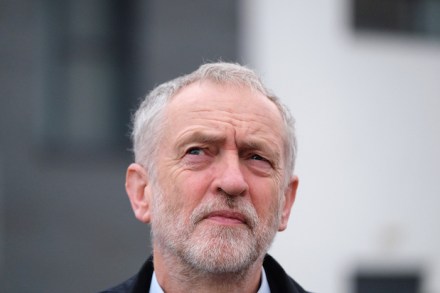
Jeremy Corbyn rarely talks about Brexit at Prime Minister’s Questions, and it is interesting that he chose today’s session, which will get little attention as a result of the Budget, to probe Theresa May on the matter. The Labour leader did have a good stint, quoting a number of European negotiators, Tory backbenchers and Cabinet Ministers who have made comments to the effect that the British government doesn’t know what it is doing on Brexit. He also accused the Tories of blocking measures protecting workers’ rights and acknowledging that animals are sentient beings. But Theresa May was on good form, too, continuing to appear as though she is regaining her confidence somewhat.

Atkins’ confident start as a minister bodes well for tricky bill

From our UK edition

Vicky Atkins was the first MP from the 2015 intake to become a minister, and had been preparing assiduously for doing so. She asked loyal questions of the Prime Minister and beavered away on the Home Affairs Committee and the joint committee examining the Draft Investigatory Powers Bill. But it was obvious that this very capable backbencher wanted to join the government - and that she was very likely to do well as a minister. Today’s Home Office questions marked her first outing on the frontbench in the Commons - and therefore the first glimpse of what someone who has been auditioning to be a minister is going to be like now she’s got the part. Atkins was greeted with a huge cheer from her colleagues as she stood up to answer a question.

Will the Tories really grasp the nettle on two of the biggest domestic crises?

From our UK edition

Two of the biggest unsolved domestic crises in this country are surely social care and housing. Both have creaked from ‘in trouble’ to ‘already in crisis’ without much in the way of serious policy or money from successive governments. Today, ministers turned their attention to both matters, making rather different announcements on how they might deal with them. First up, social care.

Will Salmond ask questions of Putin’s interest in Scottish independence?

From our UK edition

Should the British government be more suspicious of Russia? Theresa May obviously thinks so, telling Vladimir Putin in a speech this week that ‘we know what you are doing and you will not succeed’. Jeremy Corbyn is less keen, with his spokesman telling journalists that ‘I think we need to see more evidence of what’s being talked about… [but] Jeremy has made clear on a number of occasions that we need to see an attempt through dialogue to ratchet down tensions with Russia.’  Meanwhile, Alex Salmond’s decision to host a chat show on Kremlin-backed channel Russia Today last week ratcheted up tensions with his own party, with Nicola Sturgeon distancing herself from Salmond and saying she wouldn’t have advised him to do such a thing.

Theresa May’s political problems on housebuilding might not be as big as she thinks

From our UK edition

Does Theresa May want to build more homes? The problems that the Prime Minister faces on this matter were summed up very neatly by two different Tory backbenchers at Prime Minister’s Questions today. She was asked by Tom Tughendhat whether she would ‘take the chance to build more homes’, to which she replied that ‘my hon. friend makes a very important point about investing in infrastructure, particularly in housing. We are doing exactly that, which is why we have seen more than a quarter of a trillion pounds in infrastructure spending since 2010’, though she didn’t specifically mention housing. Later, Theresa Villiers asked the Prime Minister to ‘assure the House that the Government she leads will never weaken protection for the green belt’.

Is Theresa May growing in confidence again?

From our UK edition

Is Theresa May growing in confidence again? At the weekend, the Prime Minister warned Brexit rebels against blocking Britain leaving the EU, and tried to force their hands by tabling an amendment to the EU Withdrawal Bill on the date of Brexit. That hasn’t gone down so well with the rebels, who are variously tabling their own amendments to try to strike out that proposal and describing May as being ‘tin-eared’. But it did suggest that the Prime Minister felt more like challenging her critics than she has for a while. The problem is that the way she has previously challenged her critics has indeed made her look tin-eared and a little entitled, as she did when she called the snap election, complaining about those who wanted to frustrate the government.

Boris Johnson apologises for his Iranian blunder

From our UK edition

Boris Johnson had to be summoned to the Commons by an urgent question from Labour, but when he got there, he did eventually apologise for his blunder in which he had told MPs that Nazanin Zaghari-Ratcliffe had been visiting Iran in a professional capacity to teach journalism. The Foreign Secretary was in far less bullish a mood than he was a week ago when he answered questions on the matter, telling MPs that: ‘I apologise to Mrs Zaghari-Ratcliffe and her family if I had inadvertently caused them any further anguish’; he later added: ‘I do apologise, I do apologise and of course I retract any suggestion that she was there in a professional capacity’.

Barnier’s Brexit deadline highlights May’s political weakness

From our UK edition

Given all the rows in Westminster at the moment, it’s easy to forget that there are Brexit negotiations going on. But those involved in the talks from the EU’s side haven’t, and neither have they neglected to notice that Theresa May’s government is looking remarkably flimsy. Hence Michel Barnier’s warning today that there are only two weeks in which to make sufficient progress on the very important questions of the Brexit divorce bill, the border between Northern Ireland and Ireland and citizens’ rights. Barnier knows that the pressure is mounting on May at home to move on to trade talks, and that a Prime Minister as weak as her can’t take all that much domestic political pressure.

Focus in Priti Patel row switches to what Downing Street really knew

From our UK edition

Priti Patel is on her way back to Britain to face the music following her strange holiday-cum-lobbying operation in Israel. Yesterday it emerged that the International Development Secretary had not told Number 10 that she had suggested giving humanitarian aid to the Israeli army in the Golan Heights. It has been so heavily briefed that she is expected to be sacked that there is little chance that the minister will get away with just another reminder of her responsibilities.

Welcome to Messminster, where ministers can get away with whatever they fancy

From our UK edition

What do you need to do to get sacked in this place? Quite a lot, according to the response from Downing Street to the two rows in Westminster today. First, there’s Boris Johnson, refusing to apologise in the Commons for his blunder last week about Nazanin Zaghari-Ratcliffe. When asked about why Johnson hadn’t said sorry for the distress his mistake had caused, the Prime Minister’s official spokesman argued that the important thing was that ‘the clarity that the Foreign Secretary provided today was clearly helpful, it has been welcomed and the Iranians are in no doubt as to what our view is’.

MPs tear into Boris Johnson for Iran blunder

From our UK edition

Boris Johnson mysteriously decided to update the House of Commons on the fight against Islamic State today, even though everyone else was talking about another aspect of the Foreign Secretary’s job. He decided to include the row over his comments about Nazanin Zaghari-Ratcliffe in this statement, presumably to take some of the heat out of the row. His other tactic in trying to reduce the row further was to accuse anyone who attacked him for his blunder in which he told the Foreign Affairs Committee last week that Zaghari-Ratcliffe was teaching journalism of playing party politics.

Why the social care crisis could get worse much sooner than you think

From our UK edition

Social care is in crisis: everyone knows that. And everyone knows that if nothing is done about the long-term sustainability of the sector, then the crisis will only get worse. But less well-known is that there is a short-term crisis looming that could threaten the sector very quickly, too. Over the past few years, the sector has been trying to work out the implications of a court ruling that carers who stay overnight are entitled to the minimum wage for their sleep-in shifts, rather than a flat rate fee for a ‘sleep-in’ shift.

It’s not just the Green Belt that could cause a political row on housing

From our UK edition

The Conservatives are having yet another one of their Green Belt rows. Over the weekend, it was reported that Philip Hammond wants to relax restrictions on the Green Belt in order to get more homes built, but the Prime Minister isn’t very keen on the political implications of a liberalisation of planning laws. She remembers the bruising political rows that David Cameron’s government had with the National Trust, the Campaign to Protect Rural England, and the Telegraph, and feels that this is a battle she could ill-afford.

Jeremy Corbyn is right: MPs could do with training

From our UK edition

Party leaders are meeting this afternoon to discuss Westminster’s response to the sexual harassment allegations sweeping all parts of the political spectrum. Ahead of the meeting, Jeremy Corbyn has called for a training programme for MPs after every general election on how to treat their employees, while Theresa May has said that parliament itself needs a ‘proper process where people can make complaints and bring allegations’. Corbyn’s training idea makes a fair bit of sense. MPs are not elected based on their ability to run a small business, but that is effectively what they have to do with their staff in Parliament and in the constituency.

Kelvin Hopkins suspended from the Labour whip

From our UK edition

In the past few minutes, the Labour Party has announced that it is suspending one of its MPs, Kelvin Hopkins, on the basis of ‘allegations received’. Here is the full statement: ‘On the basis of allegations received by the Labour Party today, Kelvin Hopkins has been suspended from party membership, and therefore the Labour whip, while an investigation takes place. ‘The Labour Party takes all such complaints extremely seriously and has robust procedures in place to deal with them.’ The Telegraph has reported the allegations. They’re not the sort of accusations that any reasonable person would dismiss as ‘flirting’.

May has undermined her authority further by promoting Gavin Williamson

From our UK edition

To say that Gavin Williamson’s appointment as Defence Secretary has received a mixed reaction is to suggest, wrongly, that there is a balance of opinion on both sides. Most Conservative MPs I have spoken to today are just shocked that someone with no departmental experience is now in charge of the biggest department of all, with some of the biggest budgetary challenges. ‘I’m not sceptical, because that would suggest I hadn’t reached a conclusion,’ said one colleague. ‘I’m appalled. He’s smarmy. He uses bad language about other people. He is not to be trusted.

Gavin Williamson is a hard act to follow as Chief Whip

From our UK edition

Moving your chief whip when you’re in a minority government is pretty brave. In trying to work out who to replace Michael Fallon with at the Ministry of Defence, Theresa May was obviously going to have to consider who she trusted to be able to retain the job for as long as the previous occupant (Fallon was a few months short of becoming the longest-serving Conservative Defence Secretary in history), but trusting your chief whip when you don’t have the parliamentary numbers is important too.

Fallon resigned because he ‘couldn’t guarantee’ there wouldn’t be more stories

From our UK edition

Will Michael Fallon be the only Cabinet Minister to resign as part of the Westminster sleaze scandal? Coffee House understands that the Defence Secretary resigned after telling the Prime Minister that he couldn’t guarantee that there wouldn’t be another story involving a female journalist along the lines of the Sun splash this week involving Julia Hartley-Brewer. Hartley-Brewer herself was infuriated by the coverage of the incident, which took place over a decade ago, but if there were more stories waiting to come out - particularly from people quite used to writing stories, even if not normally about incidents involving themselves - then it’s the drip-drip of allegations that can do for a government, not just a minister.

How benefit reforms could close more women’s refuges

From our UK edition

Last week at Prime Minister’s Questions, Theresa May pleased MPs by telling them that the government will not place the same housing benefit cap on supported housing as for private rented accommodation. Supported housing includes long-term accommodation for people with severe disabilities and chronic conditions, as well as short-term housing such as hostels, women’s refuges and safe houses. This sounded sensible at the time, as domestic abuse charities had been warning that capping the housing benefit paid to the women staying in refuges would mean they would have to close (at an even greater rate than they have already been shutting down).