Isabel Hardman

Isabel Hardman

Isabel Hardman is assistant editor of The Spectator and author of Why We Get the Wrong Politicians. She also presents Radio 4’s Week in Westminster.

Whose fault is the local government funding crisis?

From our UK edition

Local government appears to be on its knees, and it's not the usual suspects of authorities run by opposition parties who are complaining loudest. Today, Surrey County Council is revealed to have a £105 million funding gap, and this after Northamptonshire issued a Section 114 notice, which bans almost all new spending. Organisations such as the Taxpayers' Alliance argue that Surrey still managed to find additional money for its chief executive, suggesting that this is still a story about inept management of local government finances. Perhaps, but it's also worth looking back at how the funding crisis began. In the 2010 Comprehensive Spending Review, one of the first departments to settle early with the Treasury was Communities and Local Government, then led by Eric Pickles.

The only people feeling the consequences of the Syrian conflict are the refugees

From our UK edition

What will the consequences be for the latest chemical weapons attack in Syria? Currently everyone is accusing everyone else, but doing very little. The United States says Russia is covering for President Assad. Turkey is accusing the United States of 'calculations against' Turkey, Iran and maybe Russia too. So a war of words, but no consequences for Assad, once again. The lack of consequences are all too clear for the refugees still crammed into camps in the countries surrounding their war-torn home. I visited one housing 9,500 Syrians by the Euphrates in Turkey in December, and the most striking thing was not so much the size of the camp, but how permanent everything felt.

The great women vs men tug of war helps nobody

From our UK edition

Today's centenary of some women being given the right to vote seems to have bewildered a number of people. My colleague Ross Clark, in particular, was perturbed by the Today programme turning into Woman's Hour to mark the centenary, which he felt was inappropriate for a news programme, and also didn't cover the fact that suffrage was also extended to 5.6 million working men. Instead, he writes, the programme turned the occasion 'into a women's fest'. Worse: almost every story involving men was about sexual assault. There seems to be a curious reflex among some people to protest immediately when women are mentioned that no-one is talking about men.

Theresa May needs to rely on MPs from other parties in order to survive

From our UK edition

Theresa May's MPs are now constantly pressuring her to come up with a 'vision' of what she wants to do, whether it be on Brexit or on the domestic front. Those who are more sympathetic to the Prime Minister's caution, though, argue that her vision is constrained by the parliamentary arithmetic. Why try something that just isn't going to get through the House of Commons? One answer would be that May wouldn't lose all that much by trying and failing than she thinks. As I wrote last week, she is currently more in danger of weakening her authority by not trying at all. But another is that the Prime Minister could work with that parliamentary arithmetic to get reforms in place using a cross-party consensus.

Tory leadership crisis: where are the whips?

From our UK edition

Despite having to answer questions about whether or not she is a 'quitter', Theresa May must be reasonably glad that she's got a few days' escape from her domestic agenda while she is visiting China. But being away does mean that she has left her party to stew without her, and it's not clear that those around her are doing much to calm things down. Over the past few days, I've spoken to a range of Conservative backbenchers and ministers who either privately or publicly hold concerns about the way May is leading (or isn't, as the case may be). All agree that things are rather critical for the Prime Minister, and have a number of thoughts about how she might survive. But barely any of the MPs I spoke to have had any sort of contact from the Tory whips.

Are Labour MPs in line for their own Haringey-style showdown?

From our UK edition

The centrist faction in the Labour Party has been pretty quiet since the snap election, with most MPs who opposed Jeremy Corbyn trying to focus either on Brexit or local issues and avoiding confrontations with the leadership at all costs. But today's news from Haringey suggests that this isn't likely to hold. The council's leader Claire Kober has quit after almost a decade in charge, blaming 'sexism' and 'bullying' from Momentum members who have been campaigning against a regeneration plan that they are ideologically opposed to. Kober is also furious with the Labour's National Executive Committee for trying to interfere in local democracy too, after it instructed Haringey Council to abandon the regeneration plan, known as the Haringey Development Vehicle.

Theresa May’s caution about appearing weak has made her even weaker

From our UK edition

Can Theresa May really solve the latest crisis affecting her leadership? Previously, her survival owed a great deal to Conservative backbenchers, who vowed to protect her against a badly-behaved Cabinet, but everyone is restless now. So what can she do? The Prime Minister isn't going to have a personality transplant, but this doesn't mean that she is destined to continue doing absolutely nothing. She may never be able to conjure up small talk with her own MPs, but she has in the past shown that she can make bold decisions (the snap election was, admittedly, a bad example of this) and have a reforming zeal. The absence of any activity or vision for the domestic agenda is what has agitated Tory MPs quite so much in recent weeks.

MPs are making the refit of Parliament all about them. It isn’t.

From our UK edition

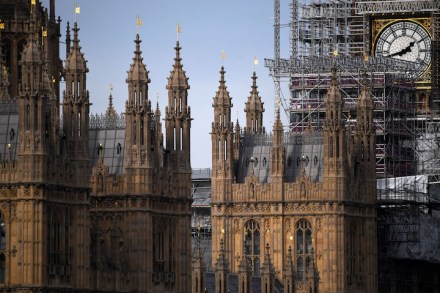
Theresa May likes to avoid awkward rows at all costs: that much we already know. Today's papers carry two stories showing this: she is said to be abandoning plans to give a Brexit speech just in case it causes further divisions in her Cabinet, and is also racking up what The Times estimates is a £230 million bill by delaying the refurbishment of Parliament. Both the Cabinet and Parliament are dangerously unstable, with chunks falling from them every day. The latter, though, has been here a long time, is one of the most famous buildings in the world, and attracts vast numbers of tourists. Philip Hammond and Greg Clark don't raise quite so much interest, oddly.

Can Theresa May really survive all this Cabinet indiscipline?

From our UK edition

Theresa May does seem to lose more authority with each week. A reshuffle in which people refuse to move, followed by Cabinet ministers using the media to ask for more money for the NHS and defence. But does this make her more likely to go soon? That the Prime Minister is weak has been priced in since the general election. It means Cabinet ministers feel so confident that they can turn down job moves, send the head of the army out to complain about defence spending, and brief the newspapers about something they haven’t yet said. But the fact that this is so well-acknowledged, and has been for a long time, makes it less likely that May will have to go because people are settling in to the reality of a weak government.

The real reason why women aren’t attending their cervical smear tests

From our UK edition

Are young women stupid? Apparently, 15 per cent of them would miss a cervical smear appointment for a gym class or waxing appointment. These strange upside-down priorities are outlined in a study of 2,017 women published by charity Jo’s Cervical Cancer Trust, which also found that two thirds of those surveyed weren’t aware they were most at risk of the illness. The charity also found a third of women were too embarrassed to get on with having the test, with 35 per cent saying they were anxious about their body shape, 34 per cent worrying about the appearance of their genitals, and 38 per cent worrying about smell. Sure, cervical smear tests aren’t anyone’s ideal way of spending five minutes, but they also aren’t very difficult to book.

The West should beware encouraging Turkey to look to the East

From our UK edition

Turkey’s decision to send troops into Syria to fight the Kurdish People’s Protection Units (YPG) shouldn’t come as a shock to anyone who has seen how the country is changing over the past few months. Turkey has become increasingly determined to forge its own way in the world, ignoring the entreaties of western countries, and indeed blaming the West for many of its troubles. The Erdogan government says the YPG is a terrorist organisation that, along with the PKK, is determined to do Turkey harm.

Boris Johnson’s bridge over troubled waters

From our UK edition

This post first appeared in the Spectator's Evening Blend email, a free round-up and analysis of each day's politics. Sign up for free here. Why is Boris Johnson quite so keen on improbable-sounding bridges? The Foreign Secretary became obsessed with the idea of a ‘garden bridge’ across the river Thames when he was Mayor, a project that was cancelled by his successor Sadiq Khan after it became clear that public money would be needed to build the structure, which would then not always be open to the public. Unabashed, Boris is now suggesting something much bigger and more eye-catching: a bridge across the Channel to France. Johnson was talking about major infrastructure projects when he suggested the bridge, which is apparently technically possible.

Whips try to soothe post-reshuffle wounds

From our UK edition

If you thought the main fallout from Theresa May’s reshuffle was last week, think again: over the past few days the Conservatives have been appointing their parliamentary private secretaries, which means the reshuffle has only just about ground to a halt. These PPS jobs are unpaid but count as government payroll, meaning the MP in question must be loyal to the government as well as carrying a minister’s bag around. The problem is that not every ambitious MP can be made a PPS. Worse, not every PPS can be made a minister, which means that there are a fair few Tory backbenchers and PPSs swirling around who are feeling a little sore.

The government must end the curious indifference to survivors of domestic abuse

From our UK edition

What happens to a woman who leaves domestic violence? A layman’s impression might be that she gets on with her life and tries to forget what happened to her. But a question today in the House of Commons showed that this is just not the case. The SNP’s Lisa Cameron asked Theresa May about a constituent of hers who had left her violent partner: ‘A constituent of mine has informed me that she was repeatedly raped and beaten by her ex-partner, requiring an injunction. Much to her horror, her bank would not close their joint account unless she attended with the perpetrator. When banks are left to their own discretion, women’s lives are put at risk. Will the Prime Minister ensure policy to protect survivors is included in the pending domestic violence Bill?

The case for more NHS cash is growing

From our UK edition

Theresa May likes to boast at Prime Minister’s Questions that mental health spending is increasing. The problem is that this is rather difficult to see on the ground. The King’s Fund today published a report saying the gap between spending on hospitals and mental health widened further in the last year. The think tank even said that there was an increased risk to patient safety in more than a half of mental health trusts because of staffing shortages, and that ‘the government’s mission to tackle the burning injustices faced by people with mental health problems will remain out of reach if things stay the way they are’. The King’s Fund’s analysis found that income for mental health trusts rose by less than 2.

Michael Gove’s green crusade is a smart way to sell Brexit

From our UK edition

What is Michael Gove up to? The Environment Secretary seems to be on a tree-hugging rampage at the moment, announcing a new green measure every week. Not content with unveiling the Tories’ 25 year environment plan last week, Gove has given an interview to today’s Sunday Times in which he attacks the water companies for using tax havens. The water companies are interesting enough, given Jeremy Corbyn has called for them to be renationalised. But what’s really revealing about what Gove’s overall mission is comes later in the interview, when he says: ‘Brexit creates opportunities, particularly in my area. Brexit could be the catalyst for some of the biggest, boldest environmental steps forward as we transform our fisheries and agriculture policy.

Chris Williamson’s resignation shows Labour’s determination to win

From our UK edition

Chris Williamson’s resignation from the Labour frontbench shows that the party isn’t just a protest movement any more. The staunch Corbynite found himself the focus of Tory campaign graphics this week after suggesting that council tax should be doubled on some of the highest-value properties.  This afternoon, Labour confirmed that their Shadow Fire Minister had stepped down. Williamson said: ‘I will be standing down from my role with immediate effect so that I can return to the backbenches, where I will be campaigning on a broader range of issues. I will continue to loyally support the leadership of Jeremy Corbyn from the backbenches and hope to be a voice for the party’s members.

Why Virgin Trains really wanted to stop selling the Daily Mail

From our UK edition

Is it really ‘censorship’ that Virgin Trains won’t be stocking the Daily Mail any more? An internal company memo to staff this week announced that ‘we’ve decided that this paper is not compatible with the VT brand and our beliefs’ and that staff had raised ‘considerable concern’ about the Mail’s stance on ‘issues such as immigration, LGBT rights and unemployment’. This has prompted accusations that the train company is cracking down on free speech and therefore censoring views that it doesn’t like. Is this true? Many have argued that as Virgin is a private company and not a newsagents, it has no obligation to give every newspaper a platform.

What the government plans to do with social care after the reshuffle

From our UK edition

Will Jeremy Hunt’s new job title make any difference to the rather precarious state of the social care sector? Opposition parties have been accusing Theresa May of ‘window-dressing’ by changing the name of the Health department to the Department of Health and Social Care - though if this reshuffle is about window-dressing, May must never, ever consider a career in retail. Changing names does signal intentions, but it can also have no more effect on policy than a change in stationery. Hunt will be taking control of the government’s green paper on social care, which as I’ve been reporting, hasn’t been so much kicked into the long grass as chucked into a forest so that no one raises the toxic issue in the way they did in the election.

Jo Johnson’s ministerial move is the latest in a strange reshuffle

From our UK edition

Jo Johnson hasn’t had the best week. He’s spent most of it defending the decision to appoint Toby Young to the advisory board of the Office for Students - and was doing so yesterday afternoon, just hours before Young resigned. Now Johnson has been moved to the Transport department, and with an additional post as Minister for London. This is the latest strange move in a strange reshuffle. Johnson set up the Office for Students and had been making headlines over his confrontations with university vice chancellors over pay and free speech. He was also the minister who took the legislation setting up the new Office for Students through Parliament. There didn’t seem to be any evidence that he wanted to move or that Number 10 was disappointed by his performance.