Isabel Hardman

Isabel Hardman

Isabel Hardman is assistant editor of The Spectator and author of Why We Get the Wrong Politicians. She also presents Radio 4’s Week in Westminster.

Vince Cable tries to solve the Lib Dems’ existential crisis

Vince Cable's announcements about shaking up the Liberal Democrats don't exactly inspire confidence in the party as an energetic force in British politics. Despite pitching themselves squarely as the anti-Brexit party, and despite there being growing talk of a group of voters - and MPs - who feel politically homeless, the Lib Dems are struggling to attract attention or offer a sense of purpose. The Lib Dem leader's plan to open up the party's membership to a 'new class of supporters who pay nothing to sign up to the party's values' has sparked a fair bit of criticism from those who think this would leave the Lib Dems vulnerable to entryism, as happened when Ed Miliband enacted similar reforms in the Labour Party.

Bleak House

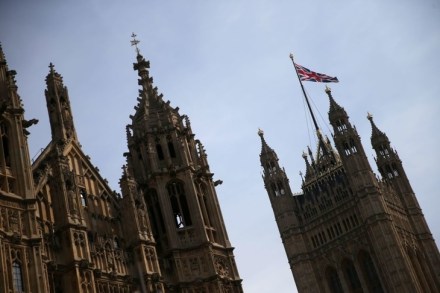
It takes seven years to know your way around Parliament. That’s what I was told when I arrived in the Commons press gallery seven years ago, but I am still none the wiser about how to get from the Snake Pit to the North Curtain Corridor, and have only recently discovered the location of the Yellow Submarine. As a building, the Palace of Westminster is a confusing, contradictory rabbit warren of underground corridors, secret briefing rooms at the top of towers and rooms with strange names. The very fabric of the building is dysfunctional, with pieces of masonry falling onto cars, and mice creeping through kitchens.

Jeremy Corbyn and Novichok: what did the Labour leader really say?

Jeremy Corbyn's spokesman this afternoon caused something of a stir when he insisted to journalists that the Labour leader had always said that the evidence from the Salisbury attack pointed to direct or indirect Russian involvement. This didn't seem quite right: Corbyn attracted a great deal of opprobrium for failing to blame Russia for the attack at the time. It's worth going back over what precisely the Labour leader did say after the attack - and what he didn't. On 12 March, when Theresa May made her first statement to the Commons about the matter, she told MPs that 'the government have concluded that it is highly likely that Russia was responsible for the act against Sergei and Yulia Skripal'.

PMQs: Corbyn accuses May of ‘dancing round’ on Brexit

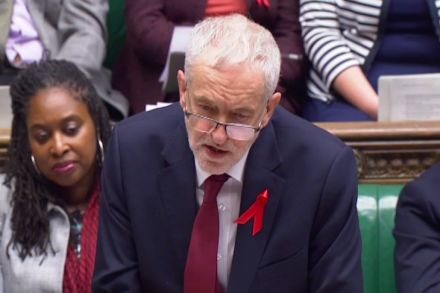
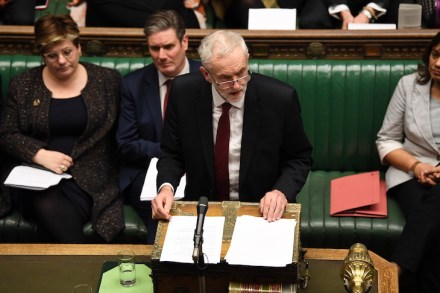
It's a measure of quite how badly split the government is on Brexit that Jeremy Corbyn, who would previously avoid the matter because of problems in his own party, looked comfortable as he devoted all six of his questions at Prime Minister's Questions today to the subject. Theresa May came prepared, not so much with answers on who in her government is telling the truth about the Chequers agreement and the chances and consequences of a no deal, but with attacks on Corbyn's handling of Labour's anti-semitism row. This preparation gave the Prime Minister some decent pay-offs, including her final answer, when she closed the exchanges by saying 'he should be ashamed of himself'.

Can Jeremy Hunt really keep playing it safe on Brexit?

Funnily enough, MPs across the Commons were today very keen to welcome Jeremy Hunt to his position as Foreign Secretary and suggest that he might garner more praise from them than his predecessor. At his first departmental questions in the new role, Hunt also had to address one of the messes left by Boris Johnson - and explain what his priorities were for the aspect of the portfolio that Johnson resigned over: the EU. The priorities of a Secretary of State can often be divined from which questions he or she chooses to answer at these sessions, and which ones are farmed out to his junior ministers. Hunt answered questions on the mass killing of Rohingya Muslims in Burma, the detention of Nazanin Zaghari-Ratcliffe in Iran and Brexit.

Labour NEC results: when will Corbyn’s opponents accept it’s over?

It is quite clear what today's NEC results mean for the Corbynites in the Labour Party: they've consolidated their control over the party structures. All the candidates who won were backed by Momentum, apart from Peter Willsman, who had seen the Corbynite grassroots organisation drop its support after a recording emerged of him making anti-Semitic comments. Willsman pushed moderate candidate Eddie Izzard out and will remain on the party's ruling body. Izzard and 'independent left-winger Ann Black' came 10th and 13th respectively. Less clear is the implication for that rather nebulous group of anti-Corbynites generally known as 'the moderates'.

How ordinary people are priced out of Parliament by the most expensive job interview on earth

Could you afford to go into politics? Chances are that the answer is no, unless you’ve got a spare £10,000 knocking around. In a survey that is being published later this week, I’ve found that candidates in general elections are having to stump up tens of thousands of pounds of their own money just to stand. This is not the money spent on campaigning, which is funded by the parties and donors to individual campaigns. It’s the personal expenditure that comes with having to take up to two years off work to campaign, moving to the constituency if you are not local, travelling around the constituency, attending events and so on.

It’s easy for MPs to miss the humiliating treatment of their own constituents

If you wanted an easy illustration of the importance of a Parliament that looks vaguely like the country it works for, look no further than a tiny consultation issued this week by the Home Office. In it, ministers suggest new guidelines on the treatment of women in custody who are on their periods. This sounds like quite small fry - and the sort of subject that makes at least 50 per cent of readers recoil from going any further. But it’s important, not just in itself, but also because it shows what happens when more women join the House of Commons.

Labour’s noise problem

Political parties rarely have good summers. If you’re in government, something normally goes wrong just as you’re settling into a deckchair. If you’re in Opposition, a good summer is when something has gone wrong in the government. A disappointing summer is when no-one notices your carefully-planned announcements. A bad summer is when you get plenty of attention, but for all the wrong reasons. Labour has had a bad summer. It has spent much of it making rather wan attempts to calm the row on anti-semitism.

Why are some Tories worried about an influx of new members?

William Hague’s warning today that the Conservative Party mustn’t change the rules by which its leader is elected shows quite how much has changed in British politics over the past few years. Ideas that were very much in vogue in 2015 are now widely trashed. Where once it was considered a no-brainer that parties should make it easier and cheaper for members to join and even give them more say over policy making, now parliamentarians and commentators are running scared of just that. Why?

The failure of HMP Birmingham isn’t about privatisation. It’s worse than that.

Last week Prisons Minister Rory Stewart vowed to quit his job if he didn’t oversee specific improvements in a group of struggling prisons. ‘I believe in the prison service,’ he said. ‘I believe in our prison officers. I believe that this can be turned around and I want you to judge me on those results and I will resign if I don’t succeed.’ This pledge sounded both refreshing and naive - unless, of course, Stewart had some more exciting plans for what he’d like to do in 12 months’ time (or he was expecting to be reshuffled before this). It’s rare that ministers take responsibility for failures on their watch.

How Corbyn’s opponents made it easier for him to dodge scrutiny

Benjamin Netanyahu's intervention in the row about Jeremy Corbyn and the memorial wreath has been incredibly handy for the Labour leadership. The Israeli Prime Minister said Corbyn's presence at the wreath laying for members of the group behind the 1972 Munich terror attack 'deserves unequivocal condemnation from everyone - left, right and everything in between'. A number of Labour MPs have been calling on Corbyn to show contrition in order to resolve the ongoing row, but instead the party leader decided to hit back, accusing Netanyahu of 'false' claims and pointing to 'the killing of over 160 Palestinian protesters in Gaza'.

How does your garden grow?

What could be more British than nosying around someone else’s private property while munching on a slice of cake? The National Garden Scheme allows you to do both, opening up people’s back gardens to the public and offering them a lovely homemade afternoon tea while they’re at it. I grew up poring over the pages of its famous Yellow Book of open gardens, envying the fat borders of geraniums and delphiniums in the rural area where we lived. But the NGS doesn’t just do big walled gardens and sweeping lawns; it has a London Yellow Book, too, and while the gardens are far smaller, the plants, the cakes and even the wine that some homeowners offer are no less lovely. ‘Lovely’ really is the best word to sum up the whole scheme.

Forget the ‘Beatles’: here’s what happens to most British jihadi suspects

What happens to Brits who've returned from fighting for Islamic State in Syria and Iraq? Most would expect that they'd immediately fall into the criminal justice system, and wouldn't then emerge for a very long time. Today it emerged that Home Secretary Sajid Javid had dropped Britain's blanket opposition to the death penalty so that two Isis fighters from the group dubbed the 'Beatles' could be sent to the US. But in most cases, the question isn't where someone will face justice, but whether they can face justice at all. We know that there are hundreds of people who have returned from fighting for Islamic State. But what is less well-known is what happens when these individuals get back to Britain.

Public sector pay rise masks political row to come

The Downing Street media grid must be a rather dismal affair these days, with announcements planned that barely get any attention at all thanks to a combination of Brexit and another minister being on the brink of resignation. But one story that has come off reasonably well is today's public sector pay award. Ministers have confirmed that around one million workers in the health service, schools, armed forces and so on will receive a raise of between 1.5 and 3.5 per cent. Obviously, this works nicely politically because everyone loves a pay rise. But the small print of this announcement reveals that it's not going to make life dramatically easier for ministers. The Treasury press release says: 'Today's increases are funded from departmental budgets.

Hancock’s health hour

Matt Hancock has been ambitious for a big Cabinet job for a good while. He's finally got it, and today the new Health Secretary had his first outing in the Commons with departmental questions. Every new Secretary of State wants to make their mark on the job, showing how they're different to their predecessor, and setting out their priorities for the portfolio. Jeremy Hunt was particularly good at the latter, making patient safety his focus as Health Secretary. Hancock has clearly paid attention to how the longest-serving Health Secretary approached the job, and last week gave a speech setting out three priorities: workforce, technology and prevention.

The trouble with social prescribing for mental illness

It's a measure of how much the debate around mental health has changed that Matt Hancock's latest announcement on social prescribing for mental illness isn't being written up as mere quackery. The Health and Social Care Secretary today pledged a £4.5 million fund for these schemes, which include gardening, arts clubs, running and so on. Hancock is worried about possible over-prescription of anti-depressants and the associated risk of diagnosis creep, whereby people who are not depressed but quite understandably struggling with life events such as a bereavement are given a medical diagnosis and handed pills that aren't really going to help them.

Forget the ‘Beatles’: here’s what happens to most British jihadi suspects | 23 July 2018

What happens to Brits who've returned from fighting for Islamic State in Syria and Iraq? Most would expect that they'd immediately fall into the criminal justice system, and wouldn't then emerge for a very long time. Today it emerged that Home Secretary Sajid Javid had dropped Britain's blanket opposition to the death penalty so that two Isis fighters from the group dubbed the 'Beatles' could be sent to the US. But in most cases, the question isn't where someone will face justice, but whether they can face justice at all. We know that there are hundreds of people who have returned from fighting for Islamic State. But what is less well-known is what happens when these individuals get back to Britain.

Julian Smith and the political art of not-lying

Theresa May's defence of Julian Smith this afternoon hasn't gone down amazingly well. The Prime Minister stuck to the line that Smith's instruction to Brandon Lewis to ignore the pairing arrangement he had with Lib Dem Jo Swinson and vote on two key Brexit divisions was an 'honest mistake'. This seemed somewhat implausible before the Times reported that Smith had in fact asked other paired Tory MPs to vote, and that he had also admitted to a chief whip from another party that he had instructed Lewis to vote. But the Tories now look dangerously as though they are sticking to a lie. Of course, this being politics, Labour has accused the Prime Minister of offering 'blatantly untrue excuses' rather than the straightforward word 'lying'.

Can Sajid Javid really change immigration policy?

When Sajid Javid became Home Secretary, he did so on the basis that he would be able to undo some of the political damage done by the 'hostile environment policy'. Last night, he rather quietly announced that a key element of this policy would be paused, something Labour's David Lammy immediately seized upon, hauling Javid's junior Caroline Nokes to the Commons for an urgent question. Noakes insisted that this pause was 'temporary', adding that she would not give consent to the data sharing between government departments and other organisations until she was confident 'that we will not be impacting on further members of the Windrush generation'.