Isabel Hardman

Isabel Hardman

Isabel Hardman is assistant editor of The Spectator and author of Why We Get the Wrong Politicians. She also presents Radio 4’s Week in Westminster.

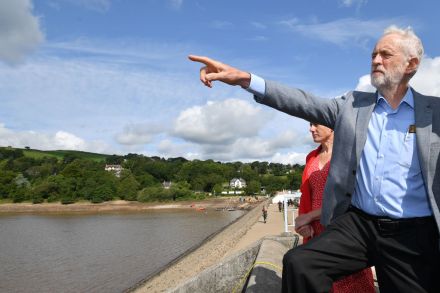
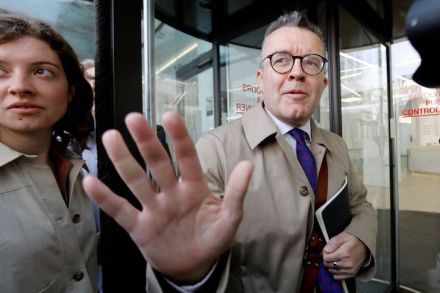
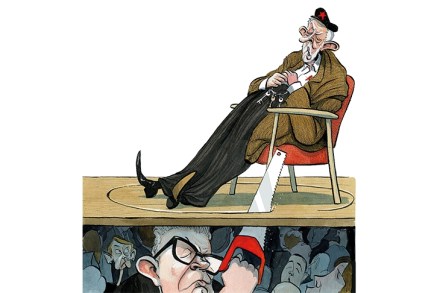
Jeremy Corbyn wins his Brexit showdown with Tom Watson

From our UK edition

Jeremy Corbyn has again shown his power over the structures of the Labour party by winning today's national executive committee showdown over its European elections manifesto. A faction of MPs, led by Tom Watson and backed by the GMB, Unison, Usdaw and TSSA unions, had hoped to change party policy to support for a confirmatory referendum on any Brexit deal that Parliament comes up with. But Corbyn and the Unite union had opposed this, and this afternoon, they came out on top.

The Government wants Brexit talks to end next week. But can they end well?

From our UK edition

Will the cross-party Brexit talks ever end? They seem to have been going on for almost as long as the negotiations to get Britain out of the European Union, and with a similar lack of anything for either side to boast about. Yesterday, David Lidington said he was 'encouraged by the sense in the room today about the need to inject greater urgency into this', which was read by some as a sign that a breakthrough might be imminent. This seems a rather hopeful reading of what is essentially an admission that everyone has been faffing around a lot, but members of the Labour negotiating team also believe the government might shift on some of its red lines. Lidington updated the cabinet on the talks when it met today.

Corbyn says May still isn’t compromising on her Brexit red lines

From our UK edition

Jeremy Corbyn has insisted that Theresa May hasn't yet moved on her Brexit red lines in talks with the Labour Party. In a broadcast clip this evening, the Labour leader said: 'Well, the meetings are very long. A great deal of detail is gone into by both parties. We have people who have been on this case for several years so they're all very accustomed to it all. We've gone into it because the government at last acceded to a request I first made last September that we're prepared to talk and put forward our views, but talks have to mean a movement and so far there's been no change in those red lines.' There have been reports that the talks are moving towards an offer of a customs union, which would enrage many Conservative MPs even more.

May finds ministers to fill resignation holes: but does it really matter?

From our UK edition

Theresa May has this evening found enough people to fill the various ministerial holes left in her government by the recent slew of resignations. Some of these holes have been gaping for rather a long time: there has been no Minister for Disabled People since 13 March, for instance. But their lack of replacements until now has excited very little attention, largely because it's not clear what else the government aspires to do at the moment other than exist. The appointments announced this evening are as follows: Justin Tomlinson MP to be a Minister of State at the Department for Work and Pensions. James Cleverly MP to be a Parliamentary Under Secretary of State at the Department for Exiting the European Union.

Why a leaky Commons and a Brexit crisis are symptoms of the same problem

From our UK edition

Oh look, there's water coming through the roof of the House of Commons! What a gift to those starved of metaphors for the mess that has been made of Brexit. The problem is that the water coming through the roof, which the House authorities are insisting is not a sewage leak (in a blow to fans of particularly crap metaphors), is far more than some kind of coincidental symbol of what's going on. It's actually just a different manifestation of the same problem afflicting British politics as the one that's led us into the Brexit crisis. The House of Commons Chamber is the bit of Parliament that the public notice the most, and it's doing pretty well compared to the rest of the estate.

The Independent Group becomes a political party: Change UK

From our UK edition

The Independent Group has brought forward its plans to become a political party, called Change UK, and appointed Heidi Allen as its interim leader. This is so it can stand candidates in the European elections, should Britain end up having to participate in them. The party will have its inaugural conference in the autumn. This comes at a rather awkward time for the group of MPs who left their parties last month. They haven’t yet been joined by any more colleagues, with many Labourites who were wavering now putting their faith in Tom Watson’s attempts to renew the party.

Why John Bercow seems to delight in irritating Tory MPs

From our UK edition

Once again, the Commons has concluded its day with rather chaotic scenes involving Tory MPs having a scrap with John Bercow. The Speaker managed to refrain from insulting anyone's abilities as a whip, but he nevertheless irritated those who want a third meaningful vote by insisting throughout a series of points of order that he was not contradicting himself when he said he would not allow Theresa May to bring her deal back to the Commons while also allowing for another day of indicative votes. Some Conservative Brexiteers were angry that any more indicative votes are due to take place when the Commons has offered no one view tonight. But many more were annoyed about the implications for the Prime Minister's deal, quoting Erskine May and the Speaker's own words back at him.

105 MPs vote against changing Brexit date in bad omen for May

From our UK edition

If Theresa May wants an indication of how well things are going for a third meaningful vote, she could do worse than to look at the result of a vote on a statutory instrument in the Commons tonight. MPs have just approved the official piece of legislation that acknowledges Britain is no longer leaving the European Union on 29 March - but with a substantial rebellion. There were 105 MPs who voted against this change of date, with impassioned speeches from Tory Brexiteers in the Commons arguing against the move, even though it had already been approved in international law. Their line was that Britain should just leave now, and that the Remain majority in Parliament has shaped Brexit in a way the Leave campaign could never have envisaged.

European Research Group descends into hugging fiesta as members insist they won’t back May’s deal

From our UK edition

Despite a number of MPs announcing that they will back Theresa May's Brexit now that she has said she will leave within weeks of it passing, senior members of the European Research Group have come out fighting this evening to insist the deal still doesn't have the votes. Steve Baker received what one source described as an 'enormous standing ovation'. The source said: 'His voice was cracking with emotion, so much so that at the end he was hugged by Jacob [Rees-Mogg] and others at the top table. We are not a hugging group.' Baker's speech included the following lines: 'What is our liberty for if not to govern ourselves?' 'Like all of you I have wrestled with my conscience about what to do.' 'I could tear this place down and bulldoze it into the river.

This is MPs’ chance to reinvigorate democracy. Will they take it?

From our UK edition

MPs are rather bewildered today. It's not just that some of them are trying to understand the intricacies of the Labour Party whipping operation, with frontbenchers saying one thing in broadcast interviews, and the whips saying quite another in private conversations. It's also that parliamentarians are having to decide what it is they actually want from Brexit. This is a significant shift for all of them, whether they were elected two decades ago or in the most recent general election: MPs' job is to decide whether or not to let legislation written by the government of the day pass unamended. Now, rather than simply rejecting a bill, or making changes to its detail rather than the overarching principle, they are having to choose from a long list of options.

Tory uproar as Bercow insults backbencher Greg Hands

From our UK edition

The Commons has just erupted into a bizarre row over an insult thrown across the Chamber. Normally, in these situations, the Speaker ends up scolding the MP who deployed the insult, but in this case it was John Bercow himself who provoked the uproar in the first place. Demanding that Tory MP Greg Hands come to order, the Speaker told the Chamber that Hands hadn't been a very good whip when he had held the role, which immediately led to angry roars from the Tory benches, followed by repeated shouts of 'withdraw!' Initially, Bercow stuck to his guns as Conservatives complained in points of order that he had only recently asked them to consider their language when addressing one another, and that he had praised Oliver Letwin during the debate which had preceded this argument.

Theresa May gives MPs another Brexit lecture

From our UK edition

The most damaging thing that Theresa May did last week was to turn on MPs in her Downing Street statement, blaming them for the Brexit chaos. Given how settled Westminster seems to be on this conclusion, you might expect the Prime Minister to have tried to mend broken bridges in her Commons statement this afternoon. That she didn't underlines why so much of this mess is her own responsibility. May was not strident, but neither was she making any attempt to mollify MPs. Indeed, her only attempt to engage with MPs' role in this involved yet another lecture about the number of chances they had been given to put amendments down for a second referendum, and that any attempts to stop Brexit was 'not respecting the voters and not respecting our democracy'.

Jeremy Corbyn makes pointless Brexit meeting all about him

From our UK edition

This evening, Jeremy Corbyn walked out of a meeting between opposition party leaders and the Prime Minister about Brexit. The reason for his angry protest had nothing to do with what was being discussed, but his distaste for one of the attendees. Former Labour MP Chuka Umunna was there to represent the Independent Group, and this, according to those present, was too much for the Labour leader to stomach. Labour has since said the the terms of the meeting had changed and that this wasn't what Corbyn had agreed to when he said he would meet the Prime Minister in her office. But this is an impressive own goal, even by the Labour leader's standards.

Boris Johnson ‘read riot act’ in front of MPs for child abuse comments

From our UK edition

Boris Johnson was given an angry lecture by a minister in the voting lobbies about his comments that money had been 'spaffed up a wall' for investigating child sex abuse, I understand. The former Foreign Secretary upset survivors of the crime by using the term during radio interview last week. He told LBC that 'you, know £60 million I saw was being spaffed up a wall on some investigation into historic child abuse'. [embed]https://twitter.com/LBC/status/1105787079483670533[/embed] On Thursday night, as MPs were voting on the latest round of Brexit amendments, he was confronted in the lobby by Victims' Minister Victoria Atkins who, according to several MPs present, 'read him the riot act'.

A dose of understanding

From our UK edition

What a baffling group of people anti-vaxxers are. They rail against one of the miracles of modern medicine, peddling scare stories about vaccines which had nearly eradicated many deadly childhood illnesses in the developed world. Baffling, of course, is too soft a word for many: they’re dangerous, because their anti-science views don’t just put their own children at risk, but wider society. The uptake of the measles, mumps and rubella vaccine in Britain is at 87.5 per cent. This sounds a lot, but isn’t close to the 95 per cent threshold that the World Health Organisation (WHO) says will ensure ‘herd immunity’ — which is when a disease cannot spread through a community.

Fear and loathing in the lobbies: how the government whipped against itself – and lost

From our UK edition

With just a few minutes to go before the division on the government's motion on no deal, Tory MPs' phones started buzzing. It was a message from the whips, telling them that the free vote they'd been promised since last night was now subject to a three line whip: the strongest possible instruction on how to vote. But there was no further explanation. A message from Chris Pincher, the deputy chief whip, read: 'We are voting no to the amended motion. This is a 3 line whip.' It was sent at 7.31pm. Some Conservatives didn't get this message until they were walking through the lobbies, still believing that, as Theresa May had promised last night, they could make their own decision on how to vote.

Government in chaos after rebel no deal amendment passes

From our UK edition

Theresa May has just suffered another extraordinary defeat, losing on Caroline Spelman’s amendment (which rules out no-deal Brexit under any circumstances) by just four votes. This was not expected. Spelman even tried to withdraw the amendment, but was too late. This Spelman amendment said that the House “rejects the United Kingdom leaving the European Union without a Withdrawal Agreement and a Framework for the Future Relationship.”. This is different to the main motion, which offers a caveat: specifically a declaration that ‘leaving without a deal remains the default in UK and EU law unless this House and the EU ratify an agreement’. The Spelman amendment is not legally binding: it’s a vote expressing the view of the House.

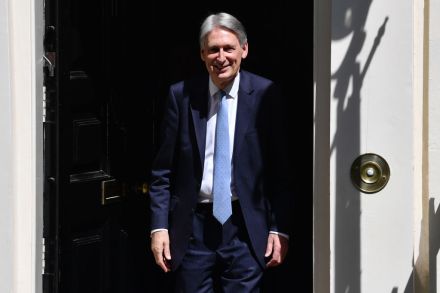
Hammond to MPs: make up your mind on Brexit or the domestic policies get it

From our UK edition

Philip Hammond’s squeeze message to MPs trying to work out how to vote on Brexit over the next few days was clear: if they don’t reach a consensus, then there won’t be lots of lovely spending on important domestic policies such as social care.  Theresa May has been so busy procrastinating on Brexit that her failure to make decisions on these policy areas has not attracted the level of attention it deserves. The social care green paper, for instance, has been pushed back by over a year. This isn’t as much to do with Brexit as ministers like to make out, by the way, but all the same it is now highly convenient for the Chancellor to link the two.

Theresa May failed to set out her plan at PMQs

From our UK edition

The Prime Minister’s Questions before an economic statement is usually rather pointless, with both party leaders going through the motions. But this isn’t a usual week, and so Jeremy Corbyn had genuinely important questions to ask Theresa May, and the answers mattered far more than anything Philip Hammond will say shortly. Naturally, Corbyn didn’t exactly rise to the occasion, delivering his questions as though he’d read them for the first time. But his final demand of the Prime Minister was important: he asked her to tell MPs what her plan was now. May had told the Chamber that because her voice was still coming out as a croak, her answers would be somewhat shorter than usual.

DUP confirms it won’t support May’s Brexit deal

From our UK edition

The DUP has confirmed that it will be voting against Theresa May's Brexit deal this evening. A party spokesman said that 'sufficient progress has not been achieved at this time' and that 'it is clear that the risks remain that the UK would be unable to lawfully exit the backstop were it to be activated'. Along with the European Research Group's recommendation to vote down the deal, this means that the Prime Minister's strategy of trying to win over the DUP and the Brexiteers in her own party has failed. It means that she is facing a landslide defeat tonight. The Commons benches behind the Prime Minister as she is giving her speech at the start of the debate are eerily empty, almost as if a good number of Conservative MPs can't face being there to watch government disintegrating.