Isabel Hardman

Isabel Hardman

Isabel Hardman is assistant editor of The Spectator and author of Why We Get the Wrong Politicians. She also presents Radio 4’s Week in Westminster.

Media exposure was the worst thing that happened to Shamima Begum

From our UK edition

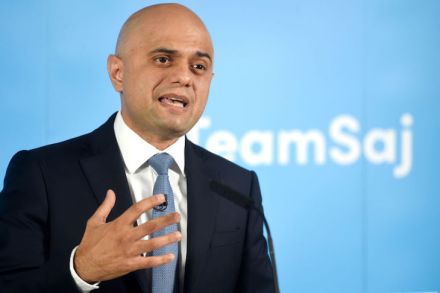
Why has Sajid Javid announced that he is revoking the citizenship of Shamima Begum? The 19 year old, who travelled as a teenager to join the Islamic State in Syria, has asked for 'forgiveness' from the UK, but last night the Home Secretary responded by saying he would be removing her status as a British citizen. He can do this, he argues, because she has a right to Bangladeshi citizenship, which means the government will not be rendering her stateless. A fair few people have suggested that this is about Javid's own ambitions in the Conservative party, as this move will likely appeal to the Tory grassroots. It has already earned praise from key newspapers like the Sun. But it's not just about the politics of this.

Is the Independent Group already heading for a split?

From our UK edition

The three Conservative defectors to the Independent Group gave a notably upbeat press conference this lunchtime. It was quite a contrast to the sorrowful tone struck by the seven Labour MPs who announced they were leaving on Monday. Heidi Allen claimed that she was ‘so excited and in a way that I haven’t felt since I was first elected'. She also cracked jokes about the three amigos as she opened the event.  It has never been fully clear why Allen joined the Conservative party over any other, but Anna Soubry and Sarah Wollaston both argued that the organisation had been transformed in the years since they were first elected. Like the Labour defectors, they wanted to suggest that their values had not changed, but their party had.

Lib Dems to Independent Group: please be our friends

From our UK edition

In a parallel universe, the MPs who've left the Labour and Conservative parties this week would be joining the existing centrist party that shares their views on Brexit. But the Liberal Democrats haven't had a look in, despite Vince Cable and before him Tim Farron claiming that they'd spoken to would-be defectors. Cable has just issued a statement saying that 'there is clearly some very radical changes now afoot' and offering to work with the new Independent Group. He said: 'We will hold out the hand of friendship to the independent MPs with whom we already have a good working relationship.' The Lib Dems have accepted that they have failed to provide a home for these despairing MPs.

Theresa May ‘saddened’ as Heidi Allen, Anna Soubry and Sarah Wollaston quit the Tories

From our UK edition

Theresa May has said she is 'saddened' by the decision of Heidi Allen, Sarah Wollaston and Anna Soubry to leave the Conservative party and join the new Independent Group of MPs. In statement released in the past few minutes, the Prime Minister said: 'I am saddened by this decision – these are people who have given dedicated service to our party over many years, and I thank them for it. 'Of course, the UK’s membership of the EU has been a source of disagreement both in our party and our country for a long time. Ending that membership after four decades was never going to be easy. 'But by delivering on our manifesto commitment and implementing the decision of the British people we are doing the right thing for our country.

Joan Ryan quits Labour and joins the Independent Group

From our UK edition

Another Labour MP, Joan Ryan, has tonight announced she is leaving the party to join the Independent Group. This is significant, and not just because it creates a sense of momentum. Ryan is the first Labourite to leave who wasn't involved in the months of secret planning meetings. She was, until fairly recently, arguing that the best thing to do would be to stay and fight to change the party back. Now, she has gone, releasing a potent statement about her reasons. Those reasons include what she calls 'the scourge of anti-Jewish racism', which 'simply did not exist in the party before his election as leader'. She argues that she has 'fought for as long as I can within the Labour Party'.

Seven MPs leave Labour and form ‘The Independent Group’

From our UK edition

There are seven MPs leaving Labour: Luciana Berger, Chris Leslie, Gavin Shuker, Angela Smith, Chuka Umunna, Mike Gapes and Ann Coffey. They have revealed that they will call themselves 'The Independent Group'. They will publish a full statement of what they stand for this morning. The MPs are setting out their reasons for leaving. Berger said she had become 'embarrassed and ashamed' of the Labour Party, which she said was 'institutionally anti-Semitic'. Leslie insisted that his values hadn’t changed, but said it would be 'irresponsible' to make Jeremy Corbyn Prime Minister and accused the Labour leader of a 'betrayal' on Europe. Smith set out her family history and said the Labour Party now contradicted what her family had campaigned for.

Five questions for Labour’s ‘splitters’

From our UK edition

A group of Labour MPs are expected to announce they are leaving the party this morning. While the numbers and names aren’t yet confirmed, this has been a very long time coming, with members planning their exit for months, and rumours about it swirling for almost as long. Finally, the question is now not whether some MPs will leave, or indeed when. But today’s announcement raises many more questions which are even more difficult to answer: 1. Are there more to come? It’s not expected that much more than half a dozen MPs will announce they are going today. These are the ones who’ve been considered almost a dead cert to leave for a good while. But other colleagues have been rumoured to be interested in breaking away, too.

Will ‘Isis bride’ Shamima Begum really end up in a British prison?

From our UK edition

What will the UK do about Shamima Begum, the schoolgirl who travelled to Syria to join Islamic State? The Times' stunning scoop this morning about the 19-year old's plea to be allowed home from the Syrian refugee camp prompted Security Minister Ben Wallace to tell the Today programme that 'actions have consequences' and that she could face prosecution. Some argue that as a teenager who left when she was just 15, she has been indoctrinated and needs rehabilitation, not punishment. Wallace may well agree with that, but it's not something he's likely to say in a broadcast interview, given it is still important for the government to send the message that you cannot support a proscribed organisation or potentially commit crimes in its name without fearing that the law will catch up with you.

After Brexit defeat, Downing Street insists nothing has changed

From our UK edition

After Theresa May mysteriously evaporated from the Commons following tonight's government defeat, Downing Street has issued a statement insisting that nothing has changed. The official line is, somewhat tortuously, that the previous set of indicative votes from MPs were the ones that mattered, whereas this one didn't. A No.10 spokesman said: 'While we didn't secure the support of the Commons this evening, the Prime Minister continues too believe, and the debate itself indicated, that far from objecting to securing changes to the backstop that will allow us to leave with a deal, there was a concern from some Conservative colleagues about taking no deal off the table at this stage.

Defeat looms for government as Brexiteers decide to abstain in key vote

From our UK edition

The European Research Group has decided it will abstain on the government's Brexit motion, which MPs will be voting on in the next hour. An ERG source said that there was a 'collective decision' at a meeting this afternoon to abstain on the motion if no other amendments to it were passed. Voting has begun, but Anna Soubry has suggested that she won't be pushing her motion calling for the government's no-deal assessments to be published, after ministers said they would do so. This means that there will definitely be a vote on the main motion, and with the ERG abstaining, the government looks as though it is heading for a defeat. There was a split in this afternoon's meeting between a majority of MPs who wanted to abstain, and those who wanted to vote against the motion.

Brexiteer Tories threaten Valentine’s Day defeat

From our UK edition

Tomorrow's Brexit vote has gone from being billed the 'Valentine's Day massacre' to threatening a desperately dull anti-climax, and then back again to being quite interesting. This latest development comes courtesy of the European Research Group, which has said it could vote against the government on the motion that has been tabled because they object to its wording. This is another one of those neutral motions expressing government policy, which allows MPs to table motions expressing their own views.

Chris Grayling gives Jeremy Corbyn a helping hand at PMQs

From our UK edition

How do you put people off thinking that a no-deal Brexit might be alright? Jeremy Corbyn clearly thinks the best way to do this is to talk about Chris Grayling and the mess over the contract for ferry services. The Labour leader made this the focus of his stint grilling Theresa May at today’s Prime Minister’s Questions, asking how on Earth she could have confidence in her transport secretary when the awarding of the contract has been such an embarrassment. May defended Grayling, pointing to government spending on the railways as a reason for backing him. She also attacked Corbyn for choosing the ferries as a line of attack, arguing that this was just his attempt to disguise his own lack of answers on Brexit.

Amber Rudd changes the Tory tune on food banks

From our UK edition

What's behind the rise in demand for food banks? Over the past few years, the default Conservative line has been that the reasons people need emergency help are 'complex'. This is certainly true: the figures released by the Trussell Trust, which runs the largest network of food banks in the country, show that there is no one factor in food bank use. But those figures also show quite clearly that problems with the payments of benefits, or cuts to benefits, are a major driver: the top four reasons cited for referring someone to a food bank in 2017-18 were low income (28.49 per cent), benefit delays (23.74 per cent), benefit change (17.72 per cent) and debt (8.53 per cent).

Cold water swimming

From our UK edition

The woman on the path has come to a dead stop. She’d been shuffling along in that bunched-up posture we all developed when we bought smartphones, a two-fingered salute to the millennia of evolution that managed to pull humans into an upright position. Now she’s staring, open-mouthed, at her surroundings. I rather enjoy the shocked faces of passers--by who catch sight of us Serpentine swimmers in our flimsy costumes as we lower ourselves into the cold water each morning. I look still more shocking when I get out. My skin turns from its normal skimmed-milk colour to bright neon, as though it has been slapped. And it has in a way: when you first enter water that’s only a couple of degrees, you do get a shock.

The Brady amendment gives Theresa May the strength to kick the can down the road

From our UK edition

You could tell that the result of tonight's vote on the Brady amendment (which calls for alternative arrangements to replace the Northern Irish backstop) came as a surprise to those at the top of government from the look on Chief Whip Julian Smith's face as he re-entered the Commons. He looked as though he had spent the past few hours trapped in a ghost house of horrors at a funfair. Smith had, like his colleagues in Downing Street, thought that this amendment was going to fail with a narrow margin until minutes before the result was announced. Instead, it passed with a surprising majority of 16.

Jeremy Corbyn’s petty Brexit speech undermined the Labour leader’s claim to be serious

From our UK edition

Jeremy Corbyn scolded a Tory MP during his opening speech in the Commons debate on Theresa May's Brexit Plan B, telling the backbencher that his intervention hadn't added anything to the seriousness of the occasion. How odd, then, that the way the Labour leader conducted himself throughout his speech also ended up fitting that criticism perfectly. The Labour leader's response was dominated not by a careful critique of the Prime Minister's strategy for getting a new Brexit deal agreed with European leaders and then accepted by the Commons, but by his petty refusal to take an intervention from a backbencher on his own side. Angela Smith, who has long been openly hostile to Corbyn, repeatedly stood up to ask him to give way. Corbyn repeatedly ignored her.

Labour’s Immigration Bill stance shows how much Jeremy Corbyn has changed

From our UK edition

A row is brewing in the Commons over Labour's stance on the Immigration Bill, which has its second reading this evening. The party's whips told MPs this morning that they would be on a one-line whip for this piece of legislation, with the plan being to abstain on the vote itself. Centrist MPs in particular are angry about this, suggesting the Labour leadership is trying to 'pander to Ukip' by not opposing the Bill outright. Abstaining at Second Reading is normally something a party does to signal that it supports some aspects of a bill, while having concerns about others. It neither wants to oppose or support the legislation outright at this stage. In this instance, the Immigration Bill ends free movement, and brings EU citizens living in the UK under domestic immigration law.

Theresa May is using Jeremy Corbyn to avoid blame for her Brexit mess

From our UK edition

The Commons has grown rather used to Theresa May giving an update on Brexit each Monday afternoon, and still more used to the Prime Minister offering precious little in the way of new information each time she does so. Today's statement was a little different, in that May is now asking MPs for more information, rather than MPs turning on her and accusing her of not telling them anything. She laboured rather heavily on the point that Jeremy Corbyn has so far refused to attend the cross-party talks designed to work out an agreement that the Commons can stomach, introducing it early in her statement, and returning to the point again after the Labour leader had finished talking.

Why the odds are stacked against plans to tackle domestic abuse

From our UK edition

The government is publishing its draft domestic abuse bill today, over a year and a half after it announced plans to do so in the Queen’s Speech. Like so many pieces of domestic policy, this legislation has suffered greatly from the lack of government bandwidth for anything else other than Brexit, and it has been delayed repeatedly.  The bill itself is something campaigners are very keen on: it will include the first ever statutory definition of domestic abuse, set up a domestic abuse commissioner, and prevent alleged perpetrators of abuse from being able to cross-examine victims in the courts.

Why did Theresa May bother giving a statement in Downing Street tonight?

From our UK edition

Theresa May has just given a statement in Downing Street in which she apparently said absolutely nothing. The Prime Minister walked out to the lectern outside No.10 and offered the sort of update on her diary that is normally sent out by email from the Downing Street press office. She said that she had held talks this evening 'with the leader of the Liberal Democrats, and the Westminster leaders of the SNP and Plaid Cymru', adding that 'I am disappointed that the leader of the Labour Party has not so far chosen to take part'. After a day of complaining that the Prime Minister hadn't yet picked up the phone to him, Jeremy Corbyn has refused to meet May until she rules out a no-deal Brexit.