Isabel Hardman

Isabel Hardman

Isabel Hardman is assistant editor of The Spectator and author of Why We Get the Wrong Politicians. She also presents Radio 4’s Week in Westminster.

Labour moderates were wrong to fear a leadership contest stitch-up

From our UK edition

Despite the muttered predictions from some of the leadership campaigns, Labour's ruling National Executive Committee has today decided on a set of rules for its leadership contest that even a really committed conspiracy theorist would struggle to badge a 'stitch-up'. The timetable is very slightly longer – Jeremy Corbyn will remain Labour leader until 4 April when his successor is announced – and the rules on registered supporters applying to be able to vote are the same as in the 2016 contest. Candidates have a week to get enough nominations from MPs and MEPs (the threshold is 22).

Labour leadership contest: the state of the race so far

From our UK edition

The candidates to replace Jeremy Corbyn have been busily launching their campaigns and giving political interviews this weekend, with the party deciding the rules for the contest at a meeting of its ruling National Executive Committee tomorrow. There are still a couple of candidates left to launch their official campaigns, including Rebecca Long-Bailey, who appears to have disappeared to a location far more secretive than any prime ministerial holiday, and Ian Lavery. But here's what we know so far about each of the candidates: Keir Starmer: considered the frontrunner in the contest, the shadow Brexit secretary launched his campaign last night with a moving video.

What does Jess Phillips actually believe in?

From our UK edition

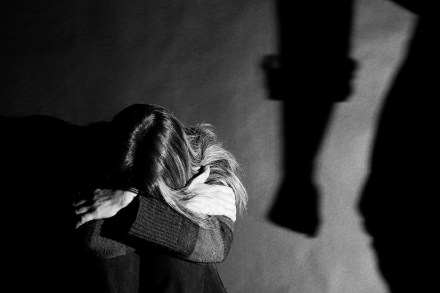
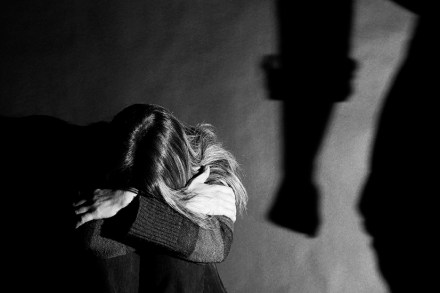
Jess Phillips is expected to launch her bid for Labour leader this evening, having only said up to this point that she is seriously considering a bid to take over from Jeremy Corbyn. She is both the candidate most identified with the 'moderate' side of the party and the most high-profile, but that doesn't mean she is launching with a particularly well-formulated policy platform. In fact, while Phillips is well-known for her dislike of Corbyn and her altercation with Diane Abbott pretty early on as an MP, it's not quite as easy to work out what she thinks. Phillips has largely exerted her influence in Parliament in two ways. The first is as a campaigner on issues she knows a great deal about from her pre-parliamentary life, including domestic abuse and cuts to school funding.

What remains of the Labour party is defined by misery

From our UK edition

If you wanted an illustration of the different emotional states of the two main parties, you could do a lot worse than to watch the humble address speeches just given by two Tory backbenchers in the Commons following the Queen’s Speech. While Tracey Crouch and Eddie Hughes cracked jokes and had their colleagues in stitches as if at a pantomime, the Labour benches looked as though they were about to go to a funeral. Many Labour MPs who managed to win their seats again are still in a state of numb, angry grief about the friends they lost and about what has happened to their party. The thought of laughing is just too much.

This is the first time in a decade the government can do what it wants

From our UK edition

There wasn't much pomp around today's Queen's Speech, despite the fact that this second speech of the autumn is the one that will actually get delivered. With a majority, Boris Johnson is able to say confidently that his government is going to introduce all the policies listed in the Speech and that they will pass too. This means that the government can transmit its key messages for the voters it has just won over without fear that its own MPs will scupper those policies before they have a chance to be implemented. In his introduction to the speech, Johnson writes: 'I am humbled by the trust millions of voters placed in this government last week. The work to repay that trust starts here.' And it's a weighty list of policies, too.

Keir Starmer looks and sounds middle class precisely because he’s working class

From our UK edition

Despite being beaten by an Old Etonian with 'de Pfeffel' as his middle name, the Labour Party has descended into a rather predictable round of the Four Yorkshiremen, with competing factions arguing variously that voters in former 'red wall' seats will only return to Labour if it is led by a northerner, a woman and preferably someone who grew up in a cardboard box. Sir Keir Starmer doesn't appear to be any of those things. He may end up being the only man standing against a group of female contenders. He is a Northerner only in London terms, and as former Director of Public Prosecutions, doesn't sound like he's come from a tough background.

Ghosts of Labour’s past and future gather in Commons as MPs return

From our UK edition

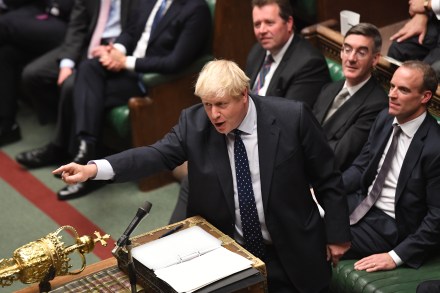
Boris Johnson and Jeremy Corbyn have just faced one another in the Commons for the first time in this new Parliament, though it is highly unlikely to be the last. The pair were responding to the election of the new Speaker, Lindsay Hoyle, and both chose to use their statements to make a few remarks about the election itself. Naturally, Johnson was greeted with a huge cheer from his MPs when he rose, and told the Speaker that 'I mean absolutely no disrespect to those who are no longer with us - but I think this Parliament is a vast improvement on its predecessor'. He then promised that 'this Parliament is not going to waste the time of the nation in deadlock and division and delay', and that on Friday MPs would vote on the Withdrawal Agreement Bill.

Why splitting the Home Office up makes sense

From our UK edition

We won't see the full scope of what Boris Johnson plans to do for life after Brexit until the new year. There will be a few appointments this afternoon to replace gaps in the government, and then the Queen's Speech will introduce the legislative agenda on Thursday. But the full launch of the new government won't be until February. What we do know is that Johnson and his senior aide Dominic Cummings have got Whitehall in their sights, and are hoping to reshape government departments to make them work better. One of the biggest changes is carving up the Home Office so that it loses its responsibility for immigration and border security, with a new ministry carrying out that function.

Will the new Tory MPs truly ‘change politics for the better’?

From our UK edition

It's the first proper day in the Commons for newly-elected MPs, though many of them took part in induction sessions organised by the House yesterday. This evening, Conservative MPs will have a drinks reception with Boris Johnson, where the new Prime Minister will reiterate his commitment to spending this week getting Brexit done. The first piece of legislation newly-elected Tory MPs will vote on will be the Withdrawal Agreement Bill, which is expected to come back to the Commons on Friday. We are expecting a big government relaunch in February, once the Brexit process has concluded, but this week's Queen's Speech will point to the plans that Johnson has for life after Brexit – the 'unleash Britain's potential' part of his election slogan.

What happens to ex-MPs?

From our UK edition

Parliament returns tomorrow - without 47 of the people who were MPs just a few weeks ago. Some, like those standing as independents, had a pretty good hunch that they'd be booted out by the electorate on Thursday. Others had less notice, and realised only as the campaign wore on that their constituencies, many of which had been solidly Labour for decades, were turning away from them. Many of them will be in Westminster in the next few days to clear out their offices and make their staff redundant. You can usually tell the difference between a re-elected MP and one of their colleagues who lost as you watch them walk through the corridors of parliament.

Can Labour’s moderates learn from all their mistakes?

From our UK edition

Labour’s defeat is so terrible that it provides the kind of creative destruction that could save the party. It will be extremely difficult for the Corbynites to argue with much authority that one more push or slightly nicer newspapers would have got them over the line when the party hasn’t had a result this bad since 1935. But does the failure of Jeremy Corbyn necessarily mean that the ‘moderates’ in the party are going to be able to rescue it? In 2015, centre-left Labour MPs were confident that the members were so bruised by what they’d heard on the doorstep that they would happily elect a leader who took the party back to the middle ground of politics.

Boris Johnson promises to ‘unite and level up’ the UK. Can he really achieve that?

From our UK edition

Boris Johnson's victory speech in Downing Street was aimed at the voters unsure about his government, whether they be the voters who backed his party for the first time, or Remainers who didn't vote Tory. In an acknowledgement of how difficult it will have been for many traditionally Labour voters to turn away from their party, he said: 'To all those who voted for us, for the first time, all those whose pencils may have wavered over the ballot and who heard the voices of their parents and grandparents whispering anxiously in their ears, I say thank you for the trust you have placed in us and in me and we will work round the clock to repay your trust and to deliver on your priorities.

What kind of Prime Minister will Boris Johnson be now?

From our UK edition

Boris Johnson has just given a fully-charged victory speech at a rally in London, telling joyful activists that today marks ‘a new dawn and a new government’. The event was emblazoned with a new logo, ‘The People’s Government’ as the Tories claim victory for representing all parts of the country. Johnson echoed this in his speech, saying he was ‘humbled’ by those who had voted for his party for the first time and promising that he would ‘never take your support for granted’. And he told his party that it ‘must change’.  The language was deliberately centrist, Blairite and welcoming rather than sneering.

What are the parties trying to tell voters in their leaflets?

From our UK edition

What's the point of political leaflets, anyway? Many voters in target seats will be asking that very question on an almost daily basis, as they shovel the latest snowdrifts of election literature into their recycling bin. We have social media, party election broadcasts and phone banks to reach voters. Who needs leaflets? There is a (I believe only half-serious) 'test' that some Liberal Democrat campaigners apply to the amount of information they think it is possible for a voter to absorb from a leaflet they're carrying from the letterbox to the bin. Given the parties keep sending them, particularly in those marginal seats where it's just not clear where the result is going to go, it's worth having a look at what they think is going to appeal to voters as they trudge once more to the bin.

Labour’s succession battle is well underway

From our UK edition

John McDonnell was insisting this morning that Labour was going to win a majority, but just in case, insiders are suggesting that the Shadow Chancellor is planning to take over as interim leader if Jeremy Corbyn resigns after a general election defeat. McDonnell has long championed Rebecca Long-Bailey as a future leader, and there is speculation that he could install her as his shadow chancellor in order to boost her credentials. This explains why those around Corbyn were so keen to try to abolish Tom Watson as deputy leader in September. They tried to force a rule change at the party's ruling National Executive Committee meeting which would scrap the post.

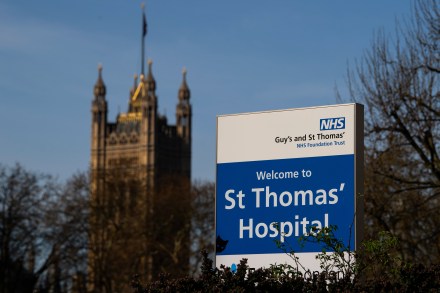
Boris Johnson gives himself a hospital pass as he avoids picture of sick child

From our UK edition

Is Boris Johnson a robot? I ask this advisedly, given the connotations of that word in the political arena, but the way the Prime Minister responded to questions from a journalist this afternoon does suggest he might be turning into one. He was asked by ITV's Joe Pike for a response to the photo of a young boy with suspected pneumonia lying on the floor of Leeds General Infirmary, waiting for a bed. It's a difficult photo for anyone to look at without an emotional response, and Johnson initially refused to see it at all, taking the reporter's phone out of his hand, and shoving it in his own pocket.

Tories benefit from no-show at chaotic TV debate as election enters final days

From our UK edition

Believe it or not, there was yet another televised election debate tonight, this time on Channel 4, called the 'Everything But Brexit' debate. The Tories had refused to take part, and while their decision will have been partly down to their ongoing battle with the broadcaster, which they have accused of being biased, they will also have viewed tonight's programme as an opportunity for them to make their central election pitch without even turning up. This debate worked in the Conservatives' favour because it was chaotic, with the representatives of the five parties who did turn up constantly talking and even shouting over each other and the presenter Cathy Newman. At times it sounded like a school playground at the end of term when everyone is tired, including the teacher.

Andrew Neil interview: Jo Swinson sticks to her guns

From our UK edition

Jo Swinson had a terrible session on Question Time earlier in the election campaign, but tonight in her interview with Andrew Neil, she showed that it is possible for a leader who believes what they are saying to survive a very tough grilling with their dignity intact. She faced difficult questions on her party's Brexit position, on her voting record in the Coalition government, and on what she would do if her party lost seats at this election, but managed to stick to her guns in a way that showed up Jeremy Corbyn for not doing so in his interview - and Boris Johnson for not having the guts to agree to an interview at all.

How money for losing MPs can skew elections

From our UK edition

With just over a week to go till polling day, tis the season for endorsements from publications and public figures. We've published our leader in tomorrow's Spectator setting out why this election is too important to not take sides. There's been plenty of debate about the New Statesman's unusual refusal to endorse Labour, arguing that Jeremy Corbyn is not fit to be Prime Minister. But the most bizarre endorsement of the day comes from Ivan Lewis, who is re-standing in Bury South. He may have his name on the ballot paper, but Lewis has taken the odd step of asking voters not to back him. Lewis was a Labour MP but resigned the whip following allegations of sexual harassment, and is re-standing as an independent.

Party leaders shape up for a week of talking Trump and terror

From our UK edition

Tonight's ITV election debate had a slightly different cast to the seven-way BBC programme on Friday night, but its spokespeople offered pretty much the same soundbites throughout the show. It started with the parties arguing about the lessons from the London Bridge attack, with Conservative Rishi Sunak and Labour's Richard Burgon repeating the lines their leaders have used over the weekend: Sunak had a slightly softer way of putting the Prime Minister's argument that only a Conservative government can provide the necessary security for voters. But he did say it was important that the leader of a country responded to attacks like this, and emphasised what he claimed was Boris Johnson's longstanding support for tougher sentencing.