Isabel Hardman

Isabel Hardman

Isabel Hardman is assistant editor of The Spectator and author of Why We Get the Wrong Politicians. She also presents Radio 4’s Week in Westminster.

Election debate: leaders squabble over how they can stop Brexit

From our UK edition

For a seven-way debate which didn't even feature the two main party leaders, tonight's BBC election programme was remarkably good. It felt as though it started with a jolt, with all the senior politicians present looking dazed as they struggled to find the words to respond to this afternoon's terror attack at London Bridge. It is too early to debate the consequences, the policies which may change, the mistakes made and so on, and the awkwardness was palpable. There was visible relief when they were able to move on to the second question, and a different topic. Because Boris Johnson and Jeremy Corbyn had both sent along substitutes, the debate felt rather more balanced, rather than the leaders of the smaller parties trying to gang up on the big two.

Tories go to war with Channel 4 over climate debate ice sculpture

From our UK edition

Why did Boris Johnson refuse to attend tonight's Channel 4 leaders' debate on the climate? His party has gone to war with the broadcaster, writing to Ofcom before the programme even started to complain about the way the prime Minister had been 'empty-chaired', a slowly-melting ice sculpture replacing him (and another for Nigel Farage). According to the letter, signed by Tory spinner Lee Cain, the rationale for turning down the invitation was that Channel 4 has marked itself out as being anti-Tory with a 'wider pattern of bias', including the channel's head of news and current affairs Dorothy Byrne 'making highly personal and unpleasant attacks on the Prime Minister at the Edinburgh Television Festival in August'.

Jeremy Corbyn flounders on anti-Semitism, Brexit, tax and spending

From our UK edition

Jeremy Corbyn's interview with Andrew Neil was one of the most uncomfortable half hours of the Labour leader's tenure. In contrast to the ITV debate, where he appeared confident and quick-witted, Corbyn struggled to answer questions on a number of different issues, complaining all the while that Neil wouldn't let him finish. By the end, he might have wished that he'd had more interruptions as this was a very poor interview. His refusal to apologise for the Labour party's handling of anti-Semitism has naturally attracted the most attention.

Can the Tories really underpromise in their manifesto and overdeliver in government?

From our UK edition

Boris Johnson is today launching the Welsh Conservatives' manifesto. For the Tories, this event comes with a trigger warning: it was where Theresa May defended her party's social care U-turn in 2017 after its disastrous manifesto launch. The clip of her insisting that 'nothing has changed' became one of the defining moments of the election campaign. So far, it seems that today's Welsh event won't be quite so dramatic, which is just what the Conservatives wanted. They have devoted an entire page of their 2019 manifesto to social care, but what it amounts to is little more than thin air. It even promises to search for a 'cross-party consensus', which is something politicians of all hues have spent the past two decades trying and failing to reach.

Starling murmurations are a display more dazzling than fireworks

From our UK edition

It’s late afternoon in the car park of Workington Asda. A little crowd is gathering in one corner, most of them clutching cameras and tripods. We’re not here to find ‘Workington Man’, the supposed archetypal voter who apparently all the parties need to court to win this election. Instead, Workington men and women — and a number of us from all over Cumbria — are here to watch a bunch of birds going to bed. The sun is at that dripping egg-yolk stage where it’s about to slip behind the horizon. It’s cold, and for a few minutes you can see the panic on the faces of the birdwatchers. Perhaps the starlings aren’t coming tonight. Perhaps we’ve missed them. Perhaps the other shoppers will think we’re a bit weird.

Priti Patel hasn’t learned the lesson of ‘no such thing as society’

From our UK edition

Can Priti Patel really stand in Barrow-in-Furness, which has some of the most deprived wards in the country, and say that the government isn't responsible for poverty? The Home Secretary's comments to the BBC's North West Tonight have unsurprisingly gone viral because of the juxtaposition between the charity she was visiting and the stridency with which she said them. It's worth noting that she wasn't, as some have claimed, standing in a food bank. In the interests of accuracy, Patel was actually visiting The Well, which is a local charity helping people with with addiction (I live in the town, and it's a fantastic organisation, like so many of the charities and community groups who tend to be staffed by Barrovians with their own stories of poverty and struggle.

What’s going wrong for the Lib Dems?

From our UK edition

The Liberal Democrats may have brought confetti canons to their manifesto launch, but they have still struggled to get as much attention today as they hoped, given Boris Johnson's loose lips on the National Insurance threshold cut. They are also - by leader Jo Swinson's own admission - suffering a squeeze in the polls. The latest YouGov poll has the party on 15 per cent, trailing Labour which is on 30 per cent and the Tories on 42 per cent. Perhaps more worryingly, given the focus on Swinson herself, voters don't seem to warm to her the more they find out about her. What's going wrong? One of the main problems might be that the party has miscalculated what its strongest selling points are. The campaign is heavily focused on two things: Swinson and the stop Brexit pledge.

Boris Johnson’s corporation tax u-turn could backfire

From our UK edition

The Conservatives are naturally very determined not to repeat the mistakes of the last election campaign, particularly when it came to the way the party’s manifesto was ‘dumped’ on an unsuspecting public in the middle of the campaign. Campaign aides say the 2017 mistake was not to roll the pitch in the run-up to the big, controversial announcements on social care that Theresa May’s manifesto contained. That’s why Boris Johnson today surprised the CBI by announcing he would postpone his planned corporation tax cut and instead put £6 billion into public services.  Now on one level this announcement isn’t anything like the sort of controversial policy that seriously undermined May two years ago.

Only one thing is certain in this general election

From our UK edition

No one has much certainty about what sort of government we will end up with after this election. Even when they are being totally honest in private, neither of the two main parties will really say they’re confident they can get a majority. The Tories hope they have a good chance of getting a decent working majority, but there’s no swaggering confidence that there was in 2017, when campaign staff were telling anyone who would half listen that they were going to ‘win big’.  Aside from the volatile political climate and the likelihood of voters being far less loyal than they have been previously, what makes this election even less certain is that the traditional methods of measuring how things are going have turned out to be rather flawed.

Labour deputy leader Tom Watson quits parliament

From our UK edition

In the past few minutes, Tom Watson has announced that he is stepping down at this election. In a surprise letter, the Labour deputy leader says his decision is 'personal, not political' and that he is 'not leaving politics altogether'. In the meantime, he wants to spend more time campaigning on public health. https://twitter.com/tom_watson/status/1192169894479122433?s=21 There are some curious lines in this letter, and Jeremy Corbyn's response. The Labour leader picks up Watson's comment about not leaving politics, and writes: 'I am proud and glad to have worked with you over these four years and I know this is not the end of our work together.

How will the independent ex-Tory candidates cope in the election campaign?

From our UK edition

This election is going to be particularly discombobulating for the ex-Tory MPs who are now independents. Even though all three of them - David Gauke, Anne Milton and Dominic Grieve - have been through at least four elections each (Grieve has been an MP since 1997, while Gauke and Milton were elected in 2005), this is the first time they are standing without the help of a party apparatus. For Grieve and Gauke, this is the first time they will be fighting the sort of election campaign that their colleagues in marginal seats are perfectly used to: one full of uncertainty, very long hours, and never quite enough money, local support or sleep.

The exodus of experienced MPs will only hurt parliament

From our UK edition

Are MPs really fleeing parliament in their droves, having decided that it's just too mean and dysfunctional a place to stay? There have been so many resignations over the past couple of weeks that you might be forgiven for wondering if there will be any MPs, let alone women MPs, in Westminster at all after the next election. There are currently 61 MPs who've said they won't fight again at the next election, double the number who stepped down two years ago in 2017. If you combine these two snap elections, the figure only just passes the 90 who stood down in 2015, which was considered a fairly normal number. So there isn't a horde of members deserting a sinking ship.

Cabinet minister Nicky Morgan announces she’s quitting as an MP

From our UK edition

Nicky Morgan has announced she is standing down as a Conservative MP at the next election. She isn't the first to say she's off, but what's different about this resignation is that Morgan is a serving member of Boris Johnson's cabinet. In her resignation letter, she cites the need to send more time with her family - and the toxic political environment: 'But the clear impact on my family and the other sacrifices involved in, and the abuse for, doing the job of a modern MP can only be justified if, ultimately, Parliament does what it is supposed to do - represent those we serve in all areas of policy, respect votes cast by the electorate and make decisions in the overall national interest.

Amber Rudd’s treatment is a warning to Tory MPs

From our UK edition

Amber Rudd was one of the more high profile ex-Tory MPs, quitting the cabinet and the party whip in protest at the way her colleagues who had rebelled on taking control of the order paper had been treated. It is therefore particularly awkward that her status has become the subject of such controversy. This morning, it seemed the Hastings and Rye MP was headed back into the party fold along with the ten colleagues who were handed the whip back last night. Then she announced she was standing down as an MP but hoped to do so with the whip back in place after a ‘good meeting with the Prime Minister’. But shortly after this, Tory chief whip Mark Spencer sent her a letter telling her she wouldn’t be getting the whip back after all, because he didn’t trust her.

Why would anyone normal want to be an MP?

From our UK edition

Heidi Allen has announced she is standing down at the election, citing the culture of abuse and intimidation in politics as one of the reasons. In a letter to her constituents, she writes: 'I am exhausted by the invasion into my privacy and the nastiness and intimidation that has become commonplace. Nobody in any job should have to put up with threats, aggressive emails, being shouted at in the street, sworn at on social media, nor have to install panic alarms at home. Of course, public scrutiny is to be expected, but lines are all too regularly crossed and the effect is utterly dehumanising. In my very first election leaflet I remember writing "I will always be a person first and a politician second" - I want to stay that way.

Brace yourselves for a dismal election campaign

From our UK edition

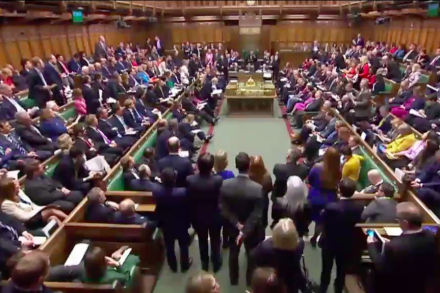
Would anyone want an election after witnessing this afternoon’s Commons debate on the matter? Both Boris Johnson and Jeremy Corbyn have just produced rambling, slightly nonsensical speeches arguing their corner. The Prime Minister wants an election. The Leader of the Opposition does not. Neither offered much that was convincing to support those stances.  Johnson’s main theme was that ‘this Parliament has run its course’. This would have made more sense had the government not held a Queen’s Speech introducing its new legislative agenda just two weeks ago.

How Boris’s opponents are making this week much easier for him

From our UK edition

The stronger the prospect of a general election, the easier it will be for Boris Johnson to get through the week that Britain was supposed to be leaving the European Union. He had said he would rather 'be dead in a ditch' than miss the deadline, but is now taking a two-pronged approach to distracting everyone from the fact that Thursday will come and go, and Brexit will still not have happened. The first part of this plan is to make sure that it is clear parliament is to blame for missing the 31 October deadline, rather than the Prime Minister who placed so much emphasis on it. So the repeated message from Johnson and his allies is that 'this parliament is broken' and that the 'country is being held hostage'.

How Keith Vaz tried to avoid punishment by claiming male escorts were ‘decorators’

From our UK edition

Keith Vaz is facing the longest suspension in history after the Commons Standards Committee found he had breached the MPs' Code of Conduct by paying two male escorts for sex and offering to cover the cost of cocaine for a third man. The Committee - which is made up of MPs and lay members, said he had 'caused significant damage to the reputation and integrity of the House of Commons as a whole', and said it represented 'a very serious breach of the Code'. This brings to an end a row which has gone on since August 2016, when Vaz met the two men in his flat. One of them was covertly recording the encounter, and the story was printed by The Sunday Mirror. It included Vaz describing himself as a washing machine salesman named Jim (which he spelt for the men).

Number 10 drops its threat to go ‘on strike’

From our UK edition

One of the defining themes of this week has been the government threatening to do something dramatic, before manifestly not carrying out that threat. We’ve had No. 10 sources claiming Boris Johnson would pull his Withdrawal Agreement Bill if MPs voted down the programme motion, only for the Prime Minister to announce he is 'pausing' it, before then making a bid to the Labour Party to resurrect the legislation with a longer timetable. We’ve also seen the demise of Johnson’s claim that he would rather be found 'dead in a ditch' than delay Brexit beyond 31 October. Though the Prime Minister hasn’t openly acknowledged that he’s missing the deadline, his 12 December election bid was an attempt to move the conversation straight past an awkward admission.

Caroline Flint: why I’m backing this Brexit deal

From our UK edition

Nothing in Caroline Flint’s CV would have marked her out as someone who would end up marshalling 19 of her fellow Labour MPs through the ‘aye’ lobby to vote for Boris Johnson’s deal. One of the original ‘Blair babes’, she went on to become Gordon Brown’s minister for Europe. She campaigned for Remain in the referendum but this week she ended up telling MPs that ‘the EU is not God’ while fending off accusations that she is the devil. One commentator called her ‘a heroine for those seeking to turbo-charge Thatcherism’. He didn’t mean it kindly. When we meet in her office, on another one of the supposed Brexit make-or-break days, she is preparing for further battle.