Isabel Hardman

Isabel Hardman

Isabel Hardman is assistant editor of The Spectator and author of Why We Get the Wrong Politicians. She also presents Radio 4’s Week in Westminster.

Is Marcus Rashford a more effective opposition leader than Starmer?

From our UK edition

13 min listen

Gavin Williamson, the education secretary, has said today that a national voucher scheme for free school meals would return on Monday, after pictures of the food packages being given to children were widely circulated online. Footballer Marcus Rashford said the Prime Minister promised 'that he is committed to correcting the issue'. Katy Balls speaks to James Forsyth and Isabel Hardman.

The wonder of winter birds

From our UK edition

One of the many reasons to love winter is that it brings so many wonderful new birds to this country. We might complain about our colder weather and the need to wrap up, but for many migratory birds, this country is a warm haven from their breeding grounds which are often within the Arctic Circle. In the past, these migrations confused people, leading to bizarre myths about geese hatching from barnacles and tiny birds travelling over the sea on the backs of larger species. Here are five to look out for this winter. Redwings: surprisingly easy to see, and even easier to overlook as they are often camouflaged by the leaf litter that they like to hang about in.

Ministers can no longer ignore the problems Covid has exposed

From our UK edition

Tuesday's cabinet meeting discussed the usual topics of Covid and the Brexit transition period, but at the end, Boris Johnson told ministers he had asked Sir Michael Barber to conduct a rapid review of government delivery 'to ensure it remains focused, effective and efficient'. Downing Street's readout of the meeting said the Prime Minister told his colleagues that 'it remains important to ensure that work continues to ensure that we build back better from the pandemic'. Barber, currently chair of the Office for Students, set up the first 'delivery unit' in Downing Street in 2001, and has even written a book on How to Run a Government. He will be examining how No. 10 can deliver its domestic policies over the next few years.

Do Covid rules need to be clearer?

From our UK edition

11 min listen

Boris Johnson has been criticised for taking a bike ride in the Olympic Park, seven miles away from Downing Street. Should the government make the Covid rules clearer? Isabel Hardman speaks to James Forsyth and Katy Balls.

The delicate balancing act of lockdown messaging

From our UK edition

Matt Hancock spent Monday evening trying to explain a very delicate tension to the public. There’s the good news of the vaccine and his determination that all four of the most vulnerable priority groups will be vaccinated by mid-February. And then there’s the bad news that in the meantime, coronavirus is spreading and we haven’t yet seen the worst of its impact on the NHS. So alongside announcing that more than 2.3 million people across the UK have had their first dose of the vaccine, Hancock warned at Monday night's Downing Street press briefing that unless the public sticks to the rules, he will have to tighten restrictions on meeting others for exercise.

Has lockdown fatigue set in?

From our UK edition

13 min listen

Chris Whitty said that hospitals will face 'the worst weeks of this pandemic' in a broadcast round this morning, as he implored Brits to keep social contact 'to an absolute minimum'. It comes as the government is considering even stricter restrictions to improve compliance. Katy Balls speaks to Isabel Hardman and James Forsyth.

Starmer wants to change Labour, but are voters even listening?

From our UK edition

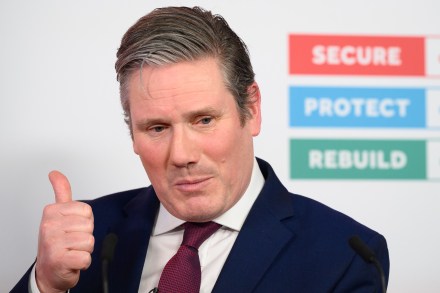
Inevitably, Keir Starmer’s main intervention today has been on Covid, with the Labour leader calling for more restrictions within the next 24 hours. But he made this demand as part of his first major policy speech as leader – and there was more in it than just Covid curbs. Starmer has decided he wants to spend the next few months talking about several topics the Labour party has veered away from over the past decade or so. Chief among them is the economy, with the leader and shadow chancellor keen to use the time they have now before the next election to start making it normal for Labour to bring up the economy rather than wait for the party’s opponents to do so instead.

The healthcare backlog will be Boris Johnson’s next challenge

From our UK edition

Boris Johnson’s coronavirus press briefing this evening was largely an upbeat discussion of how the vaccination programme is being rolled out, including a look at the logistical side of things with Brigadier Phil Prosser. So far, nearly 1.5 million people have been given the vaccine across the UK, and the Prime Minister said there was sufficient supply for all the top four priority groups to have been immunised by 15 February. This is all very well, but the reason we are in the current lockdown is that ministers want to protect the NHS from being overwhelmed before the vaccines have been rolled out.

Can Gavin Williamson limit the impact of school closures?

From our UK edition

It is much harder being an embattled minister in the socially distanced Commons than in normal times. There is no group of supportive MPs to arrange behind you, no ability to organise sympathetic noises from the backbenches as you give your statement explaining why you've taken a last-minute decision to close all schools when you said you wouldn't and had been threatening councils who were trying to do so just before Christmas with legal action, and why you've spent the past few weeks insisting that exams would go ahead in the summer, only to cancel them this week too. On this charge sheet, Gavin Williamson would have struggled in any Commons setting when he explained why the government had changed its mind at the last minute.

Can the PM sustain his vague lockdown timetable?

From our UK edition

Boris Johnson doesn't have as angry a Conservative party to deal with as he might have expected after announcing his third national lockdown. The Covid Recovery Group of MPs has largely moved on from opposing further restrictions to putting pressure on the government over its vaccine timetable, meaning any revolt on tonight's vote will be much smaller than the 55 who rebelled against the tiered system in December. But that's not to say that the Prime Minister can afford to be careless with the way he communicates with MPs, and his statement in the Commons today showed that.

Boris Johnson’s justifications for lockdown

From our UK edition

Boris Johnson this evening tried to give a little more background to why he had called England’s latest lockdown – and why he had confidence that this really was the darkness before the dawn. The Prime Minister told the Downing Street coronavirus briefing (yes, we are back in that sort of lockdown) that more than 1 million people in England are now infected with Covid – around 2 per cent of the population, according to the ONS – but that as of today, the same number of people in England, and a total of 1.3 million people across the UK, have received the vaccine. He had to explain why he had changed his tune on schools so rapidly, going from insisting that most schools should return to cancelling face-to-face teaching within 36 hours.

Why are the UK’s borders still open?

From our UK edition

11 min listen

Following the announcement of a third lockdown, a testing regime for arrivals could be put in place. It comes as Michael Gove said there would be announcements in the coming days about 'how we will make sure that our ports and airports are safe', and Nicola Sturgeon said 'urgent' discussions were underway. Isabel Hardman talks to Katy Balls and James Forsyth.

Lockdown returns: what the new rules mean

From our UK edition

11 min listen

This evening the Prime Minister announced a return to the lockdown system for England, coming after Nicola Sturgeon announced similar measures earlier in the day. Katy Balls talks to James Forsyth and Isabel Hardman about what the measures mean for students, vulnerable groups and more.

Boris Johnson announces a third national lockdown

From our UK edition

Boris Johnson has announced that England is going into a third national lockdown – but a much stricter one than we saw in the autumn. The government has also been forced to accept that A-levels and GCSEs will not be going ahead this year because all schools will close from tomorrow, save for vulnerable children and the children of key workers. In a televised address to the nation, the Prime Minister asked people to stay at home from Monday, with a legal requirement to do so being introduced in regulations this week. The lockdown will run until the middle of February. He explained that scientists had concluded the new variant was 50-70 per cent more transmissible and that hospitals are under the worst pressure of the entire pandemic.

How will Tory backbenchers react to another lockdown?

From our UK edition

Boris Johnson is coming under increased pressure from Tory MPs on both sides of the Covid debate today. On the one hand, there is former Health Secretary Jeremy Hunt calling for schools and borders to close and a ban on all household mixing straight away in order to prevent the NHS from collapsing. On the other, there is Mark Harper, chair of the influential Covid Recovery Group, who has just issued a call for the government to start relaxing restrictions from February. The two demands aren't necessarily mutually-exclusive: the two men just have rather different timescales.

The unending confusion at the Department for Education

From our UK edition

It used to be the case that the only things that were certain in life were death and taxes. To that list we can now add unending turmoil and confusion at the Department for Education. Today Gavin Williamson U-turned on the government’s previous pledge to keep schools open, announcing that a number of schools in Covid ‘hotspots’ would not be going back as planned next week. Primaries in some areas – including a slightly random patchwork of London boroughs – will not reopen next week. Those in lower tiers and some Tier 4 areas will start term as planned. The following week, years 11 and 13 will return to secondary schools, and from the week beginning 18 January, all year groups will return.

Would speeding up the vaccine programme placate Tory MPs?

From our UK edition

More than 75 per cent of England will be in the top tier of coronavirus restrictions from midnight after Health Secretary Matt Hancock announced a large number of areas would move up into Tier 4. This is part of an attempt to contain the spread of the new variant of Covid-19, as hospitals come under what Hancock described as ‘significant pressure’ to treat surging numbers of patients with the virus. Hancock was speaking on what he described as a day of ‘mixed emotions’, and he was naturally keen to emphasise the difference that the approval of the Oxford/AstraZeneca vaccine would make to the length of time people will be subject to these restrictions.

What does the Oxford vaccine approval mean for the UK?

From our UK edition

This morning the Oxford/AstraZeneca vaccine has been approved by the UK medicines regulator, the MHRA. This is almost more of a game changer than the approval of the first Pfizer vaccine, because the UK government has ordered 100 million doses of it – and it is also much easier to distribute, as it does not need to be stored at the same very low temperatures as the Pfizer jab. It means that there really is a chance of life returning to normal in the not-too distant future. Ministers had been very clear in private that if this immunisation didn’t pass, it would mean society would have to work out how to live with Covid-19 over a much longer term – and that this would be very difficult politically.

It’s about time we cleaned up our filthy rivers

From our UK edition

Cold water swimming has gone from an eccentric and very niche pursuit to something everyone is doing – and is very keen to tell you about, whether or not you’re interested. There’s been a bit of a backlash against the sport’s popularity recently, with a variety of objections. The first comes from the ‘in my day, we called it swimming’ brigade, who are particularly aerated about the current fashionable term ‘wild swimming’. It’s just swimming, they say, and people who do it aren’t any more special than anyone else.

Will normality really return by Easter?

From our UK edition

10 min listen

Another day, another press conference. In today's, Matt Hancock announced more regions to enter Tier 4 restrictions come Boxing Day, as well as another new, highly transmissible, strain of the virus. Cindy Yu talks to Isabel Hardman and Katy Balls about the latest updates, as well as signs of potential white smoke on the Brexit negotiations.