Isabel Hardman

Isabel Hardman

Isabel Hardman is assistant editor of The Spectator and author of Why We Get the Wrong Politicians. She also presents Radio 4’s Week in Westminster.

Was Boris’s Ukraine/Brexit comparison a mistake?

From our UK edition

16 min listen

Over the weekend, Boris Johnson sparked a wave of criticism after he linked the Ukraine crisis to Brexit. During his speech at the Conservative Party's Spring Conference, the PM suggested that Ukraine's decision to 'choose freedom' was reminiscent of Brexit. 'I think it was up there with the Jimmy Saville joke which he made about Keir Stamer in things which should not have been said.' - Fraser Nelson.Also on the podcast, will Rishi Sunak be forced to u-turn on his commitment to low taxes? In the week of the Chancellor's Spring Statement, Russia's full-scale invasion of Ukraine means that the goalposts have moved. All to be discussed as Isabel Hardman is joined by Katy Balls, James Forsyth and Fraser Nelson.

What lessons can Britain learn from Nazanin Zaghari-Ratcliffe’s ordeal?

From our UK edition

'How many foreign secretaries does it take for someone to come home? Five?' Nazanin Zaghari-Ratcliffe has spoken for the first time in public, giving a press conference alongside her husband Richard and MP Tulip Siddiq this lunchtime. She was grateful for her release from Iran, but also very clear that she wasn't as thankful to the British government as Richard, who praised the foreign secretary and officials for saying they would bring Nazanin home and for doing that. She argued that she should have been brought home six years ago, and that she had given up hope after hearing multiple foreign secretaries over the years assuring her that they would bring her home, and that it was eventually going to be one of them who succeeded.

Could the private sector help fix the NHS backlog?

From our UK edition

The Conservative plan to tackle the NHS backlog has, so far, run roughly along the lines of the New Labour approach to the hefty waiting lists in the health service at the turn of the century. More money, more flexibility when using the private sector and greater 'patient choice' (which in this context translates as patients who've been waiting a very long time being able to get treatment in another part of the country where waiting lists aren't quite so bad). So far, the main difference is that ministers are just shouting a bit less at hospitals (though GPs might argue they are bearing the brunt this time instead) than the Labour government did.

Rayner grills Raab over Lebedev and Saudi oil

From our UK edition

When Angela Rayner faces Boris Johnson at Prime Minister's Questions, it is obvious that both sides rather enjoy the exchanges. When she's up against Deputy Prime Minister Dominic Raab, as she was today, it feels like more of a grudge match. The session naturally centred around Ukraine, but as is Rayner's habit, it was more political than previous PMQs. Labour's deputy made her theme the government's failure to ensure Britain's oil security and links to Russian oligarchs. Much of her attack was about flaws in the absent Prime Minister's own character: the first question was whether Johnson's comments about Nazanin Zaghari-Ratcliffe when he was Foreign Secretary had made the situation worse.

Gove is clearing up Patel’s mess

From our UK edition

Michael Gove has a reputation as a minister for clearing up colleagues' messes – often the secretary of state he has replaced in a department – in a polite but very conspicuous fashion. Today it was Home Secretary Priti Patel's turn to see what it was like to get a visit from Gove and his dustpan and brush. As Levelling Up, Housing and Communities Secretary, Gove is responsible for one of the routes by which Ukrainian refugees can come to Britain, and he announced the details of the 'Homes for Ukraine' scheme in the Commons this afternoon. This has largely been passed to him because the Home Office is in such chaos over visa applications (and other matters).

Will Boris Johnson charm the Saudis?

From our UK edition

14 min listen

Vladimir Putin's war in Ukraine has caused the prices of oil and gas to skyrocket. One of the Prime Minster's strategies to combat this appears to be a visit Saudi Arabia this week, where he'll ask Crown Prince Mohammed Bin Salman to release more oil. But what's the chance of this working?Katy Balls is joined by James Forsyth and Isabel Hardman.

PMQs: Johnson struggles to defend refugee policy

From our UK edition

Today's Prime Minister's Questions clash between Sir Keir Starmer and Boris Johnson focused on the domestic implications of the Russian invasion of Ukraine. The Labour leader started by calling on Johnson to force Chancellor Rishi Sunak into a U-turn on his policy of a £200 loan to help with energy prices.  Starmer's argument was that this loan had been developed on the assumption that prices were going to fall, but Ukraine had changed that. Johnson argued that Starmer would be 'absolutely out of his mind' to be arguing that the Chancellor should U-turn on the help he was already offering.

Why is Britain so useless at helping Ukrainian refugees?

From our UK edition

Some MPs were in tears yesterday when President Volodymyr Zelensky addressed the House of Commons, and understandably so, given the soaring rhetoric and bravery of a man who knows his days on earth could be numbered.  One kind interpretation is that the caseworkers at the Home Office haven't been trained sufficiently for them to use the initiative But across Westminster over the past few days, MPs and their constituency teams have also been crying tears of frustration at the Home Office's handling of the visa application process. Not only has there been intense confusion between the different arms of government about how many routes there are for refugees – with Home Secretary Priti Patel claiming she was creating a third one, only for No.

What cards does the West have left to play?

From our UK edition

11 min listen

PMQs began with a rather unorthodox but touching round of applause to welcome the Ukrainian ambassador to the chamber. While the Commons was united in its support of Ukraine and condemnation of Putin's actions, Labour leader Keir Starmer confronted Boris Johnson about certain Russian individuals who have been sanctioned by our allies but not by the UK. But why is Boris Johnson holding back? Though many talk about the close relationship between the Tories and Russian money, the bitter truth of the matter may be that we are running out of non-military options for opposing Putin.Katy Balls breaks down the session with James Forsyth and Isabel Hardman from the roof of Parliament.

Starmer leads on oligarchs at a strange PMQs

From our UK edition

Prime Minister's Questions today had a strange tonal disconnect to it. The session began with a standing ovation for the Ukrainian ambassador Vadym Prystaiko, who was watching from the gallery. Normally, clapping is banned in the Commons, but today the Speaker tore up protocol and MPs from across the house (and journalists, who by convention don't clap anything) stood up to applaud Prystaiko. It was a moving moment. But it was not matched by the tone of Boris Johnson, either in his exchanges with Keir Starmer or indeed in the rest of the session. The Labour leader chose to focus on sanctions and economic crime.

No-fly zones won’t work, but what about aid to Ukraine?

From our UK edition

Vladimir Putin's forces are encircling the cities of Kharkiv, Kherson and Mariupol, and a 40 mile-long convoy of Russian armoured vehicles is north of Kiev on the seventh day of fighting in Ukraine. The coming days are likely to see greater barbarity from the Russian President after he failed to get his way in the first few days of the invasion. Those days are also likely to stretch into weeks as Putin lays siege to these cities until they are his. The debate about what the West should be doing to needs to widen out So far the political debate in the West has been dominated by a noisy argument about a no-fly zone: something all leaders have repeatedly ruled out on the grounds that it would lead to direct combat between Nato and Russia.

Why is a no-fly zone a no go?

From our UK edition

10 min listen

During a press conference in Poland today, Prime Minister Boris Johnson was confronted by Ukrainian journalist and campaigner Daria Kaleniuk, who took issue with the excuse for not imposing a no-fly zone because it may start World War Three, saying it had already begun. While it is completely understandable that on the streets of Ukrainian cities that is how it must feel, the UK and the West are committed to not involving themselves with direct military action against Russia. Though the sanctions that have been imposed on Putin's regime are unprecedented, can they work quickly enough to pause the conflict before things get even bloodier?Katy Balls talks to Isabel Hardman and James Forsyth about how the Prime Minister has been handling this situation so far.

Boris rules out a no-fly zone over Ukraine

From our UK edition

What can the UK do to ensure that Vladimir Putin fails in Ukraine? The Prime Minister has just given a press conference in Poland with his counterpart Mateusz Morawiecki where he repeated his assertion that 'Putin will fail' and that the West 'will succeed in protecting and preserving a sovereign, independent and democratic Ukraine'. The Russian president, he said, had underestimated the resolve of Ukraine and its allies.

Liz Truss is having a good war

From our UK edition

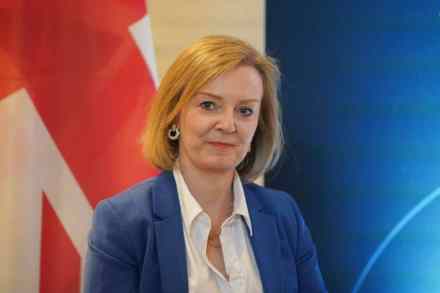
Liz Truss gave a striking statement in the Commons this afternoon on the action the government was taking to respond to the Russian invasion of Ukraine. It contrasted to the approach taken by some of her colleagues, because it contained a number of admissions about the impact of this action. For the first time, the Foreign Secretary stated that Britain would 'have to undergo some economic hardship as a result of our sanctions'. This has been implicit over the past few days, but Truss was the first to say it clearly. She added that 'our hardships are nothing compared to those endured by the people of Ukraine', and also warned that the war could last months or years.

Has Putin underestimated the West?

From our UK edition

12 min listen

Over the weekend, the West unveiled further measures to punish Russia for invading Ukraine. The European Union said it would put limits on the Russian central bank's ability to access its reserve of foreign currency, Finland blocked Russia from its airspace, and Germany pledged that it would increase its defence spending to 2 per cent. Has Putin underestimated western resolve? Katy Balls speaks to Fraser Nelson, James Forsyth and Isabel Hardman.

Are UK sanctions all bark no bite?

From our UK edition

12 min listen

For the last few weeks, the UK has condemned Putin and promised a strong response in the face of more Russian aggression. But when Boris Johnson announced his sanctions, for many, including those within his own party, they felt a little small. Particularly when compared to Germany cancelling the Nord Stream 2 pipeline. Isabel Hardman talks with James Forsyth and Katy Balls about the UK's response to the Russian invasion.

PMQs: Boris Johnson faces pressure to be tougher on Russia

From our UK edition

Boris Johnson came under sustained pressure at PMQs today to introduce tougher sanctions against Russia. Both Sir Keir Starmer and Ian Blackford pressed the Prime Minister on the matter, with the Labour leader opening his questions by arguing that given a sovereign country had been invaded, ‘if not now, when’ would the government unleash a full package of sanctions. Starmer repeatedly said the Labour party was supportive of what had been announced so far but that it wanted much more from the government. This included cracking down on the Russian state-backed broadcaster RT, which he said should be prevented from spreading Vladimir Putin's propaganda around the world.

Ending restrictions won’t save Boris

From our UK edition

Boris Johnson certainly managed to rally the troops on their first day back from recess this afternoon as he told the Commons that all remaining domestic Covid restrictions were coming to an end.  The most explosive moments of the past few months haven't been about the continuation of Covid restrictions From this Thursday, the legal requirement to self-isolate following a positive test will come to an end. Until 1 April, people who test positive will be advised to stay at home, but after that 'we will encourage people with Covid-19 symptoms to exercise personal responsibility, just as we encourage people who may have flu to be considerate to others'.

Dick’s departure is Sadiq Khan’s victory

From our UK edition

Sadiq Khan forced Cressida Dick out of her job as Metropolitan Police chief. Both made that very clear this evening, with Dick saying 'the mayor no longer has sufficient confidence in my leadership to continue', while Khan said he was 'not satisfied with the Commissioner's response' to his ultimatum for changing the Met's culture of misogyny, racism, homophobia and bullying. The Met is clearly an institutional basket case The Mayor of London has played a political blinder on this. Unlike Home Secretary Priti Patel, who has the ultimate authority on the appointment — and exit — of the Commissioner, he has been quick to respond to last week's report which revealed appalling messages exchanged by some officers at the Charing Cross station.

Will there ever be a break in the partygate scandal?

From our UK edition

9 min listen

The Prime Minister tried to start today's PMQs with an announcement to fire up the right of his base, an early end to all Covid restrictions. But the partygate scandal is the gift that keeps on giving when during the Commons session a new photo leaked of Boris Johnson at a Christmas quiz with a bottle of Prosecco and a colleague draped in tinsel. Isabel Hardman is joined by James Forsyth and Katy Balls to break down today's events in Westminster.