Isabel Hardman

Isabel Hardman

Isabel Hardman is assistant editor of The Spectator and author of Why We Get the Wrong Politicians. She also presents Radio 4’s Week in Westminster.

Sunak returns to PMQs with a subpar performance

From our UK edition

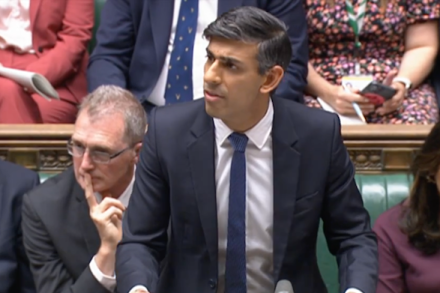
Everyone was very keen to attack Labour at today’s Prime Minister’s Questions, particularly over Keir Starmer’s decision not to scrap the two-child benefit limit. Before the session, SNP staffers handed out ‘controls on family sizes’ mugs to journalists in the Commons press gallery, a reminder of Labour’s disastrous 2015 ‘controls on immigration’ mug. Then SNP leader Stephen Flynn, and later Pete Wishart, both called the policy ‘heinous’. Flynn even said Scottish children were used to living in poverty, which prompted some ironic shouts from MPs on the other side of the house: the SNP has the power to change benefits policies anyway, but hasn’t scrapped the two-child limit on the grounds of affordability (the same argument Labour is making).

The benefits row is a serious test of Starmer’s leadership

From our UK edition

Keir Starmer is in the middle of his first proper row with his party. The Labour leader is not rowing back from his decision to tell Laura Kuenssberg that he wouldn’t reverse the two-child limit on child benefits. In fact, he’s leaning into it, even though he has achieved the incredible feat of uniting Rosie Duffield and Lloyd Russell-Moyle against it (the two backbenchers are normally found disagreeing vehemently on sex and gender). At today’s shadow cabinet meeting, the Labour leader told his top team that they would have to get used to these kinds of uncomfortable decisions because ‘tough choices is not a sound bite’. He insisted that ‘it’s vital to us being able to do what we need to do in government and getting over the line’.

Has Starmer become the villain?

From our UK edition

15 min listen

Katy Balls speaks to Isabel Hardman and former Labour advisor John McTernan to discuss the ongoing Labour row over the child benefits limit. Reactions were muted during today's shadow cabinet meeting, but is this a reflection of a looming reshuffle?  Produced by Natasha Feroze.

How the challenges to the Illegal Migration Bill were seen off

From our UK edition

The Illegal Migration Bill is making its final crossing today to become an Act, after peers and MPs voted into the small hours on the final changes to the legislation. The House of Lords eventually dropped the amendments that they'd been holding out on, including the plan by the Archbishop of Canterbury, Justin Welby, for the government to draw up a proper international strategy for refugees and an amendment from Lord Randall of Uxbridge on victims of modern slavery. It became clear that these peers were not going to have any luck when Immigration Minister Robert Jenrick opened the 'ping-pong' debate in the Commons by telling MPs there would be no more compromises from the government.

Will public sector pay rises stop the strikes?

From our UK edition

That Rishi Sunak chose to announce his decision to give public sector workers a 5 to 7 per cent pay rise with a press conference tells you everything you need to know. There is no requirement for him to be anywhere near a pay announcement: indeed, it was chief secretary to the Treasury John Glen who made the statement in the Commons. But Sunak clearly thinks there is a big political win here for him in dealing with the ongoing strikes. Sunak confirmed in his opening statement that ‘we are accepting the headline recommendations of the Pay Review bodies in full but we will not fund them by borrowing more, or increasing your taxes’. It means that teachers will get a 6.

Tories will be missing Sunak at PMQs

From our UK edition

Are you tiring of the stand-in routine at Prime Minister’s Questions? Oliver Dowden seems to be. When he first started this now regular gig for Rishi Sunak, the Deputy Prime Minister was clearly delighted that he could deliver the lines he’s been coaching other prime ministers to say for years. Today, as he stood in for Sunak for a second week running, he looked as though he could do with a break. His jokes were not well delivered: he teased Angela Rayner for wanting John Prescott’s old job (which she already has), and he also fluffed what was already a poor line about Keir Starmer hating tree huggers but being ‘very keen on hugging the magic money tree’. That was a reference to a reported put-down by the Labour leader of his shadow net zero secretary Ed Miliband.

Uxbridge by-election

Can the Tories make the Uxbridge by-election all about Ulez?

From our UK edition

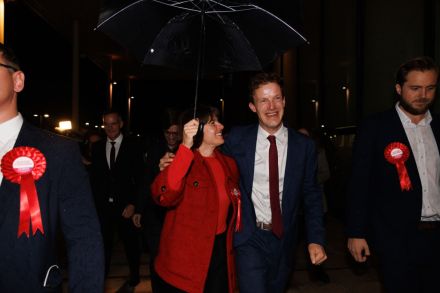
‘Is this about the Ulez?’ asks the woman looking out of her front door at a group of campaigners in her garden. One of them is wearing a round STOP ULEZ sticker on his top. It’s not actually about the Ultra-low emission zone, which is being expanded to the constituency by the Labour mayor of London, Sadiq Khan, it’s about the by-election in the Uxbridge and South Ruislip seat vacated by Boris Johnson. But the man hoping to succeed him as Conservative MP, Steve Tuckwell, wants to make the campaign about Khan and cars, not the Conservatives.

Tories fight over Illegal Migration Bill

From our UK edition

The Illegal Migration Bill is back this afternoon for ‘ping pong’ – the final stage of its legislative passage where MPs and peers bat amendments between their respective chambers until a compromise is found. There were 20 such amendments for the government to deal with and there is still a chance that some key Conservatives might rebel tonight. Ministers want to overturn 15 changes. Two of the loudest critics are, inconveniently, former home secretaries Two of the loudest critics are, inconveniently, former home secretaries. Theresa May has criticised the Bill throughout its passage and it is still not clear whether she will vote with the government or rebel tonight.

Boris’s allies defend their attacks on the Privileges Committee

From our UK edition

The House of Commons often rises early these days, with little in the way of legislation to keep MPs busy. Ministers spend more of their time answering repetitive urgent questions than they do piloting bills through the Commons. So it was an odd sensation to see MPs debating something at length, with detailed speeches and an extensive debate. Ah, of course – they were talking about themselves: what else? Yesterday afternoon’s debate was on the Privileges Committee special report on the ‘campaign’ against that Committee by supporters of Boris Johnson.

Chris Pincher’s suspension spells more trouble for Rishi Sunak

From our UK edition

14 min listen

A year on from allegations that Chris Pincher groped two young men at the Carlton Club (allegations that ultimately triggered the downfall of Boris Johnson), Parliament's standards watchdog has now found that Pincher brought the House into disrepute and recommended an eight-week suspension. On the podcast, Isabel Hardman says that this makes a by-election in his constituency of Tamworth a question of when, not if. But even worse for the Conservative party, their newly-selected candidate in that constituency is the current MP of another constituency. Cindy Yu talks to Isabel and Katy Balls about the mess that CCHQ finds itself in now. Produced by Cindy Yu.

Starmer commits to oracy classes for children

From our UK edition

Keir Starmer is giving another speech on one of his five missions (remember them?) today. The Labour leader has a lower bar to meet with his five pledges than Rishi Sunak. While the Prime Minister has to achieve things like halving inflation by the end of the year, the Labour leader just has to stick to his policies all the way to the election manifesto. On current form, that’s enough of a challenge, but today’s announcement on smashing the ‘class ceiling’ is a particularly personal interest of Starmer’s, which gives it a better chance of survival. In a speech in Kent, Starmer will commit to oracy being a key element of the national curriculum.

Chris Pincher’s suspension spells more trouble for Rishi Sunak

From our UK edition

Chris Pincher should be suspended as an MP for eight weeks following allegations he groped two people at the Carlton Club last summer, Parliament's standards watchdog has recommended. The Standards Committee report into the Tamworth MP – who was a Tory MP – found that Pincher 'groped [two people]...and that this was unwanted, inappropriate, and upsetting'. The lengthy suspension means that Pincher's constituency can be subject to a recall petition – the threshold needed for these petitions is a suspension of ten days or more – and that a by-election is therefore on the horizon. Pincher may choose to quit straight away and trigger that election earlier, though a problem is that the candidate for Tamworth is Eddie Hughes, currently the MP for Walsall North.

Let us pray for the NHS

From our UK edition

Why was there a service in Westminster Abbey thanking God for the NHS today? Some 1,500 NHS workers, many in uniform, packed into the Abbey along with politicians to mark 75 years of the service. As a celebration of the work those people have done, it was a good event: the Dean of Westminster, David Hoyle, paid tribute in his sermon to the ‘sheer bloody-minded persistence of tired, stressed, wonderful people in the NHS’. There were testimonies from healthcare workers who had treated sickle cell patients and children with cancer from Ukraine. And of course there were readings from Rishi Sunak and Keir Starmer and an address from NHS chief executive Amanda Pritchard.

How Enoch Powell helped make the NHS

From our UK edition

Who are the giants of the NHS? Just off Central Lobby in Parliament is a bronze bust of Aneurin Bevan, the man who set up the health service in 1948. I have a rose named after him growing in my garden. When Britain marks the 75th anniversary of the health service today, Bevan’s name will be everywhere as the man who gave this country taxpayer-funded, state-organised, universal healthcare.  The name you’re less likely to hear is Enoch Powell. Few even know that this Conservative politician was minister for health. Few know much more than one line of one speech, which he knew would ‘go up like a rocket’, and which destroyed both his reputation and the political discourse around immigration for decades. But Enoch Powell is one of the giants of the health service, too.

Sajid Javid’s medicine won’t save the NHS

From our UK edition

Does the NHS need a royal commission? Sajid Javid, the former health secretary, thinks so. ‘It is abundantly clear the status quo cannot continue,’ he writes in the Times. He argues that ‘a dispassionate and honest assessment is required’ from an ‘institution that is above the political fray’. Javid suggests that a royal commission that is ‘set up correctly’ could perform this function. Royal commissions sound august but don’t have a great track record of really helping governments make difficult decisions. They have become a byword in Westminster for kicking something not so much into the long grass as into a thick forest of delay. The Labour government set up one on social care in 1999, and rejected its most important proposals.

Sunak faces a grilling over his key targets

From our UK edition

Does Rishi Sunak think he’s going to hit his key targets? The Prime Minister had to answer this question repeatedly today after being asked by members of the powerful Liaison Committee. His basic answer was that he was still very committed to the targets – but couldn’t say that he definitely would meet them. A particularly difficult set of questions came from Home Affairs Select Committee chair Diana Johnson, who grilled him on the details of how his Rwanda deportation policy would stop the boats, as Sunak has promised. The Prime Minister was very keen instead to talk about the agreement the government had struck with Albania, but said he was confident that the government would succeed in its appeal against the Court of Appeal ruling on Rwanda.

The ‘New Conservatives’ are useful for Braverman

From our UK edition

How unhelpful are the New Conservatives to their party in government? They insist that they’re fully supportive of Rishi Sunak, but today’s 12-point plan to cut net migration isn’t exactly a love letter to the Prime Minister. Someone who does seem rather less annoyed by the new caucus is Suella Braverman, who as luck would have it was taking Home Office Questions in the House of Commons this afternoon. One of the members of the new caucus, James Daly, had a question about ‘what steps she is taking to reduce net migration’, and the Home Secretary replied: Net migration is too high, and this government are determined to bring it down. Indeed, that was one of the reasons why I voted and campaigned to leave the European Union in 2016.

Who are the New Conservatives?

From our UK edition

10 min listen

A group of 25 Tory MPs, calling themselves the New Conservatives, have launched a plan that they say will cut net migration from 606,000, last year’s figure, to 226,000, the figure in 2019. Temporary visa schemes for care workers should be shut, the ‘skilled work’ salary threshold raised, and the number of refugees accepted into the UK capped. Who is in the group, and what do they want?  James Heale speaks to Isabel Hardman and Katy Balls. Produced by Max Jeffery.

Rishi Sunak needs to turn his attention to mental health

From our UK edition

Will the government meet its NHS target? Health Secretary Steve Barclay was asked about this when he did the broadcast round this morning, arguing that even though there were record waiting numbers, the government had successfully reduced the longest waits. But as Fraser wrote this week in his Telegraph column, Rishi Sunak is having to face up to the chance that he might miss this (and most of his other) five ‘priorities’ which he said the British people should judge him against at the next election. But voters might be paying a little less attention to another area of care where things are visibly going backwards: mental health.

Why is the NHS in such a bad way?

From our UK edition

27 min listen

Next week is the NHS's 75th birthday. Why is the health service in such a poor state? Are the Tories selling it off? And is there any hope for its future? Max Jeffery speaks to Kate Andrews and Isabel Hardman.