Isabel Hardman

Isabel Hardman

Isabel Hardman is assistant editor of The Spectator and author of Why We Get the Wrong Politicians. She also presents Radio 4’s Week in Westminster.

How’s the mood at Tory conference?

From our UK edition

9 min listen

It's day two at Tory conference and the mood seems muted and lacking in energy. This is in direct contrast to Rishi Sunak who appeared to have fire in his belly in a tetchy interview over the weekend with Laura Kuenssberg. He will be hoping to use this conference as his reset moment, but will he be undermined by those in the cabinet with an eye on the leadership? In Manchester, Katy Balls and Isabel Hardman discuss.

Is Sunak helping Starmer on HS2?

From our UK edition

13 min listen

Rishi Sunak is on his tour of hard truths, saying the unsayable on areas of policy where he believes his predecessors didn't want to be honest with the public. First we had the net zero pivot – scaling back the government's environmental commitments – and over the weekend there has been speculation that HS2 could be the next victim of tough talking Rishi Sunak. What's the latest? Is Rishi gifting Starmer an easy ride by clearing the weeds on this controversial project?  Katy Balls speaks to Fraser Nelson and Isabel Hardman.  Produced by Oscar Edmondson.

Sunak’s climate climbdown puts Labour in a pickle

From our UK edition

Rishi Sunak hadn’t wanted to announce the first part of his ‘vision’ for government this way. He was bounced into the press conference on a new approach to net zero by a massive leak. Towards the end of the Q&A session, the Prime Minister said, slightly testily, that he hoped ‘now people, rather than looking at the speculation, but having now seen what I’ve actually said and the detail of what I was saying can digest it, absorb it, and I think it will command very broad support, not just in our party but also in the country’. Sunak struggled with accusations that he ‘watered down’ the UK’s commitments on tackling climate change.

Is Labour the party of the pensioner?

From our UK edition

12 min listen

At PMQs, neither Labour nor the Tories wanted to commit to keeping the state pension triple lock. Have the two parties, awkwardly and unofficially, reached a consensus on dropping the promise? Max Jeffery speaks to Isabel Hardman and James Heale.

The SNP’s Stephen Flynn teaches Sunak and Starmer a PMQs lesson

From our UK edition

Will Rishi Sunak commit to the pensions triple lock in the next Conservative manifesto? That’s going to be one of the big questions of the autumn, not least because the Prime Minister won’t answer it. He didn’t do so today when quizzed on it by the SNP’s Stephen Flynn and Labour MPs – but at least has the political cover that the Labour leadership isn’t committing to the policy as a manifesto pledge either.  Flynn’s two questions to the Prime Minister were much better than the ones from Starmer. The SNP Westminster leader is a confident speaker who can look comfortable rather than contrived when he chuckles in response to a vague answer. That came in handy today when Sunak did not answer his first question on the triple lock.

Tories face ninth by-election – are they ruined?

From our UK edition

13 min listen

The Conservative MP Chris Pincher has resigned following the Commons decision to refuse his suspension appeal. Follow Nadine Dorries's most recent resignation, this means the government faces their 9th by-election since Rishi Sunak became Prime Minister – can they come back from this? Also on the podcast, Oscar Edmondson speaks to James Heale and Isabel Hardman about Rishi Sunak's move to rejoin the EU Horizon Project and the latest on the UK-India trade deal.

Starmer lays blame for the schools concrete crisis at Sunak’s door

From our UK edition

Rishi Sunak didn’t use the same language as Gillian Keegan today when he returned to Prime Minister’s Questions. But he clearly also thinks people should be thanking the government for the good job it is doing. The session was dominated by the concrete crisis in schools, but Sunak also wanted MPs to give him some credit for the economy recovering and inflation falling. He complained that both Keir Starmer and SNP Westminster leader Stephen Flynn had failed to mention these in their questions, and even rather boldly proclaimed that small boat crossings were down – despite them passing the 100,000 mark this summer and despite the Bibby Stockholm fiasco.

Sunak is embracing wind farms because of politics, not principle

From our UK edition

Michael Gove today announced that the government was relaxing the effective ban on new onshore wind farms that was introduced by David Cameron. Under those rules, just one objection could stop a planned wind farm – but they’ve been scrapped with immediate effect.  The reason? Rishi Sunak was facing a rebellion from Tory MPs, of course. The Prime Minister held talks with the would-be rebels, led by former Cop26 president Alok Sharma, and concluded that he would have to yield to their demands. They were trying to force the government to get on with a promise that was supposed to have been fulfilled by April – and were going to use an amendment to the Energy Bill, currently being debated in the Commons, to do it.

Does Gillian Keegan deserve some credit?

From our UK edition

Gillian Keegan’s Commons statement on the school concrete crisis will not be the most memorable contribution the Education Secretary made today: that award goes to her hot mic moment a few hours before where she appeared to suggest that people should be grateful for what she was doing and that others hadn’t been doing anything at all. Both could of course be true, and though she didn’t repeat what she had described in her apology as her ‘choice’ language, she did make points to MPs that backed up her ‘fucking good job’ argument. It was a very uncomfortable session, naturally, because Labour went on the attack about this being the latest sign of a crumbling country neglected by the Conservatives.

Liz Kendall deserves her promotion

From our UK edition

Keir Starmer has carried out a shadow cabinet reshuffle today that suggests he is confident about his authority over the Labour party, and that he is also genuinely keen to be a reforming prime minister. Giving so many key policy and campaigning jobs to centrist types will please those who have been pushing him to be less cautious. Unlike Fraser, I think Liz Kendall replacing Jon Ashworth in the work and pensions brief is an excellent example of the Labour leader being enthusiastic about reform. Ashworth is, as his appearances in The Spectator recently have shown, a very thoughtful and forward-thinking politician. He hasn’t been afraid to take on important arguments about welfare reform that were once the preserve of the right.

How did the Tories not see the school concrete crisis coming?

From our UK edition

12 min listen

Parliament is back from recess and the row which will be dominating MPs inboxes is the school concrete crisis, which has disrupted the start of term for over 100 schools. Why didn't the government act sooner?   James Heale speaks to Katy Balls and Isabel Hardman.   Produced by Oscar Edmondson.

How did the Tories not see the school concrete crisis coming?

From our UK edition

How did they not see this coming? Normally that question is one of the laziest you can ask in Westminster: easy for pundits or opposition politicians to say with a confident flourish in hindsight when they hadn't seen it coming beforehand, either. But in the case of reinforced autoclaved aerated concrete (RAAC), everyone saw this coming. The reason the school concrete crisis is so potent is that ministers have known for years about the presence of RAAC in public buildings (decades, in fact: it was in the late 1990s that concerns started to emerge about problems with this material). Yet the announcement that schools would have to close buildings last week still came as a shock because no one had prepared the ground for it.

Why can’t NHS managers spot a serial killer?

From our UK edition

No one who has paid any attention to NHS scandals over the past few decades should be at all surprised by the way in which managers at Lucy Letby’s hospital repeatedly dismissed concerns about her. When worried consultants produced considerable evidence to show that the nurse was present at every single event where a baby had dramatically collapsed or suddenly died, they ended up being the ones in the firing line. Management even forced them to apologise to Letby personally at an HR meeting, to which, bizarrely, the nurse brought along her parents. Doctors are suspicious of the calibre of those managing them, and the managers are often on the defensive Yet in the NHS, monumental managerial failures are not unusual, they’re typical.

Will the NHS learn from Letby’s murders?

From our UK edition

Will the fallout from the Lucy Letby case really lead to lasting change in the NHS? The most prolific killer of babies was able to continue even as doctors raised concerns about her – to the extent that the consultants themselves were forced to apologise to her face for a ‘campaign’ of bullying, rather than their concerns being taken seriously about her presence at the deaths or collapse of all the babies at the Countess of Chester hospital. Now, doctors’ union the British Medical Association has turned on NHS managers, saying the time has come for a reckoning for the ‘unaccountable’ bosses.

How was Lucy Letby able to operate in an NHS hospital?

From our UK edition

How was Lucy Letby able to operate as a serial killer in an NHS hospital? Now that the verdicts in her trial are in – guilty on seven counts of murder and seven counts of attempted murder, not guilty on two attempted murder charges and the jury unable to reach verdicts on six further charges – the government has launched an independent inquiry into the circumstances behind the murders at Countess of Chester hospital.  There are a number of questions that families want answered – some through a full public inquiry – including how Letby was able to kill or harm so many babies while enjoying the trust and faith of her colleagues on the neonatal ward. Staff reported being ‘fobbed off’ when they raised concerns.

Results day: is the worst of the pandemic over for students?

From our UK edition

12 min listen

As A-level students receive their exam results, Cindy Yu speaks to Isabel Hardman and Mary Curnock Cook who is the former chief executive of UCAS. In a bid to curb recent grade inflation, fewer of the top results have been handed out to students who were the first year group to sit through pandemic style national examinations. Can the government return to 2019 levels this summer? Produced by Cindy Yu and Natasha Feroze.

Public sector pay pushes wage growth to record high

From our UK edition

14 min listen

Natasha Feroze speaks to Fraser Nelson and Isabel Hardman about today's wage growth figures which have reached a 22-year high due to public sector pay. Are these an accurate reflection of the economy? Also on the podcast, Isabel Hardman takes a look at NHS week – each day the government has announced new measures to improve the National Health Service. Is a 'quit smoking' campaign really want the system needs?

How the Tories plan to take the fight to Labour on the NHS

From our UK edition

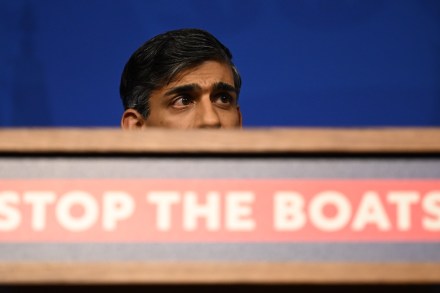
Brace yourselves for health week. After the rip-roaring success of the government's 'stop the boats' week, you might forgive the NHS for looking a bit scared that now ministers have the health service on their media grid for the coming days. As with last week's focus on illegal immigration, the government is kicking off with a series of pre-briefed stories in the Sunday newspapers about the health service – and it's striking how many of them are designed to take the fight to Labour. There's the claim in the Sun by Welsh Secretary David Davies that Sue Gray, who is about to become Keir Starmer's chief of staff, 'dragged her heels' on data showing how the NHS was performing in Labour-run Wales.

Should Team Truss accept resignation honours?

From our UK edition

12 min listen

Bibby Stockholm, the government's first migrant barge opened this morning. Intended to house up to 500 migrants, will this plan to cut the costs of putting migrants up in hotels work? Also on the podcast, Natasha Feroze speaks to Isabel Hardman and Katy Balls about the Liz Truss honours list – who are the contenders? And who may politely decline a new title...

Ulez isn’t the election gift Sunak wishes it was

From our UK edition

Given everyone has won a prize in this round of by-elections, the three main party leaders have been feasting on their respective wins. Rishi Sunak has arguably had the best day by holding one seat when his party had briefed it would lose all three. He has used the win in Uxbridge to say that the next election is still in play: ‘Westminster’s been acting like the next election is a done deal. The Labour party has been acting like it’s a done deal. The people of Uxbridge just told all of them that it’s not. No-one expected us to win here. But Steve’s [Tuckwell] victory demonstrates that, when confronted with the actual reality of the Labour party, when there’s an actual choice on a matter of substance at stake, people vote Conservative.