Isabel Hardman

Isabel Hardman

Isabel Hardman is assistant editor of The Spectator and author of Why We Get the Wrong Politicians. She also presents Radio 4’s Week in Westminster.

Downing Street: G4S is a ‘good story’

From our UK edition

I've just returned from the morning lobby briefing, where the Prime Minister's official spokesman was grilled on the unfolding G4S debacle. He rather surprised journalists by claiming 'the story is a good one' on the Olympics because all the venues have been delivered on time and the Government had thought to put contingency plans in place on this matter, which it can now use given G4S' failure to recruit sufficient numbers of security staff. 'There are going to be millions of additional visitors to London over the next few weeks and people will notice the difference, but we have plans to deal with those challenges and we have contingency plans for all of these things.

Railing against government policy

From our UK edition

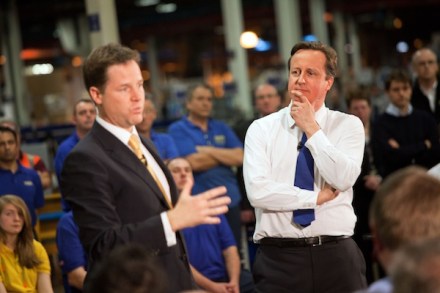
The cabinet is out and about today, trying to smooth feathers ruffled by last week's Lords reform row by splashing out on £9 billion worth of investment for railways. Today's announcement by David Cameron and Nick Clegg is, as much as anything else, an attempt to put into practice the Prime Minister's claim yesterday that the coalition is still capable of making real progress on big issues, despite differences on constitutional reform. Handily for Nick Clegg, today's announcement may also encourage some friendly feelings from his own constituents, as it includes electrifying the line between Bedford to Sheffield. But the work isn't starting tomorrow, which means this announcement could be quickly forgotten once the next row flares up back in Westminster.

Cameron’s coalition healthcheck

From our UK edition

The coalition is doing pretty well, thank you very much. In case last week's rebellion of the 91 on Lords reform and continuing tensions over Europe had you fooled, up pops the Prime Minister this morning with a soothing comment piece in the Sunday Times.  David Cameron tries to shrug off Lords reform within three paragraphs of his op-ed. 'What's far more significant is that we are working together on so much else - and after last week, it's vital that everyone reminds themselves of that fact,' he argues. As part of his health-check piece, the Prime Minister details signs that the coalition is functioning well. When he mentions the reforms the two parties are working together, the piece is very carefully worded. He starts with investment in infrastructure.

King joins Libor drama

From our UK edition

Up to now, Sir Mervyn King has played largely a walk-on part in the Libor scandal, prompting Bob Diamond's resignation after he warned Barclays that the regulators no longer had confidence in Diamond's leadership of the bank. Now the Governor of the Bank of England has also been dragged into the drama after email exchanges released by the Bank revealed that he was aware of deliberate misreporting of the rate in June 2008. Timothy Geithner, who was then the president of the Federal Reserve Bank of New York, emailed Sir Mervyn with a list of recommendations for improving Libor, one of which tackles how to 'eliminate incentive to misreport'. The Governor forwarded this on to his deputy Paul Tucker, and replied to Geithner that his recommendations 'seem sensible to us'.

Clegg’s ‘sensitive little violets’ get tough

From our UK edition

Two rather interesting reconciliations are taking place today. Ed Miliband is making the first speech of a Labour leader at the Durham Miners' Gala since 1989. And Nick Clegg has been trying to charm the left of his party into believing that all is well in the Liberal Democrat world. The latter largely involved Clegg trying to encourage the left-leaning Social Liberal Forum's annual conference to develop a sort of persecution complex. So the audience was told not to 'underestimate how much the right and the left want to destroy us', and to remember that 'if we aren't going to stick up for ourselves, no-one else will'. It was difficult, he acknowledged, to have doors slammed in your face on the campaign trail because 'we're sensitive little violets'.

The race to secure the Olympics

From our UK edition

G4S' security arrangements for the Olympic games are turning into the story that keeps on giving, which is a good thing for journalists only, given the opening ceremony is just weeks away. The headlines this morning aren't just about the 'Olympic chaos' that Theresa May tried to address when she made a statement to the Commons yesterday, but contain more revelations: staff failing to notice dummy explosives during test exercises, 18 and 19-year-old 'yobs' being recruited to fill the spaces, and the firm not being penalised for failing to recruit enough staff. That last revelation is awkward for May, as she implied yesterday that there was a chance G4S could face penalties.

The EU amuse-bouche

From our UK edition

Tory MPs clamouring for a new relationship between Britain and Europe were given an amuse-bouche today when William Hague announced a review into the impact of the EU on everyday life. The Foreign Secretary told the House of Commons earlier that the review, which will report towards the end of 2014, 'will present the evidence and analysis', adding that it would be 'for political parties to decide on their own policy recommendations'. The Foreign Office is briefing that the audit was not about identifying powers to grasp back from the EU, but many in the Conservative party certainly hope it's the start of that process if nothing else.

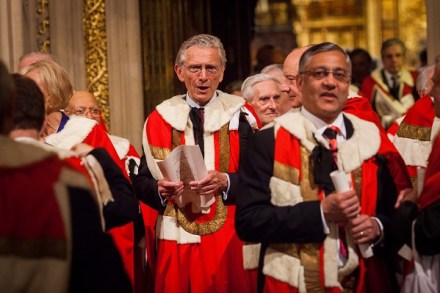
Lords rebels meet to kill the bill

From our UK edition

The Lords reform rebels held a debrief today following David Cameron's offer to the 1922 committee, I understand. The meeting, which took place mid-afternoon, was about what the rebels 'need to do going forward to ensure that the Bill is dead', one senior source told me. The rebels were not at all impressed by the suggestions that the Prime Minister put to backbenchers last night, and the meeting decided that offering the Liberal Democrats a smaller elected element in the upper house was a 'Trojan horse' by which more elected members could be added over time. The source explained that the MPs involved 'did not want to be awkward', but that 'we need to uphold the principle' of an appointed chamber.

Half a plan for social care

From our UK edition

The delayed white paper on social care will be published today, but don't expect it to clarify much about how pensioners can cover their care costs. The document itself will announce loans administered by councils offering nominal interest rates to prevent elderly people having to sell their homes to cover the cost of their care. That loan would be paid back once that person dies and the house is sold. But Labour's Andy Burnham was out and about this morning pointing out that the white paper 'is half a plan'. He's right: the most important part of the reforms is missing. The paper will reiterate ministers' support for a cap on the amount someone must contribute towards their care costs themselves, but will not specify the size of that cap, or any other details.

The real rebel problem

From our UK edition

The post-match analysis of last night's vote on the House of Lords Reform Bill shows the Prime Minister has a bigger rebel problem on his hands than he might have initially thought. It is true that there is a significant hardcore within the Conservative party of rebels who happily defied the whip on the other big rebellion of this Parliament - October's vote on holding a referendum on Britain's membership of the European Union. But that group only accounts for 57 per cent of last night's rebels. The 81 in October did not simply increase by 10 to 91 last night. The table below shows that there were 39 MPs who walked through the 'no' lobbies who had obeyed the whip on Europe, and 29 EU rebels who voted with the Government last night.

Cameron’s attack on Jesse Norman will backfire

From our UK edition

Jesse Norman became the hero of the hour yesterday afternoon when the government admitted defeat against the Tory rebels and dropped the programme motion on Lords reform. Norman was keen to claim the victory for his rebel operation, making an early intervention to say: 'Let me make it clear from the Conservative benches that the very substantial opposition from within the Conservative party, not just that from Labour, was responsible for the withdrawal of the motion. That should be perfectly clear and reflected in the record.' As leader of the rebel camp, and a member of the 91 who voted against the second reading of the Bill late last night, Norman was the toast of his colleagues after the programme motion failed.

Cameron’s leadership is bruised by Lords rebellion

From our UK edition

'Shouldn't we just go home?' the SNP's Pete Wishart asked Sir George Young this evening after the Leader of the House revealed the government was dropping its programme motion on the House of Lords. 'You know it's all over. They know it's all over,' he added. But they didn't go home, and the Commons has just voted in favour of the second reading 462 votes to 162. Early reports suggest that there were 86 Conservative MPs who defied the whip, which would make this the biggest rebellion in this parliament. Nick Clegg paused from trying very hard not to grimace on the front bench to cheer as Mark Harper told the chamber shortly before the division that this legislation belonged to the coalition. But the speeches from MPs throughout the evening gave a very different message.

GOD draws near to Bank of England job

From our UK edition

Paul Tucker rather drove a steamroller over his hopes to be the next Bank of England Governor during his testimony to the Treasury Select Committee yesterday. We said on Coffee House last night that the suggestion that Tucker and co discussed a possible manipulation of Libor as far back as 2007 had seriously wounded his bid - although Tucker argued that he 'thought it was a malfunctioning market, not a dishonest one'. Paddy Power agreed that Tucker was in trouble - and has duly lengthened the odds against Tucker getting the job. Before his appearance, he was 6/4, but those odds are now 5/2.  The new favourite for the job, according to Paddy Power, is not Lord Turner, but Gus O'Donnell, who currently has odds of 15/8, while Turner is on 7/2.

J’accuse backfires

From our UK edition

Andrea Leadsom seems to have backed down a little from last night's suggestion that George Osborne 'should apologise' for saying that Ed Balls had 'questions to answer' about Libor. This morning, perhaps after a cheery morning phone call from someone at CCHQ, she took to the airwaves to clarify what she had said:  'Look, I was talking about a very specific point last night, which is the extent to which the Labour party may have leaned on the Bank of England, which Paul Tucker completely refuted. I want to be very clear here: this is an inquiry about the banks’ behaviour, and Ed Balls still has a huge amount to answer for about his time in office during the last parliament, when the tripartite regime absolutely failed us and allowed the banks to get into this mess.

The Osborne/Balls stalemate

From our UK edition

George Osborne and Ed Balls are now locked into something of a staring match over the Libor scandal, with one waiting for the other to flinch. After Paul Tucker's evidence to the Treasury Select Committee yesterday cleared the Shadow Chancellor and his ministerial colleagues in the Labour government of leaning on the Bank of England, Balls demanded an apology from Osborne for his comments to the Spectator. Andrea Leadsom, one of the members of the committee, saw enough in Tucker's testimony to publicly call for an apology. This is significant because Leadsom is not the sort of MP who openly briefs against her bosses. She may have a slightly rebellious streak over Europe, but she's no Nadine Dorries when it comes to making pronouncements on the Government.

What Labour did next on banking

From our UK edition

When Ed Miliband gave his speech to Labour's autumn conference last year, he rather tied himself in knots about how to end predatory capitalism. The Labour leader was trying to make it clear that he would stand up to vested interests, but the message was lost under a row about whether he was pro- or anti-business. Today Miliband managed to put that speech into context a little more, by announcing Labour's plans to change the culture of banking in this country. Instead of predator banks, he wants 'stewardship banking', which builds 'a long-term, trusted relationship with their customer' and serves the real economy as well as the industry itself.

The day of the Lords arrives

From our UK edition

Lords reform makes its way into the Commons today, but it's hardly a relief for the whips that after weeks of threats from the rebel camp, the legislation is finally being debated. With tales circulating the House that there are 110 Tory MPs prepared to defy the whip on the programme motion, this could be the first time the Government is defeated on its legislative programme. The BBC's Norman Smith tweeted this morning that the rebels were being told to vote against second reading rather than the programme motion if they were unhappy with the legislation. But even if, as Paul Goodman argues, not every rebel on that list of 110 actually sticks to the commitment they've given to the rebel whips, Labour only need 50 Conservative MPs to join them in voting down the programme motion.

Shots in the arm for the economy

From our UK edition

There's an interesting paper out from a number of members of the Conservative Free Enterprise Group this morning. The report, called Policy Bites: Seven Shots in the Arm of Britain, makes these seven recommendations for reforming the economy: 1. Over 65s still in work should continue to pay National Insurance contributions on their earned income to fund NIC holidays for young low-paid workers. 2. Exempt businesses with up to three employees and less than £75,000 annual turnover from employment regulation. 3. Reform the Treasury to place greater emphasis on supply-side reform. 4. Give planning permission for a third and fourth runway at Heathrow. 5. Create a new Ministry of Infrastructure covering transport, communications and utilities. 6.

Tucker denies Labour leant on Bank over Libor

From our UK edition

So Labour ministers did not 'lean on' the Bank of England to encourage lowballing of Libor rates, according to Paul Tucker. The Deputy Governor of the Bank told the Treasury Select Committee this afternoon that he had held conversations with officials about how able Barclays was to fund its operations. This is the exchange between Pat McFadden and Mr Tucker. McFadden asked whether any minister had tried to 'lean on' him over Libor: 'Absolutely not.' Asked whether Shriti Vadera had leant on him: 'I don't think that I spoke to Shriti Vadera throughout this whole process.' Ed Balls? 'No' Other ministers?