Isabel Hardman

Isabel Hardman

Isabel Hardman is assistant editor of The Spectator and author of Why We Get the Wrong Politicians. She also presents Radio 4’s Week in Westminster.

Osborne’s handbrake turn on fuel duty

From our UK edition

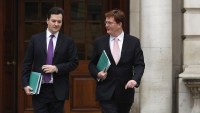
George Osborne's U-turn today on fuel duty seems both canny and confusing. It comes just 48 hours after a denial from Transport Secretary Justine Greening that the Government would scrap the 3p rise in August, but appears to be warding off the threat of a backbench rebellion in the Commons next week on a motion submitted by Labour to the Finance Bill.  Ms Greening told the Sunday Telegraph:  So more power to the backbenchers, led by Robert Halfon, whose campaign against fuel duty increases now looks to have succeeded in part, although he might want to continue to push retailers to push costs down anyway. But it is still surprising given the rebellion from Conservative MPs was not expected to reach beyond double figures.

Long nights of Lords reform ahead

From our UK edition

The concessions that David Cameron has reportedly offered the Conservative backbench on Lords reform are really not sufficient to keep them out of the no lobbies. Switching from a salary to a daily attendance allowance, which would keep peers' earnings below £60,000 in most cases, is hardly going to set the benches alight. The reason for this is mainly that Tory MPs are opposing Lords reform as much for reasons of principle as they are for personal reasons. This is a deeply personal row with the Lib Dems that was a bit awkward and grumpy a month or so ago, but has turned to full-blooded revenge over the party's refusal to support Jeremy Hunt in the Commons.

Osborne borrows his way out of a debt crisis

From our UK edition

This morning's borrowing figures from the Office for National Statistics are a blow for George Osborne, showing public sector borrowing up £2.7bn on the same time last year. The stats show the government borrowed £17.9bn in May, while the 2011-12 deficit is now £127.6bn, up £3.2bn. Labour have seized on the figures, saying it's the 'nail in the coffin of David Cameron and George Osborne’s failed economic plan'. It's worth remembering, though, that Labour would be borrowing even more in this Parliament than the Coalition is, with the Institute for Fiscal Studies estimating that under Labour, borrowing would be closer to £76bn in 2016-17 than the £26bn forecast in the March Budget.

Gove goes on attack on academies

From our UK edition

This morning at our Schools Revolution conference, Michael Gove came under sustained attack from academies architect Lord Adonis and Neil O'Brien from Policy Exchange, who pointed to a slowing-down in the number of primary sponsored academies being set up. O'Brien pointed out that the majority - around 80% - of academies set up under Gove are actually failing schools converting to academy status rather than new schools with a sponsor. Adonis told the audience that Gove's success on academies was illusory' because of the decline in the number of sponsored academies. But I hear that Gove is going to directly address these criticisms in his speech this afternoon.

Cameron’s welfare pledge to backbenchers

From our UK edition

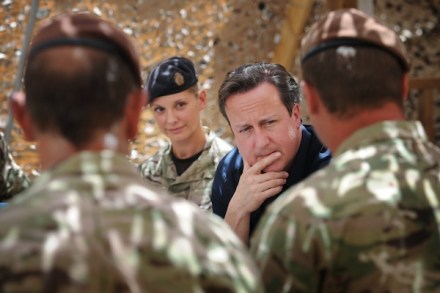
Why has David Cameron chosen to launch what is effectively a 2015 manifesto pledge on welfare today? The Prime Minister's speech, which he has just finished giving, had quite interesting timing: we still, after all, have just under three years before the next general election. Cameron has already dropped hints about how much further the Conservatives could go on key areas - and specifically referred to welfare - without the Liberal Democrats holding them back, but this is the first instance where he has pinpointed a particular post-2015 policy. It leaves the Liberal Democrats once again on the back foot over benefits, suggesting to a public hungry for a more conditional and less generous welfare state that the Government could go so much further without their Coalition partners.

Low marks for Labour’s Gove debate

From our UK edition

Labour's Opposition day debate tomorrow on Gove-levels might not reveal as much as the party hopes about where Liberal Democrat MPs stand on the Education Secretary's planned reforms. True, you won't see a Lib Dem lift so much as a finger in outright support of what Nick Clegg dubbed 'a two-tier system' created by scrapping GCSEs and replacing them with two sets of exams, but this might not be the forum for them to launch a rebellion. One key figure on the left of the party points out that 'it's not where the decision will be made', while another MP says Labour's motions are often so 'over-the-top' that they are unsupportable.