Isabel Hardman

Isabel Hardman

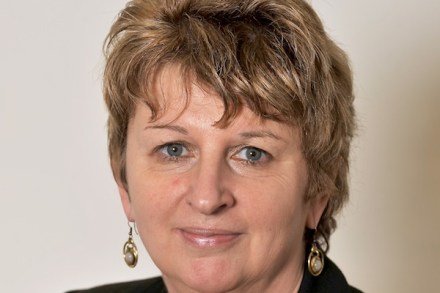
Isabel Hardman is assistant editor of The Spectator and author of Why We Get the Wrong Politicians. She also presents Radio 4’s Week in Westminster.

Theresa May tries to deter Tory uprising on foreign criminals

From our UK edition

MPs are hard at work in the Chamber tonight: once they've finished voting on the Leveson amendments to the Crime and Courts Bill, they'll move on to everything else in this piece of legislation. And everything else includes that amendment signed by over 100 MPs on Tory and Labour benches which limits the ability of foreign criminals to resist deportation. The Leveson debate has been a bit of a gift to ministers, as this big proposal would have enjoyed far greater attention had the Chamber not ben more exercised over press regulation. But that hasn't stopped a 'Dear Colleague' letter going out from Theresa May to Conservative MPs to explain why the government isn't supporting this call.

Newspapers irritated by exclusion from Leveson talks

From our UK edition

As he summed up today's debate on press regulation, the Prime Minister repeatedly stressed that the new system was a voluntary one, with incentives for journalists to join. It marked a shift in the tone from the leaders at the start of the debate: the Prime Minister was now trying to coax the industry to join the new system leaders had agreed on. Perhaps it was this statement from the Newspaper Society that made him a little more conciliatory: 'We would like to make it clear that, contrary to reports broadcast by the BBC this morning, no representative of the newspaper and magazine industry had any involvement in, or indeed any knowledge of, the cross-party talks on press regulation that took place on Sunday night.

Press regulation: Tory backbenchers worried by proposals

From our UK edition

MPs are continuing to debate the cross-party deal on press regulation in the Commons at the moment. The debate has been divided between congratulations for the party leaders and their colleagues who hammered out the deal, and wariness from some Tory backbenchers about what the proposals actually mean. David Cameron insisted during the debate that this wasn't statutory underpinning, but Nick Clegg said 'of course' when asked whether it actually was. Some Tory MPs agree with Nick: they believe this does include statutory underpinning.

Why the Tories don’t think the Leveson deal is statutory underpinning

From our UK edition

David Cameron has just met Tory MPs to explain the deal he's struck on Leveson. One of the things many of them were anxious to learn was whether the result does really mean the government has accepted the need for statutory underpinning. Hopefully the PM employed a better turn of phrase than his spokesman,  who told hacks this morning that this 'enshrines a non-legislative approach'. The Tories in Number 10 are insisting that this really is the case, that it's not statute at all and that the PM's feet aren't wet from any crossing of the Rubicon. Their argument is firstly that the amendment to the Enterprise and Regulatory Reform Bill is aimed at all Royal Charters, and protects them from further interference.

Press regulation: Ceci n’est pas une statute

From our UK edition

The party leaders should finish their discussions on Leveson - by phone - in the next hour or so. We'll then get a statement in the Commons on the outcome of those talks, and it's highly likely that all three leaders will speak as part of that statement. But the big debate now is whether what they have signed up to already constitutes the statutory underpinning that David Cameron was so very keen to avoid. There are two amendments to two different pieces of legislation relevant to press regulation: one on the Crime and Courts Bill on exemplary damages, and one to the Enterprise and Regulatory Reform Bill which prevents politicians meddling with the Royal Charter.

Harriet Harman and Maria Miller both claim victory in Leveson talks

From our UK edition

Who has won in the late-night Leveson talks? Both Harriet Harman and Maria Miller seem to think their own party's Royal Charter has come out tops. And one says they've secured statutory underpinning, while the other says there isn't any underpinning. And again, one says the deal is done, while the other says the parties are 'close' to a deal. This is what Harman had to say on the Today programme: 'There is an amendment going forward into the Enterprise and Regulatory Reform Bill which says that where a Charter says in that Charter it can't be dissolved or amended without a two-thirds majority in both Houses then that should have the force of law.' She added: 'The framework is set up in a Royal Charter, not by statute but in a Royal Charter.

Late night Leveson talks bring parties close to deal

From our UK edition

So it looks as though a deal has been struck on Leveson after late night talks. Oliver Letwin, Nick Clegg, Ed Miliband and Harriet Harman were holed up in Miliband's office until 2.30 this morning, and Labour is now confident that it is close not just to an agreement on press regulation, but an agreement on its own proposals for a Royal Charter, rather than the government's draft. As Coffee House reported on Friday, David Cameron was facing a rebellion of around 20 Tory MPs and a defeat in the House of Commons on his Conservative amendment which introduced the Royal Charter. That threat appears to have concentrated the mind rather.

Jeremy Hunt continues his quest to make the Tories the party of the NHS

From our UK edition

Jeremy Hunt used his address to the Conservative Spring Forum this afternoon as the next step in his quest to make the Conservatives the party of the NHS, not Labour. His speech was in some ways quite formulaic: it started with good news about health care in this country, then praise for the 'extraordinary' staff working in the NHS. But then it moved on to his duty 'to be honest about the failures' of the health service too. He said: 'If you care about something you don’t try to sweep problems under the carpet – you expose them, sort them out and make things better. And by criticising us when we do that, Labour show extraordinary complacency about the treatment suffered by some of the most vulnerable people in our society.

HS2 ruling: both sides claim victory

From our UK edition

The useful thing about most court rulings in judicial review cases is that both sides can take from it whatever they want and make it into a victory. We had that last month with the work experience judgement, which was apparently both a victory for those who thought the government's scheme was 'slave labour' and for those ministers who thought it was brilliant. And today's HS2 ruling in the High Court had the same effect. The government actually won nine out of the 10 points challenged by campaigners, so Transport Minister Simon Burns could call this a 'green light' to getting high speed rail underway. But according to former Cabinet minister Cheryl Gillan, that 10th point was in fact 'the most serious of all', and shows ministers have been 'cocky'. So what has happened?

20 Tories could rebel on Royal Charter plan

From our UK edition

Conservative MPs who have previously supported statutory underpinning of press regulation are meeting on Monday morning to discuss how they will vote. There is a list of 75 Tories who have backed the idea, but I understand that if an agreement isn't reached on Monday between the main parties, there are around 20 MPs who would be minded to vote against the Conservative three-line whip and support Labour's amendments. The Conservative part of the government has just published its Royal Charter, and Labour and the Lib Dems are also tabling more amendments today. Once all the information is available, pro-statute Tory MPs will make up their mind on whether to back their own party, or the others.

Parties prepare for Leveson showdown

From our UK edition

The Conservative amendments to the Crime and Courts Bill which introduce their Royal Charter for press regulation proposal are now out, although Labour and the Lib Dems are yet to table all their formal amendments.

Mid-Staffs scandal: The Tories must beware focusing solely on Andy Burnham

From our UK edition

MPs were debating accountability in the NHS following the Mid-Staffs scandal today, and as part of that, the argument about who - if anyone - should be held responsible continues to rumble on. Charlotte Leslie and many of her Tory colleagues want to see Sir David Nicholson gone (and The Telegraph's Robert Winnett reports that senior government figures are considering a route by which he can exit). But the focus of Jeremy Hunt and other Conservatives is on Andy Burnham instead. Today Hunt said: '[Nicholson] does bear some responsibility. He said himself 'we lost our focus', he has apologised and has been held to account by this House and others. But I don't believe that he bears total responsibility, or indeed personal responsibility for what happened.

David Cameron brings Leveson debate to a head over bill hijack fears

From our UK edition

Those involved in the Leveson talks from the Labour and Lib Dem side say they had no idea the Prime Minister was going to pull the plug on the cross-party discussions this morning until a conference call shortly before David Cameron's hastily-arranged press conference. An angry Lib Dem source tells me: 'It was completely out of the blue to be honest. Over the last few days the talks have been making gal progress and we were moving towards a deal. We thought a solution was possible. There were other things we war pushing for, such as some form of statutory underpinning to protect the Royal Charter from future political interference.

Exclusive: Nick Boles to get roasting from No 10 over ‘rotten campaign’ comments

From our UK edition

Nick Boles is getting a roasting in Number 10 tonight for his comments in The Times about the Eastleigh by-election, I understand. There was considerable disquiet about the interview, in which the Planning Minister said his party had run a 'truly rotten campaign' and failed to convey the modernisation message. "Where was the hope? It was as if modernisation had never happened. We screwed it up. We didn't even screw up in a new way. We screwed it up in an old way that we have been doing for a decade. It's so frustrating." This was apparently Boles doing his own thing rather than a decision from the top that someone needed to go out to the media and be clear that no-one blamed Maria Hutchings for the Conservatives coming third in the by-election.

PMQs: David Cameron flails as Tory backbench stays glum

From our UK edition

Today's Prime Minister's Questions was not a good one for David Cameron, but it could have been a great deal worse. With a U-turn on minimum pricing on the cards and open dissent in the Cabinet and on the backbenches, the PM arrived knowing he'd have his back up against the wall, even though Ed Miliband has struggled to make effective attacks on big issues in the last few weeks. The Labour leader had some good jokes, too. His opening line - 'in the light of his U-turn on alcohol pricing, can the PM tell us, is there anything he could organise in a brewery?' - was particularly good, and set the tone for the rest of the exchanges.

Expected U-turn on minimum alcohol pricing is victory for May and relief for Osborne

From our UK edition

The government's expected U-turn on a minimum price for alcohol avoids a Cabinet revolt which would have included Home Secretary Theresa May. It's good timing for May as she enjoys the spotlight on her apparent jostling for a future leadership bid as it shows that she enjoys power at the top of the Tory machine, and will again make her a rallying figure for libertarian Conservatives. But the U-turn is also, in the long-term, good for the Chancellor, too. George Osborne is under pressure to deliver a cost of living budget, and raising the minimum unit price would do the opposite, even for squeezed shoppers who drink responsibly. The last thing the Conservatives want to appear to be doing is punishing the responsible majority by making life even more expensive for them.

Tory campaign on foreign criminals attracts huge support

From our UK edition

Dominic Raab's proposal to stop jailed foreign criminals avoiding deportation on the grounds of a right to family life turns out to be very popular indeed among MPs. It's got 104 supporters currently, including 91 Conservative MPs, and will be debated as an amendment to the Crime and Courts Bill tomorrow when the legislation reaches its report stage in the House of Commons. The amendment would mean that foreign criminals can only avoid deportation if they risk being killed or tortured on their return, and is intended as a stop-gap ahead of any Tory plans to repeal the Human Rights Act or exit the European Convention on Human Rights.

The Tory leadership needs to make MPs feel valued, not stop them tweeting

From our UK edition

Lynton Crosby is holding his election strategy meeting (first revealed on Coffee House) with Tory MPs at 5.30 this afternoon. One of the things he'll bring up, as reported by Benedict Brogan this morning, is that MPs need to be a little less unruly on Twitter. Obviously that's not their biggest worry, as there's also the problem of MPs coalescing around different future leadership contenders, who are all thinking ahead to what will happen after the 2015 leadership election. I understand from friends of Adam Afriyie that their campaign has managed to stop seven or eight letters asking for a leadership contest to oust David Cameron going to 1922 Committee chairman Graham Brady.

How the Coalition neutered Ed Balls’ mansion tax vote

From our UK edition

The mansion tax - sorry, 'tax fairness' - debate is still rumbling on in the Commons, and Labour are trying to score as many political points as possible on the matter, as expected. Actually, the party's idea to table the Opposition Day vote on this policy was a good piece of political game-playing when they announced it. But equally impressive has been the Coalition's response to it. The Liberal Democrats were extremely nervous about talking about how they would vote before the Eastleigh by-election. One aide told me at the time: 'We can't have Labour putting about on leaflets that we are opposing our own policy: we don't want a broken promises problem.