Isabel Hardman

Isabel Hardman

Isabel Hardman is assistant editor of The Spectator and author of Why We Get the Wrong Politicians. She also presents Radio 4’s Week in Westminster.

Tory conference 2013: five things we learned

From our UK edition

1. Labour set the agenda for this conference. Ed Miliband might be preoccupied by his row with the Daily Mail about his father, but he can take heart that his shift to the left in Brighton last week had a huge influence over this Conservative party conference. This wasn't just the cost of living agenda, which Tory ministers felt the need to rebut and respond to in their own speeches, but, as James explains in his politics column this week (get a sneak preview on Coffee House here), Ed Miliband has energised the Tories into being more determined than ever to beat Labour. David Cameron's own speech contained 25 references to Labour, and he tried to deal with Ed Miliband in a number of ways, which I outlined here.

Labour set the test for this Conservative conference – but Cameron passed

From our UK edition

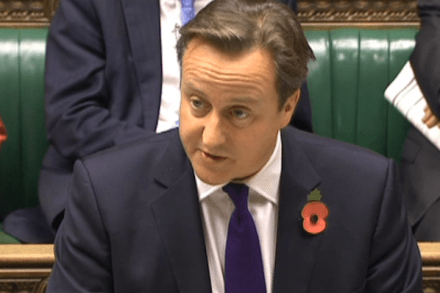
David Cameron is an essay crisis Prime Minister. He works best when his back is against the wall. And this conference he had a last-minute test set for him which he had to step up to. That test was set by the Labour party last week, with its focus on the cost of living, and Cameron passed it. His speech was written with clever flourishes and turns of phrase - 'the land of despair was Labour, but the land of hope is Tory', 'Abu Qatada had his very own May Day this year' and 'I've got a gesture of my own for Ed Balls' - but it was also dominated by the Labour party. There were 25 references to Labour in the text of the speech.

David Cameron skips conference announcements to boast about Tory record

From our UK edition

Normally when a Prime Minister gives a speech to a party conference, the 'line' for the next day's newspapers is pretty clear. A policy announcement means it's easy to write the introduction to the story, which is supposed to sum up what happened in under 25 words. But David Cameron's speech today could only really be summed up as 'Today the Prime Minister gave a speech on all the things he's done and asked for time to finish the job'. His speech had no policy announcements in it, other than a hint that under-25s could lose their benefits unless they were 'earning or learning'. This is an impressive bet by the Conservatives: that the speech will still get written up by the press with a list of achievements in it rather than trying to tempt voters with a new policy.

What will Cameron say about the Lib Dems?

From our UK edition

The Tories are naturally the most worked up about Ukip - while trying to publicly pretend that it doesn't exist, of course - but when David Cameron gives his speech to conference shortly, what will he say about the Lib Dems? He faces two yellow challenges: the first is to try to stop the Lib Dems claiming credit as the party of the moral high ground without which the Tories would be a rabidly unfair party unconcerned with the needs of the vulnerable. The second is giving the impression that while the Coalition may conduct itself with greater serenity than anyone could have imagined when it formed in 2010, he doesn't relish the thought of another partnership after 2015.

David Cameron: Don’t be seduced by Labour’s quick fixes, let us finish the job

From our UK edition

One of the striking things about the extracts of David Cameron's speech that have been briefed so far is that the Conservative Prime Minister is having to respond to a number of key themes of Ed Miliband's conference last week. Labour should be pleased that it has set the agenda for this conference season, not just spooking ministers on the cost of living, but also forcing a defence of business and profit from the Prime Minister. Ed Miliband's row with the Mail has also overshadowed the conference. The Prime Minister will say: 'We know that profit, wealth creation, tax cuts, enterprise… these are not dirty, elitist words - they're not the problem. They really are the solution because it's not government that creates jobs, it's businesses.

‘Generation Rent’ policy is first victory for Number 10 policy board

From our UK edition

When the Number 10 policy board was formed, many dismissed it as a sop to angry backbenchers that would have no real power. It lost one of its biggest figures, Jesse Norman, after the Syria vote, and I reported a few weeks ago that there were concerns the members weren't gelling all that well. But today, buried in Eric Pickles' speech to conference, was a line that represented the first solid policy from the board. Pickles said: 'We are supporting new family-friendly tenancies in the private rented sector.' Some listening might have missed this, but Coffee Housers will recognise the policy, because we first reported it last year. It was first proposed in a briefing paper to Number 10 by Jake Berry, who was then just a lowly PPS, and is now a member of the policy board.

Michael Gove’s evangelical education afternoon

From our UK edition

Michael Gove has only just started speaking to his party conference, but already he has made a powerful, emotive case for the moral value of his education reforms. The education section of the afternoon programme has resembled an evangelical Christian outreach event where people give their 'testimonies' about how they came to faith. It had a former US teaching union leader, George Parker, explaining how he was 'born again' as a reformer, and how he repented of the days he spent time and money defending bad teachers and opposing performance-related pay. He was followed by Mark Lehain from the Bedford Free School, and a parent of a pupil at the school, Jo Morey, who broke down in tears as she thanked the Conservatives for giving her choice over how her child was educated.

Jeremy Hunt aims for the moral high ground on the NHS

From our UK edition

Jeremy Hunt has an unusual way of delivering a forceful speech. He pulls a worried, frowny face, and speaks in a special growly sort of voice when he wants to criticise his opponents, but doesn't shout, or indeed really raise his voice at all. Today he delivered a particularly forceful speech to the Conservative conference on why the Tories are the 'party of the NHS'. He used that phrase 'our NHS' that Andy Burnham likes to deploy as part of his emotive pitch to voters on the health service. Hunt used the same emotive pitch today, arguing that Labour placed ideology above what works for patients, and that it failed to address problems. He said: 'Even their own people felt desperately uncomfortable.

Boris Johnson, Cameron loyalist

From our UK edition

During his speech, Boris Johnson frequently looked down at his notes and then looked a little surprised, as though he hadn't expected half the content to be there. This wasn't his strongest speech, but it was clear that among all the jokes about large boring machines, the murder rate in Brussels and other quips that he's used before, there were two serious messages that the Mayor wanted to convey to the conference. listen to ‘Boris: 'It's time to cut the yellow Lib Dem albatross from around our necks'’ on Audioboo The first was a very serious policy-focused message, and therefore delegates got a little bit bored when Boris was delivering it. They still come for the jokes, not the ideas.

Boris Johnson, Tory counsellor-in-chief

From our UK edition

Boris Johnson is difficult to pigeonhole, but at Tory conferences he seems to be taking the role of counsellor-in-chief, cheering up party activists with a slew of jokes and slights on other ambitious colleagues or indeed his party leader. As ever, there were two huge queues outside the auditorium this evening for his event on London, and some of the only truly sincere and excited-sounding applause when he (eventually) arrived. And there were jokes - 'Ukip if you want to - David Cameron's not for kipping. Not unless, obviously, he's at his sister-in-law's wedding' and the definition of 'Milipede' being some sort of left wing insect - that left them all guffawing.

Breaking: George Osborne wants to freeze fuel duty for the rest of this Parliament

From our UK edition

George Osborne is currently giving his speech to the Tory conference, which is being well received - particularly impressive in this flat hall. He focused initially on the argument that fixing the economy is the way to solve the cost of living crisis. But his MPs will also be heartened that he didn't stop there. The Chancellor has just told the conference hall that, provided the savings can be found, he wants to freeze fuel duty for the rest of this parliament. This announcement came at the end of a passage on the sort of people the Conservatives want to stand beside: the factory and warehouse workers that the Chancellor has visited in the past few months. The message: you trusted the Tories with the economy, now keep trusting them to lift all the boats, not the yachts.

The north-south rebrand won’t stop HS2 becoming the new symbol of Tory disunity

From our UK edition

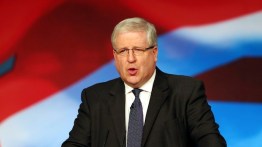
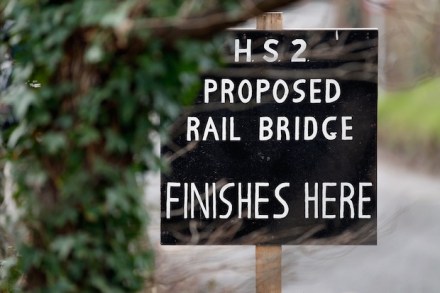
There was no chance the Conservatives could come to Manchester, with a row over the future of high-speed rail raging, and not make a big thing of the proposed new railway line. But as I explained in my Telegraph column last week, the party knew that a little crafty rebranding wouldn't go amiss, and so when Patrick McLoughlin spoke to conference this morning, he placed as much emphasis on the uniting power of the new 'north-south' line as he did on the economic or capacity-based arguments that the government have focused on so far. He said: 'So here in Manchester I am proud to support HS2 - the new north-south line. Just as I’m proud to support it in cities like Sheffield. Leeds. Nottingham. Derby. Glasgow. Birmingham. In all the great cities of our country.

George Osborne focuses on big picture and trust to undermine Labour

From our UK edition

How can the Conservatives deal with Labour's attack on the cost of living? As I explained last week, the party believes that the best way to address the opposition's focus on living standards is to talk about the bigger picture rather than the 'footling little things'. Senior Tories I've spoken to in the past week are very confident indeed that because they enjoy the trust of voters on the economy, while voters still blame Labour for the mess, they don't need to worry about the strategy that Ed Miliband has adopted. One senior figure remarked to me this weekend that 'Labour has mis-fired: when we've got such a poll lead on the economy, why should voters think anything Labour has to say about cost of living is credible?

William Hague is charming, but what he says won’t satisfy the Eurosceptics

From our UK edition

William Hague has to be one of the most charming men in the Cabinet. Today, rather than attacking his Lib Dem colleagues for being 'woolly', as Philip Hammond did, the Foreign Secretary made the case for a majority Conservative government by saying quite politely, at the end of a long list of British foreign policy achievements, 'And all that in a Coalition: just think what we could accomplish on our own'. Delegates loved that.

Philip Hammond: Britain can do better than a blank sheet of paper or the Lib Dems

From our UK edition

listen to ‘Hammond: 'A Conservative government will never send our forces in to battle without the right kit'’ on Audioboo Philip Hammond's speech to the Conservative conference was accompanied by the set of circumstances that most ministers have bad dreams about after eating too much cheese. First he was interrupted by two men in military clothing, shouting about defence cuts and fusiliers. 'I'll come and talk to you later, let me finish my speech,' the Defence Secretary said, hopefully. The man didn't stop, and was escorted from the floor, followed by a cloud of journalists scribbling away and enthusiastic photographers. Then the giant screens behind Hammond that were beaming two massive shots of his head out across the Manchester Central hall went dead.

Grant Shapps: Britain can do better than a Labour government

From our UK edition

Manchester Central is a beautiful, cavernous conference venue. But it also seems to be acting as a bit of an atmosphere sink today. When Grant Shapps bounded onto the conference stage after the party's tribute to Baroness Thatcher, he might have expected that his speech, which was full of the sort of fare that Tory grassroots love - attacks on Labour and the trade unions and a reminder that Abu Qatada no longer haunts these shores - would have gone down to uproarious applause. But though delegates clearly liked his speech, they never really warmed up. If this continues through the week, it won't help diminish the impression that political conferences are dying.

How strong can the Tory tax attack be?

From our UK edition

One of the key dividing lines in 2015 will be over what sort of action each of the parties proposes to take over filling the financial black hole. The choice is between tax rises and spending cuts, and the Tories were first out of the blocks to make clear that they want to focus on spending cuts, specifically shaving more money from the welfare bill, as part of their election offer. James first revealed this in his Mail on Sunday column in June, and then George Osborne ruled out tax rises at a press gallery lunch the following month. At the time, he said: 'I think this can be delivered through spending and savings both in welfare and in departments, and there is no need for tax rises to contribute to that fiscal consolidation.