Miliband says he’ll stick to his convictions in post-election fightback
From our UK edition
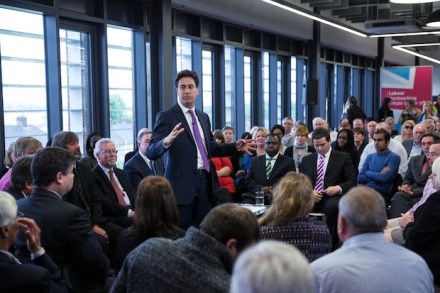
Moments of grumpiness aside, Ed Miliband's fightback speech this afternoon was very worth listening to.

Isabel Hardman is assistant editor of The Spectator and author of Why We Get the Wrong Politicians. She also presents Radio 4’s Week in Westminster.
From our UK edition
Moments of grumpiness aside, Ed Miliband's fightback speech this afternoon was very worth listening to.
From our UK edition
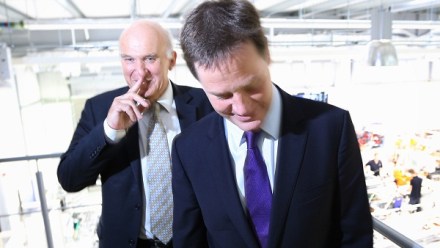
In the past few minutes, Vince Cable has issued this statement on the leaked ICM polling: 'Lord Oakeshott's actions are totally inexcusable and unacceptable. I have made it very clear repeatedly that he does not speak or act for me. 'Commissioning and publishing polls without the consent of the Member of Parliament, as in the case of Sheffield Hallam, is utterly reprehensible. 'There are undoubtedly raw feelings in the wake of poor local and European election results. We need to respond in a measured way. Public speculation about the leadership is an unwelcome distraction and as I made absolutely clear yesterday there is no leadership issue as far as I'm concerned.' Oakeshott has not responded to requests for comment all day.
From our UK edition
Ed Miliband has just delivered his post-European and local elections comeback speech in Thurrock, to show that he's not afraid to confront the challenges that Labour still faces in the run-up to 2015. I'll post on the details of the speech and what it means shortly, but one exchange in the Q&A told us quite a lot not just about Miliband but politicians in general. Here is a video clip: And here is the transcript: Journalist: 'Peter Dominiczak from the Telegraph. You've been attacked in your party for being too wordy and too academic. I wondered if you could give us here today just one word that defines your leadership and tells voters what makes you different and sets you apart from the other party leaders?
From our UK edition
Who is the mysterious 'Lib Dem supporter' behind the ICM poll showing that the Lib Dems would fare very badly next year if Nick Clegg remains leader? ICM have published the poll tables, saying only that the commissioning client is a 'member of the Liberal Democrats'. The British Polling Council rules state that its members must refer to the 'client commissioning the survey', and there is some suggestion that simply saying the client is a Lib Dem member isn't quite sufficient. I've spoken to the BPC's Secretary Nick Moon, who says the Council is examining ICM's disclosure to see whether it complies with the rules. He says: 'It is a little unclear, we are looking at it, but we've never had a case quite like this. It's not clear whether the rule includes the actual individual.
From our UK edition
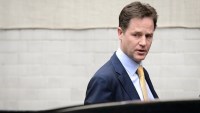
Will Nick Clegg survive his mauling in the European elections? The front pages this morning don't do the Lib Dem leader any favours - although his main leadership rivals, Tim Farron and Vince Cable, did by pledging their loyalty to him. There is considerable suspicion in the party that the polling on the Guardian front page was commissioned by one of Cable's allies, with or without the Business Secretary's knowledge or approval. It's certainly had more impact than an open letter or pithy op-ed, and whoever the 'Lib Dem supporter' responsible for the leak is, they're certainly not a Nick Clegg supporter. Privately, Clegg has admitted that he wishes his 'party of In' campaign had more nuance on the question of reform so that he didn't sound blindly pro-European.
From our UK edition
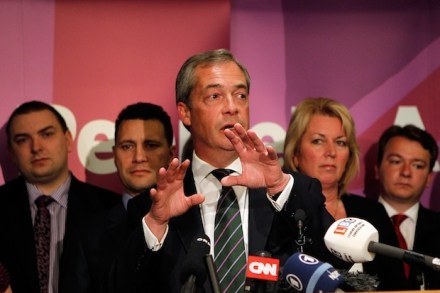
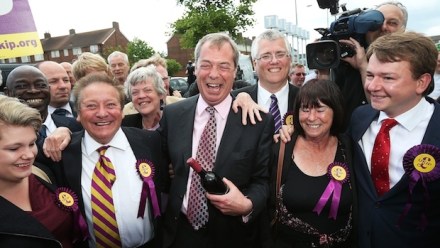
Nigel Farage hasn't just been enjoying today, he's been using it as a springboard for a professional, grown-up Ukip. He told a press conference in London that his party would challenge Ed Miliband's focus on the cost-of-living crisis and do so in the Labour leader's own town. He also said the party had been doing 'substantial work on the NHS'. Even though he's had a torrid few weeks of scrutiny on every reach of his party and his own views, you can't fault Nigel Farage for continuing to plug away at trying to make his party grow up. But while more prominent policies than just Europe are an important part of growing up, the real sign that Ukip is a 'professional' party will come when it makes its first unpopular pledge - what Nick Clegg would describe as a 'difficult decision'.
From our UK edition
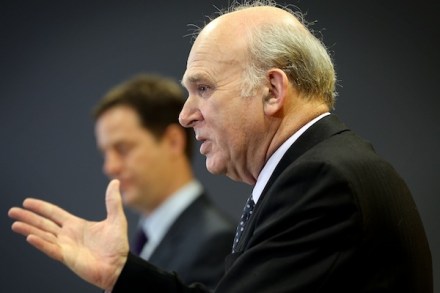
Vince Cable, definitely not in the Team Nick camp, has finally broken his silence from a trade visit in China to defend his colleague. In the past few minutes the Business Secretary has released this statement: 'These were exceptionally disappointing results for the party. Many hard working Liberal Democrats, who gave this fight everything they had and then lost their seats, are feeling frustrated and disheartened and we all understand that. 'Nick did a bold thing in standing up to the eurosceptic wave which has engulfed much of continental Europe. We are the only party to have taken that on and he personally deserves tremendous credit for that. There is no leadership issue.
From our UK edition
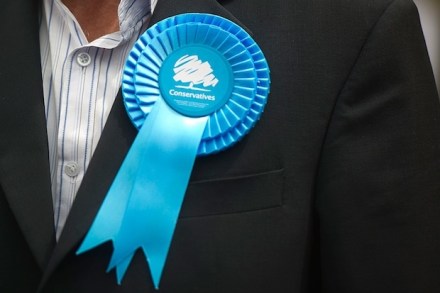
Conservative MPs and candidates are, it's fair to say, pretty exhausted this afternoon after last-minute campaigning for the local and European elections and all-nighters watching the results come in. But with the Newark by-election drawing closer, they're not flopping into their beds just yet. All candidates have been summoned to a 10am briefing in Newark on Sunday. They were only told on Monday that the meeting was taking place, and that it was compulsory, with Grant Shapps demanding a personal explanation from those who cannot make it. The email says: 'There will be a briefing meeting for everyone on the Candidates List on Sunday 25th May at 10.00 am in Newark, which will be followed by delivering.
From our UK edition
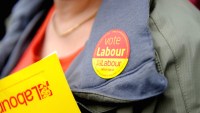
Labour has a strange response today to Ukip's success. Ed Miliband has argued that 'there is deep discontent with the way the country is run and a deep desire to change', which almost suggests that the results have been resoundingly good for Labour. True, the party has won seats - 152 net gains so far - and reeled in big fishes from the Conservatives such as Hammersmith and Fulham Council. But Ukip is stealing votes from Miliband's party, Labour is not doing as well as it could be expected to, and the Labour leader's point seems to be as much about the factors driving voters to Ukip as it is about anything else.
From our UK edition
Labour's performance in the local elections is a blessing for the Conservatives. A less impressive showing in the polls for the Opposition a year out from the general election, with key target councils failing to go red and what John Curtice has described as a 'failure to do well enough' means the story is not just about the government getting a pounding. Number 10 sources are arguing that 'Labour are actually going backwards'. Some MPs long known to be vocal critics of Ed Miliband are taking to the airwaves to criticise him. Graham Stringer has attacked the Labour leader's 'unprofessional' team. Simon Danczuk has just told LBC that 'I'm not going to pretend that Ed Miliband as an issue doesn't come up on the doorstep, of course it does'.
From our UK edition
Inevitably, given Ukip has made strong gains overnight, some Conservative MPs have been renewing their calls for a Tory-Ukip pact. Conservative ministers have been quick to brush this off, with Grant Shapps arguing: 'We’re not going to have a pact or joint candidates, or whatever. It can’t happen on a technical basis because we do not allow joint candidates to stand... It’s not going to happen because we’re the Conservative party; we are the best chance to offer an in/out referendum, the only chance.' Michael Gove was also asked about this on Good Morning Britain, and he said: 'Absolutely not. I don't think we should have a pact.' The Tories had been quite bullish about the local results in their briefings in the run-up to these polls.
From our UK edition
Around a third of all councils up for election yesterday have now declared. Here are the results so far: So far the Conservatives have lost eight councils, with 15 declared Conservative. The Tories have 1,005 seats (a loss of 85). Labour has gained 73 seats with 1,280 now Labour and two councils, with 25 declared Labour. The Lib Dems have one council declared for them, losing one. Seven councils have moved to no overall control - a total of 16 councils are NOC so far. Ukip has not won any councils but has gained 81 seats taking it 102. This means the party has already met its target of 80 gains. Here are some of the most interesting results: - Labour has taken control of flagship Conservative council Hammersmith and Fulham.
From our UK edition
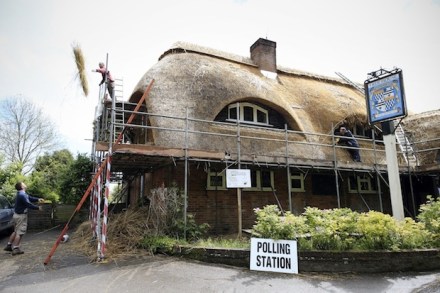
Now the waiting begins.
From our UK edition
When polls close tonight, another vote will open in one part of the country that could cause a bit of European trouble for David Cameron. Tory MPs Peter Bone and Philip Hollobone and Conservative candidate for Corby Tom Pursglove are running a In/Out referendum in North Northamptonshire, consulting around 250,000 people across three constituencies on Britain's membership of the European Union. The trio have timed the poll for after the European and local elections have closed for votes but before the result of the European elections is declared, partly so that they cannot be accused of making trouble in any way. They are, they argue, simply following Conservative party policy (now rather than two years ago, when a referendum was not Conservative party policy).
From our UK edition
The inconveniently-timed net migration figures are out this morning, and they're not good for the Prime Minister's pledge to get immigration into the 'tens of thousands' by the general election. The Office for National Statistics estimates that net long-term migration to the UK was 212,000 in 2013. This is a rise—one the ONS says is 'not a statistically significant increase'—from 177,000 the previous year. But what is 'significant' is the increase in the number of EU migrants – 201,000 EU citizens came to the UK in 2013, up from 158,000 the previous year. [datawrapper chart="http://static.spectator.co.uk/ZtESo/index.
From our UK edition
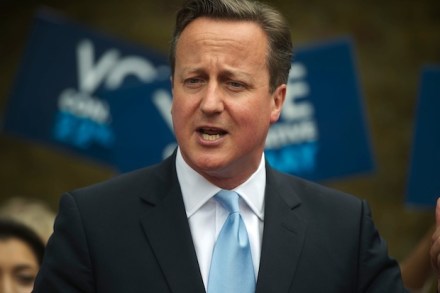
A Prime Minister defending a government policy is usually quite unremarkable. But today David Cameron defended the Government's free school meals policy, and given the amount of vitriol this has attracted between the two Coalition parties in recent weeks, that really is remarkable. He told the World at One: 'I don’t really accept it was made on the hoof because, as I say, it was trialled, a decent amount of time has been set aside for its introduction, £150m… Any change is always difficult and I think you should judge the change as it comes in.
From our UK edition
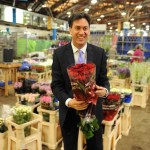
Most of the reshuffle-related excitement in Westminster is focused on a pending Tory one. But does Ed Miliband's top team need a bit of freshening up too? I blogged last week that Labour backbenchers, including a number with serious experience of government, were unhappy with the way many of the Labour top dogs are failing to go out to bat for their leader. Miliband has certainly trodden on his stumps in the past few days with some broadcast gaffes, but he does have a problem with the batting order below him.

From our UK edition
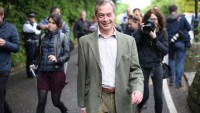
Nigel Farage has stirred up talk again this morning of joint Conservative/Ukip or Labour/Ukip candidates. This has been doing the rounds ever since the Ukip leader mooted it in an interview with James in the Spectator, but neither main party is keen. The reason is that this would effectively outsource candidate selection to someone outside the Conservative or Labour party: only candidates Ukip considered sufficiently 'sound' according to its own standards would get the Farage kitemark, and therefore local parties with Ukip breathing down their necks might be tempted to choose a more Ukippish type to stand for them than otherwise. But there's another point worth making about the joint ticket.
From our UK edition
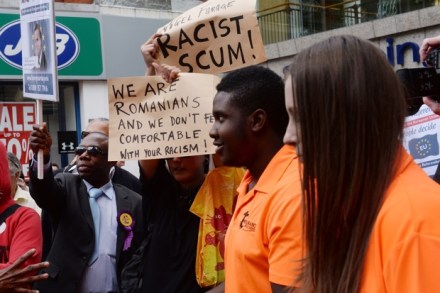
Ukip's we're-not-racist ethnic minority carnival in Croydon always looked as though it was going to provide plenty of material for sketchwriters and critics. It was another attempt by the party to showcase its non-white members and candidates, with local candidate Winston McKenzie on hand too. But the event aimed at spinning a line about the party's open-mindedness spun out of control. The steel band told journalists they didn't know they'd been booked by Ukip, and were pretty unhappy about it too. Then a group of protesters accused the party of being Nazis. Then McKenzie, explaining why Nigel Farage had pulled out of attending the event, described the town he is standing for election in as a 'dump' and 'unsafe' because it had been failed by successive governments.
From our UK edition
The next set of net migration figures are, conveniently, released on the day of the European and local elections. Some wonder whether this will add grist to the mill of those on the Tory Right who want to cause trouble for Cameron as they can demand that he crack down further on immigration. But I've discovered that if there is one demand eurosceptics will make, it will be for the Prime Minister to scrap the target, rather than try harder to meet it. The reasoning behind this is that the Prime Minister could argue that freedom of movement in the European Union makes it impossible for the Conservatives to have any real chance of meeting this target, save by introducing ever-tougher restrictions on non-EU immigration.