Isabel Hardman

Isabel Hardman

Isabel Hardman is assistant editor of The Spectator and author of Why We Get the Wrong Politicians. She also presents Radio 4’s Week in Westminster.

French economy minister pushes Germans on bailout money

From our UK edition

Emmanuel Macron has only been the French economy minister for a few months, but already he's attracted plenty of domestic outrage, mostly from socialists who think he's a bit too right-wing. Now the former banker seems to be aiming for a wider audience to provoke, suggesting in meetings in London yesterday that Germany should drop its opposition to using the European Stability Mechanism bailout fund as a EU-wide stimulus fund. Macron spoke to British journalists after holding meetings with Vince Cable and Chuka Umunna. He will also meet Osborne during his trip, and hopes to persuade the Chancellor of the merits of using €50bn from the ESM to spend on capital projects across Europe.

Home Office questions: It’s all Labour’s fault

From our UK edition

A week after uproar in the Commons over the vote on the European Arrest Warrant that was or wasn't a vote, depending on what you fancied believing, Theresa May faced MPs at Home Office questions where she was rather quickly pulled up on that debacle. Shadow Home Office minister David Hanson asked why the House of Lords did get a vote on the European Arrest Warrant when MPs were denied the opportunity last week.

Anger at government incoherence on spending and debt

From our UK edition

David Cameron had hoped that the UK's £650 million contribution to the Green Climate Fund wouldn't get much attention in the week that the Tories are going head-to-head with Ukip in Rochester and Strood. But there it is, in the newspapers today, with angry quotes. It is being billed as a threat to the Tory fight against Ukip, but some MPs think it has a wider resonance. One grumbles: 'Why is Cameron one minute promising in the Guardian to not let up in tackling our debt and then the next splashing £650 million on a UN green fund? He's like the guy who, when on a night out with people he is trying to impress, throws all reason out of the window and starts buying rounds of champagne!

David Cameron warns of ‘red warning lights’ in world economy

From our UK edition

Over the past few months, ministers have been using increasingly upbeat language about the British economy. 'Britain is coming back', 'the economy is booming', and 'Britain, we did this together' are examples of just some of the things George Osborne and colleagues have been saying. So why is David Cameron writingin the Guardian about 'red warning lights' on the dashboard of the global economy? The first reason is that all that upbeat language has always been couched in warnings about the global economy. George Osborne's Conservative party conference speech this year contained a long passage about the problems in the world economy, so this is not a change in tune.

How should mainstream politicians talk about Ukip?

From our UK edition

Mainstream politicians still aren't sure how to talk about Ukip. There's the question of whether the party's European election and by-election successes will power them to a good result at the 2015 election, or whether this protest movement will fade a little by the time voters start thinking about the sort of government they like. There's the question of whether Ukip is borrowing members of each mainstream party's 'core vote', or whether neither the Tories nor Labour should consider voters 'theirs' any more anyway. And then there's the question of how to talk about Ukip. Most senior politicians are agreed that you can't call people who vote for Ukip fruitcakes or closet racists. But the question still lingers of how to approach the Ukip leadership.

The recklessness of CCHQ

From our UK edition

The Conservatives have released a rather silly leaflet for the Rochester by-election contrasting Mark Reckless with their candidate Kelly Tolhurst. As if to highlight that it might be a silly leaflet, it features the phrase 'the straight choice', which some thought had gone out of fashion in 1983. Then it goes through Tolhurst's local credentials, followed by Reckless's Establishment background. You can see what they're trying to do here, which is to undermine Ukip's anti-Establishment pitch. That's why the Conservatives held a postal primary to select their new candidate once Reckless had defected.

Sir John Major, Cameron’s unofficial EU negotiator

From our UK edition

John Major's speech in Berlin yesterday was aimed at a European audience, but his warning that Britain has a just under 50% chance of quitting the EU still gets plenty of pick-up in the British press this morning. The former Prime Minister hasn't always helped Downing Street out in his interventions over the past few years, but Number 10 did work with Major on this speech. His arguments are beautifully-written and striking because they come from a pro-European former leader. Major is not someone who European leaders will discount as a raving eurosceptic, and therefore his stark warning about the chances of Britain leaving should be taken seriously. He said: 'I put the chance of exit at just under 50%. But if the negotiations go badly that percentage will rise.

Ed Miliband turns down head-to-head debate with Nigel Farage

From our UK edition

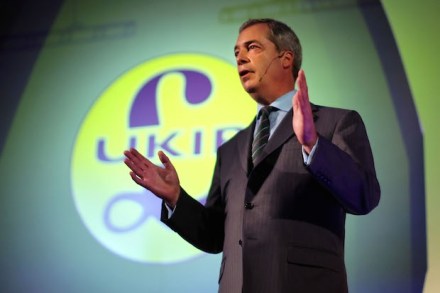
Earlier today, Ukip leader Nigel Farage sent what appeared to be a typewritten letter to Ed Miliband challenging him to a head-to-head debate. The Labour leader has now used a more modern form of communication to respond. And, funnily enough, it's a no: .@Nigel_Farage Bring it on. I look forward to a debate with you, @David_Cameron and @Nick_Clegg in the election campaign. — Ed Miliband (@Ed_Miliband) November 13, 2014 Actually what Miliband would dislike far more than an hour fighting Farage on television (which didn't work out all that well for Nick Clegg when he did it before the European elections), would be any televised debate involving the Green Party, who are currently excluded.

Ed Miliband’s make-or-break speech: ‘I’m willing to put up with whatever is thrown at me’

From our UK edition

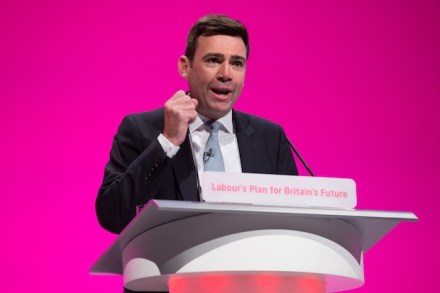
Ed Miliband's make-or-break speech this morning was fine. That's fine as in it did the job just fine, rather than that it was a fine speech that his party will reminisce about for many years. The main challenge was for him to not mess up, either by failing to mention the deficit, tripping up on the way to the lectern, or appearing unconvincing. He did mention the deficit, he did deliver the speech from a lectern (albeit in the round, which is a favoured format of his because it looks informal, but that's not really what he needs at the moment when he's trying to look formal and prime ministerial), and he did sound passionate. Miliband talked about his values and his motivation for doing the job.

The Tories are paying the price for their swagger over the Rochester by-election

From our UK edition

[audioplayer src="http://traffic.libsyn.com/spectator/TheViewFrom22_13_Nov_2014_v4.mp3" title="Isabel Hardman and James Forsyth discuss the Rochester by-election" startat=624] Listen [/audioplayer]In a corner of the Ukip campaign office in Rochester, a light-up orb is spinning, with the words ‘Vote Mark Reckless’ endlessly switching from yellow to purple. It’s hypnotic, if disconcerting, but also unnecessary because voters don’t need to be persuaded to vote for him. The by-election that Ukip thought would be a tricky one is turning out to be easier than anyone predicted. Poll after poll has put Mark Reckless as the winner of next week’s vote, and fewer and fewer Tories privately think that their party will win.

Miliband to pitch himself against Goliaths in fightback speech

From our UK edition

Ed Miliband has a speech billed as his make-or-break fightback proof-I'd-make-a-great-PM tomorrow morning. In truth, it's rarely right to bill one political speech as The fightback, at least in voters' minds, but the Labour leader does need to show that he hasn't been crushed by the past few weeks - and reassure his party sufficiently for them to fight with him. His speech will be followed by 'interventions' from Ed Balls, Yvette Cooper, Chuka Umunna and Tristram Hunt in the next few days.

How can Labour overcome Ed Miliband’s poor appeal to voters?

From our UK edition

How do Labour campaigners overcome the Ed Miliband problem on the doorstep? Today's Standard poll finds just 13 per cent of voters think he is ready to be Prime Minister, down from 22 per cent in June. MPs, candidates and activists have noticed a hardening in voters' attitudes towards the Labour leader. One says: 'Voters have gone from thinking "I'm not sure about this guy" to "I've made up my mind about this guy and I'm not going to vote for him".' But the candidate standing before them on the doorstep needs to work out how to persuade that voter to back them. So what do they do? One says that they explain to voters that when you meet Ed Miliband in person he's a 'really nice, funny, smart guy who cares desperately about our country'.

Tories three points ahead of Labour in new poll

From our UK edition

The Tories have pulled ahead of Labour in a new poll in today's Evening Standard. The Ipsos Mori poll puts David Cameron's party three points ahead of Labour, at 32, and Labour down four points to 29. The Lib Dems are on 9 and Ukip 14. This poll is just one poll, Labour will say, as it tries to stop more panic breaking out ahead of Miliband's speech tomorrow. But it is a bad poll, the worst poll for Labour so far. The Labour leader does need to reassure his party that going neck-and-neck and sometimes behind the Tories is not a symptom of Labour's weaknesses but a feature of the era of multi-party politics which means that no mainstream party can expect a poll lead. That the Tories are on 32 per cent is hardly a sign of strength, either.

Does Cameron benefit from ECJ ruling?

From our UK edition

Yesterday's 'excellent' ruling from the European Court of Justice on benefits immediately seemed a jolly good thing for David Cameron and allowed him to move on the Commons shambles on the European Arrest Warrant. But is it a good thing for his renegotiation plan? The Guardian reports the head of the European People's Party in the European parliament saying that this judgement means the UK does not need to contest freedom of movement 'because it highlights that member states have many options and legal tools at their disposal to make sure their social system is not abused'. This would make sense if David Cameron just wants to reform freedom of movement so that you can only move to this country for work.

School children excited to see David Cameron in Rochester (and TV cameras)

From our UK edition

I spent an hour today following David Cameron around a school in Rochester as part of his latest campaign visit in the by-election. The school, Strood Academy, was candidate Kelly Tolhurst's alma mater, and has the benefit of being in a snazzy building, which looks nice for photos. The children in the school were obviously thrilled that the Prime Minister was there: they didn't know until he appeared on the premises and as he walked into a citizenship class, all the students' eyes widened with surprise. He was mobbed as he walked through the building, with children turning to each other shouting 'I shook his hand! I've got to tell my mum this!' This was all very nice, but there is one slightly odd detail about this by-election visit.

Government wins European Arrest Warrant ‘vote’

From our UK edition

So Labour lost its vote delaying the vote on the European Arrest Warrant that wasn't technically a vote on that measure anyway. The first vote, that the question not be put today so that Parliament could have a full debate and vote another day, was lost, with 272 MPs voting 'no' with the government and 229 voting with Labour. There had been a big debate on the Tory backbenches about the best tactic, with MPs angry about the government's behaviour split over whether to vote with Labour or abstain. This meant that Labour lost the vote.

Uproar in the Commons: the story so far

From our UK edition

This is an extract from tonight's Evening Blend email, a free summary of the day's political developments from the Spectator team. To subscribe, click here. And to read the email in full, click here. Thanks to Theresa May's hard work, tonight's vote on the European Arrest Warrant was looking to be a reasonably downbeat affair, with around 30 Tory rebels expected and the package of justice and home affairs opt-ins due to pass on the strength of government payroll and Labour votes. But things escalated rather quickly once MPs were inside the Chamber. All weekend there had been confusion about whether the vote on the European Arrest Warrant was indeed a vote on the European Arrest Warrant or simply one on the 11 measures that the House of Commons has never formally supported before.

Government wins crunch vote on European Arrest Warrant by NINE VOTES

From our UK edition

The government has just won the vote extending the debate on the justice and home affairs opt-outs by just nine votes - 251 ayes to 242 noes. This means that MPs have approved the motion for the debate to continue to 10pm, which rebels and Labour had turned against because the Speaker had said that this was not a vote on the European Arrest Warrant. Theresa May is insistent, though, that this is a vote on the matter. Such a narrow win is clearly a relief for ministers  - and many of them had been hauled into the Commons early by panicked whips who suddenly realised they were facing a defeat. If just a few more had been delayed, the rebels could have won. It is still a serious blow for the Home Secretary.

Commons uproar: European arrest warrant debate in a ‘total mess’

From our UK edition

The government is in a total mess this afternoon. The whole house of Commons has turned on Theresa May and Chris Grayling for the way they have handled the vote on the European arrest warrant. MP after MP is calling, via points of order, for the motion to be withdrawn. The whips are in frantic conversation. Update, 17.26  May is now speaking and she appears to be sticking to her line. I hear that whips are trying to get all of the payroll vote ready to support the business motion that the house will vote on, as there are fears that the government will lose it.