Isabel Hardman

Isabel Hardman

Isabel Hardman is assistant editor of The Spectator and author of Why We Get the Wrong Politicians. She also presents Radio 4’s Week in Westminster.

PMQs: Angela Eagle tries to cheer up the Labour party

From our UK edition

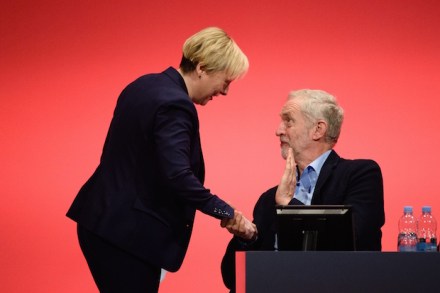
How do you unite the Labour party and cheer them up? Today the party’s MPs were cheering happily and laughing along at the jokes offered from their Dispatch Box for the first time in months. And on Monday, they managed to have a cheerful meeting of the parliamentary Labour party. One thing that was missing from both sessions was Jeremy Corbyn. The cheer that accompanied Angela Eagle as she got to her feet to ask her first question of George Osborne, who was standing in for David Cameron, was full and sincere.

‘Creeping intolerance’ towards religion could push young British Muslims to Islamic State, Cabinet Minister warns

From our UK edition

What do politicians find it harder to admit to doing in Britain today: smoking weed or praying? Welsh Secretary Stephen Crabb thinks it’s the latter, and that this is part of a ‘creeping intolerance’ in Britain that makes our society less able to resist religious extremists. In a lecture last night to the Conservative Christian Fellowship, Crabb argued that ‘Britain in 2015 is... increasingly characterised I believe by a creeping intolerance towards Christianity, and towards religion more generally, which we should be deeply concerned about’. He believes that the marginalisation of religious faith and discussion ‘risks pushing more young Muslims into the arms of Isil’ because it delegitimises their faith.

OBR suggests Cameron’s benefits row with EU leaders is a bit pointless

From our UK edition

What if David Cameron does win his fight - staged or otherwise - with European leaders to block benefits for EU migrants for four years? In terms of his pitch to the British public that voting to stay in the bloc is a good idea, this win would be very handy indeed. But would it actually materially change anything? Today, in an evidence session to the Treasury Select Committee, Office for Budget Responsibility Stephen Nickell rather undermined the importance of this row between leaders when he ended up telling MPs that it wouldn’t make much of a difference to immigration from other EU countries to Britain anyway. He said: 'I am prepared to say that any changes to benefit rules are unlikely to have a huge impact on migration flows.

Government goes to war with peers over votes at 16

From our UK edition

The government will today try to overturn a Lords’ vote that introduces votes at 16 for the EU Referendum Bill. Under other circumstances, the Conservatives could find this difficult, as there is a group of Tory MPs roughly the same size as the government’s majority who support the principle, but who do not want to rebel and cause trouble on their flagship legislation enabling the referendum they spent the election boasting about. Former minister Damian Green will abstain on the legislation, I understand, as he supports the principle. The government has invoked financial privilege on this matter, arguing that the change will cost £6 million. Speaker Bercow agrees, which means the Commons can overrule the Lords on this matter.

Is David Cameron having a staged row with Donald Tusk?

From our UK edition

Donald Tusk’s letter to European Council members highlights the choice that David Cameron faces in his renegotiation of Britain’s relationship with Europe. Either he insists that EU leaders meet his demand of a four year block on benefits for new migrants, thereby delaying the process, or he drops the demand in order to get consensus on the matter and then faces the prospect of selling a ‘new relationship’ that doesn’t look all that new and doesn’t contain a key change that most voters will understand. Tusk’s letter goes through Cameron’s four demands for reform.

Labour moderates launch fightback against deselection threats

From our UK edition

After Corbynite group Momentum allowed leaflets from other parties campaigning for the deselection of Labour MPs to be distributed at one of its events last week, those opposed to the new organisation are starting to hit back. Labour First, which represents the Old Right of the Labour party, is encouraging constituency Labour parties to vote on a motion calling for ‘tolerance and solidarity in the Labour Party’. This motion has been written by members of the Hampstead and Kilburn CLP, who have tabled it for their next meeting in the New Year. That motion condemns bullying of MPs over the Syria vote, and calls upon the party’s National Executive Committee to be swift and decisive in disciplining anyone engaging in bullying or intimidation.

No decision this year on airport expansion, says Number 10

From our UK edition

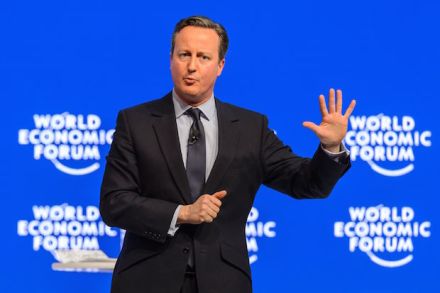
There is some irony in David Cameron giving a speech claiming that ‘this is a government that delivers’ on the day that Number 10 effectively concedes that he will not be delivering his decision on airport expansion as planned by the end of this year. At the lobby briefing this morning, the Prime Minister’s official spokeswoman said he would ‘present a clear direction’ on airports policy by the end of the year, which is different to a clear decision. The spokeswoman insisted that the government was committed to ‘providing the next step forward by the end of the year’ but that the press shouldn’t get lost in semantics.

The Leytonstone attack shows how the terror threat facing Britain is changing

From our UK edition

The striking thing about the Leytonstone attack is that a man wielding what witnesses described as ‘maybe a hobby knife’ could be suspected of a ‘terrorist incident’. The Metropolitan Police were quick to describe the stabbing, in which the knifeman reportedly shouted ‘this is for Syria’, as such last night. That they did shows the changing nature of the terror threat facing the country. It is no longer the case that would-be terrorists are just plotting spectacular attacks, but are quite happy to spread terror using whatever weapons they can get their hands on. This is partly because the intelligence services are getting better at disrupting such plots, which means jihadis will settle for any method that is much harder to detect.

MPs try to get their heads around ‘rabble’ Momentum

From our UK edition

It’s not a great surprise that Ken Livingstone is a member of Momentum, the Corbynite grassroots organisation that is definitely not at all like Militant, and definitely not going to campaign for de-selections in constituencies. He revealed his membership on BBC News, saying ‘I mean, I’m a member of Momentum. Our task, the first thing we’re focusing on, is getting those two million voters who have been kicked off the voting register by the government’s new rules, getting out to them, getting them back on that register. It’s a campaigning organisation, not some nasty bit of work like the old Militant. Seb found the same when he spent an evening eating curry with Momentum in Oldham.

Labour’s Oldham hold is a boost to Jeremy Corbyn

From our UK edition

Whichever way you look at it, the Oldham West and Royton by-election result is a boost to Jeremy Corbyn. His opponents in the party might not quite have gone so far as to hope the seat would be lost to Ukip (though those around the leader think that some MPs would have found a loss less devastating than they probably should), but they certainly thought that Corbyn would play very badly indeed on the doorstep. Indeed, all the reports from those on the ground in the constituency and later from MPs returning from the campaign trail were that the white working class vote was not warming to Corbyn at all.

Number 10 admits defeat on EU renegotiation timetable

From our UK edition

David Cameron has dropped his plans to sign off his renegotiation of Britain’s relationship with Europe at the December European Council summit, accepting that he’s not going to get the deal he wants within the next few weeks. In a call today with Angela Merkel, the Prime Minister ‘noted that the scale of what we are asking for means we will not resolve this in one go and consequently he did not expect to get agreement at the December European Council’, a Downing Street spokesperson said. The summit will instead involve a ‘substantive discussion of the proposed changes in each area’.

Hilary Benn’s Syria speech was passionate, spellbinding – and historic

From our UK edition

After 10 reasonably dismal hours, Hilary Benn has just given a truly historic speech in the House of Commons. (Here's the full text.) The Shadow Foreign Secretary garnered loud applause and an emotional waving of order papers from members across the house. His colleagues tell me he wrote much of it while sitting on the frontbench in the Commons during the debate. Benn made the only truly spellbinding argument in the whole of this largely unimpressive debate. He ran through why he believed that the conditions for action had been met, appealing as he spoke to Labour's heritage. He was furious and passionate but impressively generous towards the man who claims to lead him, telling the Chamber that Corbyn was not a terrorist sympathiser as David Cameron alleged but a man of principle.

Jeremy Corbyn gives his half of the Labour response to Syria

From our UK edition

By the time Jeremy Corbyn got to his feet in today’s debate on action in Syria, the House of Commons was in a fractious mood, with interventions from MPs focusing as much on the Labour party as the issue up for debate. The Labour leader did not find much support from his own side, either, with a number of pro-intervention MPs frowning and muttering as he ploughed on with his speech. Hilary Benn appeared to be grinding his teeth during much of the response. It opened, inevitably, with a man who could quite reasonably be described as a ‘terrorist sympathiser’, given his dealings with the IRA and his ‘friends’ in Hamas, complaining about the Prime Minister’s comments last night.

Labour’s approach to the Syria vote is making a mockery of its MPs

From our UK edition

MPs are currently in a cross-party briefing with a number of Cabinet Ministers about tomorrow’s vote on Syria. The Home Secretary, the Foreign Secretary, the Defence Secretary and the International Development Secretary are leading the briefing. Number 10 is very keen to show that MPs have had every opportunity to ask questions, with the Prime Minister’s statement on the Strategic Defence and Security Review last Monday referring to the need for action, as well as his statement in the House on Thursday on his plan for British involvement in air strikes. In that second session, he took questions from 103 MPs.

Government publishes Syria motion

From our UK edition

In the past few minutes, the government has published the following motion on action in Syria, which you can read below. The Leader of the House Chris Grayling has announced a change to the Commons business which will see PMQs cancelled and this motion debated for 10 hours. The Cabinet today held what the Prime Minister's official spokeswoman described as a 'very serious' discussion, with 20 frontbenchers speaking in favour of the motion. Significantly, when asked whether those present had discussed the question of who the 70,000 moderate opposition forces are, the spokeswoman said 'that was not a focus of the discussion', adding 'it was not a point that was debated or discussed by the Cabinet'.

Tom Watson asks Cameron to delay Syria vote

From our UK edition

The biggest problem with Labour’s furious and seemingly endless infighting is that it is preventing the party from doing its job of scrutinising the government. The Shadow Cabinet are largely scrutinising their leader and one another, which makes it easier for David Cameron to be vague about certain aspects of his case for war. But today, Tom Watson has written to the Prime Minister demanding a delay in the vote and clarity on two key points. They are: 1. The detail behind Cameron’s claim that there are ‘approximately 70,000 opposition figures on the ground who do not belong to extremist groups’. 2. A timeline for peace and arrangements for a lasting political settlement, and an assessment of the Saudi initiative to draw together opposition groups in Syria.

Corbyn survives ‘balanced’/‘ferocious’ meeting of Labour party

From our UK edition

Tonight’s meeting of the parliamentary Labour party could have been a lot worse. It was full of very concerned MPs, many of whom had complaints they wanted to air. A senior Labourite did say it was the most ‘uplifting’ meeting he had attended because of the ‘ferocity’ of attacks on Corbyn. Jack Dromey gave an angry speech about Ken Livingstone’s comments about the 7/7 bombers, which colleagues leaving said was ‘brilliant’, while others expressed concerns about Corbynite grassroots group Momentum, arguing it was going to divide the party. David Winnick described the group as a ‘party within a party’.

Corbyn free vote decision calms Labour frontbench – for now

From our UK edition

Jeremy Corbyn seems to have left Shadow Cabinet meeting with a reasonable result, given the warfare in the Labour party over the past few days. It was what one frontbencher describes as ‘rather lively’ and others felt was ‘totally embarrassing’, but the agreed position is that there will be a free vote, a call for a two day debate and that official party policy will be that set out by the Labour party conference. This is the statement on the matter: ‘Today's Shadow Cabinet agreed to back Jeremy Corbyn's recommendation of a free vote on the Government's proposal to authorise UK bombing in Syria.

Is Hilary Benn about to become Labour’s very own Aung San Suu Kyi?

From our UK edition

Labour's shadow cabinet meeting is now over, with members scuttling past a hungry pack of journalists in Portcullis House without comment. Frontbencher sources seem to think that Corbyn told his shadow ministers that they could take their own line but not speak in the Commons about that line if it contradicted the party line (confused? Welcome to the Straight Talking Honest New Politics). This would potentially mean that Hilary Benn can't speak in the Commons as shadow foreign secretary if he decides that what he said last week was a 'compelling' case worth supporting. Party sources suggest that this would make him the Aung San Suu Kyi of Labour, which would not benefit Corbyn in the long run.

Jeremy Corbyn grants Labour MPs a free vote on Syria

From our UK edition

The Shadow Cabinet is now holding its (delayed) meeting on Labour’s stance on Syria, and members have been told that they will get a free vote on the matter. Sources say that Jeremy Corbyn will also ask David Cameron to delay the vote, which is expected on Wednesday, in order to respond to MPs’ concerns, and that the party will still take a position that frontbenchers won't necessarily have to follow. This is a way of avoiding the mass resignations and fury that Shadow Cabinet members were threatening. But it is also a sign that Labour as a party no longer falls within the accepted definition of a political party. Frontbenchers can now take a range of views on a matter of war. They might as well not bother holding Shadow Cabinet from now on. UPDATE, 2.