Isabel Hardman

Isabel Hardman

Isabel Hardman is assistant editor of The Spectator and author of Why We Get the Wrong Politicians. She also presents Radio 4’s Week in Westminster.

Won’t somebody in Labour think of the mayoral contest?

From our UK edition

Jeremy Corbyn is currently conducting his reshuffle, with a group of journalists huddled at a discreet distance from the Labour leader’s office. So far, not much has happened, other than Corbyn asking the journalists not to stand outside his office, and Barry Gardiner emerging with a smile on his face. But still the briefings around the reshuffle and the anticipation of it have dominated the news agenda. This must be intensely frustrating for Sadiq Khan, who had planned to spend today getting lots of attention for his campaign on train fares. Labour members and staffers were up long before dawn handing out leaflets publicising the four-year fare freeze promised by the party’s mayoral candidate.

Why the government is getting involved in commissioning new housing

From our UK edition

David Cameron’s announcement today that the government will be involved in the direct commissioning of new homes on public land isn’t a huge surprise in that it continues an exploratory policy announced in the last Parliament. But what is a surprise is that this policy was announced by the Lib Dems and is now being continued, rather than killed, by the Tories. It was Danny Alexander who said at the launch of the 2014 National Infrastructure Plan that ‘we will be undertaking a detailed government review to examine the potential of direct government commissioning for housing to deliver the number of homes we need’. Yet it is Cameron today who is trumpeting a ‘huge shift in government policy on housing’.

How far can Jeremy Corbyn go in his reshuffle?

From our UK edition

Jeremy Corbyn is expected to carry out his much-awaited and much-briefed ‘revenge reshuffle’ this week. Given he will have to face a shadow cabinet meeting on Tuesday, it would make more sense for the Labour leader to get on with moving and sacking today so that he faces the shadow cabinet he wants, rather than the one he wants to get rid of. But will the reshuffle really give Corbyn what he wants? This morning’s Times carries an intriguing report that Hilary Benn and Andy Burnham have offered to swap jobs so that Corbyn doesn’t have such an obvious split in foreign policy in his top team, while also avoiding party fury by sacking Benn.

Cameron tries to soothe MPs ahead of challenging year for party management

From our UK edition

David Cameron’s pledge to his MPs that none of them who want to stand again in 2020 will be left behind as a result of the boundary changes is a sign that the Prime Minister thinks party management will be seriously important this year. A fight between MPs over fewer constituencies would have been bad for party morale, and inevitably theories about MPs favoured by the party leadership being kept safe would have spread through the party. But given the changes aren’t being submitted until 2018, the decision to announce the ‘no-one left behind’ pledge now suggests that Cameron thinks 2016 is a good year to calm any Conservative nerves on this matter. Why could that be?

Andy Burnham pinpoints Labour’s problem

From our UK edition

Labour is very cross about a knighthood going to the man who ran the election campaign that beat the party in May. Andy Burnham issued a statement about Lynton Crosby’s inclusion in the New Year’s Honours list which was supposed to highlight what his party thinks is an abuse of the system. But really, it just highlights his party’s own failings. The Shadow Home Secretary said: ‘This outrageous award is the clearest evidence yet that the Tories think they can get away with whatever they like. It is a timely reminder that Labour must make it a New Year’s resolution to stop facing inwards and expose them for what they are.’ Why do the Tories think they can get away with whatever they like?

Benedict Cumberbatch should take a vow of humility, not silence

From our UK edition

Should celebrities really shut up about politics? Nick Timothy makes a persuasive argument on ConservativeHome that Benedict Cumberbatch et al should stop lecturing theatregoers and pontificating about Edward Snowden because they lower the standard of political debate in this country. He writes: ‘So if I had a wish for 2016, it would be that these pompous, hypocritical, self-obsessed political celebrities would take a vow of silence. If that proves impossible, surely it is time for our politicians and the media to stop humouring these vain and ignorant liberal luvvies.

Oliver Letwin had no choice but to apologise for ‘deeply racist’ memo

From our UK edition

There is no point in anyone trying to defend Oliver Letwin’s 1985 memo to Margaret Thatcher in which the then aide to the Prime Minister argued that white people were not prone to public disorder and that regeneration of inner city areas would only result in those from ethnic minorities setting up ‘in the disco and drug trade’. No-one has really tried, though Tim Montgomerie has rather kindly said that in his experience, the Downing Street policy chief doesn’t have a racist bone in his body. But it’s clear that at some point the gaffe-prone minister had a racist thought, and that he was comfortable enough with that thought to put it in a memo. Labour's Tom Watson branded it 'deeply racist' before the papers had even been published.

Of course Lynton Crosby deserves a knighthood

From our UK edition

Why should Lynton Crosby get a knighthood? The Sunday Times today reports that the Conservatives’ election chief is in line for an honour, which has provoked fury from democracy campaigners and, naturally, those aligned with the parties he helped to humiliate in May. The fury of the Labourites is quite easy to understand, and not just because it is miserable seeing the guy who was instrumental to a surprise election victory that many around Ed Miliband thought was theirs being honoured. It’s also because many of them will complain that he is a negative force in politics, someone who isn’t averse to flinging a dead cat on the table at a moment’s notice when the chips are down.

David Cameron says Christian values make Britain successful. Why?

From our UK edition

David Cameron’s Christmas message is being reported as one of his most Christian public statements yet, with the Prime Minister arguing - as he did at Prime Minister’s Questions recently - that ‘it is because of these important religious roots and Christian values that Britain has been such a successful home to people of all faiths and none’. Cameron has - with the occasional rather odd hiccup - become much more confident about talking about Christianity, both in terms of his own beliefs and the importance he thinks faith should have in wider society, since he described his personal faith as being ‘a bit like the reception for Magic FM in the Chilterns - it sort of comes and goes’.

Should ministers spend so much on their advisers?

From our UK edition

Should ministers have so many special advisers? Should a party that promised to cut the number of these SpAds if it came to government admit that it got this wrong, having increased their number? The arguments in favour of more of these political staffers in government are well-rehearsed: if they’re good, they add expertise and political nouse to a department and they make it easier for ministers to communicate what they’re up to. Some are hopeless at both these things, but the best ones - and there are many excellent ones in both main parties at the moment - often keep the show on the road and ensure reforms actually happen. Last week it emerged that the SpAd bill had risen from £8.4 million in 2013/14 to £9.2 million in 2014/15.

Green Tories hopeful that their time is coming

From our UK edition

If the responses to last week’s Paris agreement on tackling climate change are anything to go by, you’d think politicians were warming to the issue. David Cameron said that ‘this generation has taken vital steps to ensure that our children and grandchildren will see that we did our duty in securing the future of our planet’. But the political excitement around the summit was not part of a trend, but a mere spike in interest. Politicians don’t talk very much about green issues at present. They barely discussed the environment at all during the election, and generally see it as being of such low salience that they needn’t talk too much about it. But there are some in the Tory party who don’t think that’s the right approach.

Why is David Cameron so cheerful after his European Council summit?

From our UK edition

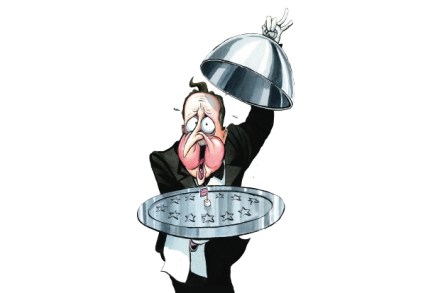
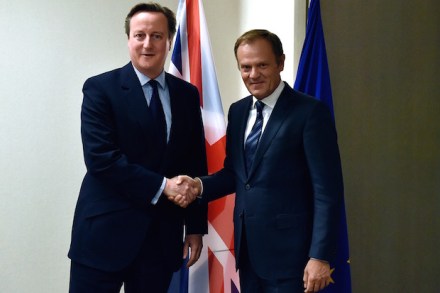
David Cameron was in such a hurry to tell everyone about how well last night's talks with EU leaders had gone that the crest hadn't been properly stuck on his lectern when he gave his press conference. It wobbled off and hung at an angle as the Prime Minister reported 'a lot of goodwill' and claimed that progress was being made in preparation for the European Council summit in February where he hopes to sign off his renegotiation plan. But nothing was agreed last night and EU leaders are claiming that Cameron has accepted he cannot discriminate against citizens of other member states, why was the Prime Minister in such a good mood?

The Strathclyde review won’t make Parliament work better

From our UK edition

The Strathclyde Review into the power of peers to block legislation sent up by the Commons reports today, and it is expected to strip the House of Lords of its ability to kill off secondary legislation. And the way the government will bring in this reform, which will enshrine the primacy of the Commons, is by primary legislation, which means that if peers try any funny business, ministers can deploy the Parliament Act and force the change through.  Labour says this is a 'massive overreaction' to the tax credits row earlier in the autumn. But this reform, naturally, won't change two major problems with secondary legislation that have very little to do with peers.

How Cameron quoted a ‘supporter’ at PMQs who was actually criticising him

From our UK edition

Today at Prime Minister’s Questions, David Cameron quoted Gary Porter, the Tory chair of the Local Government Association, praising reforms in the spending review that will allow councils to raise money for the cost of social care using council tax. The Tory leader was using the quote to prove Jeremy Corbyn wrong in his warnings about the NHS and social care. He said: ‘If he wants to swap quotations, this is what the chairman of the Local Government Association says: “The LGA has long called for further flexibility in the setting of council tax… Today’s announcement on council tax will go some way to allowing a number of councils to raise the money needed…The £1.5 billion increase in the Better Care Fund announced today is good news”.

George Osborne is outmanoeuvring Labour with his devolution revolution

From our UK edition

George Osborne has been busily signing more devolution deals today, with five pilot schemes moving power over health policy and spending from Whitehall to London boroughs. It’s part of the Chancellor’s devolution revolution that he is making a key part of his brand. It’s also - as is always the case with Osborne - a bit of clever politicking. Osborne caught Labour on the hop with his devolution deal for Greater Manchester earlier this year, with Andy Burnham struggling to work out what the party’s official line was on Labour councils happily signing up to a Tory deal. Many of his Labour colleagues were unimpressed with the then Shadow Health Secretary’s response to the deal.

Can Cameron convince people to trust him on the EU referendum?

From our UK edition

David Cameron will be relived that his European Referendum Bill is finally on its way to Royal Assent, after weeks of threats from Labour peers. But Europe being Europe, there are a whole heap of other problems that the Prime Minister needs to contend with too. It’s not just the specific question of whether David Cameron can get any sot of reform to access to benefits for migrants that looks like he’s won a battle, but whether the overall renegotiation and its result are really sufficient to impress MPs and then voters into backing staying in the European Union.

Why did Jeremy Corbyn’s critics bother trying to stop his Stop the War partying?

From our UK edition

Few really expected Jeremy Corbyn to pull out of the Stop the War fundraising dinner, which he attended last night. He used to chair the coalition, and hasn’t made any comment since becoming leader to suggest that he now disagrees with its aims and objectives. This, as Freddy wrote recently, simply shows that the new leader is sticking to what he believes, however wrong, rather than wobbling all over the place at the first sniff of power. Fewer people, perhaps, predicted that the Labour leader would release a defiant statement praising the organisation: ‘The Stop the War Coalition has been one of the most important democratic campaigns of modern times. It has brought hundreds of thousands of people on to the streets time and again.

Government decides to put off making a decision on airports

From our UK edition

‘This is a government that delivers,’ declared David Cameron in a speech on Monday. It’s a good thing he wasn’t announcing the launch of a pizza delivery firm, as tonight’s announcement on airport expansion suggests that the food would be stone cold by the time it finally arrived. After initially saying they’d make a decision on the Davies Commission by the end of this year, ministers this evening proudly announced that they have decided to delay making the decision until at least next summer. In statement, the Transport department said: ‘The Government has accepted the case for airport expansion in the south-east and the Airports Commission’s shortlist of options for expansion.

Have food banks become a ‘boil of no significance’?

From our UK edition

Remember food banks? They were a hot political issue about a year ago, with Labour MPs raising them again and again to wrong foot Tory ministers, but seem to have dropped off the political agenda, even though many of them are still seeing more people coming to them for emergency food help. Well, some politicians haven’t forgotten about them, and today the all-party parliamentary group on hunger and food poverty publishes an update on its attempts to tackle hunger in this country. The group is led by Labour MP Frank Field, who doesn’t blow about with the political winds but tends to stick to his guns. Ministers choose whether or not to agree with him as is convenient, while acknowledging privately that he generally has a point.

George Osborne needs to mind his language

From our UK edition

Though he had a reasonably good Prime Minister’s Questions for someone who hasn’t done much of it, George Osborne did stumble quite badly on one question. He ended up telling SNP MP Alison Thewliss about the importance of welfare reform - in response to a question about women who had given birth to a third child conceived as a result of rape. She was complaining about the way the government was requiring women in this situation to prove that they had been raped in order to qualify for tax credits once the two-child limit has been imposed. The Chancellor replied: ‘It is perfectly reasonable to have a welfare system that is fair not just for those who need it but for those who pay for it. We have identified the specific cases that the hon.