Isabel Hardman

Isabel Hardman

Isabel Hardman is assistant editor of The Spectator and author of Why We Get the Wrong Politicians. She also presents Radio 4’s Week in Westminster.

Does Wes Streeting’s ten-year NHS plan amount to anything?

From our UK edition

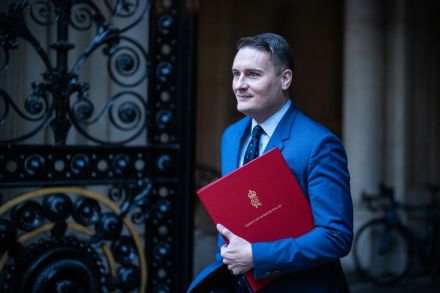
The Health Secretary is making a big fanfare about a cash boost in the Budget and a new plan to reform the NHS so that it becomes a more community-based, prevention-focused service. But at the moment, his plan for the health service is very much in nascent form: the government is nowhere near close to publishing it and is instead going to start asking for ideas from the public and healthcare workers.  Wes Streeting’s ministerial colleague Stephen Kinnock sketched out how this consultation would run when he spoke at The Spectator’s health fringe at Labour conference. He told us that there would be a lengthy ‘national conversation’ about what people wanted from their health service which would feed directly into the spending review.

Starmer denies being soft on China

From our UK edition

13 min listen

Starmer and Sunak debated Labour's position on China at today's PMQs, with Starmer denying going soft on the Asian superpower. Did Sunak draw inspiration from Katy Balls's cover article in last week's Spectator? Katy and Isabel Hardman speak to Oscar Edmondson about the party dynamics behind the debate; how much pressure is each party under from their own China hawks?  Isabel also gives an overview of the debate around the Assisted Dying Bill, which was introduced to Parliament today. Produced by Patrick Gibbons and Oscar Edmondson.

Starmer denies being soft on China

From our UK edition

Prime Minister’s Questions today asked the same question that Katy raised in her magazine cover piece last week: what is the new government’s stance towards China? Oddly, the man asking that question never really answered it himself. Rishi Sunak spent much of his premiership in a semantic quandary over what kind of challenge or threat Beijing posed. Today, he opened by asking whether David Lammy would use his meetings in China this week ‘to condemn China’s dangerous escalatory acts’ in the Taiwan Strait.

Keir Starmer’s reset comes unstuck at PMQs

From our UK edition

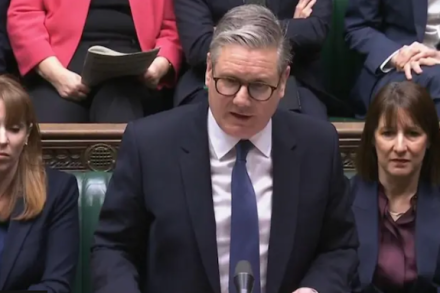
Keir Starmer's reset isn't going very well. He turned up at Prime Minister's Questions today clearly hoping to talk about the vision he had for the country, but ended up doing something he always complained about others doing when he was in opposition: dodging the question.  A planted question from a Labour backbencher allowed Starmer to kick off PMQs with some words about changing Britain: 'We were elected to change the country, and that means getting the NHS back on its feet. The Chancellor will have much more to say about that in the budget, about fixing the foundations for our economy so we put money in people's pockets, fix our public services and rebuild Britain.

Do the Tories need to worry about the winter fuel row?

From our UK edition

How long are the Tories going to campaign on the winter fuel payment? It was their main line of attack on Monday at Work and Pensions questions in the House of Commons, with a number of Conservative MPs asking ministers to say how many pensioners were going to die this winter because of the restrictions to the benefit. The Opposition has been dogged in its pursuit of the answer to this particular question, not least because Labour produced its own analysis in 2017 which suggested there would be around 4,000 deaths. It has been the main line of attack for the Conservatives, along with Labour’s freebie culture, since this new government started.

Starmer insists he hasn’t stepped back support for Israel

From our UK edition

Keir Starmer took a different tone on Israel today. That change of tone is to a certain extent to be expected, given the Prime Minister was marking the first anniversary of the 7 October attacks. He reflected in the Commons this afternoon that there were still nearly 100 hostages unaccounted for, and families across Israel still feeling ‘acute’ pain after atrocities committed by Hamas. He opened by saying the attack was ‘born of hatred, targeted not just at individuals, but at Jewish communities, at their way of life and at the state of Israel – the symbol of Jewish security to the world’.

Sue Gray out, Morgan McSweeney in

From our UK edition

11 min listen

Keir Starmer has not yet reached the 100 day mark but already he has lost his Chief of Staff. This afternoon, Downing Street has confirmed that Sue Gray is leaving her No. 10 role. Instead, she will be taking on an ‘advisory’ role as the Prime Minister’s envoy for nations and regions. In a statement announcing her departure, Gray referenced the media attention she had received as one of the reasons behind her decision to quit. Morgan McSweeney will take over from Gray in a move will be popular with parts of the Labour party and brings to a close the Gray vs McSweeney psychodrama. Will this steady the Labour ship?  Katy Balls and Isabel Hardman discuss.  Produced by Oscar Edmondson.

Assisted dying and Chagos row overshadow Starmer’s carbon capture pledge

From our UK edition

17 min listen

What Keir Starmer wants to be talking about today is his landmark £22 billion investment into carbon capture. Flanked by Ed Miliband and Rachel Reeves, his speech was an unusually personal one where he spoke about the impacts of deindustrialisation. But how new is this policy? And what does this huge investment mean for the £20 billion black hole?  What Westminster seems more interested in talking about is the news that assisted dying is back on the agenda and the fallout of the deal to give the Chagos Islands to Mauritius. Is there a degree of inevitability about these two stories resurfacing?  Oscar Edmondson speaks to Isabel Hardman and James Heale.  Produced by Oscar Edmondson.

Who was the winner from today’s Tory leadership speeches?

From our UK edition

17 min listen

The final day of the party conference saw all four candidates take to the stage in a bid to have a David Cameron moment. Back in 2005, Cameron managed to gain momentum at the party conference with an assured speech (no notes) and get one over on his main rival – the then frontrunner – David Davis. So, did anyone managed a similar feat in Birmingham? James Heale speaks to Katy Balls and Isabel Hardman.  Produced by Oscar Edmondson.

Badenoch pitches herself as the great disruptor

From our UK edition

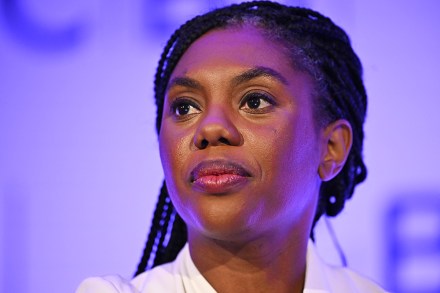
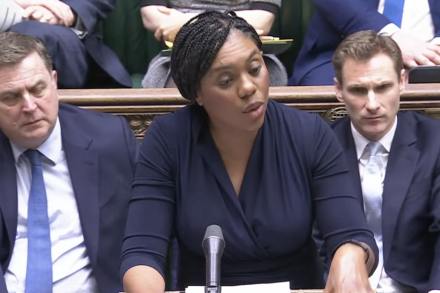
Kemi Badenoch’s opening video before her speech had a series of politicians and normal people talking at odd angles into their phones about the need for a new politician. She was pictured smiling, charming people in person, and vowing ‘let’s renew’, before she walked onto the stage for another no-notes speech.  It was, as you would expect, a speech that embraced the idea of tearing everything up and starting again, with Badenoch as the disruptor. She promised to ‘Rewire, reboot and reprogramme’, adding that: ‘Nothing is more exciting to me. I am an engineer, and engineers don't hide from the truth.

James Cleverly thinks the Tories need to be more ‘normal’

From our UK edition

James Cleverly’s speech did a much better job than Tom Tugendhat’s of explaining what sort of person he is, and what he wants to do with the party. It was very characteristic of Cleverly: there were lots of mentions of ‘optimism’, which is probably his guiding philosophy in life, and some well-delivered jokes, including one about his time in the Reserves when he got a call telling him he had been mobilised. ‘I thought I was going to Basra, or Baghdad. And I was sent... to Luton,’ he told the hall, to genuine laughter. But he also focused heavily on his experience in government, trying to differentiate himself from Tugendhat in terms of the big jobs he’s had, and also to answer the doubts that he isn’t quite up to the role of leader.

The heart-rending story of a child’s heart transplant

From our UK edition

Max Johnson’s life while he waited for a heart transplant had become so miserable and traumatic that he didn’t care whether he carried on or not. Indeed, the colourless, almost lifeless nine-year-old recorded a video saying he wanted to die. His parents felt as though they were on ‘death row’ as they waited for a donor. They knew, too, that the call announcing there was a heart for their son would mean that somewhere else in Britain a family was mourning. They would benefit from the sudden death of someone they were initially only told was an ‘age-appropriate donor’. Max’s mother read between the lines: her son was getting the heart of another nine-year-old.

Does Kemi cause problems for Kemi?

From our UK edition

Kemi Badenoch is being followed around the Tory party conference by her own comments about maternity pay. She had to explain what she was on about again when she had her main stage interview in the Birmingham hall this afternoon, telling Chris Hope that ‘I think maternity pay is quite important’, and that she was ‘answering a different question’ about business regulation. She then compared the row to the way Margaret Thatcher’s Women’s Own magazine comments about ‘there is no such thing as society’ were ‘cut down into a soundbite that was used to attack her’. She added: When you are a leader, when you are a conservative, when you are making the argument for conservative principles, your opponents are going to try and turn it into something else.

Have the Tory leadership candidates got a Truss problem?

From our UK edition

Jeremy Hunt is one of the few Tories at Conservative Party Conference willing to take the fight to Labour. In the second day, he sat down for an on-stage interview where the former Chancellor spoke about the winter fuel allowance, freebies, but also made some polite suggestions about where the Conservative party shouldn't go, and dropped a few hints about the former Prime Minister, Liz Truss. Natasha Feroze speaks to Kate Andrews and Isabel Hardman about Hunt's speech and some of the best bits from Liz Truss's own interview at conference.

Did you know Tom Tugendhat was in the military?

From our UK edition

Tom Tugendhat may have the most interesting merchandise in this Tory leadership contest (including fake tan, for reasons no-one has yet explained), but he is not, as things stand, the frontrunner. He is also the least experienced of the contenders in government terms, though he decided today to compensate for that in his on-stage interview in the conference hall by talking about being a soldier. Just in case anyone there hadn’t picked up that Tugendhat has served his country, he made sure he slipped it into to any answer that was vaguely relevant, including that ‘I’m not going to hold against anybody their inexperience in combat or their inexperience in foreign affairs’.

Jeremy Hunt tells the Tory party some uncomfortable truths

From our UK edition

Jeremy Hunt is one of the few Tories willing to take the fight to Labour while the Conservative leadership contest drones on. The shadow chancellor gave an on-stage interview at party conference in Birmingham this morning where he continued to attack Chancellor Rachel Reeves' ‘£22 billion black hole’ narrative. Hunt suggested that not even Labour MPs and members believed that claim, which was why they were having such a big row over the winter fuel payment.

What Kemi Badenoch should learn from her maternity pay row

From our UK edition

The first row of Tory conference has, unsurprisingly, involved Kemi Badenoch. The leadership contender was on Times Radio this morning where she was making a point about business regulation and ended up suggesting that maternity pay in this country was ‘excessive’. Here is a transcript of her exchange with Kate McCann: KM: Do you think we’ve got the right levels of maternity pay at the moment? KB: So, maternity pay varies depending on who you work for, but it is a function, whereas statutory maternity pay, it is a function of tax, tax comes from people who are working, we are taking from one group of people and giving to another, this in my view is excessive.

Starmer tells Israel ‘no more excuses’ on Gaza aid

From our UK edition

Keir Starmer has moved on rather quickly from Labour conference, pitching up in New York to tell Israel that it can use ‘no more excuses’ and must allow more aid into Gaza. In his speech to the UN General Assembly, the Prime Minister also called for an immediate ceasefire, and said there needed to be a ‘credible and irreversible path to a viable Palestinian state alongside a safe and secure state of Israel’. He added: ‘That is the only way to provide security and justice to both Israelis and Palestinians.’ He also turned on Russia, saying he didn’t know how the country could ‘show its face in the building’.

Liz Kendall’s difficult task of defending the winter fuel cut

From our UK edition

Arguably the most difficult speech of the whole of Labour conference came from Liz Kendall. The Work and Pensions secretary not only had the winter fuel payment cut to deal with, she is also responsible for welfare reform to get people off sickness benefits – one of the most fraught areas of policymaking – and will oversee what are likely to be cuts to benefits enforced by the Treasury in the next few months. Kendall’s aim was to argue to Labour members that the party is still staying true to its principles while doing all of this.  Kendall’s aim was to argue to Labour members that the party is still staying true to its principles She did not get a joyful cheer when she promised ‘the biggest reforms to employment support in a generation.

Wes Streeting is convincing, but where’s his plan?

From our UK edition

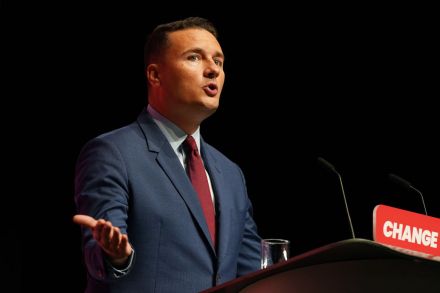
This Labour conference has largely been about Keir Starmer and his ministers making the argument for what they are doing, rather than giving any details of how they plan to achieve it. Wes Streeting’s speech to the hall in Liverpool this morning fitted that pattern. He didn’t announce anything new. Instead, he set out quite how big the challenge was, and made the argument for what Labour planned to do. He told members: We can only deliver recovery through reform. Without action on prevention, the NHS will be overwhelmed. Without reform to services, we’ll end up putting in more cash for poorer results. That’s the choice. Reform or die. We choose reform.