Isabel Hardman

Isabel Hardman

Isabel Hardman is assistant editor of The Spectator and author of Why We Get the Wrong Politicians. She also presents Radio 4’s Week in Westminster.

Justin Welby says goodbye

From our UK edition

Justin Welby has given his valedictory speech in the House of Lords, his first public remarks since his resignation. It was quite a sad speech in which the outgoing Archbishop of Canterbury didn’t appear to know quite what he wanted to say about his own departure. He started by joking that ‘if you want to make God laugh, make plans’, then added: ‘Well, on that basis, next year, I will be causing God more hilarity than anyone else for many years, because the plans for next year were very detailed and extensive.’ He told peers: The reality is that there comes a time if you are technically leading a particular institution or area of responsibility, where the shame of what has gone wrong, whether one is personally responsible or not, must require a head to roll.

The problem with Keir Starmer’s pledges

From our UK edition

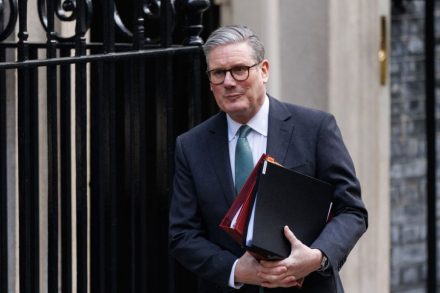
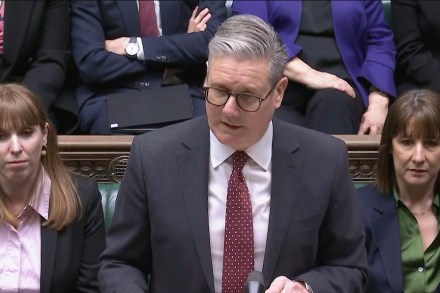
Keir Starmer still clearly misses opposition. He spent almost as much of his reset speech complaining about the Tories and the mess he feels they made of things as he did talking about what he is actually doing. It’s almost as though government has turned out to be harder and less enjoyable than even he had predicted. He spent the first few minutes of his speech listing in his usual exasperated tones the ways in which the Conservatives had failed the country, deploying his analogy about tackling damp in a household by using a hairdryer, before saying: ‘Stabilising the economy, fixing the foundations, clearing up the mess – so we can take the country forward with our missions.’ What the Prime Minister actually wants to do is ‘challenging’, he claimed.

Spectator Awards: Nigel Farage promises a ‘political revolution’

From our UK edition

12 min listen

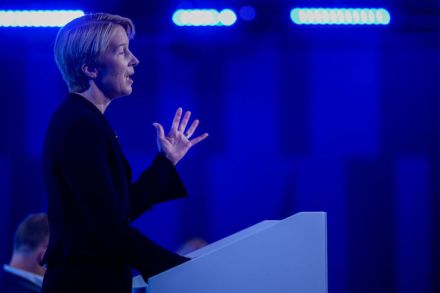
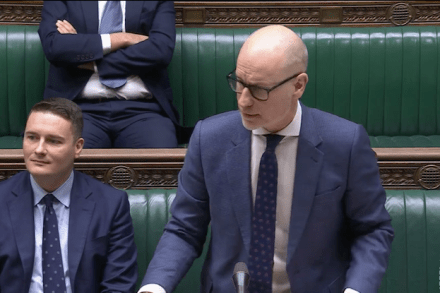
Last night was The Spectator’s Parliamentarian of the Year Awards. Politicians of every stripe were in attendance, with Wes Streeting, Robert Jenrick and Stephen Flynn among those present. There were a number of notable speeches – including a fiery opening monologue from the Health Secretary – but none caused as much of a stir as Nigel Farage’s acceptance speech for Newcomer of the Year. He warned of a ‘political revolution the likes of which we’ve not seen since Labour after the First World War’. How did that go down in the room? Also on the podcast, at PMQs today Kemi Badenoch and Keir Starmer seemed to have settled into a rhythm. Has the Wednesday ding dong become stale and predictable? Oscar Edmondson speaks to Katy Balls and Isabel Hardman.

Named and shamed: the PMQs time wasters

From our UK edition

You’re an ambitious backbench Labour MP with a weighty constituency caseload, legislation that you’re interested in improving, and a few personal campaigns to right various wrongs and make the world a better place. You get a spot on the order paper for this week’s Prime Minister’s Questions. What could you possibly ask your party leader about? One of the above? For some of the Labour MPs in today’s session, the very best questions they could come up with were ones merely asking Keir Starmer if he agreed he was doing a good job. The utterly pointless question was a regular feature at Prime Minister’s Questions when the Tories were in power The first pointless question came early in the session from Olivia Bailey.

PMQs has become painfully predictable

From our UK edition

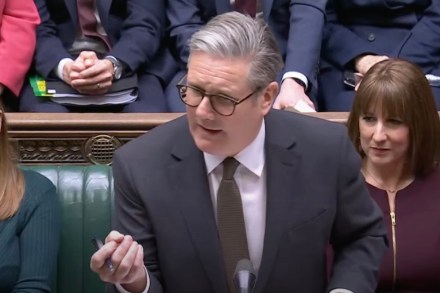
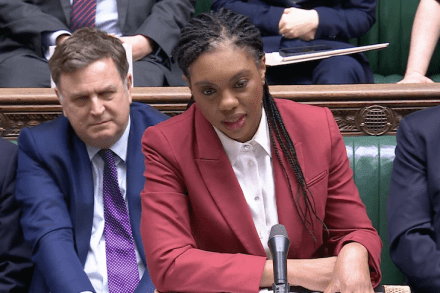
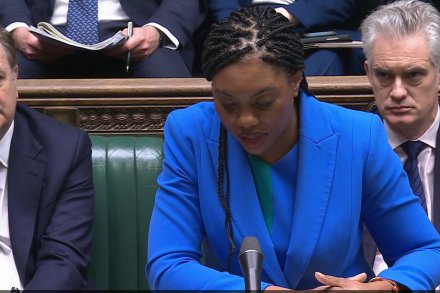
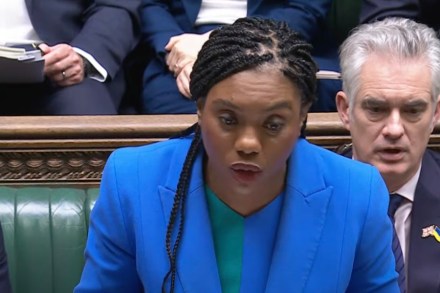
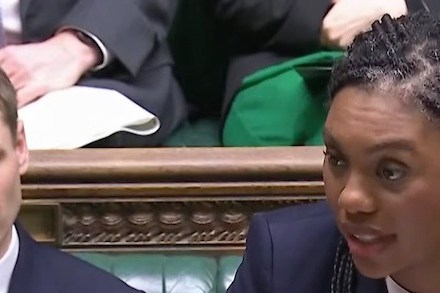
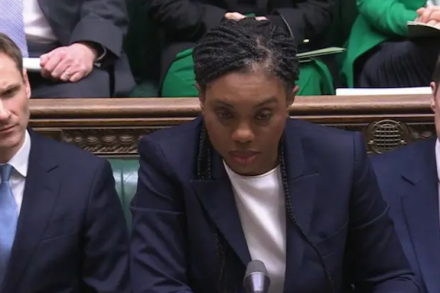
Kemi Badenoch had an odd line of attack at Prime Minister’s Questions: she chose to pursue Keir Starmer over what he knew about Louise Haigh’s fraud conviction. It is not a story that has any impact on people outside Westminster, but it did still highlight how much Starmer has become like the politicians he used to ridicule: he did not answer the questions at all and often ended up making points about the Tories being just as bad as Labour. The Conservative leader initially mocked Starmer for using a planted question from an overly loyal Labour backbencher about immigration to celebrate what he was doing to control Britain’s borders.

MPs back assisted dying, but was the debate long enough?

From our UK edition

The debate on assisted dying, which culminated in a victory for those in favour, hasn't been long enough – we knew that from the start – but it has been a very good one. There have been some very powerful arguments on both sides. There has also been a division between those who think that voting for the legislation at this stage is merely a qualified agreement to let it receive further scrutiny, and those who see it as an endorsement, both of the principle and of the detail.  A number of MPs who spoke in favour, including David Davis and Liz Saville-Roberts, nonetheless raised concerns with the drafting, with the latter saying she would vote against the bill at later stages if it did not receive the length of debate and scrutiny that it still deserved.

Are MPs rising to the assisted dying debate?

From our UK edition

What are MPs actually debating today? Some of them seem a bit confused. We have had two hours so far of the debate on the second reading of Kim Leadbeater’s Terminally Ill Adults (End of Life) Bill, and a number of them seem to be talking about entirely different  things. Some are poring over the detail of the legislation, with Leadbeater pointing to the safeguards she has had written into it, and Danny Kruger arguing that some of the definitions of the people who can act as a proxy for patient are too loose, meaning that there is still a risk of abuse of the legislation. But then, there have been others who have wanted to argue about the principle of the legislation, rather than what is written in it.

Louise Haigh’s resignation raises questions for Keir Starmer

From our UK edition

11 min listen

In the small hours of this morning Louise Haigh resigned as Transport Secretary following the revelation that she had pleaded guilty to a criminal offence in 2014. Haigh admitted fraud by false representation at a magistrates’ court after she incorrectly told the police that a work mobile had been stolen in 2013. She was then convicted and received a conditional discharge. The incident occurred six months before she became an MP. Haigh had been in hot water just a month ago after her comments nearly cost the government a one billion-pound investment deal with P&O. Is her resignation a little too convenient for the Prime Minister?  James Heale speaks to Katy Balls and Isabel Hardman.  Produced by Cindy Yu and Oscar Edmondson.

Should assisted dying be legalised?

From our UK edition

50 min listen

MPs are set to vote on the legalisation of assisted dying this week, the first such vote in almost a decade. The Terminally Ill Adults (End of Life) Bill was tabled by Labour MP Kim Leadbeater and follows a campaign by broadcaster Dame Esther Rantzen and others.  The biggest change since the last vote in 2015 is the make-up of parliament, with many more Labour MPs, as well as newer MPs whose stances are unknown. Consequently, it is far from certain that the bill – which would mark one of the biggest changes to social legislation for a generation – will pass. What are the arguments for and against? And how could the religious beliefs of MPs inform their votes?

Kemi Badenoch calls on Keir Starmer to resign at PMQs

From our UK edition

Unconventional as ever, Kemi Badenoch used her third ever Prime Minister’s Questions as Conservative leader to call on Keir Starmer to resign. The Tory leader was half speaking in jest, telling the Prime Minister that ‘if he wants to know what Conservatives would do, he should resign and find out’. It was her latest riposte to Starmer claiming that Badenoch's party didn’t have a ‘clue’ what to do and kept jumping on bandwagons. That was precisely the charge being levelled at Starmer just a few months ago, while he was busy accusing the then prime minister Rishi Sunak of not answering any of his questions. Once again today, Starmer didn’t answer many questions either.

Why is Labour wavering on China and Israel?

From our UK edition

Normally when MPs criticise the uncertainty around the government’s relationship with another country, they are referring to the constant chopping and changing around how to engage with China, not Israel. But where the UK stands on both countries is in flux at the moment, and today’s Foreign Office Questions in the Commons didn’t help much either. Priti Patel, who is now the shadow foreign secretary, used China as her main line of attack at topical questions, claiming that the current iteration of relations ‘appears to be all give and no take’.

Should Starmer be worried about this petition?

From our UK edition

13 min listen

Today is the Confederation of British Industry (CBI) conference, at which Rachel Reeves has laid out her plan to 'Get Britain Working' and prove Labour as the party of business ... despite what the recent Budget and the employers national insurance increase might suggest. What's the mood of big business today?  Also on the podcast, a petition has gone viral over the weekend calling for a general election. Various people have signed it, from Nigel Farage to Michael Caine. But should Labour actually be worried? Oscar Edmondson speaks to Katy Balls and Isabel Hardman.  Produced by Oscar Edmondson.

In praise of Shabana Mahmood

From our UK edition

Should Shabana Mahmood be allowed to ‘impose’ her religious beliefs on everyone else? Lord Falconer doesn’t think so, arguing yesterday that the Justice Secretary was ‘motivated... by her religious beliefs’ in her opposition to assisted dying. He added: ‘I respect that religious belief but I do not think it should be imposed on everybody else.’ It’s not uncommon to hear a secular politician making this argument about those with religious belief, though perhaps Falconer should be applauded for aiming it at a Muslim politician rather than a Christian one, as is more frequently the case. Either way, suggesting that someone’s religious beliefs mean their views on key issues are in some way less important and perhaps quite sinister is a very common technique.

Badenoch’s substitute fails to land on Rayner at PMQs

From our UK edition

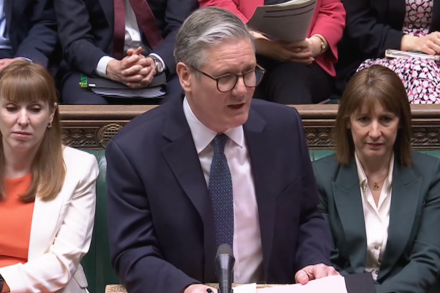
Angela Rayner was so keen to get out of the traps with her criticism of the last Conservative government at today’s deputy prime minister’s questions that she almost forgot to welcome her new sparring partner. Alex Burghart is not yet a household name: in fact, he isn’t even Rayner’s direct counterpart, as Kemi Badenoch hasn’t yet named a deputy. He had a reasonable session, and even made a stab at doing something no-one else has yet managed, which is to define ‘Starmerism’. Rayner enjoyed herself, as ever, while Rachel Reeves, sitting next to her on the government benches, had the most uncomfortable session.

Resignations alone won’t fix the Church of England

From our UK edition

Will there be more resignations following the departure of Justin Welby as Archbishop of Canterbury? The Church is, as on everything else, split on the issue, with some bishops saying that there needs to be wider accountability, and the Archbishop of York Stephen Cottrell saying that no more resignations are necessary. Given part of the criticism of the Makin report that triggered Welby’s departure was that he did not ensure that others performed their responsibilities around trying to stop Smyth, it would be odd for there not to be some wider ramifications.  The report repeatedly refers to Church officers knowing of the abuse that Smyth was still perpetrating, but not reporting it to the police.

Keir Starmer has a problem answering questions

From our UK edition

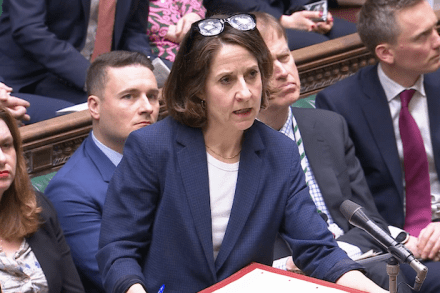
Kemi Badenoch didn’t have the best start at today’s Prime Minister’s Questions: she asked a question that had apparently already been answered, allowing Keir Starmer to mock her early on. But the Prime Minister ultimately had the tougher session. That repeated question first came from Lib Dem Christine Jardine at the very start of the session. She reported GPs and charities worrying that the rise in employers’ national insurance contributions meant they would not be able to keep offering patients the service they deserved. Starmer started replying that ‘because of the tough decisions we took’, before he was interrupted by theatrical groans from opposition MPs. He then continued: We have put forward a Budget with an extra £25.

Justin Welby quits as Archbishop of Canterbury

From our UK edition

13 min listen

Justin Welby has announced he is resigning as Archbishop of Canterbury over his handling of serial child abuser John Smyth. In a statement, he said ‘it is very clear that I must take personal and institutional responsibility for the long and retraumatising period between 2013 and 2024’. He says he believes stepping aside ‘is in the best interests of the Church of England’. Did he have to go? And who might replace him?  Also on the podcast, the assisted dying bill was published last night, 38 pages long, and will be debated in just under three weeks’ time. Keir Starmer admitted that he hasn't decided yet which way way he will vote, so is Kim leadbeater's bill enough to sway the floating voters?  Katy Balls speaks to James Heale and Isabel Hardman.

MPs should take their time over the assisted dying bill

From our UK edition

You don't need to have a strong opinion either way on assisted dying to be concerned about the latest attempt to legalise it: from a scrutiny perspective, Kim Leadbeater's bill leaves a lot to be desired. It was published last night, 38 pages long, and will be debated in just under three weeks' time. Most MPs only find out the implications of a bill when they see them in human form Critics who are saying MPs will get just five hours to debate the bill are referring to the second reading stage, with further detailed scrutiny available at its committee, report and third reading stages. However, once a bill passes its second reading, the Commons is seen to have approved its principles and overall design, and the following stages are more about finessing that.

Justin Welby quits as Archbishop of Canterbury

From our UK edition

In the past few minutes, Justin Welby has announced he is resigning as Archbishop of Canterbury over his handling of serial child abuser John Smyth. In a statement, he said 'it is very clear that I must take personal and institutional responsibility for the long and retraumatising period between 2013 and 2024'. He says he believes stepping aside 'is in the best interests of the Church of England'. At the end of last week, Welby had said he had considered resigning, and had decided that it would not be in the best interests of the church to do so. So what changed? Like so many resignations, it came after those both inside the church and outside made it very clear that they did not agree that Welby staying on was in the best interests of the church after all.

Can Justin Welby cling on?

From our UK edition

MPs are getting involved in the row over Justin Welby’s position as Archbishop of Canterbury, with Conservative MP Nick Timothy requesting an urgent question in the Commons today. Pressure for Welby to resign has been building from various quarters within the Church of England's General Synod and the wider church. As in politics, some are focused on specific issues, while others have broader grievances with Welby. How will the Church and other institutions commit to meaningful change? The current pressure stems from the Makin Review’s report on the Church’s handling of ‘serial child abuser’ John Smyth, a barrister and Christian leader who is said to have abused boys in a garden shed in Winchester.