Isabel Hardman

Isabel Hardman

Isabel Hardman is assistant editor of The Spectator and author of Why We Get the Wrong Politicians. She also presents Radio 4’s Week in Westminster.

Political activists who behave like zealots will do no good at all

From our UK edition

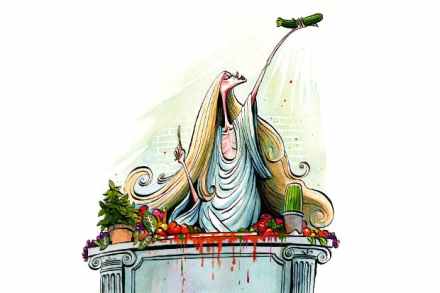
The election debate so far has included a fair bit of to-ing and fro-ing over whether religion has a place in politics and whether religious politicians have to spend significant portions of interviews talking about their views on what other people get up to in bed. But one striking feature of all political debate is how many of its participants behave like religious zealots without even realising it.  Media vicar Reverend Richard Coles yesterday tweeted that he’d spoken to a friend who planned to switch from Labour to the Conservative, rather than the Lib Dems, as Coles might have expected. The replies to this message were rather instructive. A number of people thought this voter simply could not exist.

Jeremy Corbyn’s personal speech shows that there are two Labour campaigns underway

From our UK edition

Jeremy Corbyn has given a speech today contrasting his more collegiate approach to leadership with that of the ‘bunker mentality’, as he describes it, of Theresa May’s leadership: 'Barely nine months into Theresa May’s premiership, there are clear warning signs that she and her closest advisers are slipping into that presidential bunker mentality.Whereas it is the job of leadership to hold open the space for dissent, new thinking and fit-for-purpose policy. So while it might not be the stuff of soundbites, I have always believed in standing firm and empowering others to make up their minds and come on board when they are ready.

The baffling world of Labour’s election strategy

From our UK edition

Why is it so striking that Tony Blair has said that Theresa May will be Prime Minister ‘if the polls are right’? On the surface, this appears to be a statement of the bleeding obvious, given the Tory party national poll lead isn’t exactly within the margin of error. Of course, around election time, politicians do develop the amazing ability to argue that the earth can in fact be flat, and in a normal election Blair might be focusing on talking about how Jeremy Corbyn can in fact become Prime Minister. His refusal to do that may have mildly surprised people.

Corbyn’s ex-spinner exposes an irreconcilably divided Labour

From our UK edition

One of the favourite tenets of Jeremy Corbyn supporters is that their movement is persecuted by the ‘mainstream media’ and that if only there were a fair, left-wing-friendly press in this country, then the public would be flocking to JC’s hugely popular policies. This debate has trudged its way through many acres of print already, but the insight into how Corbyn’s own team dealt with the media from former Labour spinner Matt Zarb-Cousin in an interview this week is very interesting indeed. Zarb-Cousin was, like his former colleague Kevin Slocombe, respected by many lobby journalists as someone who dealt with their queries as efficiently as possible.

The Tories don’t need silly pledges to scare off Labour in this election

From our UK edition

We are coming to the end of the first week of an election campaign that few were expecting when this week began. The parties are drawing their battle lines: the Tories are warning of a happy Vladimir Putin and a 'coalition of chaos' involving the SNP, Labour and the Lib Dems, while Labour is making this an anti-establishment election (though what precisely the Establishment is up to and which naughty coffee chains it involves remains vague, even for the party's MPs promoting that message on the airwaves). The Lib Dems, meanwhile, had long worked out their pitch as the anti-Brexit party. Of course, not all Labour MPs are talking about the way the Tories are 'rigging' the system or how Jeremy Corbyn proposes to solve that.

Labour is starting its hardest election campaign woefully unprepared

From our UK edition

The opposition parties about whom Theresa May complained in her speech launching the snap election are grinding into action. Their size and resources seem to be inversely proportionate to how prepared they are: the Lib Dems say they have already selected around 400 candidates to contest seats, while Labour hasn't selected any candidates in seats it doesn't hold. The party is contacting its 2015 candidates to see if they might stand again so it might mount reasonably well-informed campaigns in key seats (or formerly key seats: a campaign with an ounce of wisdom would have to name seats it already holds as 'key seats' while accepting that many of its sitting MPs will just be washed away).

Why do voters find it hard to trust politicians? Because of all the broken promises

From our UK edition

‘But you promised!’ Anyone who spends much time with children (whether in an Andrea Leadsom-esque capacity as a mother or otherwise) will recognise that phrase. They’re the words of someone disappointed that the grown ups, who are supposed to be sensible, haven’t followed through. Today Theresa May broke her own promise about there being no early general election. Will helpfully reminds you of five of those promises, repeated by both the Prime Minister and her henchmen, in this post. She had been so adamant that even those who thought they knew her best after years of working together in Opposition and government had taken her at her word and were insisting until recently that May believed in keeping her promises and that there would be no snap general election.

Philip Hammond’s small print won’t save him from a Tory backbench revolt

From our UK edition

George Osborne was famous in Westminster when Chancellor for laying large 'elephant traps' for Labour using Treasury policy. He was also famous for telling everyone all about how the trap worked and where it was, before falling into it himself. When Philip Hammond came into the Treasury, it was largely accepted that the days of silly elephant traps were over. But this week the new Chancellor ended up locating one of the last of the Osborne elephant traps which had been lying dormant in the political jungle - and he located it by falling straight into it. The 'tax lock', which the Tories announced in the 2015 election campaign to put pressure on Labour over sneaky national insurance and other tax rises, ended up trapping the Tories themselves.

Hammond gets a pasting in the press

From our UK edition

It's fair to say that Philip Hammond hasn't charmed Fleet Street with his Spring Budget.  There is little sympathy even from newspapers inclined to agree with a Conservative assessment of how to run the economy. Broken promises are potent in politics - just ask the Liberal Democrats. The Tories made their tax lock pledge in the 2015 election as they were hoovering up seats from the Lib Dems who were being punished for failing to keep a pledge on tuition fees they had made at the previous election. Westminster had almost forgotten the tuition fee row. Voters hadn't.

Philip Hammond brews trouble with his National Insurance hike

From our UK edition

Philip Hammond had, in his first few months of Chancellor, gained rather a reputation for being an ‘Eeyore’ about the consequences of Brexit. In the run-up to today’s Budget, it was briefed that he would be much more upbeat about things, while also storing up a ‘war chest’ to guard against any future shocks to the economy caused by Britain leaving the European Union. In the event he barely talked about it at all.  He told the Chamber that ‘as we start our negotiations to exit the European Union, this Budget takes forward our plan to prepare Britain for a brighter future’, and ’our task today is to take the next steps in preparing Britain for a global future’.

Jeremy Corbyn’s bleak Budget response fails to trouble the Chancellor

From our UK edition

Jeremy Corbyn now has more experience of responding to Budgets than the Chancellor of the Exchequer who he stood opposite today. So did the Labour leader offer a good response to Philip Hammond’s statement today? The answer will depend on how you evaluate Budget responses. If you’re expecting the Leader of the Opposition to look like a Prime Minister in waiting, then you’re expecting too much. If you’re measuring him against his own record, which remains largely that of an obscure and unimpressive backbencher who was never promoted for very good reasons, then this was a passable Budget response. It’s been a few years since we had a decent Budget response, to be fair.

A perfect example of how Corbyn’s inability to think on his feet lets him down

From our UK edition

Today's Prime Minister's Questions was a good example of how Jeremy Corbyn's inability to be nimble on his feet lets him down. The Labour leader had a perfect peg for his questions about social care, which was last night's leak of recordings in which Surrey Council leader David Hodge spoke of a 'gentlemen's agreement'. His first question was a good one, asking the Prime Minister to explain the difference between a 'sweetheart deal' and a 'gentlemen's agreement'. May denied that there was a special deal for Surrey, and repeated that denial in subsequent answers. But what Corbyn didn't pick up on was the careful wording of May's denial. She said: 'If he's asking if there was a special deal for Surrey that was not available to other councils, the answer is no.

Surrey Council’s ‘gentlemen’s agreement’ undermines ministers’ social care strategy

From our UK edition

On the eve of the Budget, the row about whether ministers struck a ‘sweetheart deal’ with Surrey Council on social care funding to stop the local authority from having to hold a referendum on raising council tax has blown up again. BBC Surrey has recorded extracts of a meeting between council leader David Hodge and colleagues in which he talks of a ‘gentlemen’s agreement’ that was struck with Sajid Javid. The councillor claims that such agreements often take place in the Conservative party. This is particularly unhelpful for ministers if they are planning to tell councils to buck their ideas up about social care, as they seem to be preparing to do tomorrow.

Will Theresa May change her mind on an early general election?

From our UK edition

Downing Street has rejected William Hague’s call for a snap general election. The former Conservative leader argues in his Telegraph column today that this would ‘strengthen the government’s hand at home and abroad’, but Number 10 says this isn’t something Theresa May ‘plans to do or wishes to do’.  Theresa May is often compared to Gordon Brown, but one thing she will have learned from that previous Prime Minister was that to talk about an early election is a very bad idea, especially if it then turns out that it isn’t something that you wish to do either. But is she secretly keen on an early election?

Is anyone brave enough to fix social care?

From our UK edition

Social care is in crisis. Everyone knows that - or at least likes to say so to sound well-informed. It is Westminster’s latest trendy crisis - rich with case studies of elderly people trapped in hospital for weeks, or trapped in their beds at home with one flying fifteen minute visit a day in which a carer has to choose whether to bathe that elderly person or take them to the toilet. It is now a comfort blanket topic for Jeremy Corbyn to retreat to at Prime Minister’s Questions whenever he has run out of other things to ask Theresa May about. But is anyone doing anything about this crisis, other than talking about it? There’s a lot of talking big and very little action.

Why the Commons headache over Brexit is only just beginning

From our UK edition

Theresa May might have won every Brexit vote in the House of Commons so far, but it’s getting trickier now. The House of Lords this week rejected the plan to trigger Article 50 without offering assurances to EU nationals, knowing that most MPs are sympathetic. I understand that the Tory whips are working hard to whittle down threatened rebellion at the 'ping-pong' stage. Given that everyone in Vote Leave pledged to protect EU nationals – as did four out of the five original Tory leadership contenders – it’s harder work. Quite a few rebels feel they need to make a point about the status of EU citizens. The whips will probably succeed, and it seems (this time) that the Lords will not send it back to the Commons again.

Can John McDonnell’s ‘tea offensive’ finally bring Labour together?

From our UK edition

What is Labour’s priority at the moment? Normally the sensible answer for an Opposition party would be that it needs to focus on policy, and particularly on talking about next week’s Budget. But it is very difficult for a party polling so far behind the one in government and that is so divided to have much authority when it criticises ministers on policy. So when John McDonnell gave his pre-Budget speech today, his focus couldn’t just be on what he expects Philip Hammond to get up to and what Labour would want from the forthcoming economic statement.

Government suffers its first Article 50 bill defeat

From our UK edition

In the past few minutes, the government has lost a vote in the House of Lords on a key aspect of Brexit: the status of EU nationals. Peers are at the Committee Stage of the bill that allows the government to trigger Article 50, and despite attempts by Home Secretary Amber Rudd to reassure them that this issue will be the priority once the negotiations for Britain to leave the European Union have begun, they backed Amendment 9b, which says the government should guarantee now that EU nationals living in the UK will have their rights protected. The House voted 358 to 256 for the cross-party amendment. Rudd was watching the debates this afternoon.

How Corbyn failed to transform PMQs

From our UK edition

Prime Minister’s Questions is now regarded in Westminster as being even more pointless than it used to be before. The general weakness of Jeremy Corbyn and his parliamentary party’s ongoing but powerless dissatisfaction with the Labour leader means that it is rarely a session where the Opposition lays a glove on the Prime Minister - and even more unusually a session which Labour MPs leave feeling proud of their party.

Will social care form a key part of next week’s Budget?

From our UK edition

The final Treasury Questions before a Budget or Autumn Statement always reveals not just what the Opposition plans to attack the government on, but also where the government is feeling particularly vulnerable. This week’s session suggested that ministers are rightly quite nervous about social care funding - and that they realise they will have to do something about it in next week’s statement. Members from both sides of the House complained about the pressure being placed on their local authorities by the shortage of funds far adequate social care. In response, ministers repeatedly pointed to the precept on council tax and the Better Care Fund, but they also left enough of a space in their answers to suggest that they were preparing to announce something next week.