Isabel Hardman

Isabel Hardman

Isabel Hardman is assistant editor of The Spectator and author of Why We Get the Wrong Politicians. She also presents Radio 4’s Week in Westminster.

PMQs: Corbyn’s confusion over the single market

From our UK edition

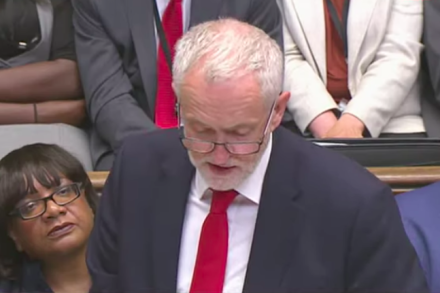
Jeremy Corbyn’s attack line on Theresa May at Prime Minister’s Questions today might have been more effective had the Labour leader not appeared confused about what he was asking. He had no option but to talk about Brexit, something he has tried to avoid in his year and a half in the job because of his own ambivalence over Europe and his disagreements with his party about what is particularly bad about the European Union. May teased the Labour leader about his apparent confusion yesterday over whether membership of the single market was the same as access to the single market, telling him that ‘I’ve got a plan, he doesn’t have a clue’.

Theresa May’s cheery Brexit threat to EU leaders

From our UK edition

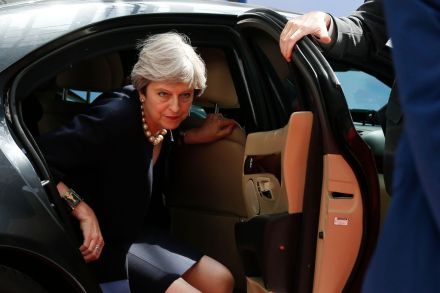
Theresa May was at pains in her Brexit speech and in the question-and-answer session from journalists afterwards to appear as friendly as possible to European leaders. She pointedly took questions from members of the European press who were present. She told the room that ‘we are leaving the European Union, but we are not leaving Europe’, and addressed ‘our friends across Europe directly’, promising that Britain would continue to be ‘reliable partners, willing allies and close friends’. But she also took a very strong negotiating line, threatening what David Cameron either couldn’t or wouldn’t, which was to walk away if the deal offered wasn’t good enough, particularly if EU leaders sought to punish Britain for its decision.

Will Theresa May finally tell us what Brexit means?

From our UK edition

How much will Theresa May’s speech today surprise us? The Prime Minister’s promise to offer more detail on Brexit was made before Christmas, but Number 10 types seemed curiously relaxed about the prep for the speech over the holiday. And even though those briefing the speech over the weekend warned of a ‘market correction’, this is likely to have been as much to suggest that the speech was going to be big and revelatory as it was to actually warn about its content. Today we will get the 12 priorities for May’s negotiation of Britain’s exit, which will be guided by four key principles. Those are ‘certainty and clarity’, ‘a stronger Britain’, ‘a fairer Britain’ and a ‘truly global Britain’.

Jeremy Corbyn needs to work on his Trump impression

From our UK edition

‘I’m really interested about the similarities between me and Donald Trump,’ joked Jeremy Corbyn this morning on Marr. ‘Is it the hair or something?’ When the Labour leader expounded upon his Trump-esque analysis of the system that is rigged against the people, it turned out that the main difference between him and the American president was that he wants a series of constitutional reforms including overhaul of the House of Lords and more political representation of the North. Which doesn’t sound like the kind of thing you can shout at a rally, whether or not you have ludicrous hair.

May might not give much away in Brexit speech

From our UK edition

How much detail does Theresa May need to give in her much-anticipated Brexit speech on Tuesday? The Prime Minister will presumably have to say more than ‘Brexit means Brexit’, and odd phrases about what colour Brexit should be (red, white and blue) won’t pass muster either. But remember that the original big Brexit speech at the start of a year was the Bloomberg speech that David Cameron gave in 2013 - and he gave so much detail about what he wanted from a renegotiation of Britain’s relationship with the European Union that he was inevitably going to disappoint, which he then did, taking Britain out of the EU as a result. May will not want to fall into the same trap. Neither will she want to be the one who gets blamed for Britain not getting certain things.

Will more Labour MPs quit Parliament in despair?

From our UK edition

How many other Labour MPs will decide to quit Parliament mid-term as Tristram Hunt and Jamie Reed have done? Some had already found escape chutes in the form of Mayoral contests, as Andy Burnham has done. Others don’t have the option of staying in politics in that sort of detached role, yet are in their prime while achieving very little in Parliament. They are struggling with the hard left in their own seats - and if they are talented and visible, they will have received very attractive job offers which have made them question whether it is really worth staying in a miserable role in their prime achieving very little. This latest resignation is not the latest in an organised ‘coup’ of MPs deserting their party to make a point.

Will more people start paying to see a GP?

From our UK edition

One of the many groups getting stick for the current pressure on NHS emergency wards are GPs, criticised for their long waiting lists and inflexible hours which lead to people pitching up at A&E with sore shoulders and the flu. The GP contract, which allowed primary care physicians to opt out of out-of-hours cover, is the popular scapegoat for this, but there’s also the question of whether there are enough GPs in the system at the moment to serve the number of patients who need them. Some patients are giving up on the free NHS primary care system. The doctor can see you now, in your living room, via webcam, using apps like Push Doctor.

Jeremy Corbyn attacks the government for ‘disarray’ while tripping over his own policies

From our UK edition

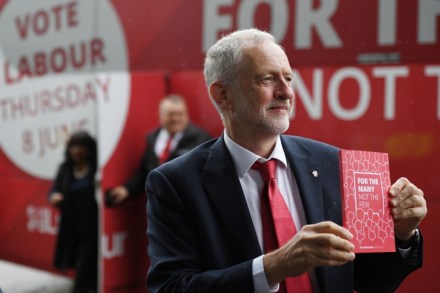
For a man prepared to stick to his principles over decades, no matter how unpopular they make him, Jeremy Corbyn has changed his mind a remarkable number of times today. His latest stance on freedom of movement is as follows: ‘Labour is not wedded to freedom of movement for EU citizens as a point of principle, but I don’t want that to be misinterpreted, nor do we rule it out.’ This makes the party’s infamous ‘controls on immigration’ mug from the 2015 election look like such a simple, wholesome proposition. Here is the evolution of Corbyn’s stance: Last night: Labour is not wedded to freedom of movement for EU citizens as a point of principle. This morning: Labour isn’t going to restrict the rights of people to move to the UK.

Why isn’t Labour focusing its efforts on the NHS crisis?

From our UK edition

Jeremy Corbyn will shortly give his speech on Labour’s position on freedom of movement, hopefully clarifying whether that is his pre-briefed position that the newspapers published this morning, or his position as set out in his Today programme interview. It was initially briefed that he was ‘not wedded’ to the idea of freedom of movement, but then said Labour would not stop any EU citizens from coming to the UK. To add to the confusion over this policy announcement which appeared to be moving the Labour party to the right on immigration, the Labour leader then did the equivalent of shouting ‘look at that massive left-wing squirrel over there!’ in order to distract everyone by suggesting a national salary cap.

The ‘shared society’ seems to be a gloomier version of the ‘big society’

From our UK edition

Is Theresa May’s ‘shared society’ speech just a rather empty rebranding exercise, or something serious that will shift social policy in this country? The Prime Minister today set out more of her thinking on domestic reform and defined what her ‘shared society’ will look like. It's something we have only caught glimpses of up until now, because of the truncated leadership contest and the focus on Brexit. She painted a very gloomy picture of life in Britain today, focusing on all the things that are going very badly wrong for many people: ‘We live in a country where if you’re born poor, you will die on average 9 years earlier than others.

What does Theresa May’s ‘shared society’ really mean?

From our UK edition

While getting the Tory leadership contest out of the way quickly was good for the country following the EU referendum, it did mean that Britain gained a new Prime Minister without much idea of what she believed or wanted to do with her time in office. Theresa May did set out some principles for her government when she stood on the steps of Downing Street on her first day in the job, and in her autumn conference speech, but how she plans to help the ‘just managing’ and how much she really intends to do by way of domestic reform when Brexit is such a big distraction - and potentially a convenient excuse. But as I say in the magazine this week,  the Tory leader is keen that Brexit isn't the only thing by which her premiership is judged.

Theresa May’s extraordinary opportunity

From our UK edition

It is the fate of all new prime ministers to be compared with their recent predecessors. Theresa May has already been accused of being the heir to the micro-managing Gordon Brown. Her allies, meanwhile, see a new Margaret Thatcher, an uncompromising Boadicea destined to retrieve sovereignty from Europe. But perhaps a more fitting model for May would be a less recent Labour prime minister: Clement Attlee. When Labourites reminisce about Attlee, it isn’t so much the man himself who makes them misty-eyed. It is the achievements of those who worked for him — Nye Bevan, Ernest Bevin and the rest. Attlee’s government created the welfare state and the National Health Service, and built a million houses. It had lots of excuses not do any of these things.

Theresa May won’t get a better chance to deal with the social care crisis

From our UK edition

What is the greatest problem facing Theresa May this year? The Prime Minister is preparing for her speech on what Brexit means (in which she will presumably have to speak in sentences rather than using random and meaningless slogans), but that's not the only major policy issue that she should deal with in 2017. As I explain in this week's magazine, Cabinet ministers are growing increasingly agitated at what they see as a paltry response to the social care crisis. As MPs, they are being lobbied by furious council leaders who say that nothing announced so far even comes close to alleviating the crisis. As ministers, many of them see the effects of a poor settlement on social care funding in their portfolios.

May’s big chance

From our UK edition

It is the fate of all new prime ministers to be compared with their recent predecessors. Theresa May has already been accused of being the heir to the micro-managing Gordon Brown. Her allies, meanwhile, see a new Margaret Thatcher, an uncompromising Boadicea destined to retrieve sovereignty from Europe. But perhaps a more fitting model for May would be a less recent Labour prime minister: Clement Attlee. When Labourites reminisce about Attlee, it isn’t so much the man himself who makes them misty-eyed. It is the achievements of those who worked for him — Nye Bevan, Ernest Bevin and the rest. Attlee’s government created the welfare state and the National Health Service, and built a million houses. It had lots of excuses not do any of these things.

Why are we handing gongs to people who are just doing their jobs?

From our UK edition

Every year closes with ‘fury’ as the press reacts to yet another honour for a ‘mandarin’ who has been doing something they disagree with, and 2016 is no exception. This year’s villainous recipient of a gong is Sir Mark Lowcock, Permanent Secretary of the Department for International Development. Much of the anger directed as Lowcock’s gong is really frustration with the government’s policy on aid spending, which is that 0.7 per cent of national income is spent on development projects around the world every year. That’s not Lowcock’s decision, but something that the Coalition Government introduced and that this majority Conservative Government under David Cameron and then Theresa May has remained committed to.

Labour MP Jamie Reed takes the nuclear option and quits parliament

From our UK edition

Jamie Reed, the Labour MP for Copeland, has announced he is stepping down from Parliament from the end of January 2017. He is leaving to work at Sellafield, which is in his constituency. Reed is a well known critic of Jeremy Corbyn, and though his resignation letter is warm and polite, it makes frequent and pointed references to the need for a Labour government. It closes with Reed wishing Corbyn well in his endeavours to become the next Labour Prime Minister, something the MP has made pretty clear in previous statements that he thinks is impossible. [caption id="attachment_9717962" align="alignnone" width="702"] Jamie Reed's resignation letter[/caption] So why is he leaving? Reed's constituency is now a marginal seat, with a majority of just 2,564.

Theresa May answers her own questions as MPs try to grill her on Brexit

From our UK edition

‘So… was that a yes or a no?’ A number of MPs on the Liaison Committee asked the Prime Minister that question during her evidence question today. They weren’t doing it to make a point: Theresa May spent most of the hour and a half stubbornly answering a set of questions that she had clearly decided in advance with lines also decided in advance, regardless of whether those questions were very close at all to the ones being asked in the Committee room. She was most opaque on the question of whether Parliament will get a vote on Brexit, circling around the issue by listing the opportunities for MPs to discuss Brexit.

Number 10 shows an odd lack of control at EU summit

From our UK edition

Theresa May looking embarrassed and awkward as European leaders appear to make a point of ignoring her at last night’s EU summit is such a good symbol of Britain’s place in the world that Number 10 is going to struggle to shake it. The footage, of course, was rather selective, with other clips showing the Prime Minister deep in conversation with European colleagues. But the picture plays in to anxieties about Britain’s standing after Brexit, and also anxieties about whether May will really be able to sweet talk EU leaders into giving her the deal that she wants. The Prime Minister told leaders that she wanted an early deal on the status of Britons who live in Europe and EU citizens who live in the UK.

Could Labour give the Boris Johnson row the attention it deserves?

From our UK edition

What could Jeremy Corbyn attack Theresa May with this week at Prime Minister’s Questions? The Labour leader has already had a go at the crisis in social care funding, which the government is trying to patch up this week by raising the council tax precept from 2 per cent to 4 per cent. He could have another go, given what has long been a serious issue is starting to become a political row too. The problem is that the Labour leader so often retreats to social care and the NHS as a comfort blanket that his attacks are a little blunter than they could be. One row that really hasn’t had as much attention as it deserves is the one over Boris Johnson’s remarks about Saudi Arabia.

On Syria, it is easier for MPs to reflect on their past mistakes than confront the present

From our UK edition

Whose fault is the bloodshed in Aleppo? Yesterday the House of Commons discussed this at some length in an emergency debate on the onslaught by Syrian and Russian planes on the city. One of the most powerful speeches came from George Osborne who spoke about the impact that the 2013 Commons vote had on Syria and on American politics. It is worth reading in full. ‘Of course, once this House of Commons took its decision, I believe it did have an impact on American politics,’ he told MPs. ‘We cannot have it both ways - we cannot debate issues such as Syria and then think that our decisions have no impact on the rest of the world. I think that did cause a delay in the American Administration’s actions and did cause Congress to get cold feet.