Interconnect

The Splendour of India’s Royal Courts

From our UK edition

Maharaja: The Splendour of India’s Royal Courts Maharaja: The Splendour of India’s Royal Courts is the V&A’s latest exhibition (until 17 January 2010). It sets out to explore the lives of India’s princes from the 18th century to the end of British rule in 1947. In the first room, a life-sized model elephant in all its finery — silver earrings, necklace, harness and howdah — stands ready to lead a royal procession. What else? Well, necklaces, belts and bracelets with rocks to make your eyes pop: look out for a dazzling turban ornament from the mid-18th-century.

The Spectator Parliamentarian of the Year Awards 2009 | 14 October 2009

From our UK edition

Our political representatives have returned to Westminster, and the air is still thick with the Ghosts of Expenses Past. As MPs are ordered to pay back their more extravagant claims — with most of them complaining as they do so — you’d be forgiven for thinking that there isn’t a single decent one amongst them. But you’d be wrong. For the past few weeks, our readers have been highlighting the diamonds in the rough, via their nominations for The Spectator/Threadneedle Readers’ Representative Award.

The Spectator Parliamentarian of the Year Awards 2009

From our UK edition

All is not lost. While the standing of parliament as a whole is at a low ebb, our readers have jumped at the chance to highlight those politicians who — whisper it — are a credit both to their exulted positions and to the country. All is not lost. While the standing of parliament as a whole is at a low ebb, our readers have jumped at the chance to highlight those politicians who — whisper it — are a credit both to their exulted positions and to the country. Yes, your nominations for The Spectator/Threadneedle Readers’ Representative Award have been pouring in for the past couple of weeks, and we’ve had figures from every major party represented. A popular figure in the early nominations is the Conservative MP Douglas Carswell.

Good women and bad men

From our UK edition

Just in case you hadn’t guessed after nearly 1,800 pages of the ‘Millennium’ trilogy, the late Stieg Larsson has his alter-ego hero Mikel Blomkvist spell it out. Just in case you hadn’t guessed after nearly 1,800 pages of the ‘Millennium’ trilogy, the late Stieg Larsson has his alter-ego hero Mikel Blomkvist spell it out. ‘This story is not primarily about spies and secret government agencies,’ he says. ‘It’s about violence against women and the men who enable it.’ Larsson’s three Millennium books, which feature adult reboots of Astrid Lindgren’s children’s characters Pippi Longstocking and Kalle Blomkvist, are slow-burners in the crime fiction charts.

The Connoisseur’s Diary

From our UK edition

2nd October New York: Opera Verdi’s Aida opens at the Met, conducted by Daniele Gatti, former principal conductor of the Royal Philharmonic Orchestra. Lithuanian soprano Violeta Urmana sings the title role. 4th October Paris: Racing The Prix de l’Arc de Triomphe is a Group 1 flat race held at the Longchamp course and one of the most fashionable race meetings in the calendar. It is one of the four French Classics and has a prize of €4 million, the second biggest prize on the turf after the Japan Cup (on 29 November). 4th October Japanese Grand Prix This year’s race takes place at the Suzuka Circuit, the only figure-of-eight F1 track and one of the most challenging. The 2008 race was won by Spain’s Fernando Alonso for Renault.

Examine my thoughts

From our UK edition

The following extracts are from The Blind Eye: A Book of Late Advice: Please don’t be misled by the apparent self-certainty of these utterances; be assured that after each one I nervously delete the words but that’s probably just me, right . . . I can see exactly what not to do at the moment. No doubt through the usual process of elimination I’ll arrive at my favourite strategy of total paralysis. With your back to the wall, always pay a compliment. Even your mugger or torturer is not immune to flattery, and still capable of being a little disarmed by a word of congratulation on their choice of footwear or superior technique.

Life & Letters | 12 September 2009

From our UK edition

Sad, but for the most part the newly published edition of Orwell’s Diaries is a bore. Not altogether, of course, but much of what is interesting — some of the wartime stuff — isn’t new, but has already appeared in the Collected Essays, Letters, Diaries etc. And what is new, the Domestic Diary, a record of the kitchen garden at his Wallingford cottage, isn’t interesting — though it may come to be so in time. I suspect that contemporaries would have found little of interest in Parson Woodforde’s journal, which nevertheless delights many today, with its picture of a vanished way of life.

WEB EXCLUSIVE: Inside the Causeway Retreat

From our UK edition

Just 44 miles from central London, there is a private island retreat.  400 acres of idyllic surroundings, lush green fields and beautiful wild beaches.  A registered bird sanctuary, it is the only place in the UK that has 5 different species of owl living together.  A designated place of natural beauty, a recognised place of scientific interest..... Welcome to The Causeway Retreat on Osea Island. A private mental health and addiction rehabilitation facility.   And this is just building on the legacy of Osea Island.  It has a history of helping people, it was also the site of the world’s first treatment centre from 1903 – 1917 when it was owned by Frederick Charrington of the Brewery family.

1843 and All That: murder and a ‘crooked’ parliament

From our UK edition

A venal House of Commons, a time of economic dislocation, an unpopular PM: Siân Busby sees eerie resonances in the strange case of Daniel McNaughten When Daniel McNaughten, a young Glaswegian wood-turner, shot Edward Drummond Esq on a freezing January afternoon in 1843, the widespread reaction was dismay but not astonishment. Such atrocities were only to be expected at a time of economic depression, social dislocation, terrorists and spies around every corner (does that sound familiar?). The unfortunate Mr Drummond was not only a scion of the wealthy and influential Drummond banking family (half the world’s wealth was said to be stashed in their coffers beneath Charing Cross).

Competition | 23 May 2009

From our UK edition

In Competition No. 2596 you were invited to submit an alphabet primer designed for children of the Noughties. A far cry from the piety and moral lessons of primers past, yours were designed for a generation-in-waiting of Heat-reading (J is generally for Jade), debt-ridden (‘Y’s for the Year the economy shrank, Z’s for Zilch that’s in the bank.’: Tim Raikes), violent (K almost always spells knife), illiterate (‘Z is for xenophobia’: Phil Thomas), egocentric (‘M is for me before everyone’: Michael Cregan), appearance-obsessed (B is mostly for botox) technophiles (Facebook, Twitter, etc, etc).

A load of hot air | 29 April 2009

From our UK edition

As a general rule, I do not believe in reviewing bad books. Review space is limited, and the many good books that are published deserve first claim on it. But climate change is such an important subject, and — thanks to heavy promotion by that great publicist, Tony Blair — the Stern Review of the economics of climate change has become so well known (not least to the vast majority who have never read it, among whom in all probability is Mr Blair), that anything from Lord Stern deserves some attention.

Henry’s VIII’s Psalter

From our UK edition

In this illumination from Henry’s VIII’s Psalter, the young David prepares to confront Goliath. In this illumination from Henry’s VIII’s Psalter, the young David prepares to confront Goliath. Dressed in Tudor costume, he wears a soft black hat with a white feather brim, similar to that worn by Henry in the famous Holbein portrait in Whitehall. Goliath is modelled on Pope Paul III, who excommunicated the ‘heretic’ King in 1538. David’s victory over Goliath is thus directly analagous to Henry’s ‘liberation’ of England from servitude to Rome. From Charlemagne onwards, European monarchs identified themselves with King David. But Henry had a better claim than most to do so.

Our society must be equal to the threats ahead

From our UK edition

There seems to have been a view developing in recent years that defines peace simply as the absence of war. If only we can avoid armed conflict, the argument seems to say, then we will live in a more peaceful world. But peace is not simply the absence of war. Real peace is accompanied by an unavoidable set of values. Freedom from tyranny, freedom from oppression and freedom from fear are essential for real peace, and unfortunately we sometimes have to fight and even to die to defend these freedoms. This is where our social attitudes, our political direction and our national security converge — in the crucial question about the state of our national resilience.

The Circus

From our UK edition

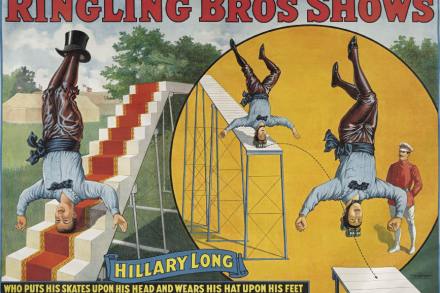
The Circus by Noel Daniel You’d have to be a strong man yourself just to lift this amazing collection of photographs and circus posters. It covers the years 1870 to 1950 and is quite eye-watering. Buy this book and you’ll never have to watch television ever again. You sir, the man at the back in the pink suit, are you strong enough to lift this tome? Roll up! Roll up! See the dog-faced woman!

The best possible ragbag

From our UK edition

I love books like this. A writer writing about what he knows and what he loves and things he has done, with absolutely no thought as to the marketability of the book when it comes out. This very slight lack of focus has already been reflected in a couple of reviews. What is it, fish or fowl? The publishers, probably scratching their heads and wondering which shelf it’ll be put on, will no doubt classify it as ‘music’ or maybe ‘autobiography’, as all the chain bookshops like their non-fiction easily categorisable. I love books like this. A writer writing about what he knows and what he loves and things he has done, with absolutely no thought as to the marketability of the book when it comes out.

A Christmas Song

From our UK edition

A Christmas Song Why is the baby crying On this, his special day, When we have brought him lovely gifts And laid them on the hay? He’s crying for the people Who greet this day with dread Because somebody dear to them Is far away or dead, For all the men and women Whose love affairs went wrong, Who try their best at merriment When Christmas comes along, For separated parents Whose turn it is to grieve While children hang their stockings up Elsewhere on Christmas Eve, For everyone whose burden Carried through the year, Is heavier at Christmastime, The season of good cheer. That’s why the baby’s crying There in the cattle stall: He’s crying for those people. He’s crying for them all.

Adjustment

From our UK edition

Adjustment So much for the ineffectual sandbags: we were put in touch with the loss adjuster, who came when the ‘black water’ had retired. They would indeed replace the white goods (for which we’d better find the lost receipts) but, with a droll glance at the furniture, he let us know that didn’t mean what was wrecked already might be redeemed nor that the house would be caulked and fitted out with gopher wood against a future flood. He must have seen a rainbow smudge of expectation in our eyes. His soles scuffed the buckled floor boards — the alluvia of silvered dust, clay, gravel, seeds and spores still promising the new, the better life.

The Undersea World of Jacques Cousteau

From our UK edition

The Undersea World of Jacques Cousteau While my mother chokes on a fishbone, I am shuffled into another room to watch The Undersea World of Jacques Cousteau. Bubbles rush upwards from a diver’s mouthpiece as my mother coughs up blood. Beyond the window, snowflakes rim the leafless trees. The deep teems with presences. My mother’s face takes on a distressing error in form. The ocean generates a sad music all of its own. Ambulance lights dye the snow blue. A siren bends the air to zero.

A life in pictures

From our UK edition

Jonathan Coe’s gloomy new novel will surprise fans of The Rotters’ Club and What a Carve-Up!, but it need not disappoint them. In taking on the voice of Rosamond, an elderly, suicidal lesbian, Coe shows an admirable refusal to be pigeonholed. Like many contemporary novelists (Penelope Lively, Thomas Keneally, Alan Judd), Coe is concerned with the emotional dislocation caused by the second world war and its impact on succeeding generations. In common with these novelists, he chiefly concerns himself with the lives of women, with the domestic aftermath of the experience of upheaval and loss.