Igor Toronyi-Lalic

Igor Toronyi-Lalic is arts editor of The Spectator

Boxed-up Churchill is a real work of art

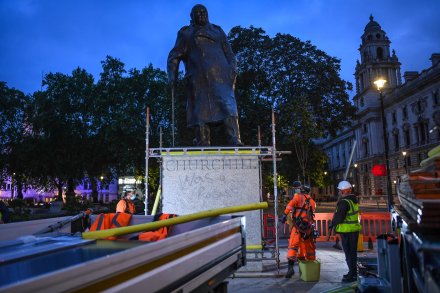
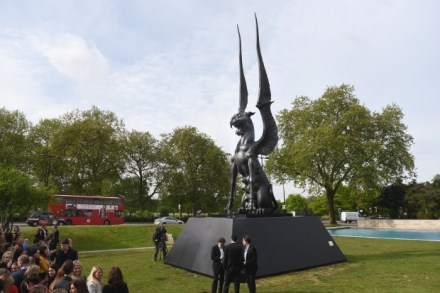
Central London is becoming a paradise for modernists like me. First there was the extraordinary encasement of Big Ben in sci-fi scaffolding, transforming this dinky clock tower into a NASA launchpad, a witchy Cape Canaveral. Then came the austere grey shell that sat over the main body of the Palace of Westminster for several years, turning it temporarily into a formidable superstructure. And now with the entombing of Churchill, we have our very own constructivist Kaaba.  For the real art lover, what is going on in this country – and elsewhere – is thrilling. Seeing sullen old public monuments suddenly inspire people to action – for and against – is exactly what these works should have been about in the first place.

Theatre closures are not necessarily a disaster – they offer a chance to remake culture

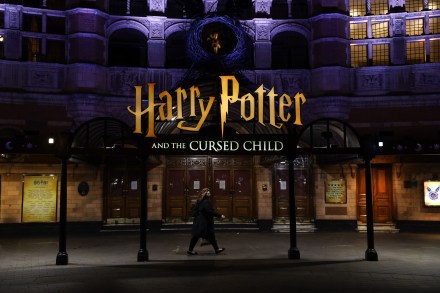
Theatre stands on the brink of ruin, says Sonia Friedman. And if you believe Twitter, so is my career. I'm apparently 'a disgrace to my profession'. 'Not fit to do my job'. I wear 'grubby' oversized T-shirts, dare to have 'an anagram for a name' (sorry for being foreign) and possess the face of an 'etiolated ferret' and, naturally, for all this, I should be fired.  Leaving aside for a moment my funny name, ferrety face and baggy clothes (all criticisms not without some merit), what was my crime? To suggest that theatre being on the brink of ruin might not be such a disaster. That tongue was firmly lodged in cheek was of course wilfully overlooked. Hey-ho. This is Twitter. Leaping on the most uncharitable interpretation of a tweet is the default setting.

A triumph: ENO’s Mask of Orpheus reviewed

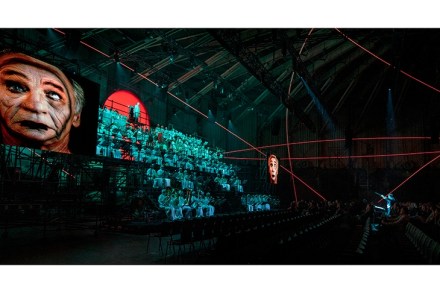
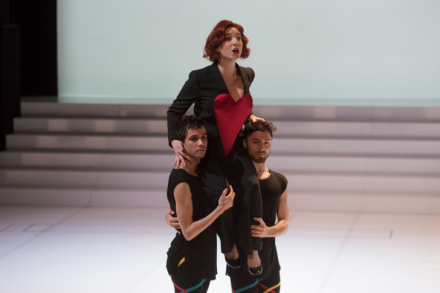
ENO’s Mask of Orpheus is a triumph. It’s also unintelligible. Even David Pountney, who produced the original ENO staging in 1986, admitted to me in the interval that he didn’t have a clue what Harrison Birtwistle’s opera was about. But who cares when, visually and musically, you’re being socked between the eyes? Mask makes sense in the same way an earthquake makes sense. Fittingly we begin with total nonsense: Orpheus, in the bath, attempting to reform language. This is Orpheus the Man, in red velour and gelled-up hair, looking like Rod Stewart. An unlikely charmer of fishes and trees, it has to be said. But soon enough another Orpheus pops up: Orpheus the Myth, looking even worse, like Rod Stewart’s drunk dad.

The rude, ripe tastelessness of John Eliot Gardiner’s Berlioz is the perfect antidote to Haitink’s Instagram Bruckner

Conducting is one of those professions — being monarch is perhaps another — where the less you do, the more everyone loves you. Orchestral players, for example, tend not to complain about being let off early from rehearsals. I prefer my maestros to have their head under the bonnet: loosening, tightening, fixing, replacing. Much of the classical music world, however, fetishises the idea of ‘letting the music speak for itself’. As if ‘the music’ were an objective thing. As if the score were a rendering that could be printed out in 3D, rather than a map to be deciphered and interpreted.

Out of this world | 11 July 2019

In Stockhausen’s Klavierstück XI hands become fists, arms and elbows clubs, shoving, pounding and ker-pow-ing the keyboard to near oblivion. No wonder Pierre-Laurent Aimard had slipped on a pair of gloves before starting to stop his fingers from bruising or bleeding. The sound created is monstrous, alarming, thrilling. Aimard threw the full weight of his body behind each blow to such an extent that I could see his backside hovering above his stool. It’s not easy to beat up a Yamaha grand. We always dismiss Stockhausen when he claimed that he came from the star Sirius. But his work backs him up. His Klavierstücke are exactly what you might expect from a dazed alien.

Oh, I do like to be beside the seaside

It was bucketing it down in Venice, yet the beach was heaving. Families, lovebirds, warring kids, a yappy mutt, all strewn across a sandy expanse, basking on beach towels. Balls were bounced, crosswords filled, timelines scrolled. Out of this idleness, songs would bubble up, light billowy airs — speaking now to suncream mundanities, now to geological anxieties — whisked up to our ears as if on a cooling breeze. We were in the Lithuanian Pavilion inside a dilapidated former military storehouse in a corner of north Venice, being given a god’s-eye view on an extraordinary new opera, Sun & Sea (Marina), by a Lithuanian trio: composer Lina Lapelyte, director Rugile Barzdziukaite, and writer Vaiva Grainyte.

The ugly truth

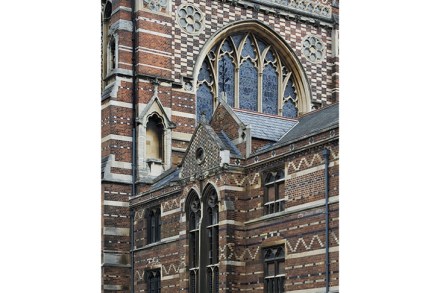
Timothy Hyde’s Ugliness and Judgment: On Architecture in the Public Eye is not about why we find things ugly. It’s not even about what ugliness is, or why our understanding of what it is see-saws so violently. We don’t learn why people once loathed John Nash’s All Souls at Langham Place, one MP calling it ‘a horrible object’, or what insanity led Edwin Lutyens to condemn — as ‘an ugly angle’ — roofs slanted at 45 degrees. The mud-slinging doesn’t interest Hyde. How the slung mud shapes us excites him much more. Arguments over ugliness, he contends, are never just about aesthetics. They’re a proxy for social, political, even theological, concerns.

Pearls and swine

The best booers, in my experience, are the Germans. There’s real purpose and thickness to their vocals. Italians hiss. The English grumble. The French? A bit of this, a bit of that. I approve of booing — or feedback, as I like to think of it. It’s galvanising and exhilarating, even when infuriating. Are you with them or not? One caveat: save it till after the performance, please. The French do not hold to such niceties. One piggy old Parisian thought it appropriate to shout at the stage during Sunday’s performance of Opéra Bastille’s new Troyens. And not once. But three times. On that third cry, he got on to his trotters to hurl his abuse. Was it feeding time?

Nasty, brutish and brilliant

If you take awards seriously (which of course you shouldn’t) you could argue that Rebecca Saunders is now Britain’s most important living composer. Last week she won music’s Nobel, the Ernst von Siemens prize. €250,000. And its record is pretty good — if you ignore 1974 (Britten) and 1987 (Bernstein). There are many reasons to love Saunders. Her post-concert talk was terrifically cheering. Explaining why she rarely writes vocal compositions, she told us blithely that it was because she ‘didn’t have anything to say’: ‘I don’t want my works to mean anything.’ Quite right. Meaning should be to music what shame is to Theresa May. A distant and hazy thing.

What’s That Thing? Award for bad public art 2018

Not a bad year for the award. Honourable mentions must go to the landfill abstractions of Oxford’s new Westgate Centre, to the bees that have appeared in Manchester’s streets to promote the ‘unique buzz’ of the city and to Gillian Wearing, a once decent conceptual artist who has taken to sculpture like a cat to water with her statue of Millicent Fawcett. Nothing, however, brought more mush to our towns than the first world war commemorations. As Simon Jenkins wrote in these pages, ‘reaching for a grand sweeping gesture, something “profound”, is too tempting’ in commissions about war. ‘The search for wishy-washy universals soaks up all the energy and bromides usually result.

Gypsy king

Looney Tunes was always at its best when soundtracked by a Hungarian gypsy dance. (Watch ‘Pigs in a Polka’ if you don’t believe me.) It’s music that was made to chase small cartoon animals — and terrify conductors. The gunshot syncopations. The hand-break turns in tempi. The banana-skin portamenti and rubato ravines… Musical tripwires everywhere. Nothing to faze conductor Ivan Fischer, however. Last week at the Proms, with the Budapest Festival Orchestra, Fischer was giving a guided tour of Hungarian gypsy music and its century-long cohabitation with classical music. It was a masterclass.

Mourning glory | 17 May 2018

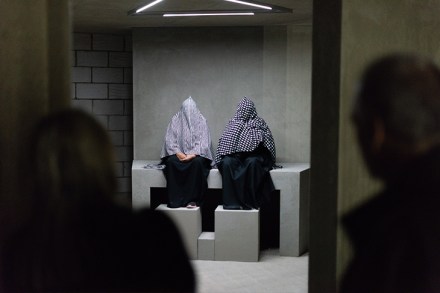
They enter two by two. Grannies, mainly. Headscarved, mainly. Some locking arms. A bit glum. Like rejects from Noah’s ark. Passing through two vertical beams of light, they appear then disappear, shuffling into the darkness. From concrete caves, they begin to wail for the dead. We’re witnessing Artangel’s latest extraordinary commission, ‘An Occupation of Loss’, by Taryn Simon. The piece draws together professional mourners from all corners of the earth — China, Armenia, Ghana, Ecuador — and deposits them under a block of flats in Islington High Street. The Azerbaijanis wallop their thighs as they wail. The Venezuelans sob behind full face veils, the fabric vibrating in sympathy. Some pace in circles, nervously fingering bits of cloth.

Bringing in the trash

Imagine the National inviting RuPaul to play Hamlet. Or Tate giving Beryl Cook a retrospective. The London Sinfonietta offered a similar cocktail of mischief and insanity in devoting the opening concert of its return to the Queen Elizabeth Hall, after a three-year refurbishment, to the nihilistic drag act David Hoyle. It had me grinning from ear to ear. Mostly from watching the other critics squirm. The woman next to me, an off-duty member of the Sinfonietta, was spitting words into her hand: ‘Patronising bollocks’. It was one of those nights. Half the audience stony-faced and tensed with anger. The other half creased double and whooping.

Beauty and the beast

I was going to start with a little moan. About the shouty marketing, the digital diarrhoea, the sycophantic drivel, which, like a bad smell, hovered over Simon Rattle’s ten-day coronation. But then came the most amazing Rite of Spring I’ve ever heard and to moan suddenly seemed criminal. No masterpiece is harder to pull off than the Rite. So often it deflates midway and never regains its shape. Rattle made his name with the piece when he was at the City of Birmingham Symphony Orchestra, taming the brute, slowing it down, prising open its interior, allowing us to inspect its fangs, look straight down its snappy gob. Here, the beast was unleashed. Rabid brass, uncontrollable winds, strings scything through the rabble behind.

Country pleasures

The English weren’t the first cowpat composers. Jean-Philippe Rameau raised the art of frolicking in the fields to such heights he filched pastoralism for the French. Rameau’s mastery of landscape is not just a question of orchestral colour, though that’s a large part of it — those goaty oboes, lowing bassoons, cooing flutes transport you straight to the manger. It’s that the very shape of his music, the softly curved lines that slide into burbling ornamentation, follows the contours of the rolling field and riverbank. The glory of his opéra-ballet Les Fêtes d’Hébé (1739) is the final act’s woodland romance that unfurls like a sunrise in the sexy Musette.

What’s That Thing? Award for bad public art 2017

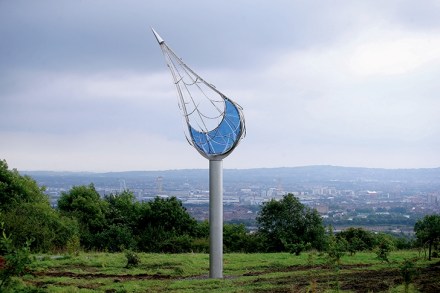
Imagine climbing the hills that surround Belfast and stumbling upon this 11-metre-high steel bollock. ‘It will be visible from a number of different points throughout the city,’ coos the Arts Council. Haven’t the people of Northern Ireland suffered enough? ‘Origin’ is the winner of our second What’s That Thing? Award for the worst new public art of the past year. The creators claim the six-metre ‘raindrop’ stuck on top of a five-metre pole represents the ‘elegant flow’ of the Farset River and ‘appears to hover’. Hover? Do you think they know what the word means? Clumsy, aggressive, cheap-looking (despite costing £100,000), it’s the very opposite of a raindrop.

The return of the What’s That Thing? Award for bad public art

Wouldn't it be nice, in these divided times, for humanity to have a common enemy – preferably an inanimate one. Welcome to the What’s That Thing? Award. We’re in our second year, hunting down the most execrable new pieces of public art that have appeared in the past year in this country and this time we've teamed up with the Architecture Foundation. The prize grew out of a report I wrote six years ago when we were at peak public-art-as-urban-panacea and every council was desperately clambering over itself to add a bit of swanky tat to their portfolio of local amenities.

Sound storms

Nothing pleased Iannis Xenakis more than a great big rattling storm. The sound of a thunderclap would have him running out of his home half naked to join the elements. If he was at sea, he’d sniff out any lightning and sail his yacht directly at it. The Greek composer was what we might call a hard bastard — a musical Ray Mears. As part of the Greek resistance during the war — battling first the Nazis then the British — Xenakis lost an eye to shrapnel. His compositions betray the same traits: those of the adrenalin junkie, the adventurer, the kamikaze. What would happen if I composed a piece solely made up of the swooping sounds we call glissandi, he asks in Mikka ‘S’ (1976). Apart from make the audience seasick?

Apocalypse now | 29 December 2016

Gerald Barry loved playing organ for Protestants as they allowed him a lie in. Then they found out he wasn’t Protestant and sacked him. When he moved to a Catholic church, he was forced up at the crack of dawn, so he punished the congregation by not giving them the chance to breathe between verses. He has a similarly cruel approach to the singers in his latest opera Alice’s Adventures Under Ground, whose voices he puts through the wringer, compelling them to squawk or chunter — or recite the ‘Jabberwocky’ in German. Barry has to be one of the most enjoyably contrary composers alive, but he is also, I fear, a sociopath, and I’m not sure the two things are entirely unrelated.

Snakes and ladders | 4 August 2016

In Luis Buñuel’s 1962 film, the ‘exterminating angel’ of the title is a mystery illness. A debilitating virus — much worse even than man flu — that attacks the social immune system and shuts down your ability to act, to think, to be. It prevents you from remembering how to behave at middle-class dinner parties. You arrive at a friend’s house twice. You forget to leave. Open doors become terrifying, impassable geometric objects. Your handbag contains not keys but feathers and chicken legs. Occasionally it kills. The bug is Buñuel’s metaphor for a society gripped by cowardice. Composers can catch it. Not Thomas Adès, though. There is bravery (insanity?