Igor Toronyi-Lalic

Igor Toronyi-Lalic is arts editor of The Spectator

The return of orientalism

I’m bullish about AI. All aesthetic snobs should be. In the war on man-made slop – still the most pressing threat – algorithms are an ally. After all, how much of the output of Netflix, Hollywood or Sony will retain its allure once AI is ventriloquising it to perfection? The qualities that have made popular art popular – legibility, fluency, tidiness – will surely be fatally tainted, perhaps even start to repel us. What we will crave instead is for culture to look and feel weird – opaque, messy, frangible. The experimental might even become box office. Wishful thinking? Well if the Rewire music festival in The Hague is anything to go by – so rammed this year that it was actually rather unbearable – it might already be happening.

What’s the greatest artwork of the century so far?

15 min listen

For this week's Spectator Out Loud, we include a compilation of submissions by our writers for their greatest artwork of the 21st century so far. Following our arts editor Igor Toronyi-Lalic, you can hear from: Graeme Thomson, Lloyd Evans, Slavoj Zizek, Damian Thompson, Richard Bratby, Liz Anderson, Deborah Ross, Calvin Po, Tanjil Rashid, James Walton, Rupert Christiansen and Christopher Howse. Produced and presented by Patrick Gibbons.

Benefits Britain, mental health & what’s the greatest artwork of the 21st Century?

23 min listen

‘Labour is now the party of welfare, not work’ argues Michael Simmons in the Spectator’s cover article this week. The question ‘why should I bother with work?’ is becoming harder to answer, following last week’s Budget which could come to define this Labour government. A smaller and smaller cohort of people are being asked to shoulder the burden – what do our Spectator contributors think of this?  For this week’s Edition, host Lara Prendergast is joined by opinion editor Rupert Hawksley, arts editor Igor Toronyi-Lalic and columnist Matthew Parris.

Bruckner on Ozempic – and the première of the year

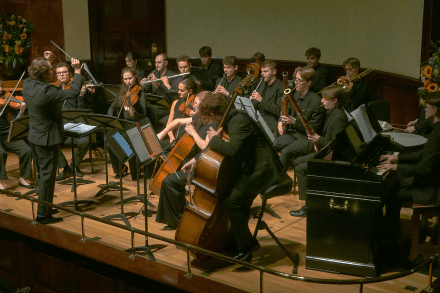
Bruckner at the Wigmore Hall. Yes, you heard right: a Bruckner symphony – his second: usually performed by 80-odd musicians – on a stage scarcely larger than my bedroom. How? Welcome to Anthony Payne’s very smart 2013 chamber arrangement. Bruckner on Ozempic. Composition is an Alice in Wonderland activity. A key duty is mastering how to make things bigger and smaller, how to stretch and compress and bend – time and space and sound. Bruckner understood this well. If you know anything about his symphonies, it’s that they’re vast – and that critics are mandated to compare them to cathedrals or mountain ranges. What survives after such an extreme trim? More than you expect. The long sightlines remain; paradoxically, the reduced forces sharpen the sense of depth.

BBC in crisis, the Wes Streeting plot & why ‘flakes’ are the worst

36 min listen

Can the BBC be fixed? After revelations of bias from a leaked dossier, subsequent resignations and threats of legal action from the US President, the future of the corporation is the subject of this week’s cover piece. Host William Moore is joined by The Spectator’s commissioning editor, Lara Brown, arts editor, Igor Toronyi-Lalic, and regular contributor, Melanie McDonagh. They also discuss the drama of this week’s Westminster coup plot, and Melanie’s new book about why Catholicism attracted unlikely converts throughout the twentieth century. Plus: what’s the most bizarre excuse a friend has used to back out of a social engagement?

Chinese spies, Vance’s rise & is French parenting supreme?

30 min listen

‘Here be dragons’ declares the Spectator’s cover story this week, as it looks at the continuing fallout over the collapse of the trial of two political aides accused of spying for China in Westminster. Tim Shipman reveals that – under the last Conservative government – a data hub was sold to the Chinese that included highly classified information; one source describes this to him as a ‘stratospheric clusterfuck’. Why do successive governments seem to struggle with UK-China relations? And, with many unanswered questions still remaining, what’s the truth over this case?  Host Lara Prendergast is joined by the Spectator’s political editor Tim Shipman, arts editor Igor Toronyi-Lalic and deputy editor Freddy Gray. As well as the cover, they discuss: how J.D.

Svitlana Morenets, Michael Simmons, Ursula Buchan, Igor Toronyi-Lalic, Richard Morris & Mark Mason

37 min listen

On this week’s Spectator Out Loud: Svitlana Morenets says that Trump has given Zelensky cause for hope; Michael Simmons looks at how the American healthcare system is keeping the NHS afloat; Ursula Buchan explains how the Spectator shaped John Buchan; Igor Toronyi-Lalic argues that art is no place for moralising, as he reviews Rosanna McLaughlin; Richard Morris reveals how to access the many treasures locked away in private homes; and, Mark Mason provides his notes on bank holidays. Produced and presented by Patrick Gibbons.

Putin’s trap, the decline of shame & holiday rental hell

50 min listen

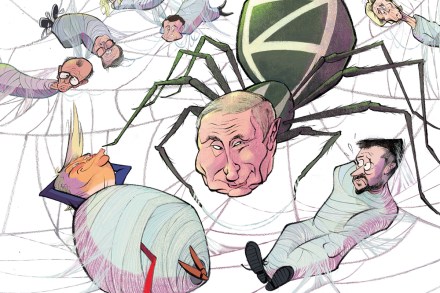
First: Putin has set a trap for Europe and Ukraine ‘Though you wouldn’t know from the smiles in the White House this week… a trap has been set by Vladimir Putin to split the United States from its European allies,’ warns Owen Matthews. The Russian President wants to make a deal with Donald Trump, but he ‘wants to make it on his own terms’. ‘Putin would like nothing more than for Europe to encourage Ukraine to fight on… and lose even more of their land’. But, as Owen writes, those who count themselves among the country’s friends must ask ‘whether it’s time to choose an unjust peace over a just but never-ending war’. Have European leaders walked into Putin’s trap? Owen joins the podcast alongside Gideon Rachman of the Financial Times.

Art and moralising don’t mix

Against Morality is not against morality. But it is against moralising. Which is a start. Anti-cancel culture, anti-identity politics, Rosanna McLaughlin’s small book of essays is the first insider-artworld publication to condemn the Savonarolan turn within culture. A cause for celebration, you might think. Her argument is perfectly sound. ‘Morality has become the central pillar, the justification for art, the bar by which we measure whether something is good or bad’, and it’s been a disaster.

The rise of cringe

No one wrote programme notes quite like the English experimentalist John White. ‘This music is top-quality trash,’ proclaims his 1993 album Fashion Music. ‘We kindly ask the users of this CD to play it at the volume of a suburban Paris soundmachine or a London underground discman earphone as used by the kid next door.’ Track titles included ‘Epaulette’ and ‘Latin Flutes’. From what I remember – my copy vanished a long time ago – the music was cheap and very funny: tinny and dumb. I was reminded of White recently because trash is back. Everywhere I go, I find composers producing shamefully terrible music. Some deliberately, some inadvertently. What flavour of terrible? Not ugly or discordant. Not camp. More tonal and naff: works woven from the worn-out and iffy.

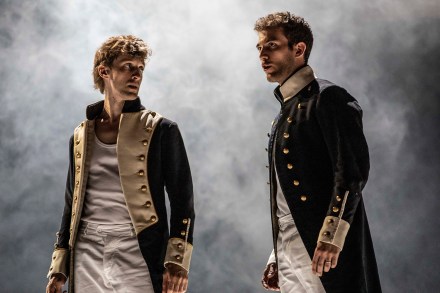
A startling inversion of the original opera: The Story of Billy Budd, Sailor in Aix en Provence reviewed

On the continent this summer, new operas from two of Britain’s most important composers. Oliver Leith likes guns, animals and dissolving sickly sweet sounds in acid baths of microtonality. In one recent orchestral work, the conductor becomes a pistol-wielding madman; his next, Garland, a vast pageant premiering on 18 September at Bold Tendencies, Peckham, sees a horse become a musician. He’s 35 and already has a school. Listen out for it – in the London new-music scene you can’t move for Leithians. The telltale sign is the sound of twisting metal: shiny pitches that warp and bend until brittle. He’s English but in an outsidery way – jokey, gentle, sad, eccentric. The opposite of arch, insidery Benjamin Britten.

Igor Levit’s 12-hour performance of Satie’s Vexations was far too short

So, in the end, it was long but not that long. Twelve hours, compared to the 20 hours-plus many of us had been anticipating. The fastest on record? Very possibly. Igor Levit had started Satie’s Vexations just after 10am on Thursday 24 April, and completed repeat number 840 of this niggly little bastard of a phrase around 10.30pm, preventing any kind of mass sleepover at the Queen Elizabeth Hall. No screens were required in the end either – screens that the Guardian had reported were scheduled to appear around the pianist to hide his modesty when the toilet beckoned. (The logistics of this seemed ambitious.) Instead whenever Levit decided it was time for a loo break he simply walked off stage.

Igor Levit performing Satie's Vexations. Image: Pete Woodhead

The liberating, invigorating music of Pierre Boulez

‘When you’re not offensive in life, you obtain absolutely nothing,’ declares a twinkly-eyed Pierre Boulez in one of the archive films that the Barbican were screening to celebrate the composer’s centenary. What a joy to be reminded of the young Boulez – the unashamed elitist, the unbeatable snob. Not even allies such as Schoenberg (too trad) and Messiaen (‘vulgar’) were safe from his tongue. To Boulez, pop music wasn’t good or bad; it didn’t exist. Ditto his own life. ‘I will be the first composer without a biography’, he proclaimed. Forget that Boulez was entangled in a love triangle with Camus’s mistress and for most of his time on earth screwing his valet, Hans… The music was everything.

Hugh Schofield, Igor Toronyi-Lalic & Michael Simmons, Lisa Haseldine, Alice Loxton and Aidan Hartley

37 min listen

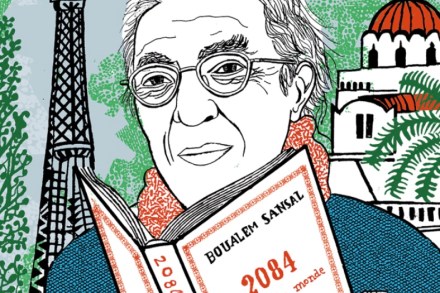
On this week’s Spectator Out Loud: Hugh Schofield asks why there is no campaign to free the novelist Boualem Sansal (1:26); The Spectator’s arts editor, Igor Toronyi-Lalic, reacts to the magazine’s campaign against frivolous funding and, continuing the campaign, Michael Simmons wonders if Britain is funding organisations that wish us harm (8:00); Lisa Haseldine reflects on whether the AfD’s rise could mean ‘Weimar 2.0’ for Germany (17:08); reviewing Thou Savage Woman: Female Killers in Early Modern Britain, by Blessin Adams, Alice Loxton explores the gruesome ways in which women killed (25:05); and, from Kenya, Aidan Hartley reflects on how a secret half-brother impacted his relationship with his father (35:13).  Produced and presented by Patrick Gibbons.

New world disorder, cholesterol pseudoscience vs scepticism & the magic of Dickens

48 min listen

This week: the world needs a realist resetDonald Trump’s presidency is the harbinger of many things, writes The Spectator’s editor Michael Gove, one of which is a return to a more pitiless world landscape. The ideal of a rules-based international order has proved to be a false hope. Britain must accept that if we are to earn the respect of others and the right to determine the future, we need a realist reset. What are the consequences of this new world order? And is the Trump administration reversing the tide of decline, or simply refusing to accept the inevitable? Michael Gove joined the podcast alongside the geopolitical theorist Robert Kaplan, author of the new book Waste Land: A World in Permanent Crisis.

2024: Cindy Yu, Michael Simmons, Angus Colwell, Igor Toronyi-Lalic, Mary Wakefield, Fraser Nelson and Michael Gove

38 min listen

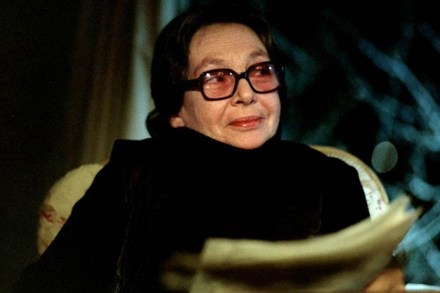
On this week’s 2024 Out Loud: Cindy Yu examined Chinese work ethic (1:13); Michael Simmons declared his love of the doner kebab (6:28); Angus Colwell reported from Israel in July (9:27); Igor Toronyi-Lalic explained the inspiration behind the cinema of Marguerite Duras (14:41); Mary Wakefield analysed the disturbing truth of the Pelicot case (20:38); Fraser Nelson signed off as editor of The Spectator (27:01); and Michael Gove revealed his thoughts as he sat down at the editor’s desk (33:15).  Produced and presented by Patrick Gibbons.

Joan Collins, Owen Matthews, Sara Wheeler, Igor Toronyi-Lalic and Tanya Gold

30 min listen

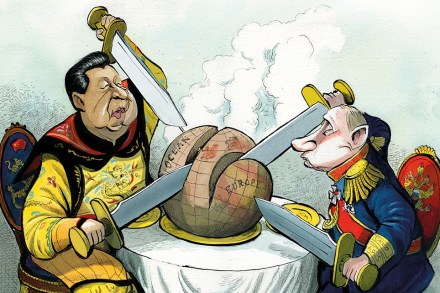
On this week’s Spectator Out Loud: Joan Collins reads an extract from her diary (1:15); Owen Matthews argues that Russia and China’s relationship is just a marriage of convenience (3:19); reviewing The White Ladder: Triumph and Tragedy at the Dawn of Mountaineering by Daniel Light, Sara Wheeler examines the epic history of the sport (13:52); Igor Toronyi-Lalic looks at the life, cinema, and many drinks, of Marguerite Duras (21:35); and Tanya Gold provides her notes on tasting menus (26:07).  Presented and produced by Patrick Gibbons.

In praise of one of cinema’s greatest trolls

The most important thing to know about the filmmaker and writer Marguerite Duras is that she was a total drunk. ‘I became an alcoholic as soon as I started to drink,’ she wrote, proudly. ‘And left everyone else behind.’ It’s not something any of the academics who’d been drafted in to introduce each film in the ICA’s exhaustive Duras season thought to mention, even in passing. Instead they spent their time trying to convince us that her films were political: they were about Palestine, feminism, decolonisation. They aren’t. They’re about being bladdered. They’re about the fact that Duras would wake up by vomiting her first two glasses of booze, before embarking on as many as eight litres of Bordeaux a day. To ruin we all go: cinema and actors, ears, eyes and brain.

Children have the Proms. Grown-ups head to Salzburg. Snob summer

Salzburg Festival doesn’t mess about. The offerings this year include an adaptation of Thomas Mann’s Magic Mountain in Lithuanian, a Soviet-era operatic treatment of Dostoevsky’s The Idiot, and Igor Levit tackling one of the Himalayan peaks of the piano rep. Kiddies, meanwhile, could enjoy the children’s opera Die Kluge (brilliantly done), a Nazi-era allegory on the rise of Hitler by Carl Orff, a composer they love here but whose politics are shall we say, um, complicated. (Pleasingly, I’m not sure the festival understands the concept of cancellation.) People always think Salzburg is pretty and fun. It’s not. It’s dark and primal, with a festival that is far more uncompromising and exhilarating than a global-elite bun-fight in provincial Austria has any right to be.

In defence of noise music

It’s curious to consider what a venerable old thing noise music is. That this most singularly untameable of musics – the place where melody, harmony and pulse all go to die – is an Edwardian invention. It first arrived in this country 110 years ago when futurists Filippo Marinetti and Luigi Russolo set up camp at the London Coliseum a month before the start of the first world war and, over ten consecutive nights, blasted the West End audience with their ‘noise-tuners’ or intonarumori, alongside diverse variety acts. I say blasted but making a decent racket was the one thing these homemade instruments were incapable of doing. ‘It could have been drowned easily by a good tympanist,’ noted the Musical Times. The artist C.R.W.