Igor Toronyi-Lalic

Igor Toronyi-Lalic is arts editor of The Spectator

Wise, passionate and soul-stirringly withering: remembering the great Michael Tanner (1935-2024)

From our UK edition

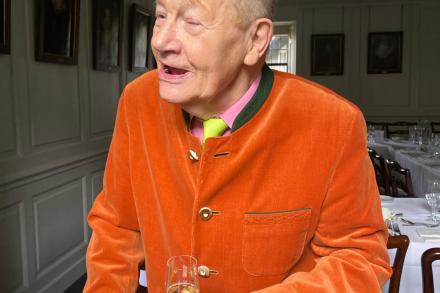
Michael Tanner, who died yesterday at the age of 88, lived two parallel lives. To many Spectator readers, he was the magazine's peerless opera critic: wise, passionate, thrillingly disputatious, intensely funny, extremely generous with the Semtex. Essential reading. He wrote The Spectator's weekly opera column from 1996 to 2014 and continued to review – and raze to the ground where necessary – concerts, books, albums and opera, whatever we flung at him, right up until 2022.  To countless others, however, he was one of the great philosophical scholars.

In Bermondsey I heard the future – at the Barbican I smelt death: new-music round-up

From our UK edition

To Dalston to witness the worst gig of my life. The premise of the Random Gear Festival was simple and rather inspired: gather some arbitrary objects; get people to play them. In previous iterations, the offerings had included an ice skate, a wet baguette and an exercise bike. This time we had a trampoline, a microwave, a dead fish. I kept an open mind. I was reminded that years ago at Cafe Oto I had seen the then chief conductor of the BBC Scottish Symphony Orchestra Ilan Volkov rub two blocks of polystyrene together with the subtle virtuosity of Martha Argerich at a Steinway. I was reminded too of what the composer Hector Berlioz had declared in his 1844 Treatise on Orchestration: ‘Every sounding object employed by the composer is a musical instrument.

The Spectator film critic who transformed cinema

From our UK edition

‘Going to the pictures is nothing to be ashamed of,’ insisted the film writer Iris Barry in 1926. But it certainly wasn’t something to be proud of, either. To the cultural cognoscenti of the 1920s, Barry admitted, the cinema was barely an art at all – about as aesthetically significant as ‘passport photography’. And for much of polite society, seeing a film was done in secret, if at all. So it was a considerable boost for the fledgling medium when, 100 years ago, the word ‘cinema’ began to appear for the first time in this country above its own regular column, with its own dedicated critic, in the arts pages of The Spectator. Attending to this young art form was the even younger Barry.

Every crumb of Kurtag’s music is a feast: Endgame, at the Proms, reviewed

From our UK edition

The fun starts early in Beckett’s Endgame. Within minutes of opening his mouth, blind bully Hamm decides to starve his servant. ‘I’ll give you just enough to keep you from dying,’ he tells Clov. One biscuit and a half. Which feels positively lavish compared with what composer Gyorgy Kurtag feeds us musically in the first 20 minutes of his operatic adaptation (receiving its British première at the Proms). Crumbs, we get. One single lonely tone, from one instrument, every few seconds, all so spaced out that it almost sounded like the orchestra was on tiptoe, glutes clenched, attempting a heist perhaps, trying to half-inch some notes from somewhere. Every crumb of Kurtag’s music is a feast.

Dismantle the maestro myth and classical music will suffer

From our UK edition

The news that conductor John Eliot Gardiner is thin-skinned, ill-mannered and thuggish should not be news to anyone. Or not to any Spectator readers anyway. ‘What, one wonders, will John Eliot Gardiner be chiefly remembered for?’ wrote Stephen Walsh in October 2013. ‘Perhaps, by many who have worked with him, for his notorious rudeness to performers and colleagues.’ Peter Phillips wrote about Gardiner ‘losing his temper’ with a member of the London Symphony Orchestra in April 2014 (Private Eye had alleged the conductor had clocked a trumpeter). ‘Is there anything [Gardiner] can’t do?’ asked Damian Thompson in a Heckler column from 2015. ‘The answer is yes. One art eludes him: good manners.

A brilliantly cruel Cosi and punkish Petrushka but the Brits disappoint: Festival d’Aix-en-Provence reviewed

From our UK edition

Aix is an odd place. It should be charming, with its dishevelled squares, Busby Berkeley-esque fountains, pretty ochres and pinks. Yet none of it feels quite real. It’s as if an AI bot had been asked to design a Provençale city. Everything is suspiciously perfect. And then you notice all the Irish pubs and American student clones. It’s the prettiness of a Wes Anderson set – with the charm of an airport. In this uncanny valley, however, lies what continues to be one of the world’s classiest opera festivals. The major new commissions this year were two British chamber operas. George Benjamin and Martin Crimp were returning with Picture A Day Like This, their third collaboration for Aix.

In defence of the Arts Council

From our UK edition

I once knew a monster who said she could not read Proust because there were no figures in Proust with whom she could identify... Theodor W. Adorno, 'Aesthetics' (1958-59) Getting an audience to identify themselves in a work – ‘being seen’ – is one of the only reasons why art is commissioned, celebrated or even allowed to exist today. In other words, the 21st century world belongs to Adorno’s monster: we just live in it.  The 20th century’s definition of art, as expressed by another Frankfurt School philosopher Herbert Marcuse, where 'art is committed to that perception of the world which alienates individuals from their functional existence and performance in society—it is committed to an emancipation of sensibility’, is dead.  Art has been put to work.

The West has much to learn from Hungarian culture

From our UK edition

In central Budapest a crew from Hungary’s state TV is filming the unveiling of a new street sign. In honour of his centenary year composer Gyorgy Ligeti now has a road named after him. Contemporary classical music is deemed newsworthy in Hungary. Even more astonishingly – and anyone working in British classical music might want to sit down at this point – the ‘Ligeti 100’ concert at the Budapest Music Centre, dedicated to a clutch of bracing new works, was being filmed for transmission prime time on the Hungarian equivalent of BBC1. Here, we’d be lucky if it got a midnight slot on Radio 3.

Kate Andrews, Igor Toronyi-Lalic and Ivo Dawnay

From our UK edition

17 min listen

This week: Kate Andrews on the NHS and the celebrations that marked its 75th birthday (01:05), Igor Toronyi-Lalic is in Marseille watching with interest as the riots happen around him (06:57) and Ivo Dawnay describes how being related to Boris is cramping his style oversees (11:13). Produced and presented by Linden Kemkaran.

The fine art of French rioting

From our UK edition

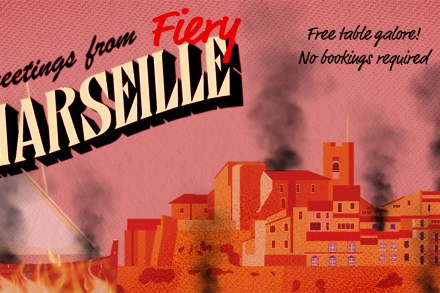
Marseille One of the benefits of holidaying during a riot is you feel remarkably safe. Ruffians have no interest in you while they can be having fun at the expense of a much more exciting foe, the police. And besides, there are Lacoste stores to be raided: they have no time for your wallet. The other major benefit is you can get a table anywhere. We had the best seat in France last week: the first-floor balcony of La Caravelle, an old-school bar overlooking Marseille’s historic port and the perfect vantage point for taking in the fine art of French rioting. The choreography unfolded in fits and starts. The police vans snaked around the water’s edge in military formation. Out filed the riot cops, their tessellated body armour making them look like mutant woodlice.

Apocalypse chic: Autechre, Last Days and Southbank’s Xenakis day reviewed

From our UK edition

It was so dark, my friend noted, you could have had sex or done a Hitler salute. No stage lights, no stair lights, no desk lights, no door lights, no usher lights, no exit signs. The few wisps of illumination that did steal in created colossal shadows, giants freeze-framed on the walls. In these snatches the wooden ribcage interior of the Barbican Hall looked demonic. A few photons lit up the Autechre boys, Rob Brown and Sean Booth, who flickered like blue flames rising from a hob. A few more nudged into view the ceiling that had become a vast charcoal grisaille. When, occasionally, someone left, the tiny glowing portal that appeared made it feel as though we were at the bottom of a cavernous well.

Apocalyptic minimalism: Carl Orff’s final opera, at Salzburg Festival, reviewed

From our UK edition

‘Germany’s greatest artistic asset, its music, is in danger,’ warned The Spectator in June 1937. Reporting from the leading new-music festival in Darmstadt, the correspondent mentioned only one première of the two dozen on offer: ‘The most important achievement was the scenic cantata Carmina Burana by Carl Orff, a piece that would have been impossible without the influence of the “cultural Bolshevik” Stravinsky.’ He’s not wrong: give Stravinsky’s Les Noces some nail clippers and a face scrub and you get Orff. Carmina Burana can today seem irredeemably boorish and kitsch. But you can see how the piece’s hiccupy primitivism might have once startled.

‘Oculus Quest is really the way’: film-maker Apichatpong Weerasethakul interviewed

From our UK edition

There always comes a moment in the films of Apichatpong Weerasethakul where you’re forced to scoop your brain up from the floor. In his last, Cemetery of Splendour, this occurs at the point where the sky is invaded by a colossal blimpish amoeba. You stare. Blink. Adjust eyes. It slowly dawns that you’re peering into a crystal-clear lake, cloudy heavens and whirring mitochondria in blissful, cosmic coexistence. Man, however, is weak. And the first time I was introduced to his films, one of the most significant, sensual, startling, transcendent bodies of work by any director this century, I fell asleep. ‘Amazing,’ beams Weerasethakul over Zoom. ‘Even I slept in my films sometimes.

Modernism’s back, baby: Huddersfield Contemporary Music Festival reviewed

From our UK edition

It’s not everyone’s idea of fun, a trip to Huddersfield in the depths of November. But as any veteran of Huddersfield Contemporary Music Festival knows, it usually pays off. Sure, none of the venues has a bar; the programming is as carefully curated as a b2b trade show, the main hall about as cosy as a care home. And true, calling all this a ‘festival’ sometimes feels like wishful thinking. And yes, you are in Huddersfield. (In November.) But HCMF remains one of the few places in this country where you can get a high-quality hit of musical modernism — and always freshly served piping hot straight from the continent’s finest compositional kitchens.

A lockdown masterpiece and the Jessica Rabbit of concertos: contemporary classical roundup

From our UK edition

So it finally happened: I experienced my first vocal setting of the word ‘Covid’. An encounter that was, inevitably, more harrowing than when I caught the virus itself. ‘Coviiiiiiid!’ yowled the singer, while the orchestra emitted a boom, crack, snap, rumble rumble, shriek, bang, dissonance dissonance. Rice Crispies fans, eat your heart out. It was part of Exiles, a 30-minute new commission by Julian Anderson for the opening concert of the LSO season.

Unopposed: Why is Starmer making life easy for the PM?

From our UK edition

42 min listen

Is Keir Starmer becoming irrelevant? (00:50) Do the Oscars really celebrate the best that film has to offer? (15:55) Jordon Peterson is back with his new book, Beyond Order, but is it beyond readable? (25:40)With the Spectator's political editor James Forsyth; broadcaster and former Labour adviser Ayesha Hazarika; writer Fiona Mountford; the Spectator's arts editor Igor Toronyi-Lalic; novelist Philip Hensher; and the Spectator's associate editor Douglas Murray. Presented by Lara Prendergast.Produced by Max Jeffery, Sam Russell and Arsalan Mohammad.

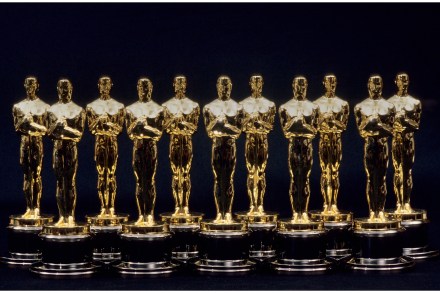
Why are the Oscars such a lousy guide to great cinema?

From our UK edition

Chloé Zhao’s Nomadland, predicted to win big at this year’s Oscars, is not a terrible film. It’s a slight, sentimental Grapes of Wrath-ish journey through the Discourse, with essential Discourse stop-offs at an Amazon warehouse and the rust belt. It belongs in the New Yorker, not on screen. As with almost every film to win big since No Country for Old Men 13 years ago, you just think: the ‘highest honours in filmmaking’? For that? Amid all the change that’s being trumpeted at this year’s Oscars — more women directors, more ethnic minorities — the one thing missing is any discussion about why the awards are such a lousy guide to great cinema.

What’s an art form that feels unpopular and pointless, but isn’t?

From our UK edition

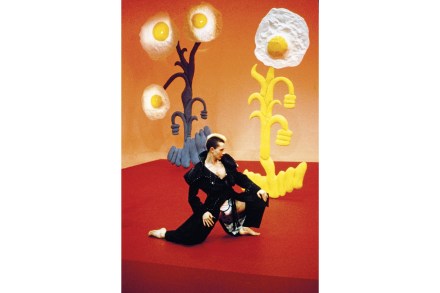
How did the universe begin? Did the great god Bumba vomit us up, as the Kuba believe? Or did we emerge, as the Navajo think, from a cloud of coloured mist? Or do we listen to the ancient Egyptians who thought the curtain opened on a giant cobra slithering across the oceans? Perhaps it starts with a computer screen: Milky Way wallpaper, a folder labelled ‘History_Of_Universe’ and a sharp intake of breath. That’s how one of the great video artworks of the 21st century begins anyway. This summer New York’s Museum of Modern Art uploaded Camille Henrot’s ‘Grosse Fatigue’ (2013) to its YouTube channel. It gives you the birth of the world in 13 minutes. This is a show to bust through those Covid blues. Who needs Pfizer when you have Michael Clark?

The long winter – why Covid restrictions could last until April

From our UK edition

39 min listen

Why does the government think the second wave will be worse than the first? (00:49) Will a Biden presidency restore America's fortunes? (18:45) And finally, does Covid mark the end for the silver screen? (30:10)Spectator editor Fraser Nelson talks to Carl Heneghan, professor of evidence-based medicine at the University of Oxford; editor of The Spectator's US edition Freddy Gray is joined by columnist Lionel Shriver; and reviewer Tanya Gold is in discussion with The Spectator's arts editor Igor Toronyi-Lalic.Presented by Lara Prendergast.Produced by Gus Carter, Max Jeffery and Sam Russell.

Is toppling a statue an act of performance art?

From our UK edition

14 min listen

Has the statue of Churchill been improved by being enclosed in a protective casing? Was Colston's toppling one of the greatest acts of performance art? Or is this all a sad indictment of the state of British politics? Fraser Nelson talks to The Spectator's arts editor Igor Toronyi-Lalic and Coffee House contributor and writer Claire Fox.