Igor Toronyi-Lalic

Igor Toronyi-Lalic is arts editor of The Spectator

BBC Proms

From our UK edition

BBC Proms 2016 is about as exciting as my sock drawer. But it’s unclear who exactly is to blame. The new head David Pickard claims only half the stalest socks are his — the rest inherited. The festival enjoys an incredibly privileged position. Some might even say it’s dangerously spoilt. Free from commercial pressures, free from government interference, an entire TV and radio network at its propagandistic disposal, the two-month summer blowout is a mighty musical monopoly. It can do what it wants with pretty much whomever it wants. Last year it dedicated a night to Eric Whitacre, the Noel Edmonds of contemporary music, and hosted an Ibiza prom 20 years after everyone stopped caring about Ibiza. Fine.

Round-up of new opera

From our UK edition

A mixed year so far for new opera. A few really dismal things have appeared from people who should know better. Did the world really need an operatic treatment of Dante’s Divine Comedy for orchestra and chorus? Louis Andriessen thought so; his La Commedia (2004–8) luckily only reared its drab head for one night at the Barbican. If you’re going to splurge as much money as opera often has to splurge, you have to ask yourself why. If you don’t, you create a situation in which operas come about merely because they can, often just to continue the tradition in the most inoffensive way possible. ‘Don’t mind me!’ says this kind of zombie opera.

All at sea | 19 November 2015

From our UK edition

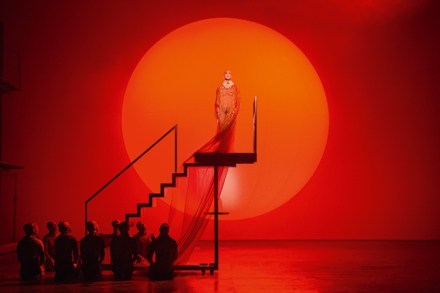
The Royal Opera House seemed nervous about Georg Friedrich Haas’s world première Morgen und Abend. They sent out a pdf of the libretto in advance, which they only ever do when they think that the words or the plot are unintelligible. Thrilled to report that it was a double whammy. An introductory soliloquy was spoken by actor Klaus Maria Brandauer. He’s apparently an Austrian national treasure. I’m not sure he’d get a part in Hollyoaks here. He wobbled on to the stage in wellies, paunch, beard and alcoholic’s nose. He was the spit in fact of Ricky Tomlinson in The Royle Family, except he said things like ‘he’ll be alone for ever alone’, instead of ‘my arse’, which coincidentally were very close to my feelings that evening.

Between Kafka and Crossroads

From our UK edition

We opera critics love gazing into crystal balls. We’re particularly good at discovering Ed Milibands and backing them to the hilt. Postwar opera is full of them. Take Hans Werner Henze. He was considered the future his entire life. Yet watching a presentation of two of his chamber operas at the Guildhall School of Music last week, it was hard not to think, how? Why? To be fair Henze never intended his early radio opera Ein Landarzt (1961) to work on stage. Originally conceived as a vehicle for Dietrich Fischer-Dieskau, the piece concedes nothing to dramatic interest (even in this theatrical adaptation). An overwrought Kafka monologue — in which a doctor hallucinates for half an hour — is coolly despatched in an orchestral game of pass-the-parcel.

Why we should say farewell to the ENO

From our UK edition

It’s easy to forget what a mess of an art form opera once was. For its first 100 years it had no name, it had no fixed address, it didn’t really know who it was or what it was doing. You’d find it at schools, at weddings, at political functions. It was an artistic whore for hire. Embroiled in an epic tug-of-war as to which of the three art forms — word, music or dance — should be primary, it was also lithe and experimental. In fact, it was more like performance art than anything you’ll witness in a modern opera house. Why this historical detour?

Forget the Germans. It’s the French who made classical music what it is

From our UK edition

The poor French. When we think of classical music, we always think of the Germans. It’s understandable. Instinctive. Ingrained. But unfair. We forget that most of the heavy lifting — most of the intrepid leaps forward in harmony, colour, rhythm and form — was done by the likes of Berlioz, Debussy and Boulez. The most completely forgotten of these Gallic explorers is Jean-Philippe Rameau (1683–1764), who died 250 years ago this year. His operatic output, begun when he was 50 and comprising 30 works, is an acquired taste. I remember the exact moment I fell for him. The exact notes in fact. It was the opening aria of his one-acter Pigmalion. Three flutes, comforted by strings, sob in a corner.

Joan Rivers (1933 – 2014) was the best

From our UK edition

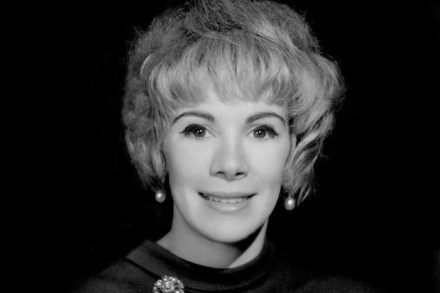
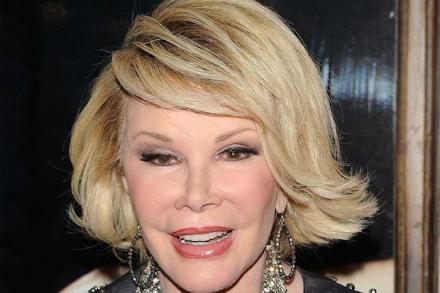
Joan Rivers has died from complications resulting from throat surgery. She was 81. For many, she was the best. The funniest, sharpest, most mischievous comic we will ever know. And though she'd hate us for saying it, she was also a true feminist pioneer. Well before it had been settled whether women should be doing stand-up at all, she was not only doing it but shaping it - and subtly shaping society too. Her early routines, like the following 1967 set from the Ed Sullivan show about how crappy the female experience could be, were laying the ground for political feminism: But her radicalism was restless. And when the political tides turned, so did she.

Remember Richard Attenborough for his acting – not his directing

From our UK edition

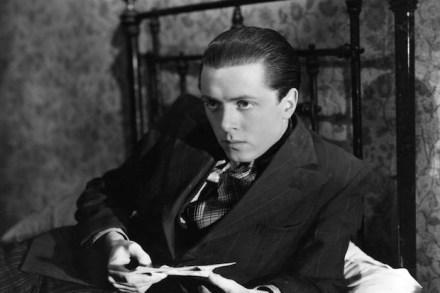
Jurassic Park has a lot to answer for. When I was growing up, I was convinced Richard Attenborough was a real dinosaur scientist. I was also convinced that Richard was David. When I became a bit older and wiser, and grew to realise there could be two Attenboroughs, I came to the conclusion that Richard might just be famous for being David’s brother. My problem with understanding how Richard fitted into the world was that, though he was ubiquitous, it wasn’t entirely clear to me (in the mid 90s) exactly why. Then I saw Brighton Rock... It's a shame his later behind-the-scenes big-shot-ery so overshadowed his prolific earlier acting career. Between 1945 and 1971 he starred in two movies a year.

If the Edinburgh Fringe thinks it’s fine to give in to bigots, I might have to give up on the Edinburgh Fringe

From our UK edition

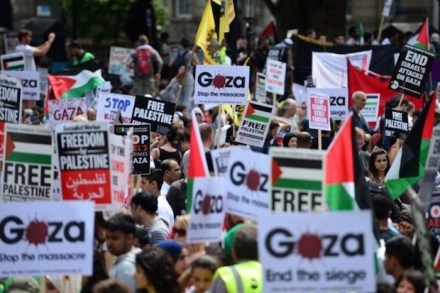
When is a great international arts festival not a great international arts festival? When it can’t uphold even the most basic principles of free speech. Last night a play by an Israeli theatre company was forced to cancel its run at the Edinburgh Fringe as the result of the barracking of a group of anti-Israeli thugs. The show, The City, is now homeless and on the hunt for a new venue. Where exactly would they like these Israelis to perform, I wondered? Outside the walls of the city possibly? Would that be more conducive to their medieval vision of the world? Owing simply to their nationality - owing simply to their race - a theatre company is being silenced. What does the artistic community have to say about this capitulation? They're rather in favour of it actually.

‘They started it!’ Joan Rivers weighs in on Gaza conflict

From our UK edition

With characteristic bluntness and admirable concision, Joan Rivers has offered her thoughts on the Israel-Hamas conflict: 'Let me just tell you, if New Jersey were firing rockets into New York, we would wipe them out.' She also lobs a few rockets at 'college grad' Selina Gomez for her pro-Gaza tweets: 'Let's see if she can spell "Palestinian".'  Watch her rant above.

Don’t knock Cool Britannia II – it’s a clever move by the Tories

From our UK edition

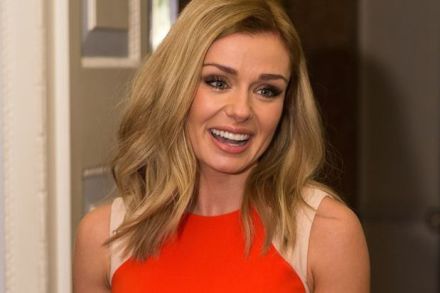
It sounds like a cruise liner, doesn't it? The Cool Britannia II: stopping at Downton Abbey, Game of Thrones and 12 Years a Slave. And if the rumoured guest list is right, the people invited to this reincarnation of Tony Blair’s infamous 1997 luvvie-fest are not far off cruise-liner quality. If Katherine Jenkins isn’t already signed to a P&O, she really should be. There are some A-listers, though, if the reports are to be believed: Nicole Kidman, Helen Mirren, Ralph Fiennes and Bryn Terfel. But the kind of artists safe enough to make it onto a Number 10 guest list are not the kind of artists anyone is going to be that impressed by.

Is a Luis Suárez musical on the cards?

From our UK edition

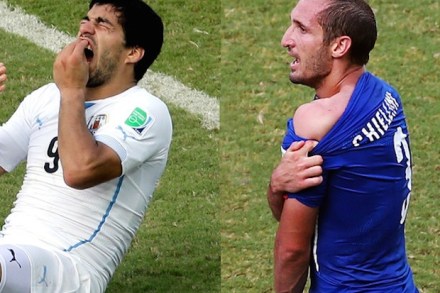
For the moment we only have one genius song by Tom Rosenthal, Hey Luis Don't Bite Me (hear it below), but surely a full-blown musical isn't far away. In the meantime we can't wait for Hey Luis to hit the football stands: 'There's a party in your brain, no one is invited and no one ever came, what is going on? what on earth is going on in there? There's magic in your feet. Diamonds in your feet, wolves in your eyes, Wait for the surprise, wait for the big surprise.

Jeremy Paxman’s last Newsnight made me want to be sick

From our UK edition

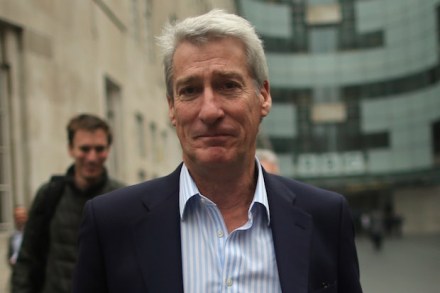
Did you threaten to overrule him, Paxman? Did you threaten to overrule your editor when he told you that he was going to let you finish your career in such an embarrassing fashion? Did you? Answer the question. Did you threaten to overrule him? Did you? DID YOU? You should have. A friend of mine admitted that he wept – wept! – as the credits rolled last night. I was split on the matter; weep or vomit, weep or vomit. If this had been a regular episode of Newsnight, Paxman would surely have been fired. The problem with last night is that it presumed that someone who is a genius at one very specific thing must also be a genius at everything else.

The BBC’s music strategy is a shambles

From our UK edition

Tony Hall made some terrible music announcements yesterday. They come hot on the heels of some terrible arts announcements he made a few months ago. Among the most lousy is the proposal to set up a music awards ceremony - because we don’t have enough of those. The suggestion is that the ceremony would become a rival to the BRIT Awards, with a focus on younger musicians and better music, which in principle sounds good until you realise it’ll be the BBC deciding the music and the musicians. He also hopes to ‘surprise audiences’ with ‘unexpected performances’. To do that he’s gone and bagged the BBC Concert Orchestra! I know! Exciting, eh, to know that Britain’s least respected orchestra will be involved in this celebration of great music.

Marina Abramović is no fraud – or no more so than any religious leader

From our UK edition

If art is the new religion, we were always going to end up here. With high priests, acolytes and 'energy'. That’s the set up at the Serpentine Gallery at the moment: us as the potential believers queuing around the block ready to be received, and Marina Abramović as the high priestess armed with nothing (literally nothing) but her presence. It could be Rome, Jerusalem or Gold Base. It could be the 20th, 8th or 1st centuries. We’re in a world of belief – and possibly make-believe. I was Abramovićed last week. Rationalist cynic that I am, I thought I wouldn’t be able to take it. But I did. I felt compelled to, really. It seemed churlish not to at least try to engage in it. To not do so would be to cut off my nose to spite my face.

Why is the opera world so damn uptight?

From our UK edition

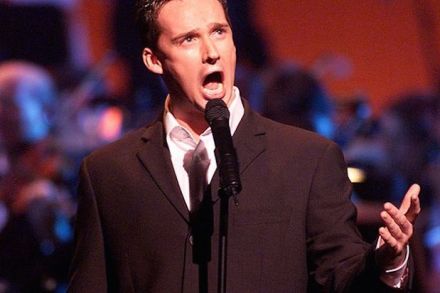
God, opera singers are touchy. You dare to analyse how they look, you dare to criticise the enormous subsidies they get, you have the temerity to call someone an opera singer who hasn't been vetted by an opera commissar and they go all Al-Qaeda on you. Yesterday the Today programme had an interview with Russell Watson, a decent, popular singer whose shtick includes shouty renditions of opera arias. The presenter introduced him as an opera singer and the poncey opera world went ballistic. 'He’s not an opera singer!' they bleated, 'He’s just a singer!’ Note that twatty 'just'? No art form that was confidant about what it does would ever feel the need to puff up their chests like this.

When The Spectator helped butcher Richard Strauss

From our UK edition

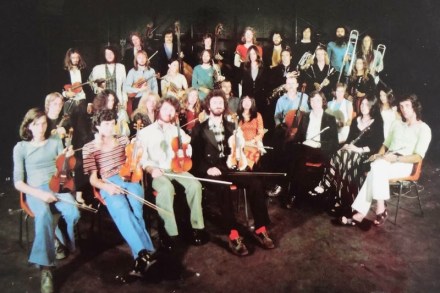
To be honest I'm not certain that Michael Nyman, The Spectator's music critic in the late 60s, was one of the performers on this infamous (and in my opinion greatest) recording of Richard Strauss's Also Sprach Zarathustra. But what is certain is that Nyman (alongside Brian Eno and Gavin Bryars) did become an enthusiastic member of the Portsmouth Sinfonia and had been a fan ever since he first witnessed one of their deliberately execrable concerts: 'I sat through the first half... and I was so moved and entertained and excited by the music that I went up to Gavin [Bryars] in the interval and said, 'Is there a spare instrument? I'd like to join.' They had a spare cello, so suddenly I was playing In the Hall of the Mountain King in the second half.

It’s not the job of the arts industry to get more ethnic minorities through its doors

From our UK edition

You’ve got to feel sorry for the arts world. Decades of self-imposed diversity drives and community outreach schemes and still – still! – they’re told they’re not being inclusive enough. 'Even from the cheapest seats in the [Royal Opera] house,' Harriet Harman said yesterday, ‘I couldn't see in the audience anyone who wasn't like myself: white, metropolitan and middle class.’ Tory culture minister Sajid Javid had the same message last week, noting how few people from black and ethnic backgrounds are given grants from the Arts Council. Before this Jeremy Paxman was banging on about how poetry needed to engage with ordinary people. It reminds me of another age.

The best of Rik Mayall (1958 – 2014), master of the grotesque

From our UK edition

Sad news reaches us at Culture House that Rik Mayall, one of the mainstays of my TV-addicted teenage years, has died at the age of 56. A virtuoso of all that was most grotesque and loathsome in man, Mayall made his name leading memorably in a number of game-changing sitcoms, including Channel 4's the Comic Strip Presents..., ITV's The New Statesman and BBC Two's The Young Ones and Bottom. The delight with Mayall was that the more odious his characters became the more mesmerising he got. Here are some highlights: 1. Richie, Bottom A lot of people didn't get Bottom. I loved it. It was like a cross between Beckett and Feydeau. And well before I knew who either Beckett or Feydeau were, its sweaty nihilism worked a treat on me. It still does: 2.

Let’s not stop at Maria Miller. Let’s get rid of the Department of Culture completely

From our UK edition

The arts world will not shed a tear at the news that Maria Miller has resigned. Though it was Jeremy Hunt who wielded the axe to the arts budget, it was Maria Miller who spearheaded a shift in philosophy in the Department of Culture, Media and Sport that arguably annoyed the luvvies even more than the cuts had done. Breaking the only rule that the arts world still deem sacred, Miller demanded, in her only keynote arts speech last April, that culture ditched the art-for-art's-sake argument for its existence and replace it with an art-for-the-economy's-sake argument. 'When times are tough and money is tight, our focus must be on culture's economic impact,' she said.