Ian Williams

Ian Williams

Ian Williams is a former foreign correspondent for Channel 4 News and NBC, and author of Vampire State: The Rise and Fall of the Chinese Economy (Birlinn).

Keir Starmer’s desperate cosying up to Beijing

From our UK edition

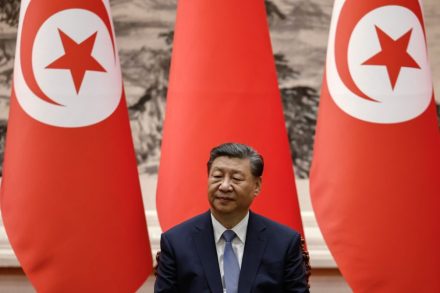
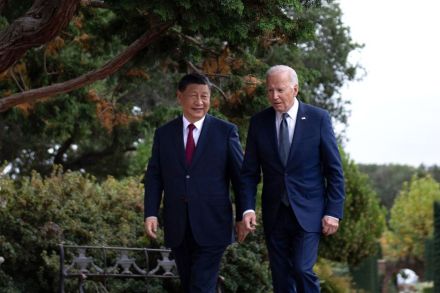
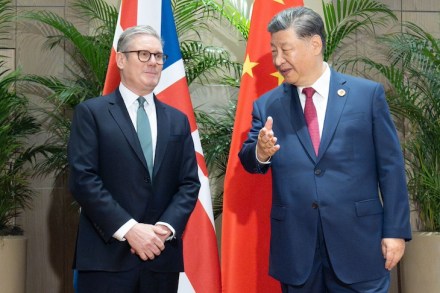
Keir Starmer has met President Xi Jinping at the G20 summit in Rio de Janeiro, telling the Chinese leader that he wants to build ‘consistent, durable, respectful’ relations. China’s official Xinhua news agency said there was ‘vast space for cooperation’. It was the first meeting between a British prime minister and Xi since 2018, and Starmer proposed further top-level meetings. Starmer clearly believes that Britain can ‘speak frankly’ where it disagrees with China while pursuing closer economic ties The timing was unfortunate, not only because of the shadow of Donald Trump, and the prospect that a cosying of British relations with Beijing will put the UK at odds with a harder line from Washington. Currently, events are coming to a head in a Hong Kong courthouse.
Why did China censor reports of a deadly hit-and-run?

From our UK edition

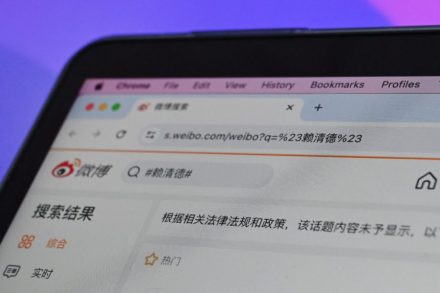
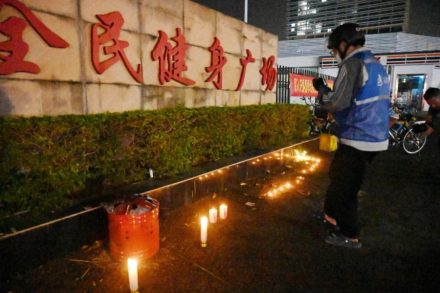
In many respects, the Chinese Communist party’s (CCP) response to one of the deadliest mass killings in recent Chinese history is drearily familiar. The authorities now say that at least 35 people were killed and dozens injured on Monday evening when the 62-year-old driver of an SUV rammed his vehicle into crowds at a local sports stadium. But it took the authorities more than a day to release details and initial online searches were heavily censored. Videos from the scene in the southern city of Zhuhai posted to social media were deleted – even state media reports were removed from the internet. BBC journalists were told to stop filming when they tried to report from the area.

Will Trump and Musk fall out over China?

From our UK edition

Xi Jinping was quick with his congratulations, urging Donald Trump to ‘forge the right path for China and the United States to get along in the new era’. After the previous election in 2020, the Chinese president was one of the last world leaders to message Joe Biden on his victory. His speed this time is perhaps testament to the fragility of the Chinese economy and an awareness in Beijing of the potential consequences of further sanctions. UBS has calculated that Trump’s threatened 60 per cent tariffs on all Chinese exports to the United States would more than halve China’s already faltering growth rate. Beijing was careful to appear neutral during the presidential campaign – and not to show any signs of nerves.

Why the Great Firewall of China is waging war on Halloween

From our UK edition

The Chinese Communist party (CCP) is spooked by Halloween. In Shanghai, police have rounded up people gathering in costumes that included a Donald Trump with bandaged right ear, Spiderman, Deadpool and Batman. A man dressed as Buddha was also shown being escorted away in videos posted on Chinese social media, but quickly deleted by online censors. The aim seems to be to prevent a repeat of last year’s celebrations, when revellers used the occasion to take a tongue-in-cheek poke at the CCP, and costumes included a surveillance camera and hazmat suits (a swipe at Covid lockdowns).

Why billionaires are fleeing China

From our UK edition

‘To get rich is glorious’ is perhaps the most over-used slogan attributed to Deng Xiaoping, the paramount leader who reformed China and opened its economy up to the world. There is no evidence that he actually said it, but regardless it seemed to capture the mood of that era. In the China of Xi Jinping, to get rich is decidedly dangerous, which may account for why the number of super-rich (or at least those admitting to it) is in sharp decline, with many now clambering for the exit to protect their wealth and their liberty. According to a rich list compiled by Hurun, a research group, the number of dollar billionaires in China has fallen by more than a third over the last three years. The figure now stands at 753, a 36 per cent decline on a peak of 1,185 reached in 2021.

How cozy is Tim Walz with China?

From our UK edition

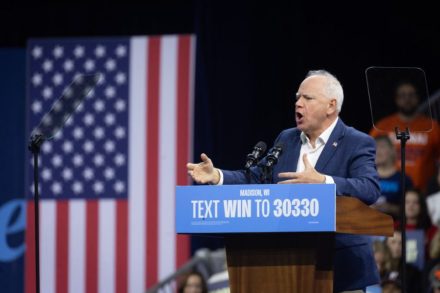
The term ‘old friend of the Chinese people’ has a sentimental, almost innocent ring, but the Chinese Communist party (CCP) regards it as a job description. It is a label used to describe foreigners looked on favourably by the CCP, but it also carries obligations. ‘Old friends’ are expected to be sympathetic and further the interests of the party. ‘China will never forget their old friends,’ said President Xi Jinping when he met Henry Kissinger, the most famous holder of that title for his supposed pragmatism toward Beijing, last year. Perhaps the most notorious ‘old friend’ was Edgar Snow, the American journalist, who was given privileged access to Mao Zedong and his fellow revolutionaries in the 1930s. He rewarded them with flattering portraits.

While Xi reigns, China’s economy is unreformable

From our UK edition

It was presented as a bold stimulus to boost China’s ailing economy – but while it excited stock markets in Asia, Western economists were underwhelmed. At a rare press conference in Beijing on Tuesday, the usually gnomic governor of the People’s Bank of China, Pan Gongsheng, unveiled a range of measures designed to ‘support the stable growth of China’s economy’ and see that it hits this year’s target of five per cent growth. There was a time when such measures, which included an interest rate cut and more funds to support the stock and property markets, would have quickened the pulse of investors. But this is unlikely to reverse their exodus.

Farage’s plan, the ethics of euthanasia & Xi’s football failure

From our UK edition

45 min listen

This week: Nigel’s next target. What’s Reform UK’s plan to take on Labour? Reform UK surpassed expectations at the general election to win 5 MPs. This includes James McMurdock, who Katy interviews for the magazine this week, who only decided to stand at the last moment. How much threat could Reform pose and why has Farage done so well? Katy joins the podcast to discuss, alongside Jovan Owusu-Nepaul, who fought Nigel Farage as the Labour candidate for Clacton (1:02). Next: who determines the morality of euthanasia? Matthew Hall recounts the experience of his aunt opting for the procedure in Canada, saying it ‘horrified’ him but ‘was also chillingly seductive’. Does Canada provide the model for the rest of the world? Or should we all be worried of where this could lead?

Why can’t China play football?

From our UK edition

It would be tough for any country to lose 7-0 in a World Cup qualifier, but when the losing team is China, and the thrashing is at the hands of arch-rival Japan, it is deeply humiliating. The defeat was ‘shameful’, according to an editorial last week in the Global Times, a state-controlled tabloid, while the Shanghai-based Oriental Sports Daily called it ‘disastrous’, adding: ‘When the taste of bitterness reaches its extreme, all that is left is numbness.’ Some commentators called for the men’s team to be disbanded, bemoaning that a country of 1.4 billion people could not find 11 men capable of winning a match.

What’s behind China’s overseas policing drive?

From our UK edition

So China wants to make the world more ‘safe, reasonable and efficient’ by training thousands of police officers from across the globe to ‘help them quickly and effectively improve their law enforcement capabilities’. The offer came this week from Wang Xiaohong, China’s minister for public security, at a police forum attended by officials from 122 countries in the eastern city of Lianyungang. There were few details, but then few are needed. Authoritarian countries will see China’s frequently brutal approach to law and order, coupled with its zero tolerance for dissent, as rather appealing – and many will already have invested in the technical side of China’s surveillance state.

Are Hong Kong trade offices just Chinese propaganda machines?

From our UK edition

China has reacted with anger at American threats to close Hong Kong’s trade offices in the United States, pledging to ‘take practical and effective measures to resolutely counteract it’, while the territory’s Commerce Secretary accused Washington of ‘slander’. In reality, Hong Kong Economic and Trade Offices (HKETOs), which were set up to oversee the territory’s external commercial relations and have some diplomatic privileges, are an anachronism. Now that Hong Kong has been stripped of its autonomy, they appear to have little purpose other than to parrot Beijing.

Xi speech warrior: Elon Musk’s love affair with China

From our UK edition

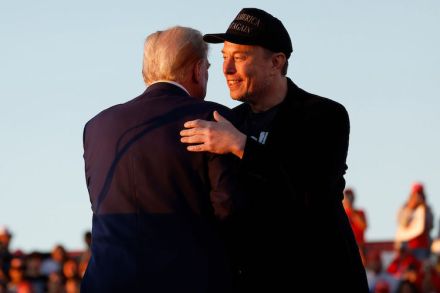
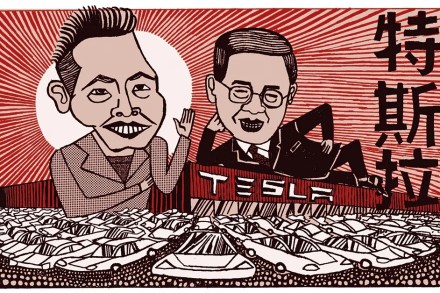
Elon Musk revels in the role of ‘free speech absolutist’. Last week, for instance, he jumped to the defence of Pavel Durov, the head of the messaging and social media app Telegram, after he was arrested by the French police. But while Musk claims he is a defender of free speech, he frequently kowtows to the Chinese Communist party, for whom the concept is alien. Musk is now the CCP’s favourite western capitalist. So although he is eager to tell his 196 million Twitter followers that ‘Britain is turning into the Soviet Union’, he has avoided antagonising China. He has echoed CCP talking points on contentious issues, such as Taiwan and artificial intelligence, while remaining silent on China’s human-rights record.

The cracks are appearing in Putin’s relationship with China

From our UK edition

Relations between China and Russia are going from strength to strength – or so they say. In reality, the strain is beginning to show. ‘Against the backdrop of accelerating changes unseen in a century, China is willing to further strengthen multilateral coordination with Russia,’ said Xinhua, the Chinese state news agency after a meeting on Wednesday in Moscow between premier Li Qiang and Vladimir Putin. Far more intriguing, though, was what wasn’t said, and which suggests a growing tensions in their ‘no limits’ partnership. First there were the cyber spies.

Labour are bowing to China’s influence

From our UK edition

The new Labour government is supposedly committed to ‘defend[ing] our sovereignty and our democratic values’, as its manifesto put it, but it appears to have stumbled at the first hurdle, delaying a key measure for countering the influence of hostile states, which MI5 has described as essential for Britain’s national security. The foreign influence registration scheme (FIRS) would for the first time force anyone in the UK acting for a foreign power or entity to declare their activities. It was due to be implemented later this year, part of a new National Security Act that represents the biggest revamp of the UK’s espionage laws in more than a century. FIRS would require those working for a foreign government to declare their activity or face prosecution.

The controversial truth about China’s new gas field

From our UK edition

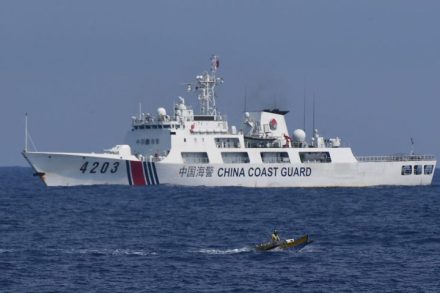
The news was seemingly big but the announcement curiously low key. Earlier this month, China declared that it had discovered what it described as the world’s first large-scale gas field in ultra deep waters and not far beneath the seabed. Lingshui 36-1 contained 100 billion cubic metres of gas, said the China national offshore oil corporation (CNOOC), and the data and plans to extract it had been approved by the ‘relevant government authorities’. It did not give a timescale or the precise location of the field – which it merely described as ‘southeast of Hainan’, China's southernmost island province. It is easy to see why maritime borders matter to Vietnam The reticence is because the gas isn’t China’s – at least not legally.

Why Xi is anxious about Biden stepping down

From our UK edition

The Chinese Communist party is rarely shy about highlighting America’s chaotic politics. State media and the CCP’s growing army of bots enthusiastically prowl around western social media, inserting themselves in the most difficult of debates, seeking to sow distrust. So why the relative caution about Joe Biden’s withdrawal from the presidential race? In the run-up to Biden’s decision, Chinese media was full of reports on the near-assassination of Donald Trump and on Biden’s mounting political troubles, but less happy about calls for the President to withdraw. According to the China Digital Times, which monitors Chinese media, censors stepped in and removed a widely shared essay titled ‘Switch Candidates.

China’s Arctic ambitions should trouble the West

From our UK edition

Four Chinese warships were spotted off the coast of Alaska last weekend. According to the US coast guard, the ships were in the Bering Sea around 124 miles from the Aleutian Islands. They were inside America’s exclusive economic zone, which extends to 200 miles, but within international waters. ‘We met presence with presence to ensure there were no disruptions to US interests,’ said a coastguard commander, as he monitored their progress. The Chinese were within their rights to be there, but the uneasy standoff was another example of Beijing boosting its presence around the Arctic.

A Chinese invasion of Taiwan remains unlikely

From our UK edition

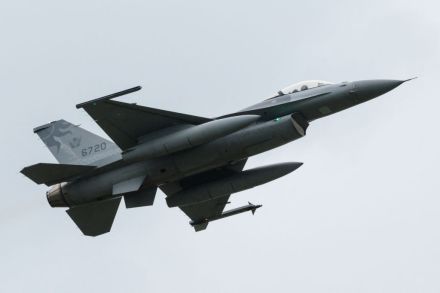
For a second day, yesterday, Chinese fighter jets and warships surrounded Taiwan for drills which the People’s Liberation Army said were designed to ‘test the ability to jointly seize power, launch joint attacks and occupy key areas’. They followed the inauguration earlier this week of Taiwan’s new and democratically elected president Lai Ching-te, who Beijing has characterised as a ‘dangerous separatist’. The exercises were a ‘strong punishment’, said the PLA, presumably for Taiwan’s audacity in electing a leader who wants to distance the island as far as possible from the thuggish leaders of the Chinese Communist Party (CCP).

Putin and Xi’s anti-West alliance is strengthening

From our UK edition

The visit by Russian president Vladimir Putin to the north-eastern Chinese city of Harbin today was no doubt designed as a symbol of the tightening economic relationship between the two countries. Harbin is a gateway for their burgeoning trade; the Russian leader was there to open a China-Russia expo. In the minds of many Chinese nationalists, though, Harbin has far darker symbolism. ‘Little Moscow’, as the city is sometimes called, was established by Russian settlers at the end of the nineteenth century and was the administrative centre of the Russian-built Chinese Eastern Railway. This was an imperialist project to give Russia a shortcut to Vladivostok and the Russian Far East, which were themselves snatched from the decaying Qing Dynasty.

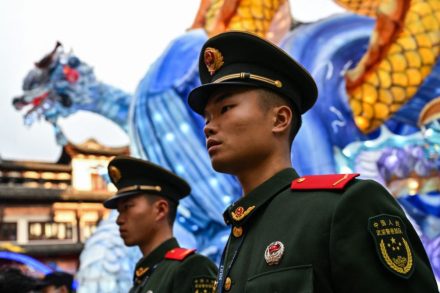
Chinese society is rapidly militarising

From our UK edition

The reports in China’s state media speak about ‘advancing national defence education in the new era’, teaching students to be ‘disciplined’, and ‘promoting the spirit of hard work and inspiring patriotism’. But behind the stultifying Communist party jargon is a new law that will force school children to undergo miliary training and which marks another step towards a militarisation of Chinese society on a scale not seen since the days of Mao Zedong. The revised ‘law on national defence education’, now before China’s rubber-stamp parliament, proposes mandatory military drills for middle school pupils aged 12 to 15 and says that defence should be studied even at primary school.