Ian Williams

Ian Williams

Ian Williams is a former foreign correspondent for Channel 4 News and NBC, and author of Vampire State: The Rise and Fall of the Chinese Economy (Birlinn).

Xi has no right to be ‘guest of honour’ at Putin’s Victory Day

From our UK edition

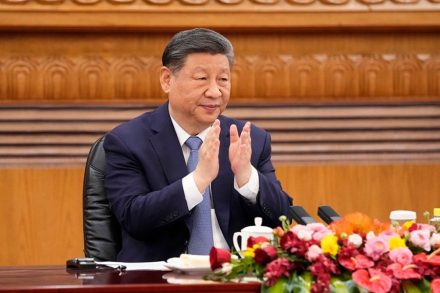
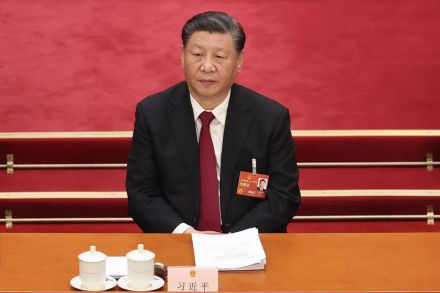
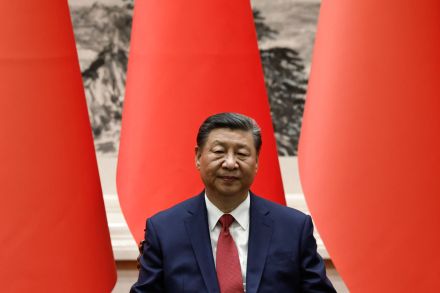
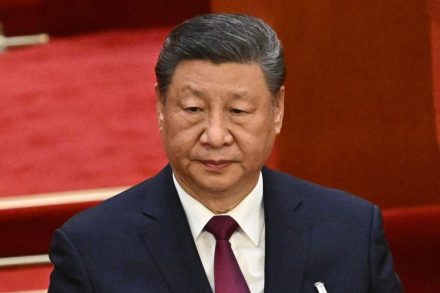
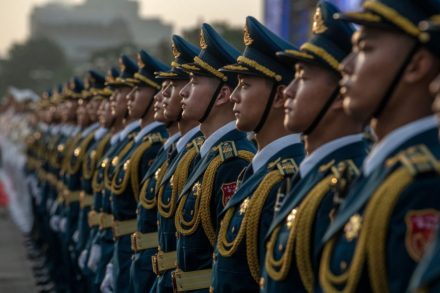
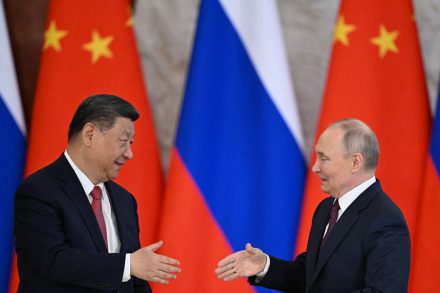
The presence of Chinese president Xi Jinping as ‘guest of honour’ at Vladimir Putin’s Victory Day military parade in Moscow today, which will include soldiers from the People’s Liberation Army (PLA), is both chilling and fraudulent. Chilling, because it is the most explicit endorsement yet by Xi of Russia’s militarism and its poisonous narratives about the Ukraine war, and fraudulent because the Chinese Communist party played a marginal role at best in the Allied victory in the second world war. In the run-up to today's parade, Putin has linked victory over Nazi Germany with his unprovoked invasion of Ukraine, which he has falsely claimed is to achieve ‘denazification’ of the country.
Ian Williams, Philip Patrick, Guy Stagg, Ysenda Maxtone Graham, Mark Mason and Catriona Olding

From our UK edition

37 min listen

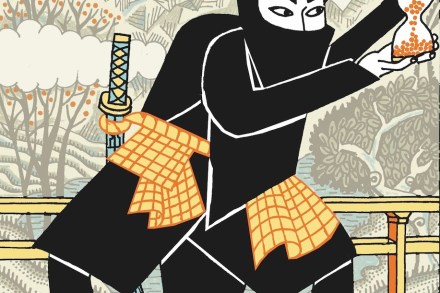
On this week’s Spectator Out Loud: Ian Williams looks at Chinese influence in the UK (1:39); Philip Patrick interviews Japan’s last ninja (9:35); Guy Stagg reviews Damian Le Bas and explores the myths behind the city of Atlantis (18:23); Ysenda Maxtone Graham reviews an exhibition on school dinners at the Food Museum in Stowmarket (23:38); Mark Mason provides his notes on quizzes, ahead of the Spectator’s garden quiz (28:00); and, swapping Provence to visit family in America, Catriona Olding takes us on a trip up the east coast (31:27).  Produced and presented by Patrick Gibbons.

How China bought Britain

From our UK edition

Somewhere in the bowels of the Foreign Office, civil servants are still working on the government’s ‘China audit’. The report was commissioned by the new Labour government to ‘assess trade-offs in the UK-China relationship’ and to ‘ensure consistency across government, business and academia towards engagement with China’. Little is known about its workings or who’s being consulted. Instead of bringing clarity, the process is deepening confusion, and there are worrying reports that the audit has been pared back to support Keir Starmer’s ‘pragmatic’ approach. All the while, there have been a series of troubling events that demand extreme caution about Beijing. The British Steel debacle is only the latest.

China smells victory in its tariff war with Trump

From our UK edition

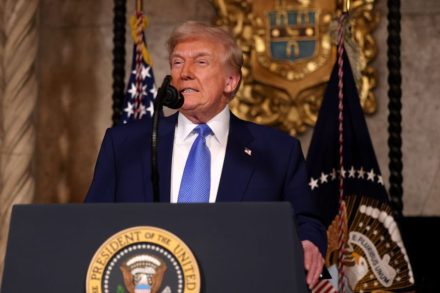
It was an extraordinary statement, given all the bluster that had gone before it. Tariffs on Chinese goods will ‘come down substantially’ from their current level of 145 per cent, Donald Trump said on Tuesday, adding that ‘We are doing fine with China … We’re going to live together very happily and ideally work together’. Perhaps the message was aimed at placating the World Bank and International Monetary Fund spring meetings taking place in Washington this week. The IMF slashed its growth forecasts for the United States, China and most other countries, blaming US tariffs and warned that things could get a lot worse.

What is Xi Jinping planning?

From our UK edition

Shanghai port is the busiest in the world. Activity there is closely monitored by financial analysts distrustful of official statistics and looking for clues as to what is really happening in the world’s second largest economy. For the past few days they will have been taken for a wild ride. First there was mayhem as ships rushed to load up with containers, half of them destined to the United States, in an effort to beat tariff deadlines. By this weekend the place is reportedly at a near standstill. ‘Containers that missed the narrow window now sit idle in stacks along the docks. Many shippers are either pulling cargo back or scrambling for alternatives,’ according to the Chinese business magazine Caixin.

Can China win the trade war against the US?

From our UK edition

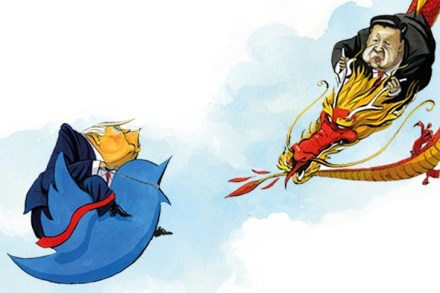
China hit back on Wednesday with an additional 50 per cent tariff on US imports, matching the extra levy imposed overnight by Donald Trump on Chinese goods. That made the running totals 104 per cent so far from Washington, vs 84 per cent from Beijing, prompting one analyst to compare them to two racing cars driving straight at each other in a high stakes game of chicken. Though in the immediate aftermath of China’s latest hike, the loudest cackling came from panicked stock markets, which continue to tumble amid a growing realisation that for the moment neither side is going to swerve.

China won’t win its ‘fight to the end’ against Trump

From our UK edition

China has accused Washington of ‘blackmail’ and said it will ‘fight to the end’ after Donald Trump threatened overnight to impose an additional 50 per cent tariff on Chinese imports. At the same time, President Xi Jinping is seeking to present himself as a responsible champion of the international trading system and defender of globalisation against the Trump wrecking ball. Neither position bears scrutiny; the latter is almost laughable, since it is Beijing’s persistent disregard of international rules that has fuelled the anger in America in the first place.

Why Vladimir Putin is afraid of sea cucumbers

From our UK edition

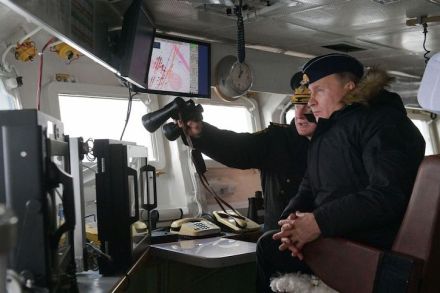
Vladivostok, the ‘ruler of the East’, is preparing to celebrate the 165th anniversary of its founding. City Day, as they call it in the capital of Russia’s Far East, will see week-long celebrations, including sailing regattas, street performances and an enormous firework display. The naval base, home to Russia’s Pacific Fleet, usually gets in on the act too, commemorating the arrival on 2 July 1860 of the first military vessel to seize control from its Chinese inhabitants. Many of those inhabitants stayed in the Far East, at least at first, though mass deportations to China increased after the Soviets seized power in 1917 – an egregious example of ethnic cleansing, well before that term came into more common usage, by Russian rulers who treated the Chinese with contempt.

Is the Trump administration ready to stop Chinese espionage?

For Republican voters sick of “deep-state” shenanigans, Kash Patel, the new head of the FBI, seems an ideal appointment. He and his new deputy, the former police officer turned podcaster Dan Bongino, look and sound like exactly the right men to disrupt a bureau that has at times in the past eight years acted as an investigative arm of the Democratic party in its attempts to thwart Donald Trump through the legal system. Patel is considered so pleasingly anti-establishment that his ties to a Chinese e-commerce business have been largely overlooked. He has holdings worth up to $5 million in a fast-fashion company called Shein, founded in China but headquartered in Singapore, and he intends to keep his stock. There’s nothing wrong with that, per se.

espionage

How China exploits the West’s climate anxiety

From our UK edition

In the fight against climate change, China loves to present itself as the world’s White Knight. Armed with wind turbines and solar panels, EVs and batteries, it will rescue us from oblivion if only we would let it.  There’s no shortage of western politicians, academics and organisations who are happy to go along with the idea that China is an ally in the global green revolution. The argument, broadly put, is that whatever our differences on other things (trifles such as security, economics and human rights), surely we can agree on saving the planet. Rachel Reeves seemed to reach that conclusion when she returned from her visit to Beijing last month.

Trump’s support for Taiwan has infuriated Beijing

From our UK edition

They were only six words on a website, but they helped maintain Beijing’s fiction that Taiwan is part of its territory. Their disappearance has infuriated China’s communist leaders. ‘It gravely contravenes international law and the basic norms of international relations,’ raged Guo Jiakun, a spokesman for China’s ministry of foreign affairs, on Monday. The website in question was that of the US State Department. The words – ‘we do not support Taiwan independence’ – have been removed from its ‘fact sheet’ along with a tweak to another section that implies stronger support for Taiwan’s right to join international organisations, which Beijing has consistently blocked.

Trump’s tariff war with China is just getting started

From our UK edition

Over the weekend, Donald Trump described his sweeping 10 per cent tariffs against Chinese goods as an ‘opening salvo’. Within minutes of them taking effect at midnight last night, Beijing retaliated with targeted tariffs of its own against US coal, liquified natural gas (LNG), farm equipment and cars. It also announced export controls on a string of critical minerals to ‘safeguard national security’, and what it described as an ‘anti-trust’ investigation into Google. Like most Western internet and social media firms, Google is already banned from China, but earns money from Chinese businesses advertising abroad.

Labour’s kowtowing to China will cost Britain

From our UK edition

When the security services accessed the mobile phone of Yang Tengbo, the alleged Chinese spy who became a confidant and business partner of the Duke of York, they found a document in which Yang said of the duke, ‘He is in a desperate situation and will grab onto anything’. We can only assume there are memos circulating in the Chinese Communist Party (CCP) this week describing the visit by Rachel Reeves in similar terms.

What is the point of Rachel Reeves’s visit to Beijing?

From our UK edition

The Chinese communist party claims to know a thing or two about humiliation – the ‘century of humiliation’ at the hands of rapacious foreigners is a founding myth of the CCP, which presents itself as a redemptive power. It will no doubt derive some satisfaction in making Rachel Reeves look foolish, as she heads to China today with a selection of City grandees. In reality though, the damage will be largely self-inflicted. Starmer’s China strategy seems even more incoherent than that of his predecessors For multiple reasons, the timing of a visit designed to build closer economic links with Beijing is awful. It comes just weeks after the UK confirmed the expulsion of an alleged spy who became a confidant and business partner of the Duke of York.

China’s hacking frenzy has reached the US Treasury

From our UK edition

When Chancellor of the Exchequer Rachel Reeves visits Beijing in January on a mission to improve ‘economic and financial cooperation’ she could well find her hosts surprisingly well informed about the global financial system and Donald Trump’s plans for it – thanks to China’s hyperactive and increasingly aggressive army of hackers. Chinese hackers are becoming far more Russian in that they are looking increasingly at undermining their adversaries and not just stealing from them The US Treasury on Monday revealed that it had become the victim of what it called a ‘major cybersecurity incident’, which it blamed on state-sponsored Chinese hackers who accessed workstations and viewed documents.

How to avoid another Chinese spy scandal

From our UK edition

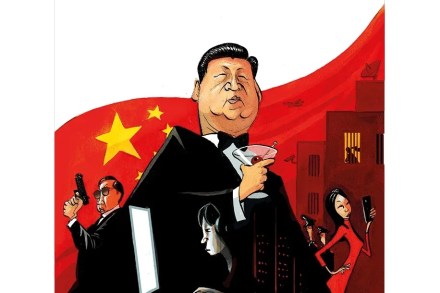
As the fallout continues from the latest China spy scandal, it is hard not to conclude that Labour’s policy on Beijing – as far as one can be identified – adds up to appeasement in the vain hope of some economic crumbs from the Emperor’s table. It will certainly be seen by the Chinese Communist Party (CCP) as a green light for stepping up what Ken McCallum, the head of MI5, has described as ‘a sustained campaign on a pretty epic scale’. ‘National security is the most important issue of our times,’ said Keir Starmer at the time of 80th anniversary of the D-Day landings, a few weeks before the general election.

China is getting ready to take on Trump

From our UK edition

By one estimate, Chinese military exercises close to Taiwan this week were the largest since 1996, when Beijing attempted unsuccessfully to disrupt the island’s first fully democratic presidential election. Up to 100 warships were estimated to have taken part in what Taiwanese officials described as a ‘significant security challenge’, while Russian warships were also spotted close to Japan and South Korea. The danger for the CCP is that it stands to lose more than the US from any intensified trade war The drills were far more ambitious than those held earlier this year, which were focused on blockading Taiwan. They covered a vast swathe of sea north of the island and appeared to be a warning to the US and its allies to stay out of any fight.

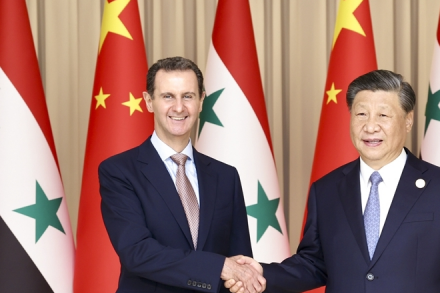
Assad’s fall is also a blow to Beijing

From our UK edition

Russia and Iran kept Bashar al-Assad in power and are the biggest strategic losers from the toppling of his brutal regime. But also spare a thought for Xi Jinping, who used the dubious ‘stability’ imposed on Syria by Tehran and Moscow to embrace the butcher of Damascus in a bid to extend Beijing’s influence in the region. ‘The future and destiny of Syria should be decided by the Syrian people, and we hope that all the relevant parties will find a political solution to restore stability and order as soon as possible,’ said Mao Ning, spokesperson at the Chinese foreign ministry, on Monday, in one of those deliciously vacuous statements so beloved of Beijing’s diplomats.

The corruption scandal gripping Xi Jinping’s army

From our UK edition

In an effort to create a cutting edge force, the Chinese Communist party (CCP) has spent billions of dollars expanding and modernising its armed forces at a pace rarely seen in peace time. But on the evidence of the last few days, the most cutting edge features of its top ranks remain corruption and political intrigue. Miao Hua, one of China’s top commanders has been suspended and is under investigation for ‘serious violations of discipline’ – CCP-speak for corruption, according to the defence ministry. Miao, a navy admiral, is one of six members of the party’s powerful central military commission, chaired by President Xi Jinping. He was also head of the People’s Liberation Army’s (PLA) political works department – charged with ensuring CCP control over the PLA.

The paper mills helping China commit scientific fraud

From our UK edition

Few people embody the ideal of scientific excellence as much as Albert Einstein. Each year a Berlin-based foundation bearing his name hands out awards for the sort of research that might have made him proud. This week, the individual prize went to Elisabeth Bik, not a conventional boffin, but a sleuth – a dogged Dutch researcher who abandoned a career at a biomedical start-up for one exposing scientific fraud. That the Einstein Foundation chose to award Bik is testament not only to the impact of her detective work, but also to the way an epidemic of fake science is shaking the scientific establishment. ‘I have a very strong sense that I’m right. I see these problems and I want to convince people there’s fraud in science,’ she said on receiving the award.