Ian Thomson

Ian Thomson is the author of books including Dante’s Divine Comedy: A Journey Without End.

Montserrat Notebook

From our UK edition

Montserrat, a smoulderingly beautiful volcanic island in the British West Indies, is a 15-minute flight from Antigua. Apart from me, the only passenger on the propeller plane is a birdwatcher from England, who hopes to catch a glimpse of the ‘critically endangered’ Montserrat oriole. After the volcano eruptions of 1995 to 1997, the island’s old

Still roughing it

From our UK edition

We are all tourists now, and there is no escape. The first thing we see as we jet round the world is a filth of our own making. Resort hotel seepage. Takeaway detritus. Travel, in its pre-package sense, can no longer be said to exist. Airports even have ‘comfort zones’ with dental clinics, cinemas and

Bookends: Saving JFK

From our UK edition

Stephen King’s latest novel is a time-travel fantasy about the assassination of John F. Kennedy. At almost 750 pages, 11.22.63 is drawn-out even by blockbuster standards. Critics have bemoaned its surfeit of period detail (bobby socks, Hula Hoops, big-finned cars). I rather enjoyed it. King, now an august-looking 64, is a writer of towering cleverness,

Cocktail Hour Under the Tree of Forgetfulness by Alexandra Fuller

From our UK edition

There is always a special risk, says Alexandra Fuller, when putting real-life people into books. Not all those who recognised themselves in her terrific memoir of 1960s and 1970s white-ruled Africa, Don’t Let’s Go to the Dogs Tonight, had appreciated their transformation. The author’s own mother, Nicola Fuller, was disquieted to find herself as a

Dark days in the Dale

From our UK edition

One of the great books to have come out of the British-West Indian encounter is Journey to an Illusion by the Jamaican journalist (and former London bus conductor) Donald Hinds. Published in 1966, the book is made up of a series of interviews with Jamaicans and other West Indians resident in Britain. Throughout, Hinds is

A dancer’s progress

From our UK edition

In 1971, at the height of the Indo-Pakistan war, my parents took me with them to Bombay. I was ten and it was my first trip abroad. My father worked for Brooke Bond, and had ‘tea business’ to attend downtown. First we checked into the Taj Hotel. On the waterfront, beggar children with lurid wounds

Tallinn tales

From our UK edition

During the Twenties and Thirties, the Estonian capital of Tallinn was known to be a centre for espionage, infiltrated by White Russian intriguers bent on blocking Bolshevik access to north-west Europe. Graham Greene first visited in the spring of 1934  — ‘for no reason’, he writes in his memoir Ways of Escape, ‘except escape to

Talking about regeneration

From our UK edition

Iain Sinclair, the London novelist and poet, is always on the move. From the industrial sumplands of Woolwich to the jagged riversides of Gravesend, he rakes unfrequented zones for literary signs and symbols, locations of forgotten films and other arcana. His previous book, Hackney, That Rose-Red Empire, revealed that Joseph Conrad had been a patient

City of miracles

From our UK edition

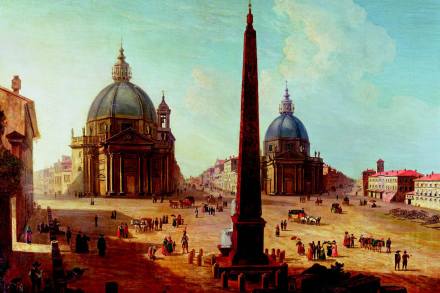
In the autumn of 1984, after an unexplained fall, I found myself in a hospital in Rome acutely head-injured and disorientated. I had been found sprawled on the floor of my flat on Via Salaria; the police suspected an intruder, yet nothing apparently was stolen. Bloody handprints covered the walls where I had tried to

Deep, dark mysteries

From our UK edition

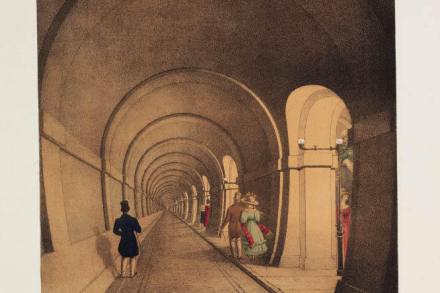
For Peter Ackroyd, the subterranean world holds a potent allure. London Under, his brief account of the capital’s catacombs and other murky zones, manages to radiate a dark mystery and sulphur reek. ‘There is no darkness like the darkness under the ground’, Ackroyd announces, like a Victorian raree-show merchant. This is an entertaining if slightly

Haitian horrors

From our UK edition

Twenty years ago, in 1991, I was shown round the National Palace in the Haitian capital of Port-au-Prince. A government official led me through long rococo halls crammed with oriental rugs, gilded boule clocks and vases of deep pink roses. Little had changed since Jean-Claude ‘Baby Doc’ Duvalier had fled Haiti in 1986. The Hall

Nostalgie de la boue

From our UK edition

In the late 1960s I grew up in the London borough of Greenwich, which in those days had a shabby, post-industrial edge. Behind our house on Crooms Hill stood a disused London Electricity Board sub-station. Broken glass crunched underfoot and buddleia grew amid the fly-tipped junk. I went there chiefly to shoot at pigeons and

A war of nutrition

From our UK edition

The long summer that led up to the last days of peace in Europe in 1939 — the vigil of the Nazi assault on Poland on 1 September and the ensuing Phoney War — gave little hint of the storm to come. The long summer that led up to the last days of peace in

So far from God . . .

From our UK edition

Ciudad Juárez, Mexico’s second largest border city, is clogged with rubbish, fouled with car exhaust and, increasingly, flooded with narcotics. Ciudad Juárez, Mexico’s second largest border city, is clogged with rubbish, fouled with car exhaust and, increasingly, flooded with narcotics. Mexican drug cartels are now so deeply ingrained in the city’s political and social fabric

In a Greene shade

From our UK edition

Some travel writers, in an attempt to simulate the hardship of Victorian journeys, like to impose artificial difficulties on themselves. A glut of memorably foolish yarns with titles like Hang-Gliding to Borneo or To Bognor on a Rhinoceros discredited the genre in the 1980s. In every case it would have been quicker for the authors

Tangerine dreams | 28 August 2010

From our UK edition

Before tourism came travel; and before travel, exploration. A sense of wonder had accompanied journeys along the lip of the unknown, as the Victorian pathfinder was often an amateur scientist, required to bring home a trunkful of fossils. Today, of course, travel is merely an extension of the leisure industry. The first thing we see

A flammable individual

From our UK edition

On the night of 18 October 1969, thieves broke into the Oratory of San Lorenzo, Palermo, and removed Caravaggio’s Nativity. On the night of 18 October 1969, thieves broke into the Oratory of San Lorenzo, Palermo, and removed Caravaggio’s Nativity. The altarpiece has not been seen since. Three decades later, in 1996, Italians were aghast

Exotic Cuban underworld

From our UK edition

Before the revolución of 1959, Havana was, effectively, a mafia fleshpot and colony of Las Vegas. Before the revolución of 1959, Havana was, effectively, a mafia fleshpot and colony of Las Vegas. Graham Greene first visited in 1954, when the dancing girls wore spangled headdresses. The Batista regime was then at its height, and tourists

Survivor syndrome

From our UK edition

In late middle age, William Styron was struck by a disabling illness, when everything seemed colourless, futile and empty to him. In fact, as he recalled in Darkness Visisble (1990), he was suicidally depressed. So when he died in 2006, at the age of 81, it was assumed he had taken his life. His father,

Paris of the gutter

From our UK edition

Port-au-Prince, the Haitian capital, lies on a marshy bay encircled by mountains. It was founded in 1749 by the colonial French and named after a vessel, Le Prince, which anchored there about 1680 (and not, as the dictator ‘Papa Doc’ Duvalier apparently liked to believe, after The Prince by Machiavelli). Thousands subsist in shanties built