Ian Thomson

Ian Thomson is the author of books including Dante’s Divine Comedy: A Journey Without End.

A tinpot Caesar

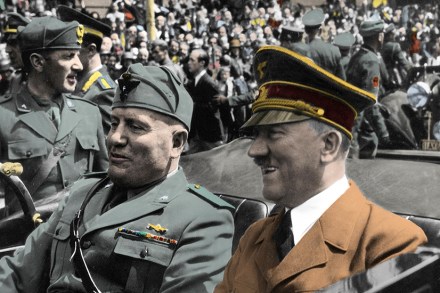
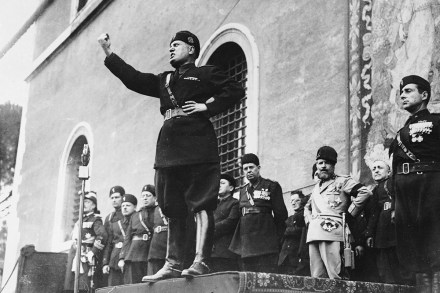
In 1919, an obscure political agitator called Benito Mussolini assembled a ragbag of Blackshirt diehards in the Lombard capital of Milan and launched the movement that was to become, two years later, the National Fascist party. The party took its name from the classical Roman symbol of authority — an ax bound in rods, or fasces. Once in power, Mussolini introduced the stiff armed Roman salute after the handshake was deemed fey and unhygienic. At times he wore a richly tasseled fez and thrust out his chin pugnaciously for the cameras. For all his posturing and demagoguery, Mussolini was widely admired in pre-war Britain, where Lord Rothermere’s Daily Mail routinely carried flattering portraits of him.

mussolini

Alasdair Gray gives us a vivid new Paradiso

From our UK edition

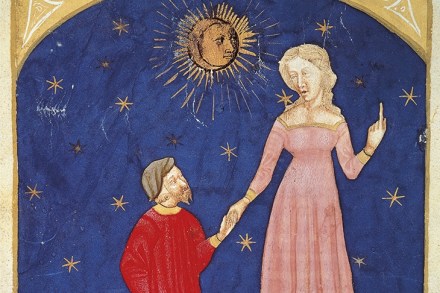
As every Italian schoolchild knows, The Divine Comedy opens in a supernatural dark wood just before sunrise on Good Friday 1300. Dante Alighieri, a figure in his own work, has lost his way in middle age and is alone and frightened in the darkness. The ghost of the Roman poet Virgil is about to show him Hell: Midway in the journey of our life I found myself in a dark wood, for the right path was lost. Begun in the early 14th century, Dante’s poem is, for many, the greatest single work of western literature. With its dramatic chiaroscuro of hellish fuming mists and paradisal stellar regions, the poem is ‘awful’ in the archaic sense of the word (still valid in the Italian terribile), meaning to inspire awe.

City of dazzling mosaics: the golden age of Ravenna

From our UK edition

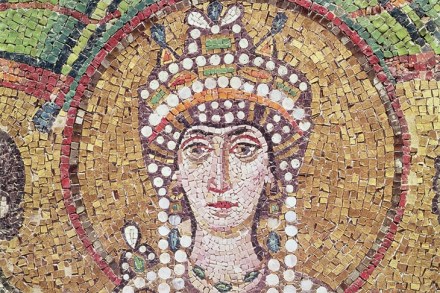
When we refer to someone as ‘Byzantine’ we usually mean guileful or too complicated and labyrinthine in manner or speech. Perhaps the term is ill-applied: Byzantium, the medieval Greek city on the Bosporus which the Roman Emperor Constantine I renamed Constantinople, was not in essence an unfathomable, over-hierarchical or manipulative sort of place. It flourished for more than 1,000 years, until the Ottoman Turkish onslaught in the 15th century, by dint of its ‘extraordinary resilience and self-confidence’, says Judith Herrin, a leading Byzantinist. The northern Italian city of Ravenna, with its wondrous mosaicked churches and gilded mausolea that miraculously survived the aerial bombardments of the second world war, was manifestly also a Byzantine city.

Should we all be prepping for the end of days?

From our UK edition

In the Covid-19 crisis the calamity-howlers have found a vindication: go back to survival mode and bunker down because nobody believed Noah until it was way too late. Bunker: Building for the End Times, a hybrid of reportage and philosophical musing, considers contemporary survivalist culture in all its manifest craziness, from the doomsday realtors who sell bomb-proof, virus-free bunker space to the Bible-belt survivalists who pack their INCH bags (I’m Never Coming Home) and bug out to bunker encampments in Wyoming in anticipation of the Final Judgment. In the modern concrete bunker Bradley Garrett sees an extreme expression of our fear of nuclear, chemical, biological and climatic calamity.

From ‘divine Caesar’ to Hitler’s lapdog – the rise and fall of Benito Mussolini

From our UK edition

In 1919, an obscure political agitator called Benito Mussolini assembled a ragbag of Blackshirt diehards in the Lombard capital of Milan and launched the movement that was to become, two years later, the National Fascist Party. The party took its name from the classical Roman symbol of authority — an axe bound in rods, or fasces. Once in power, Mussolini introduced the stiff-armed Roman salute after the handshake was considered fey and unhygienic. At times he wore a richly tasselled fez and thrust out his chin pugnaciously for the cameras. For all his posturing and demagoguery, Mussolini was widely admired in pre-war Britain, where Lord Rothermere’s Daily Mail routinely carried flattering portraits of him.
Animation lends itself readily to propaganda

From our UK edition

Qasem Soleimani, the Iranian major-general blown up by the US over the New Year, will have seen himself arrested by Saudi troops in a computer-animated film of the ‘liberation’ of Iran from Ayatollah rule. Saudi Deterrent Force was a six-minute fantasy released online by anonymous video-makers in Saudi Arabia in 2017. It was viewed over 750,000 times before Iranian animators struck back with Battle of the Persian Gulf II, in which the Great Satan and perceived Saudi lackey Donald Trump is humiliated in an imagined Gulf battle led by Soleimani. Now that Soleimani is, in Pentagon-speak, a ‘vaporised non-person’, Saudi Deterrent Force acquires added interest for us as propaganda.

Is London Calling Boris Johnson?

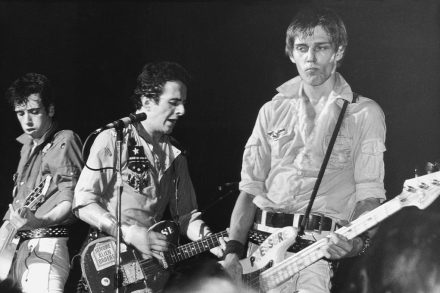
Boris Johnson recently cited the Clash as his ‘favorite band’ along with the Rolling Stones. London Calling, the Clash’s great third album, was released in the US in January 1980, 40 years ago next month. Time has judged it one of the great rock ‘n’ roll albums, but was it really made for Establishment figures like the British prime minister?For the affordable price of $7.98 the 19-tune, double LP hit the New Year market in a blaze of righteous Jamaican reggae and driving, dance-floor ska, 12-bar jazz, mento-calypso, disco, funk and much else besides. Having just returned from an American tour on which they were supported by the blues showmen Bo Diddley and Screamin’ Jay Hawkins, the Clash were fired up with the romance of America.

clash london calling punk

Franco’s exhumation could help decide the Spanish election

From our UK edition

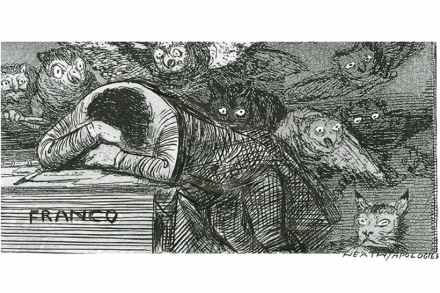
I was no sooner in Madrid than General Franco was exhumed from his mausoleum not far from El Escorial. An air force helicopter ferried his remains from the Valley of the Fallen, where a gigantic stone cross marks the dictator’s grave as well as that of 34,000 Spanish Civil War dead. For four decades the dictator had lain beneath a 1.5 ton granite slab. No longer. As eight of his descendants shouldered the coffin to the helicopter, shouts went up of ‘Viva España! Viva Franco!’ from Falangist diehards behind a police cordon. Franco was reinterred the same day alongside his wife, Carmen Polo, in a family pantheon 20 miles away.

If only Georges Simenon had been a bit more like Maigret

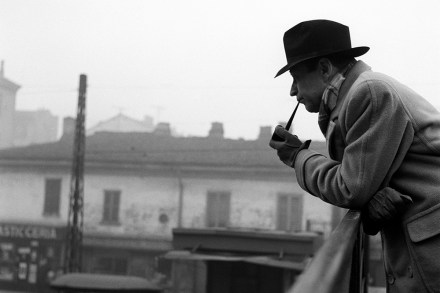
This article is in The Spectator’s October 2019 US edition. Subscribe here. Georges Simenon, creator of the somber, pipe-smoking Paris detective Jules Maigret, pursued sex, fame and money relentlessly. By the time he died in September 1989, Simenon had written nearly 200 novels, more than 150 novellas, several memoirs and countless short stories. He matched this demonic productivity with sexual athleticism. ‘The goal of my endless quest,’ Simenon explained,‘was not a woman, but the woman.’ He demanded sex at least once daily from his wives, secretary, and housemaid-mistresses. How he found the time to write so many books is a mystery that Maigret might struggle to crack. Simenon described himself, without irony, as ‘a psychopath’.

simenon lockdown

A thought-provoking work of ‘moral atonement’ and ‘comparative redemption’

From our UK edition

No nation’s defeat is ever quite straight-forward, and sometimes downfall can bring its own kind of posthumous victory. By the end of the American Civil War in 1865, for example, the Confederates had managed to recast themselves as Christ-like victims, exalted by the myth of a noble lost cause. The South had lost 20 per cent of its white male population to the Union armies, but that only confirmed its moral superiority over the money-grubbing Yankee. According to Susan Neiman, postwar Germans approximated the vanquished Confederacy in their inability to imagine their own defeat. Attempts were made to recompense the Jewish community, but most Germans, East and West, refused to accept responsibility for the war at all.

If only Georges Simenon had been a bit more like Maigret

From our UK edition

Georges Simenon, creator of the sombre, pipe-smoking Paris detective Jules Maigret, pursued sex, fame and money relentlessly. By the time he died in 1989, he had written nearly 200 novels, more than 150 novellas, several memoirs and countless short stories. His demonic productivity and the vast sales and fortune it brought him were matched by a vaunted sexual athleticism. Simenon claimed to have slept with 10,000 women. (‘The goal of my endless quest,’ he explained, ‘was not a woman, but the woman’ — which is French for wanting lots of it, very often.) It was not love-making, but a desire for brute copulation that drove Simenon to demand sex at least once daily of his wives, secretary and housemaid-mistresses.

Sicily Notebook

From our UK edition

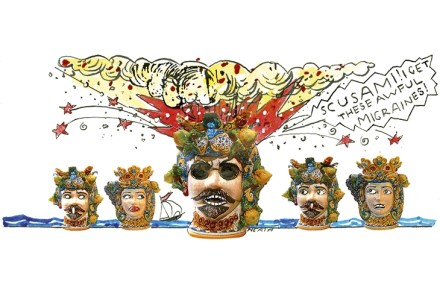
Northern Italians often speak of Sicily as a Saracenic darkness — the place where Europe ends. The Arabic influence remains strongest in the Mafia-infiltrated west of the island, where the sirocco blows in hot from the deserts of North Africa. When the Arabs invaded Sicily in 831 they introduced mosques and pink-domed cupolas, as well as the sherbets and jasmine-perfumed ices for which Sicily is renowned. The word ‘Mafia’ is said to derive from the Arabic mahyas, meaning ‘aggressive boasting’: for almost three centuries, until the Norman Conquest began in 1061, Sicily was an Arabo-Islamic emirate.

Native wood-notes wild | 20 June 2019

From our UK edition

With public life increasingly a din of personalised ringtones and phone chatter, we crave silence. Acoustic ecologists speak of ‘ear cleaning’ exercises that might attune us beatifically to a hushed environment. Silence itself can be quite noisy, of course. Even in the countryside the thoughts in one’s head and the sound of one’s breathing can disturb the peace. Music, at least, may help to restore a sense of quietude. Vaughan Williams’s 15-minute meditation ‘The Lark Ascending’ conjures a pastoral idyll untouched by the clamour and carnage attendant on the Great War. In 1921, when the music was premiered, the green fields of Europe had been psychologically altered by the bloodiest battles in recorded history.

Moving images of Christianity

From our UK edition

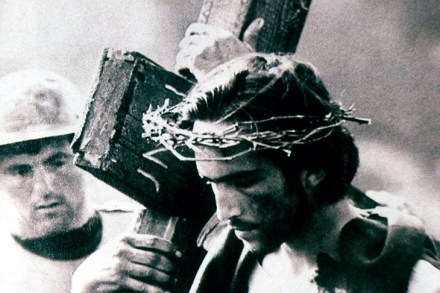
The Italian film director Federico Fellini was not known for his piety (far from it), yet towards the end of his life in around 1990 he determined to film Dante’s Inferno for national television. The brimstone poem appealed to Fellini for its comico-grotesque scenes of mass writhing human nudity amid firecracker detonations. He was not the first filmmaker to take on the work of the medieval Florentine poet. In the early 1970s, Fellini’s compatriot Franco Zeffirelli persuaded Dustin Hoffman to star as Dante Alighieri in his own version of the Inferno. Hoffman, dressed in a medieval coif hat and Tootsie-red robe, was supposed to wander through a sulphurous underworld accompanied by the Latin poet Virgil. Nothing came of either Zeffirelli’s or Fellini’s Inferno.

A tainted paradise

From our UK edition

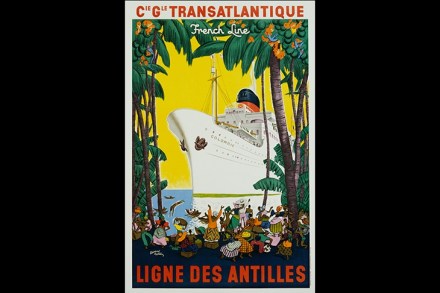
Ian Fleming’s voodoo extravaganza Live and Let Die finds James Bond in rapt consultation of The Traveller’s Tree by Patrick Leigh Fermor. ‘This, one of the great travel books, is published by John Murray at 25s’, proclaims a footnote in the first edition. Fleming was a friend of Leigh Fermor, so this is to be expected. Published in 1950, The Traveller’s Tree may still be the best non-fiction account of the West Indies. ‘It’s by a chap who knows what he’s talking about’, M tells 007, knowingly. But Paul Morand’s 1929 Hiver caraïbe comes a close second. The question is: why has it taken 90 years for this masterwork to appear in English?

A very big life

From our UK edition

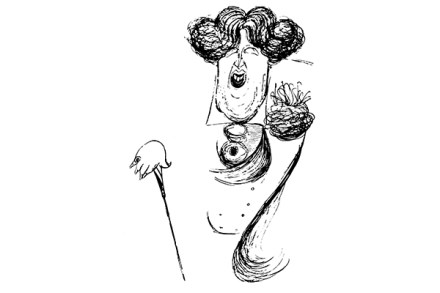
In the autumn of 1897, after two years in jail on a charge of ‘gross indecency’, Oscar Wilde absconded to Italy with the deplorable Lord Alfred Douglas. Sodomy, whether with man or beast, carried a sentence of servitude for life in Victorian Britain: prigs protested that Wilde had got off lightly. In Naples, ragamuffin capital of the Italian south, the Dublin-born outcast went to ground with Bosie in the Villa Guidice (now the Villa Bracale) at 37 Via Posillipo. Inevitably there was press intrusion. The English-language Naples Echo was quick to announce the arrival of Sebastian Melmouth: ‘Readers may know that this is the pseudonym of Oscar Wilde.’ Where to hide?

Hypnotic threnodies

From our UK edition

The tricky term ‘Krautrock’ was first used by the British music press in the early 1970s to describe the drones and industrial kling-klang of difficult German bands such as Kraftwerk, Tangerine Dream, Popul Vuh, Faust and Can. A British fear and loathing of Germany and the Germans informed numerous New Musical Express Krautrock articles. (‘Kraftwerk: the Final Solution to the Music Problem’, or ‘Can: They Have Ways of Making You Listen’.) The term was made semi-respectable by Julian Cope, the erudite jester of English pop, in his ironically entitled book Krautrocksampler (1995), which commended the strange new music that rose from the moral and material ruins of post-Hitlerite Germany. It is hard now to imagine how startlingly new Can must have sounded.

Of human bondage

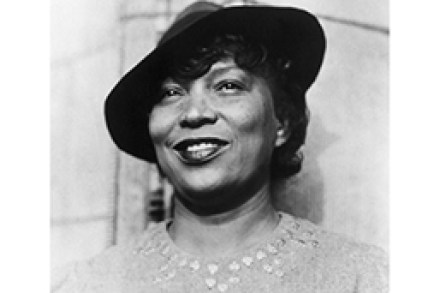
Zora Neale Hurston, the African-American novelist-ethnographer, was a luminary of the New Negro Movement, later renamed by American scholars the Harlem Renaissance. ‘Harlemania’ took off in jazz-age New York, as white thrill-seekers danced to Duke Ellington hothouse stomps and enthused over so-called primitive art. Hurston made a ‘black splash’ of her own in 1920s Harlem. Among her admirers was the dance critic and photographer Carl Van Vechten, whose deliciously Firbankian 1926 account of life uptown, Nigger Heaven, gloried in blackamoor jungle dances and other Uncle Tom minstrelsy. (‘Period piece’ would be the most charitable description.

Time to lighten up

From our UK edition

In parts of Africa and the West Indies women are so anxious to ‘whiten up’ that they use skin-lightening creams. The British writer and broadcaster Afua Hirsch sees this as a regrettable consequence of the aristocracy of skin colour as instituted by British merchant-capitalists during slavery. (Skin must first be bleached before it can be considered beautiful.) Of mixed Jewish-African parentage, the 36-year-old Hirsch is proud to call herself black. In this much-hyped book she sets out to question lingering obeisance to the idea of colonial Britain and to that ghost of the British Empire, the Commonwealth. Why does it persist so? Affection for Britain remains surprisingly strong in Commonwealth countries.

Steamy encounters

From our UK edition

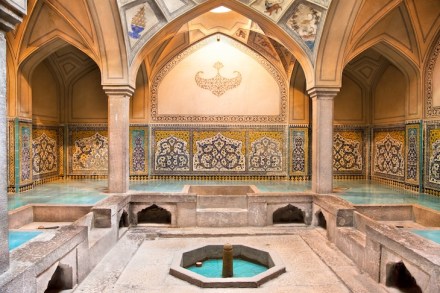
With my friend Maurice, I have long frequented the Ironmonger Row baths behind Moorfields Eye Hospital. As married men, we appreciated the circumspect and respectful behaviour; for a few quid one felt properly laved and rejuvenated. Nakedness is a great leveller. City traders mingled with taxi drivers; a High Court judge might ‘testiculate’ (talk bollocks) with Maurice, a Labour peer. Afterwards in our robes we relaxed in the cooling-room over cups of tea; the steam induced a state of blissful lassitude. In 2012, after an ill-spent £16 million refurbishment, the baths were reopened as the Old Street Spa Experience. At a stroke, the local community was priced out: only transient businessmen and affluent Islingtonians can afford the exorbitant entry fee.