Ian Birrell

Korean notebook

From our UK edition

When I arrived in Seoul, I joked to my editor that I hoped this was not going to be like Ukraine. I went there for three days and ended up staying for five weeks because a war broke out. This time the threat of war is implied, rather than real, although a Korean conflict would be far more lethal and terrifying. Soon after arriving, I met Hwee-Rhak Park, a former army colonel who teaches strategy to young officers. We talked in his university office, high in suburban hills overlooking the smog and skyscrapers. He calmly told me how he had tried to persuade his children to leave and fully expects to die in one of the north’s hideous concentration camps.

A truly monstrous regiment

From our UK edition

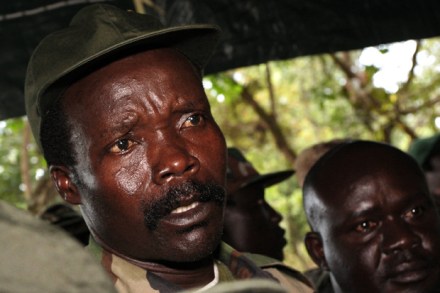
When George Omona first saw soldiers in the infamous Lord’s Resistance Army, he was amazed. The scary fighters who had terrorised people for decades across a big chunk of Africa turned out to be emaciated teenagers with dirty clothes who could hardly hold the big guns they carried. Some were unarmed children, barely ten years old. He felt sorry for them. ‘They could not have known anything else but living in the forest like wild animals.’ Soon he had joined their pack, a reluctant member of one of the world’s most notorious rebel groups. A bright boy who dreamed of becoming a teacher, George ended up a bodyguard to one of the world’s most bloodstained killers.

Getting away with murder

From our UK edition

Cher Hughes loved the beauty, the white sand beaches and sun-kissed climate of the tropical islands of Bocas del Toro in Panama. So she sold her thriving sign business in Florida and spent the profits on creating a new life on the Caribbean archipelago. She and her husband built a beautiful home filled with fine furnishings on Darklands, a private island with coconut palm trees and a sheltered cove, while investing in a couple of rental units nearby. Hughes threw herself into her new life. She went into the jungle to find strange blooms for her vases and searched for armadillos in the moonlight. A blonde in her forties, she became a popular member of the largely American community of about 2,000 expats.

Trapped in hell

From our UK edition

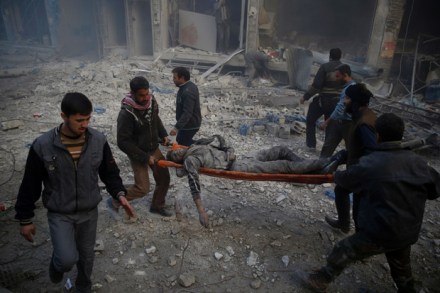
The mechanic, blinded in one eye by shrapnel, spent three days searching for his family in the destroyed buildings and broken streets of Darayya. Finally he found his father’s body in a farmhouse, alongside those of three boys, already starting to decay. ‘Can you tell me why they would kill an old man?’ he asked, before adding: ‘This is not my Syria. When I see the sorrow that happens in our towns, all I think is — this is not my Syria.’ Yet it is. Indeed, one mystery of the darkness that has descended on Syria is that so many gut-wrenching depravities could befall a place of such bewitching beauty, history and apparent tolerance.

The Tories are right to focus on prison reform – it’s a classic conservative issue

From our UK edition

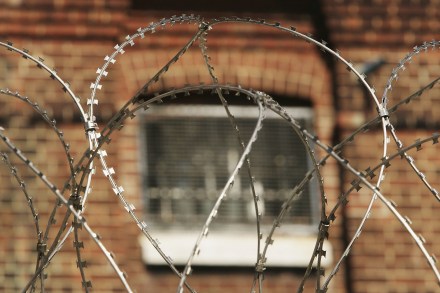
Many people were surprised when David Cameron placed prison reform at the heart of his party conference speech last week. His passionate words on the subject of state failure when it comes to incarceration put the issue firmly at the heart of his reawakened vision of compassionate conservatism. It is now at the core of the Conservative party’s bid to seize the centre ground after Labour’s refusal to accept the verdict of the voters.  Hopefully this marks a significant moment, when the debate on crime and punishment shifts from the ‘sterile lock em up’ stance to a more rational and evidence-based approach focused on stopping people from reoffending.

The murderous gangs who run the world

From our UK edition

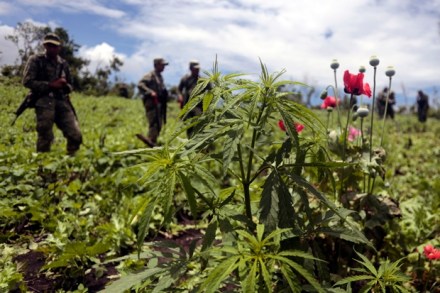
Rosalio Reta was 13 years old when recruited by a Mexican drug cartel. He was given a loyalty test — shoot dead a man tied to a chair — then moved into a nice house in Texas. Soon he was earning $500 a week for stakeouts and odd jobs, but the big money came from slitting the throats of the gang’s enemies, which paid a $50,000 bonus. Four years later he was arrested after 20 murders; his only remorse was over accidentally sparking a massacre that left him fearing his bosses might exact revenge on him. Such bloodstained stories of obscene violence in pursuit of obscene wealth fill the pages of the Italian journalist Roberto Saviano’s investigation into the cocaine trade.

Crimean notebook: ‘They’ll have to break all my bones to make me a Russian citizen’

From our UK edition

Vladimir Putin still swears that there are no Russian troops in Crimea, so their mission is to say as little as possible as they invade this holiday region in their unmarked uniforms and vehicles. It is remarkable how soon you get used to shouting questions at these heavily armed special forces soldiers while they pretend not to be Russians. They tend not to take the bait: the most you’ll get out of them is a curt ‘Nyet’. I wandered up to an officer who seemed to be in charge of seizing a Ukrainian naval base in the old Tartar capital of Bakhchisaray. He wore all black, his face hidden by a balaclava and his vest stuffed with nasty-looking weapons. ‘Can we talk?’ I asked.

Africa’s Afghanistan

From our UK edition

For centuries, the people of Timbuktu have sought guidance from their Sufi saints. They took pride in the mausoleums of these medieval Muslim holy men, who spread their faith around the world from a city built on the profits of gold, salt and slaves. When I visited six years ago, a teenager showed me around, pointing out the shrines. As we stood by a monument to peace built in 1995 to mark the end of the last Tuareg uprising, with guns embedded in its concrete, I handed him a few coins. He gave them to children standing nearby. ‘My religion says we should share,’ he said. Today, the mood is different. Islamic extremists, who hold the shrines and tombs to be idolatrous, are tearing them apart with pickaxes, iron bars and shovels.

Big charity

From our UK edition

The aid business has grown fat. It’s time there was proper scrutiny Such a simple question: should Oxfam spend a couple of hundred pounds a month opening up the swimming pool at its guesthouse in one of the nicer parts of Nairobi? It was posed by Duncan Green, the group’s head of research, on his blog, and provoked a revealing bout of navel-gazing in the aid industry. The pool was shut, Mr Green disclosed, on the orders of the charity’s head office, which feared a scandal after an advert for a pool attendant appeared on its website. The post went viral, sparking a far bigger response than Mr Green’s usual musings on poverty. Some comments were satirical, such as the suggestion Oxfam open a golf course for staff in Kenya.

Another top ten albums of 2011 list

From our UK edition

Picking my favourite albums this year reminded me of three things about the current state of music. First, the obvious point of how everything is driven by single tracks rather than albums, making the task harder each year. Second, how so much of the most interesting and innovative art is being made by women right now. And third, how the future of music is increasingly found in places such as Kinshasa and Johannesburg as much as in the traditional stomping grounds of London and Los Angeles. Anyway, here’s my list. And since any of these lists are an exercise in self-indulgence, can I cheat and give mentions in dispatches to Little Dragon, Metronomy, Nneka, Owiny Sigoma Band, SBTRKT & Toddla T?

The ongoing NHS scandal

From our UK edition

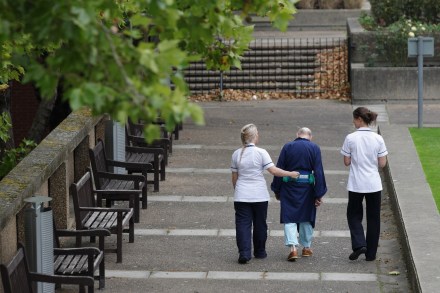
Shock! Horror! Another report reveals the shameful care given to the elderly in British hospitals. People in the twilight of their life reduced to begging for food and rattling the bars of their beds in a desperate attempt to get the attention of medical staff paid to care for them. The findings came in reports of random inspections by the Care Quality Commission watchdog that found concerns in 55 of the 100 hospitals visited, with 20 of them — one in five — breaking the law in its levels of neglect. They found patients starved of food, denied water, spoken to rudely or simply ignored. It is sickening stuff.

Spotify Sunday: Shuffle…

From our UK edition

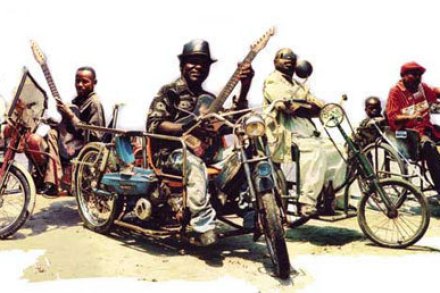
Like many music fans, I could spend months pondering a playlist and coming up with dozens of variations. Since I assume I was invited to participate in Spotify Sunday as co-founder of Africa Express, I wondered whether to do an all-African list, but in the end decided to do a random shuffle of a few of my favourite things – much like the madness of an Africa Express show.  Je T’aime – Staff Benda Bilili I first came across this band in Kinshasa, when a group of homeless paraplegics were carried on to the stage in a tiny club and left us all totally stunned. A breathtaking moment. Since then they have become global stars with their incredible rumba-driven grooves, overlaid with the virtuoso playing of Roger Landau and his homemade one-string electric lute.

Hell or high water

From our UK edition

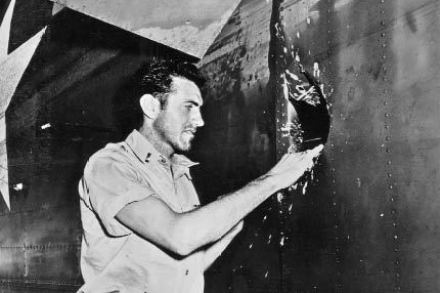
As his battered bomber hurtled towards the Pacific in May 1943, Louis Zamperini thought to himself that no one was going to survive the crash. If he had had the slightest inkling of what lay ahead of him, he readily admits that he might have preferred death, staying beneath the surface of the water rather than wrestling his way from the wreckage as it sank. Clambering into a life raft floating amid the blood and wreckage, he knew the odds were bad. Search planes were more likely to crash — just as his barely airworthy B-24 had — than rescue downed airmen.

The making of the coalition

From our UK edition

David Cameron was despondent on the evening of 10 May. Although the election result was pretty much as he had predicted privately, he feared that his ‘big, open and comprehensive offer’ of coalition with the Liberal Democrats was about to be rejected in favour of a deal with Labour. When we talked that night he feared another spell in opposition, and he ended by suggesting I went into the office the next day since he would have time on his hands. But as we spoke, the Lib Dem negotiating team was reporting back to Nick Clegg on another disastrous set of discussions with Labour, ensuring that long-held hopes of the so-called ‘progressive alliance’ were shrivelling by the hour. Even Vince Cable accepted the reality of the situation.

That turbulent decade

From our UK edition

On 2 January, 1980, a new decade was ushered in with a strike by steelworkers. It was their first national stoppage for half a century, and after three tense months they were rewarded with a 16 per cent pay rise. Once again, a strike seemed to pay off, with weak managers sacrificing long-term gain to avoid short-term pain, whatever the costs ultimately to their industry or to the economy. But then, in a clear sign that the Eighties were going to be rather different to the tortured decade that had preceded it, the Government sacked the chairman of British Steel. He was replaced by a tough Scottish-born banker from Wall Street called Ian MacGregor, who immediately began challenging the old order and slashing the workforce.

Caught in the crossfire

From our UK edition

Maqbool Sheikh dreaded hearing a knock at the door of his home. For he was the most intimate witness to one of the world’s most enduring and forgotten conflicts, the struggle over Kashmir. As the only autopsy expert at the police hospital in Srinagar, it was his job to conduct post mortems on those shot, stabbed or blown to pieces — and the bodies arrived at the rate of around 1,000 a year. Each time, as he drove back to the mortuary, he wondered whether he would be confronted with the corpse of a child, a woman or another young man. The law required him to determine how each one died, and his judgment could affect how their families were treated — were they a terrorist, a police informer or simply another innocent bystander?

The hell I share with David Cameron

From our UK edition

My daughter suffered two seizures the other night. One was shortly after midnight, the other a couple of hours later. Having been away on business the previous night, it was my turn to get up to comfort her, to check that the fits were not life-threatening and, afterwards, to settle her back to sleep. Five hours later the alarm went off and, as my teenage son stomped into the shower, I popped back into her bedroom to check that she was still asleep — and still alive. This was a typical night in our house, and it was followed by a typical day of attempting to balance work and family while caring for a severely disabled child and engaging in a ceaseless battle with the bureaucracy of our public services.