Ian Acheson

Ian Acheson

Professor Ian Acheson is a former prison governor. He was also Director of Community Safety at the Home Office. His book ‘Screwed: Britain’s prison crisis and how to escape it’ is out now.

Terror cells: how Britain’s prisons became finishing schools for extremists

Sometimes it appears as if, over the past ten years, the government has been actively trying to destroy the whole criminal justice system. It’s like an evil experiment: impose a 20 per cent cut in the prisons budget, meaning a 26 per cent reduction in the number of operational front line staff — then sit back and see what happens. What happened was predictable, with disastrous consequences for both inmates and the public. As a previous Conservative home secretary once said, our prisons became places that ‘make bad people worse’. Imagine a young man like Sudesh Amman arriving in prison after his first offence. He was already a drug user, known to have a cannabis habit. He was mentally unstable and radicalised by Islamist propaganda.

Can our prison system ‘cure’ convicted terrorists?

We’ve just celebrated the birth of a refugee who went on to radicalise a group of fishermen and transform the worldview of millions of people. You might not feel comfortable with this depiction of Jesus Christ but it does illustrate the challenges and limitations of language and labelling when dealing with contemporary violent extremism. I was on the Today programme on Radio 4 this morning to speak about Healthy Identity Intervention (HII) – a psychosocial approach to changing the mindset of terrorists which was used in prison to treat Usman Khan prior to his murderous rampage on London Bridge.

Usman Khan’s time in prison could hold the key to explaining his murderous attack

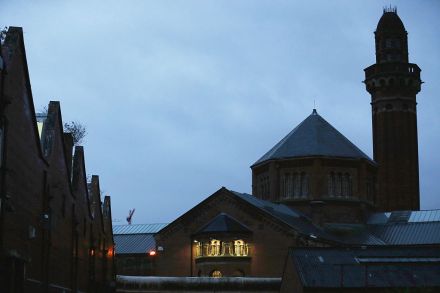
London Bridge terrorist Usman Khan appears to have spent some of his final months behind bars at HMP Whitemoor, a high-security prison near Peterborough, where some of the country’s most dangerous people are held. The prison's chequered history could be relevant to the horrific events that unfolded in the capital last week. I last visited Whitemoor near the beginning of 2016. This ‘new build’ prison, finished in 1992 with space for around 450 inmates, was designed to be escape proof. Two years later, five IRA terrorists and a gangster brutally disabused this notion by escaping over the perimeter wall armed with a gun that had been smuggled into the ‘supermax’ special secure unit where they were held. A prison officer was shot during the escape.

Locking child killers up for life won’t solve our prison crisis

What should we do with adults who murder children? 'Nothing good' is a perfectly understandable response. Child killers occupy a unique position on the destitute outer fringes of humanity. Bogeymen made real, they are in fact often pathetic, hideously damaged individuals driven to satisfy appetites we can only guess at. The Conservatives have announced that adults over 21 who murder children under 16 will never be released from custody. It has made for a good Sun newspaper op-ed; justice secretary Robert Buckland is pushing against an open door with the electorate. It's not just Tory voters who never want these aberrant individuals to see the light of day again. Ask any parent and wait for the sound of sharpened pitchforks.

Winning the online war after the fall of Isis

Home Secretary Priti Patel downgraded our national terrorism threat assessment last week from ‘severe’, where it has sat for the last four years to ‘substantial’. Attacks have now been reduced from ‘highly likely’ to ‘likely’. We’re never given the full analysis of the reasons for the changes in alert levels, which is independently assessed by the Joint Terrorism Analysis Centre (JTAC).  But it’s fair to say from what we know, it’s more an art than a science. And there are plenty of reasons to remain pessimistic. The threat of violent extremists across the ideological spectrum to cause us severe harm continues.

Is Rory Stewart running to become London mayor because he’s bored?

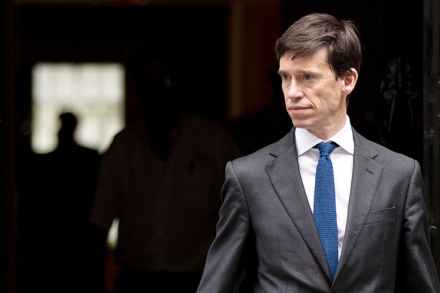
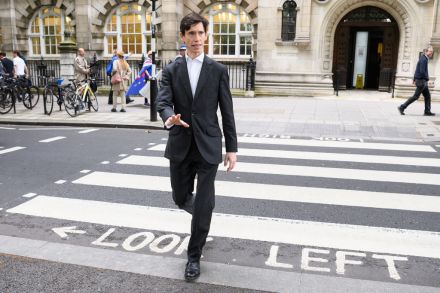
Rory Stewart's announcement that he would run as an independent candidate for Mayor for London was typically civilised. This was no political suicide bomb. Instead Stewart waited for his erstwhile party’s conference to finish before making his move. But this trademark decency does not render his decision any less barking to his detractors. I’m on friendly terms with Stewart and had enthusiastically supported his Conservative leadership campaign which, after this abrupt defection, does leave me feeling like a bit of an arse if I’m honest. But Rory is very hard to dislike, not least because his innate decency, ability and desire to listen and respond to ordinary people is clearly authentic.

The dangerous myth of the ‘bad border’ in Northern Ireland 

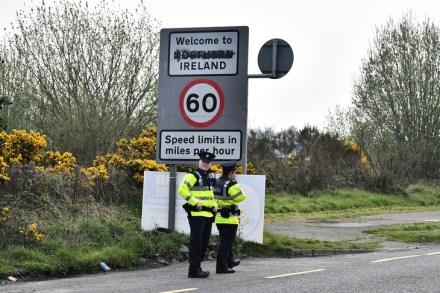
The Irish border is awash with journalists and pundits from Great Britain, scratching their heads in wet frontier fields patrolled by incurious Friesians. No border bridge has been left unmolested by visiting television crews in search of a sombre framing shot. The former ‘Killing Fields’ outside Enniskillen were my home until I left for university in England at 18. I don’t decry the honest attempts of blow-in journalists to explain the conundrum of what Churchill wearily dismissed as the ‘dull and dreary steeples of Fermanagh and Tyrone’ – it’s a bit of a head melter all right. But the blaring singularity of the ‘bad border’ narrative we hear far too much of is both ignorant and dangerous.

The Yellowhammer report is nothing like a real contingency plan

The latest Operation Yellowhammer disclosures put me in mind of a book I read a few years ago describing an unsettlingly plausible zombie outbreak in Britain. When the streets were too full of undead shamblers for the government to ignore, the Home Secretary asked officials who were barricaded in his office for the contingency plan to deal with this apocalypse. He was handed one sheet of A4 on which was simply written, ‘run away screaming.’ I wonder whether Michael Gove had anything much more coherent to rely on when he took up the reins at the Cabinet Office at the back end of July and asked for the latest no-deal arrangements?

The false equivalence between victims and perpetrators of the Troubles

Julian Smith used to have the unenviable task of being Theresa May's chief whip. As the newly-appointed Secretary of State for Northern Ireland, he now has an even harder job. Wrangling unbiddable MPs pales into insignificance when arbitrating the causes and consequences of a brutalised polity. Members of Northern Ireland’s devolved government still refuse to sit with each other and the legislative assembly is defunct. The police service is chased off Northern Irish housing estates by teenagers and regularly targeted for murder by dissident republicans. Putrid commemoration of dead terrorists saluted by gunfire and sinister paramilitary parades barely raises an eyebrow.

Boris Johnson is right to talk tough on crime. But can he deliver?

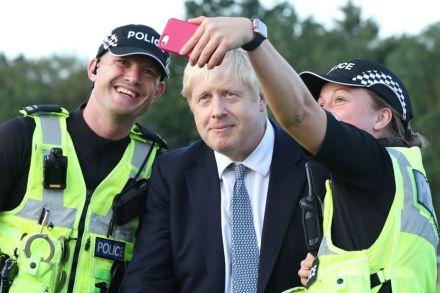
Remember #rorywalks? This was the hashtag created to follow the progress of Tory leadership candidate Rory Stewart as he travelled around Britain meeting people in places detached from mainstream politics. One encounter that sticks in my mind happened when he met a couple from east London, who told him that they wouldn’t start a family because their local area was too unsafe to bring a child into the world. Whether apocryphal or not, it is clear that there are parts of Britain where criminality and incivility has become normal, battering the morale of our most vulnerable citizens.

Tommy Robinson is no martyr. Here’s how to stop him becoming one

We might not care for Stephen Yaxley-Lennon but we should care very much about what happens to him in prison over the next two months or so. Lennon, also known as ‘Tommy Robinson’, was convicted at the Old Bailey yesterday for contempt of court after he live-streamed footage of defendants on trial for sexual exploitation arriving at court. Yaxley-Lennon had previously served time in custody for this but was freed on appeal pending a retrial. Just to make matters more complicated, he was also sentenced yesterday for an earlier contempt committed at Canterbury Crown court in 2017, again at a rape trial that involved four Asian defendants that attracted a suspended sentence, now activated.

How Theresa May’s war on the police backfired

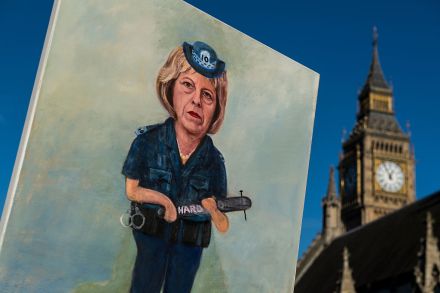
British law enforcement is famous around the world for its brand of neighbourhood policing. But this now exists largely in memory in the place where policing was invented. Our capability to police in this way, that has protected society since the time of Robert Peel, has all but collapsed. The only surprise about the five ex-Metropolitan Police chiefs' blistering attack on the ten years of Conservative policy that achieved this is how long it’s taken them to get their act together. For a period of time between 2009 and 2011, I had a pretty unique perspective on policing in Britain. By day I was the senior Home Office mandarin in south west England, overseeing performance on crime, drugs and counter terrorism policy.

What Rory Stewart did next

Rory Stewart’s pitch for prime minister seems strangely distant now, lost in the enveloping chaos of Boris Johnston’s shamble to glory. All is not lost, however. The divergent metrics of parliamentary and public sentiment – and the character deficits of the frontrunner, who claims to be able to square that circle – make it abundantly possible that Stewart will have another chance to shine before the year is out. So what should he be doing in the meantime? I was peripherally involved in Stewart's leadership campaign, helping to organise some of his Northern Ireland visit, including a trip to my home county (and Britain's true Lake District) Fermanagh.

How Rory Stewart can save the Tories

What does Rory Stewart’s time at the helm as prisons minister tell us about his fitness to lead the Conservative party and our country? In January last year, I wrote an open letter to his boss, Justice Secretary David Gauke with some thoughts on how to deal with Britain’s shameful prisons crisis. In it, I referred to Gauke’s new prisons minister, who, ‘given his diplomatic experience in conflict zones, will know a bullshitter when he sees one, which can only be good news when he meets the people who are running the wreckage of our probation system.’ I was right about Stewart’s low tolerance for bureaucratic abstractions and managerial verbiage.

The equality watchdog’s probe leaves Labour with a painful choice

Today’s confirmation that the Equality and Human Rights Commission (EHRC) is launching a formal investigation of the Labour party has huge personal significance for me. I was the chief operating officer for the Commission between 2012 and 2015, responsible for redesigning the approach to statutory enquiries and investigations. I also had a role in making the Commission a warmer house for Jews. The EHRC I joined was not an organisation beloved of the state. Unfortunately this was not a function of its fearless independence, more that it wasn’t taken terribly seriously with a poor reputation amongst ministers. Budget cuts and obsessive introspection by some staff who regarded the body as a pressure group for leftist causes had seriously imperilled its very existence.

Lyra McKee’s life must mean more than the way she died

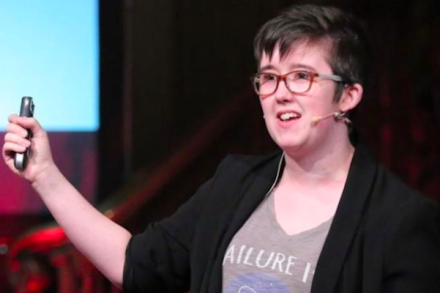
Twenty one years ago this week, a deal was signed in Belfast that undoubtedly gifted many people with a future who would otherwise now be cold in the ground. The Good Friday Agreement saved lives in Northern Ireland and brought a measure of consensual politics, but there is no tent big enough to accommodate the sadists who inspired and now evade all responsibility for the death of journalist Lyra McKee on Thursday night in Derry. She was murdered standing at police lines reporting on rioting orchestrated by dissident republicans who, in their desperation to kill Irish men and women in uniform protecting a community they hold hostage, took her life instead.

David Gauke is wrong about short prison sentences

‘Short term custody isn’t inherently bad, but the way we do it is awful.’ I didn’t expect Justice Secretary David Gauke to start an otherwise thoughtful speech yesterday on prisons like this, but he should have. No one wants people in prison when there are better alternatives that will properly punish them and give them the tools to break away from offending. To do otherwise is stupid. But the debate has been overwhelmed by a fixation on sentence length that wrongly suggests that short imprisonment must always and forever be toxic and counterproductive. Gauke presented his audience with sobering statistics on rates of incarceration putting us at the top of the league in Europe. We seem addicted to custody in this country, as long as it’s cheap.

The government machine can’t root out Islamism in prisons. Believe me, I know

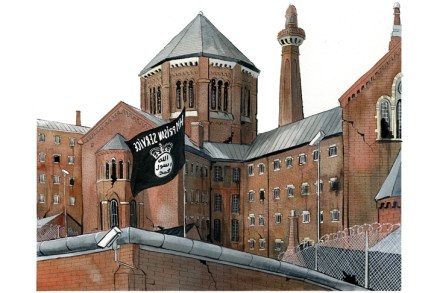
In response to the Westminster attack, a 100-strong new counter-extremism taskforce has been announced to deal with the terrorist threat in prisons. I’m taking some credit for this badly needed focus. In the autumn of 2015, the then Justice Secretary, Michael Gove, asked me to lead an independent review of the threat posed by Islamist extremism in prisons, the probation service and the youth justice system. I used to be a prison governor in what was known until just a few days ago as the National Offender Management Service, so I agreed on the understanding that I reported only to him and that I had his full support to go where the evidence led me, without interference from bureaucrats. To his credit, he agreed immediately. Gathering information was a complex task for a small team.

Inmates and Islamism

In response to the Westminster attack, a 100-strong new counter-extremism taskforce has been announced to deal with the terrorist threat in prisons. I’m taking some credit for this badly needed focus. In the autumn of 2015, the then Justice Secretary, Michael Gove, asked me to lead an independent review of the threat posed by Islamist extremism in prisons, the probation service and the youth justice system. I used to be a prison governor in what was known until just a few days ago as the National Offender Management Service, so I agreed on the understanding that I reported only to him and that I had his full support to go where the evidence led me, without interference from bureaucrats. To his credit, he agreed immediately. Gathering information was a complex task for a small team.