Horatio Clare

The cormorant – symbol of gluttony and the Devil

From our UK edition

Greed, death, hate and clouds of destruction – this is the cormorant season all right. I was hungry to read Gordon McMullan’s book because I love the birds and looked forward to learning their secrets. But I gathered only a little about the green-glossy, serpentine jewel of a fowl I saw in Hebden Beck recently, hunting in the middle of town where I’d never seen it before. Look elsewhere for the creaturely particulars, such as the spur of bone at the back of the skull from which thick muscles link to the lower mandible, giving the corvus marinus a mighty bitey beak. This book is not concerned with what we know about cormorants but with the cormorants that we ourselves are.
Hell is other tourists in Antarctica

From our UK edition

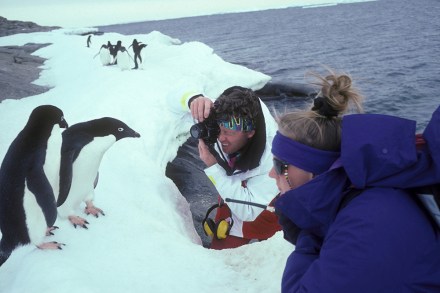
My first love was a penguin. Pengwee was an adorable brown and white emperor chick who had my heart and broke it the day he dived into the bath. After a week in the airing cupboard he smelled of fish – surprising in a soft toy. But then penguins are surprising. Towards the end of the Cretaceous period, 65 million years ago in Zealandia, a fragment of the Gondwana supercontinent, penguins waddled off along their own evolutionary path. Other birds flew through air; penguins flew through water. Natural selection pi-pi-pimped up the penguin (sorry) to astonishing specialisation. Hunting in black oceanic deeps, many species can see in ultraviolet.

The complexities of the dawn chorus

From our UK edition

‘Tawny owls,’ I tell friends and family, ‘can’t see in the dark any better than we can. So they memorise the whole wood! But they may be able to see sound,’ I burble. ‘And the Latin name for a blue tit is Cyanistes caeruleus obscurus: Heavenly hidden blue one!’ In Bird School, Adam Nicolson rejoices in the detailed stories of some of the birds on his farm in Sussex. Its precursor, The Seabird’s Cry, a love letter to a dozen species, soared over the coasts of Scotland, ablaze with sea light. The Sussex Weald on a dull spring dawn offers a claggier setting. Puffins seem more interesting than marsh tits. But in fact Bird School is even better. Nicolson makes like the bowerbird, which constructs elaborate artistic temples of seduction.

Saviours of souls: the heroism of lifeboat crews

From our UK edition

Our summer holidays by the sea were the thrill of the year and the lifeboat was the thrill the holidays. Whissh-crack! went the maroon, sending the dauntless crew and their punchy little vessel off into the waves to save souls. The Royal National Lifeboat Institution has been doing this for 200 years. Mariners and all of us must hope it never stops, because its story is the best of us. In One Crew, Helen Doe, a maritime historian, writes the official history with verve and precision.

Seeing the dark in a new light

From our UK edition

True darkness, it turns out, can be experienced but does not exist. If you have been down a deep mine where the guide tells you to turn off your lamp you will have seen – in not seeing – something close to it: an utter nothingness in which your body and mind seem to shrink and expand at the same time. On a school trip to Big Pit in South Wales my entire class fell into a moment of unprecedented and never-to-be-repeated silence, a gasped amazement at the disappearance and invisibility of ourselves. Just for a moment everything vanished – and then the whooping and squealing started.  This double impulse, of delight and terror, runs through Into the Dark, Jacqueline Yallop’s exploration of what she describes as ‘an anomaly...

The life of the revolutionary Albrecht Dürer

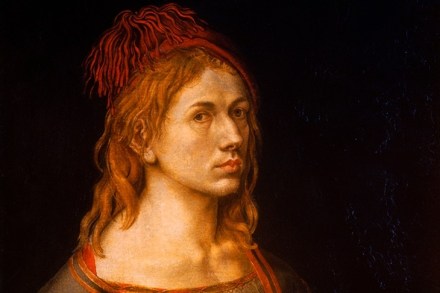
Great books make genres jump. It happened with W.G. Sebald’s The Rings of Saturn, which looked like a travelogue, claimed to be a novel and felt like neither. Albert and the Whale by Philip Hoare, which recalls and converses with Sebald, is such a work. An antic and original creation, it is not exactly a biography of the revolutionary Renaissance printmaker, painter and theorist of geometry and perspective. For the fuller story of Albrecht Dürer, turn to Erwin Panofsky’s mighty monograph, as Hoare does frequently. Instead, Hoare has made a book as much for Dürer as it is about him. Dürer’s life and art are thrillingly encountered.

Dürer

The life of an Exmoor stockman reads like bloody-knuckled rural noir

From our UK edition

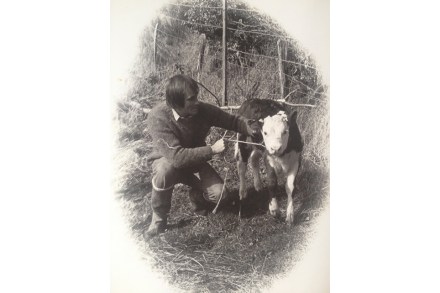
British nature is having a moment, thanks to David Attenborough’s Wild Isles (BBC One). As ever, spring brings a crop of new nature writing, but you are unlikely to come across anything like Once Upon a Raven’s Nest. This is the story of the life of an Exmoor man – Hedley Ralph Collard, known as Tommy – and it reads like bloody-knuckled rural noir. Fans of Niall Griffiths and Kevin Barry will bolt it down. But although the tale is told by Tommy, and rampages along like fiction, the book is actually a blend of reportage and imaginative truth constructed by Catrina Davies, who writes: ‘Where necessary I have put my own words into his mouth, and filled in the gaps of his story using my imagination. This is a portrait, not a biography.

A poet finds home in a patch of nettles

From our UK edition

Towards the end of a long relationship – ‘resolved to have a conversation about the Future, which meant Separating’ – Nancy Campbell’s partner suffered a stroke. Campbell’s life then became a hell of hospital visits, supporting and fearing for the brilliant Anna, an intellectual who worked with virus analysts in Moscow, reduced by brain insult and aphasia to a kind of infancy. Thunderstone is the story of Campbell’s response to this crisis. Her diary extracts jump from Anna’s stroke in 2019 and her slow healing, to Campbell’s own new life, which begins when Anna is strong enough to be encouraged to move on, from June to September 2021. Campbell is a poet and travel writer, with many friends and contacts.

The treatment of mental illness continues to be a scandal

From our UK edition

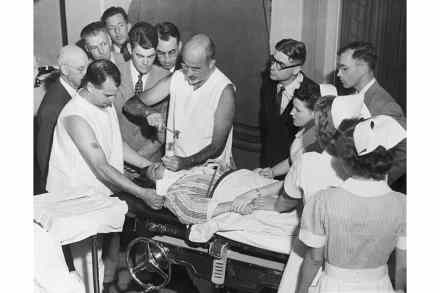
There is much more desperation in this searching and enlightening history than there are remedies. Andrew Scull is a distinguished sociologist and scholar of psychiatry. He comes across as wise, sanguine and unsurprised by his findings in this survey of how American – for which also read British – psychiatry has understood and treated the insane, distressed and traumatised from 1820 to the present. His book, however, will leave readers who are unfamiliar with the story horrified and aghast. Since my own breakdown and sectioning in early 2019 I have been working with sufferers, social workers and psychiatrists on improving the understanding and treatment of mental distress.

Another fallen idol: the myth of Ferdinand Magellan debunked

From our UK edition

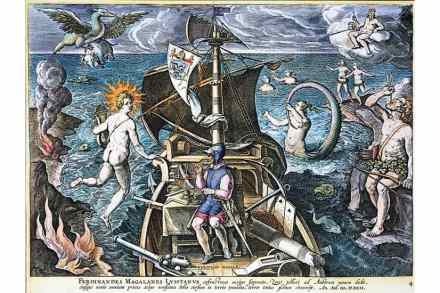
Who would you choose to judge you long after your death? How about a professional historian? How about Felipe Fernández-Armesto? Much lauded and read, this professor of history at Notre Dame, Indiana is the author of many books including short histories of humankind and the world and longer ones of exploration, Hispanic America and the year 1492. As you begin Straits, his account of the life and voyages of Fernando de Magallanes, known in English as Ferdinand Magellan, the explorer credited with the first European navigation from the Atlantic to the Pacific via the straits at the tip of South America in 1520, you may quail at the thought of his searing judgments. He can be waspish, uncompromising and cutting.

Birds have helped mankind throughout history — but we have repaid them cruelly

From our UK edition

Unusually for a book about nature, the species in question, in this lucid story of the relationship between birds and humans, is ours. Why catch six million ibises, attractive water birds with curved beaks, plunge them into vats of liquid resin, wrap them in bandages and bury them in vast cemeteries in Middle Egypt in 650 BC? When There Were Birds explains that these ibises were offerings to Thoth, god of knowledge and wisdom. Throughout this story, faith, cash and custom drive humans to behave in astonishing ways towards birds. From the early 15th century we were moving canaries to the Swiss Alps and southern Germany, where breeders might raise 50,000 birds a year, which were then transported and sold across the world. In 1871 America alone bought 48,000 as pets.

The strange solidarity of hill walking

From our UK edition

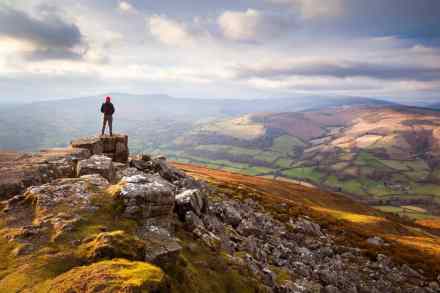
On a gauzy wintery day I am half way up Scafell Pike in the Lake District in an effort to climb the tallest peaks of England, Wales, Northern Ireland and Scotland and discover what so many seek up there. I am not alone. Over a million people climbed one of the peaks this year, with 700,000 making for Snowdon, where summer saw 45-minute queues at the top. Scafell drew 250,000, Ben Nevis more than 160,000 and Slieve Donard in County Down is only relatively quiet, with an annual 100,000 people walking its granite trails. Each mountain now requires constant tending by path builders, litter pickers, repair teams and rescuers who fret they are being overrun. No wonder. In these pandemic years we have come to worship a Trinity of nature, exercise and domestic travel. The result?

A whale of a time with Albrecht Dürer

From our UK edition

Great books make genres jump. It happened with W.G. Sebald’s The Rings of Saturn, which looked like a travelogue, claimed to be a novel and felt like neither. Albert and the Whale by Philip Hoare, which recalls and converses with Sebald, is such a work. An antic and original creation, it is not exactly a biography of the revolutionary Renaissance printmaker, painter and theorist of geometry and perspective. For the fuller story of Albrecht Dürer, turn to Erwin Panofsky’s mighty monograph, as Hoare does frequently. Instead, Hoare has made a book as much for Dürer as it is about him. Dürer’s life and art are thrillingly encountered.

Horatio Clare: Heavy Light

From our UK edition

36 min listen

My guest in this week's Book Club podcast is Horatio Clare - whose superb latest book is about going mad. Heavy Light: A Journey Through Madness, Mania and Healing, tells the story of Horatio's recent breakdown and forcible hospitalisation - what he experienced, how he recovered, how it pushed him to investigate the unquestioned assumptions about 'chemical imbalances' causing mental illness, and the questionable and effectively random ways in which drugs are prescribed.

The problem with pills: The Octopus Man, by Jasper Gibson, reviewed

From our UK edition

Having a breakdown? Try this pill, or that — or these? Built on the 1950s myth of a chemical imbalance in the brain, long since debunked, modern psychiatry still pours pills on trauma. While their general mechanisms are hypothesised, the specific consequences of different psychotropic drugs for individual brains remain haphazard. ‘We prescribe by side-effect, by trial and error,’ one consultant psychiatrist told me. ‘But I’ve seen all these drugs working,’.The problem is that pills alleviate symptoms of mental illness while doing nothing for causes. Psychiatry’s dilemma mirrors that of Tom Tuplow, the hero of Jasper Gibson’s magnificent novel, a delightfully intelligent man from a broken home who took too much acid etc.

Heated debate over Franklin’s doomed Arctic expedition

From our UK edition

How refreshing in a time of general sensitivity to find a book intended to infuriate and debunk. Welcome to the desolate Canadian Arctic, to the mystery of the Franklin expedition, which disappeared in 1845 seeking the North-West Passage, and to a world of disagreement about what happened to it. Ernest Coleman’s story of his search for clues to Franklin’s fate is delightfully prejudiced and pugnacious. The purpose of No Earthly Pole is, he writes, ‘to speak out in opposition to the clustering together of some academics and experts who have closed their minds’. Middle-aged lieutenant goes to the ends of the earth to defend the reputation of Queen Victoria’s Navy would make a lovely film.

Man’s first instinct has always been to return to the sea

From our UK edition

Travelling the Indus valley late in the third millennium BC you would have been awed by two Bronze Age megacities, 320 miles apart, ‘massive and tightly planned, very similar in layout’, their bricks and measures standardised, evidence of rigid authority. Their trade goods included Afghan lapis lazuli, Omani vases, legal seals from Sumeria, carnelian beads, packed for dispatch to Sumer — and that is almost all that is left of Harappa and Mohenjo-daro, and more than we know of them. Their names are modern labels. This section of The Boundless Sea, David Abulafia’s fascinating ‘human history of the oceans’, is one of many moments of thrilling implication. (Do not assume anyone will know the name of London in 5,000 years’ time.

The ice was all around

From our UK edition

‘We had seen God in his splendours, heard the text that nature renders. We had reached the naked soul of man.’ Ernest Shackleton’s lines unscroll through both these complementary books. David Grann’s The White Darkness is all-man, the gripping story of mighty but quite straightforward struggles. The Library of Ice, brimming with men, women, ships, science, complexity, brevity and beauty, has a precision and quiet brilliance which suggest the feminine. In fact, these qualities belong simply to the author, Nancy Campbell. Readers will finish her quasi-travel book, a search for an ‘understanding’ of ice, wary of any idleness of expression, any generality in thought. Campbell seems incapable of either.

Pirates on parade

From our UK edition

Avast there, scurvy dogs! For a nation founded on piracy (the privateer Sir Francis Drake swelled the exchequer by raiding the Spanish, who were in no doubt that he was a pirate), it is appropriate that Britain should give the international archetype of the pirate his language. The language of the Victoria & Albert’s exhibition A Pirate’s Life for Me at the Museum of Childhood in Bethnal Green is a banquet of humour and doggerel. Whether you arrive a slipperslopper sea-cook, reeking of Havanas, or pushing treasures in a pram, you will stare at walls, speak in tongues and smile. These master (and mistress) mariners of yore have their grappling hooks deep in the psyche of maritime nations. In their infancies, modern states needed pirates.

In the eye of the storm

From our UK edition

‘We are globalisation,’ a senior executive at the shipping company Maersk told me. ‘We enable it, and we have questions about it too, but we ask them in isolation.’ He then granted me leave to travel on Maersk vessels wheresoever I wished in order to write a book about shipping and seafarers, promising that Maersk’s lawyers would not vet the manuscript before publication. Maersk have little to fear from writers. The giant corporation is effectively public-relations proof (if they stopped their ships’ engines today there would be a worldwide supply crisis the day after tomorrow). Moreover, Maersk is among the industry’s leaders, confident that whatever I found would be better, or no worse, than average standards at sea.