Horatio Clare

Poison in Paradise

From our UK edition

Eton turns out prime ministers of various stripes and patches, but it also forges fine explorers. It seems to prepare its alumni perfectly for flying snakes, scorpions so large you can put leads on them and leeches in waving battalions; titanic drinking and dancing ceremonies (our explorer, Robin Hanbury-Tenison, suffers repeated blistering on the dance floor); the friendship of head-hunters; and for the exacting business of leading world-protecting, people-nurturing expeditions into the planet’s wild and vulnerable regions. In the school’s natural history museum, pupils can now see a parang, presented to Hanbury-Tenison by his tribal friends, its handle shaped like a hornbill, its razor-sharp edge responsible for hacking off more than 100 heads.

In the footsteps of Bach

From our UK edition

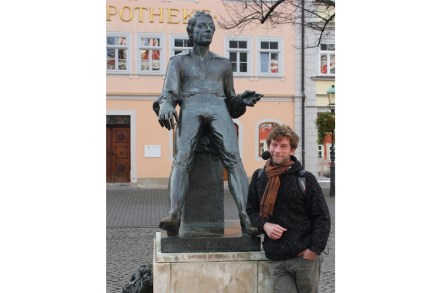
It was in his organ loft at Arnstadt that I began my acquaintance with Johann Sebastian Bach — with JSB, with the young man, with the writer, the fighter, the lover. After the great walk of his in 1705 that we would follow, and after his return trek in February 1706, he would be caught at it in that organ loft with a ‘mysterious’ woman, who may or may not have been she who became his wife. It is the perfect place for a stolen moment. The church is now white and golden, and wooden, ugly on the outside and elegant as a cream bun on the in. To reach the loft you leave the producer talking to the stern and understandably suspicious woman in moral charge of the church — who are these English people?

The worst things happen at sea

From our UK edition

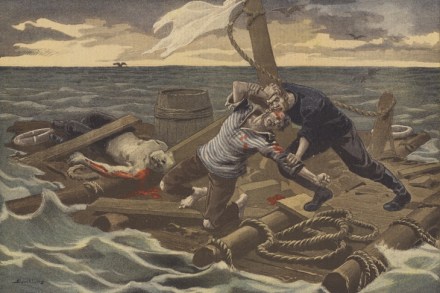
This horrifying and engrossing book could scarcely be improved upon. In this age of HRHs Harry, William and Kate-led openness about our mental health, I declare an interest: diagnosed as cyclothymic, and having known more than two attacks of depression and hypomania in the past 30 years, I would have been disqualified from passage as an emigrant to New York by the 1907 US Immigration Act, which prohibited ‘All idiots, imbeciles, feeble-minded persons, epileptics, insane persons and persons who have been insane within five years previous....

Formidable black talons…

From our UK edition

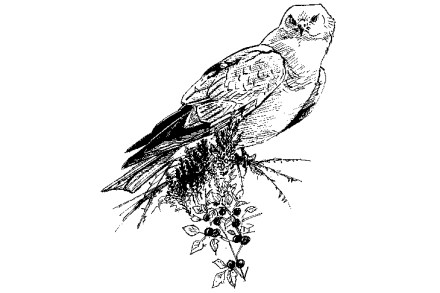
I often feel slightly sorry for the British nature writer. It’s not an attractive emotion — it sounds patronising — but reading David Cobham’s Bowland Beth: The Story of an English Hen Harrier I felt it again strongly. Your nature writer now has a hungry market, keen and generous publishers and a shelf in the bookshop. But anyone younger than my parents — unless they are very fortunate — has seen only a fraction of the natural richness our islands once held. And despite the sales and acclaim and translation rights, none of them — of us — has even pushed the boundaries laid down by our predecessors in the last century, when British nature really was something to write home about.

Furry fury

From our UK edition

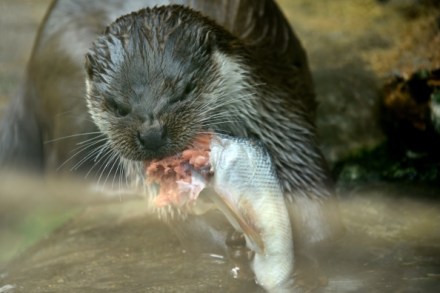
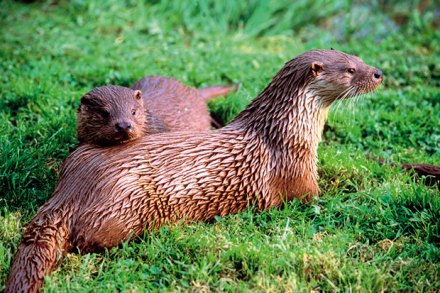
Thanks to Henry Williamson and Gavin Maxwell I have spent hours in the company of otters, though I have only seen two. The first was harried, fleeing towards us along a shoreline, apparently pursued by spirits. From The Otters’ Tale I now know that was a period, the late 1980s, when the otter was heading for British extinction. It was a young adult, menaced by hunger and the weather. The second otter, a decade ago, was one of a resurgent population, erupting out of the river Teifi, in Wales. A whiskered face popped out of the torrent and stared. ‘Otter!’ we shouted, delighted. The animal’s expression suggested ‘Humans!’ — but that is the danger of otters.

Misadventures in Libya

From our UK edition

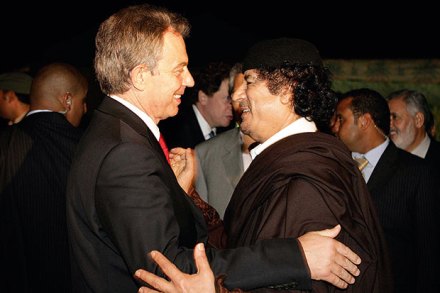
If photographs of ‘the deal in the desert’ made you queasy — you remember, Tony Blair and Muammar Gaddafi shaking hands for the cameras in 2004 — imagine how you would have felt if you were in exile in London and your father under torture in Gaddafi’s cells at the time. Now Blair is not looking forward to the Chilcot report, Gaddafi is dead and Hisham Matar, who was the helpless onlooker, has published The Return, a memoir about his father and about Libya which will attract many readers and prizes. It may also help focus our ideas about whom we protect, whom we betray, and how we deal with the devil. Gaddafi’s death might not have been a source of sorrow to Blair (and co).

Not so bird-brained after all

From our UK edition

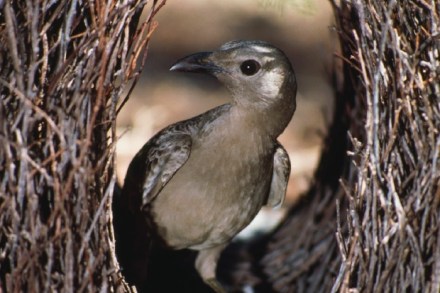
What is it about birds? They are the wild creatures we see most often, their doings and calls a daily reassurance that humans are not isolated in our sentience. They descend from the first reptiles, while we come from the first mammals. Across a gulf of evolution we contemplate a parallel life which has evolved exhilaratingly different answers to the same questions that existence asks of us. Cross-referencing allows us to address the fundamentals. Darwin and his finches revealed how we came to be. What else might birds teach us? Addressing questions because we can conceive them is the spirit of The Most Perfect Thing: Inside (and Outside) a Bird’s Egg by Tim Birkhead, author of the acclaimed Bird Sense.

Burrowed wisdom

From our UK edition

Being a Beast is an impassioned and proselytising work of philosophy based on a spectacular approach to nature writing. That genre has given us riches on the language of landscape, the redemptive power of goshawks and the lives of fields, rooks, butterflies et al. We are wealthier for the movement, but in none of many beautiful books will you find a passage like this, from a writer in a wood at dusk thinking about badgers. It would be pointless to reel off the adjectives and metaphors I used to describe to myself the scent of shepherd’s purse on the pillow or dog’s mercury in the wood. That might say something about me, but nothing about badgers or woods. Do badgers use adjectives? I expect they describe the world to themselves, and so they must.

Drying out in the Orkneys

From our UK edition

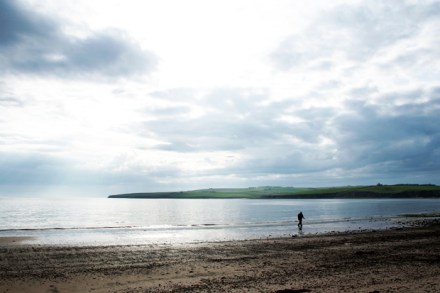
‘If I were to go mad,’ Amy Liptrot writes in her memoir of alcoholism and the Orkneys, ‘It would come as no surprise at all.’ One surprise of this book is its sanity, which is remarkable, given Liptrot’s beginnings. We open, unforgettably, with her parents passing each other on an island runway. Her mother is being flown home from hospital, holding the newborn Amy; her father, in the grip of a manic episode and a strait jacket, is heading the other way. Liptrot recalls another fit which drove him to smash all the windows of the family farm and hide with her, aged 11, from the police and doctors. ‘As his sedatives kicked in I crouched with my father in a corner of my bedroom, sharing a banana. “You are my girl,” he said.