Hermione Eyre

How Winston Churchill painted himself out of the darkness

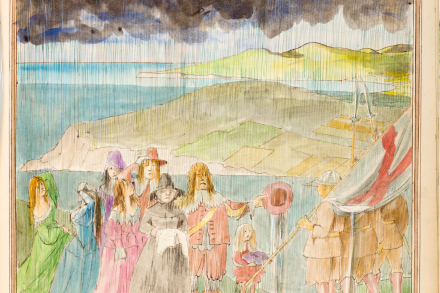
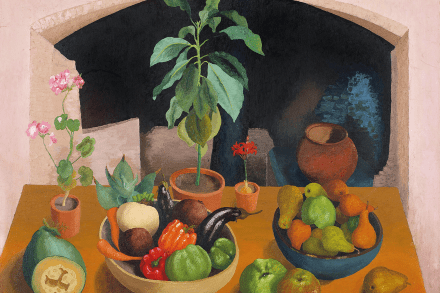
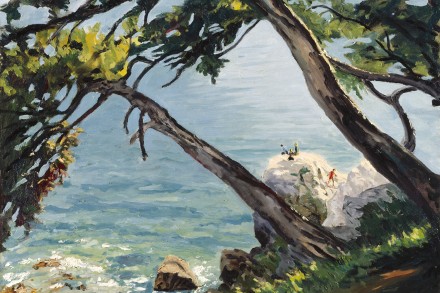
At Chartwell, Sir Winston Churchill’s home of 42 years, now owned by the National Trust, lies his painting studio. Reached by a path through the green-gold gardens, it is a standalone building with a little doorway and a soaring ceiling, clearly a place of refuge, and recreation, but also of serious commitment. The walls display a hundred or so paintings, lit by a big window that gives on to the garden and the purple horizon of the Weald of Kent; his armchair is set at the easel, near his twisted paint-tubes, housed in a former cigar humidor. His bespoke painting overcoat is flung over the armchair, his drink of ‘mouthwash’ (a splash of whisky and a lot of soda) set ready. It was here that Xavier Bray, director of the Wallace Collection, had his revelation.

Tracey Emin at her most operatic

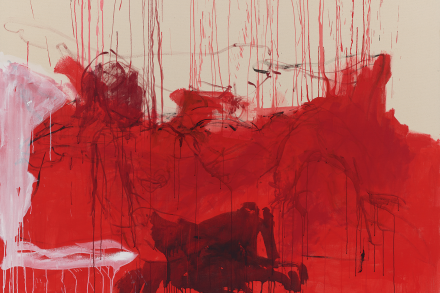
I feared this summing-up of Tracey Emin’s career might be self-congratulatory – biennale here, damehood there. But it’s Emin at her most operatic, facing mortality after surviving extensive surgery for bladder cancer in 2021. Blood and suffering are its subjects: the broken body, and the ascension of the spirit. The Young British Artists are getting on for 60, and Emin embraces it. Arranged in the centre of the exhibition is a ‘corridor to the afterlife’, inspired by an Egyptian tomb, dark and narrow. Along one side are sexy Polaroids she took of herself 26 years ago, along the other, gruesome hospital selfies. You might not want to look too closely at the latter, but the dialogue between the two is strong. ‘You thought you had problems?

How sure are we that all the Michaelina Wautiers at the RA are by her?

Roll up, there’s a new old master in town. Or a new old mistress, if you prefer. Michaelina Wautier (1614-89) is revealed here as a painter who excelled within the genres of her time: flower painting, portraiture, emblematic tronies, and, if the scholars are right, classical epic, too. The new Royal Academy show cracks open the received idea of what a Flemish woman operating in the decades immediately after Rubens and Van Dyck could achieve. Her c.1650 self-portrait at the easel is a confident statement. She is enthroned under a mantel of lusciously painted black velvet, which looks restrictive, but emerging from it comes her agile, three-dimensional painting hand. Her beauty is incidental, an aspect of her concentration and skill.

Tim Shipman, Ben Clerkin, Maxwell Marlow & Hermione Eyre

24 min listen

On this week’s Spectator Out Loud: looking back to 1973, Tim Shipman wonders how bad the energy crisis could get; Ben Clerkin interviews Steve Hilton, the former Cameron aide running to be California’s next governor; Maxwell Marlow explains how to solve the student debt crisis; and finally, ‘disorientatingly enjoyable’ is the verdict of Hermione Eyre as she reviews David Hockney at the Serpentine. Produced and presented by Patrick Gibbons.

Tim Shipman, Ben Clerkin, Maxwell Marlow & Hermione Eyre

This Hockney show is disorientatingly enjoyable

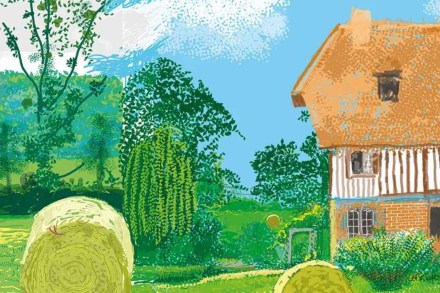
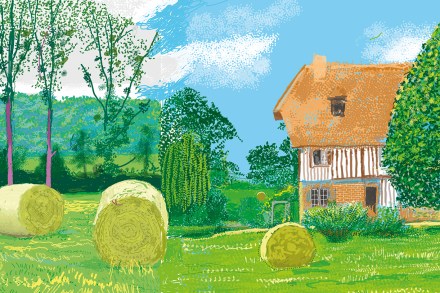
When so much contemporary art is riven with obscurity and angst, it is disorientating, at first, to encounter something as straightforwardly enjoyable as Hockney’s latest exhibition. Aged 88, the artist went out into his garden in Normandy with his iPad to make a visual diary of the year 2020. A hundred or so of the iPad sketches he made have been put together here, blended into a frieze, a walk-through panorama of the seasons rendered with Vivaldi-like virtuosity. As we move along the curve of this frieze, we see nature through Hockney’s bright yellow spectacles As we move along the curve of this 90-metre frieze, we see nature through Hockney’s bright yellow spectacles. He distils the garden to its dramatic essences.

Marvellous but repetitious: Gwen John – Strange Beauties reviewed

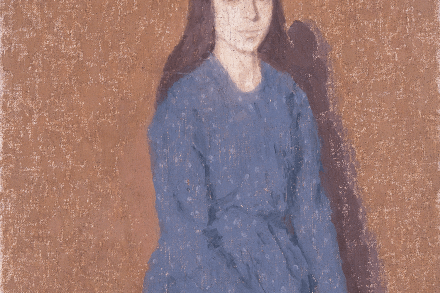
A pilgrimage to Cardiff Central, sorry, Caerdydd Canolog (according to the signage in the station, which also had my return train’s destination ‘Lundain Padd’ton’) to see the new Gwen John show. She is being lauded as Wales’s greatest artist, but she left Tenby at 18 in 1895, and never went back. After studying at the Slade she moved to Paris, fell in love with Rodin, and adopted the Catholic faith.

How fantastic to see Hogarth’s largest paintings in their original glory

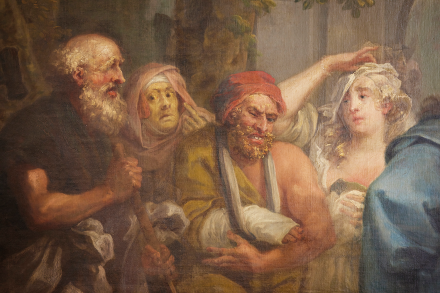
The long overlooked staircase by Hogarth at St Bartholomew’s Hospital has been cleaned and restored in a £9.5 million scheme. It is now open to the public, the management says, for the first time since the 1730s, although when I lived nearby in the 2000s, I used to slip in to look at it sometimes. No one seemed to mind. Murals are of course the original site-specific artworks, and you have to enter a working hospital to see this one. Literally: turn right for the clap clinic, turn left for the Hogarth mural. Turn right for the clap clinic, turn left for the Hogarth mural You might pass a small group of patients smoking outside in the James Gibbs quadrangle; I remember seeing people who were visibly sick, in wheelchairs or on ventilators, puffing away.

The thrill of Stanley Spencer

‘Places in Cookham seem to me possessed by a sacred presence of which the inhabitants are unaware,’ wrote Stanley Spencer. Mystically devoted to the Berkshire village near the Thames where he grew up, Spencer was synonymous with Cookham as early as 1912, when he was at the Slade; ‘Cookham’ was his nickname. His greatest work is probably ‘The Resurrection, Cookham’ (1924-7), and he lived out his life there. He became known for pushing an old pram full of paints around town. The former Wesleyan Chapel, where he worshipped as a boy, is now the Stanley Spencer Gallery. So it was intriguing to come across this new show connecting him with Suffolk.

This exhibition made my companion gasp

Numerous research academics have contributed to this highly cogent show celebrating the craftspeople of Ancient Egypt. My pre-teen companion, though a big fan of Egypt, was still slightly hesitant about whether this would be the most interesting angle. It began with a 4,000-year-old stele, or tombstone, on loan from the Louvre, praising the sculptural and painterly skills of an artisan called Irtysen, about whom, of course, nothing more is known. The perennial problem. General information, however, came thick and fast. We learned that a cooperative of skilled workers was a hemut, and a singular skilled worker a hemu.

The Two Roberts drank, danced, fought – but how good was their art?

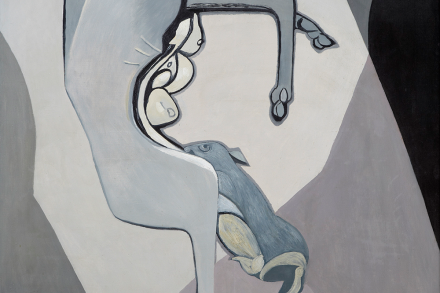
The Two Roberts, Robert MacBryde (1913-66) and Robert Colquhoun (1914-62), are figures of a lost British bohemia. Both born in Ayrshire, they met on their first day at the Glasgow School of Art, becoming lifelong partners and painters. Well-connected in louche literary London, their conversational barbs were recorded by Julian Maclaren-Ross, their jig-dancing antics noted by Joan Wyndham, their drunken fights observed by Anthony Cronin – so that one sometimes forgets what sort of art they made. This show, staged in a former municipal building in Lewes, is a reminder. The work is haunted, unbeautiful British neo-romanticism, second cousin to Piper and Sutherland. They established this angsty, angular modernist style in the 1940s.

Magnificent: V&A’s Marie Antoinette Style reviewed

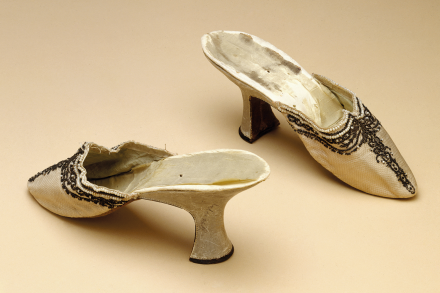
This exhibition will be busy. You’ll shuffle behind fellow pilgrims. But it’ll be worthwhile. It’s a tour de force that tells the story of Marie Antoinette’s 17 years on the throne with detail, focus and flair. There are 34 items here that she owned personally – opulent, carefree objects that resonate with impending disaster. These precious items need protecting from light, and in the first room curator Sarah Grant cleverly runs with this, evoking the candlelit ambience of a Versailles ball by hanging silver baubles from the ceiling and covering the walls with smoked mirrors. Here we have a taste of Marie Antoinette’s wardrobe – its annual budget peaking at £1.

Sondheim understood Seurat better than the National Gallery

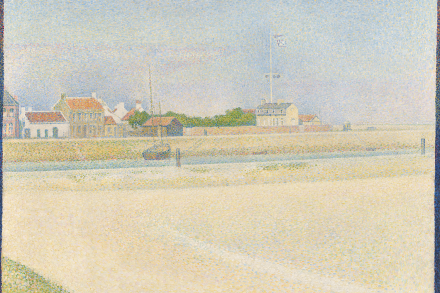
In Sunday in the Park with George, Stephen Sondheim catches something of what makes Georges Seurat so brilliant – not just his technical flair, but his engagement with ordinary life. Sondheim has Seurat sing, or rather woof, a little duet between two dogs meeting on the island of La Grande Jatte; later, Sondheim gives Seurat a pointillist melody as he works, crotchet-dabs of blue, blue, blue, red, red… Seurat’s muse, meanwhile, is called Dot. Seeing the National Gallery’s somewhat overloaded presentation made me long for the light touch of Sondheim.

Wittily wild visions: Abstract Erotic, at the Courtauld, reviewed

If you came to this show accidentally, or as a layperson, it could confirm any prejudices you might have about avant-garde sculpture. Pretentious, ugly and resorting to kink. Those pendulous string bags, that enormous turd – gimme a break. Except that would be a mistake. Because the work here is the real thing: the 1960s originals that spawned a million imitations and parodies. The exhibition is perhaps a little cool about selling itself, so allow me. This is a snapshot of the work of three artists around the time they all took part in a 1966 New York show called Eccentric Abstraction. Two of the artists, Louise Bourgeois and Eva Hesse, were nascent superstars.

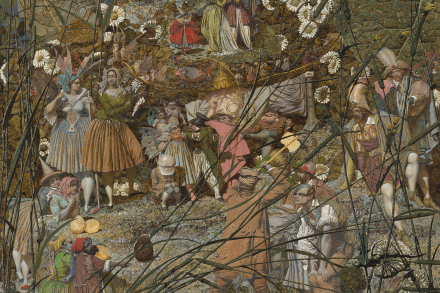
Grayson Perry has pulled off another coup at the Wallace Collection

This show was largely panned in the papers when it opened in April, with critics calling it ‘awkward and snarky’, applying that sturdy English put-down ‘arch’, and generally carping at ‘rich insider’ Sir Grayson Perry for posing as an outsider artist. Word-of-mouth reviews were completely different, however, almost as if gallery-goers, free from the necessity of taking an art-historical position, had just really enjoyed the whole bonkers experience. To get to the exhibition, which is down in the former cellars of Hertford House, you first walk through the Wallace Collection, past its gleaming ormolu and onyx treasures.

Peter Frankopan, Tim Shipman, Francis Pike, Hermione Eyre and George Young

42 min listen

On this week’s Spectator Out Loud: Peter Frankopan argues that Israel’s attack on Iran has been planned for years (2:00); just how bad are things for Kemi Badenoch, asks Tim Shipman (13:34); Francis Pike says there are plenty of reasons to believe in ghosts (21:49); Hermione Eyre, wife of Alex Burghart MP, reviews Sarah Vine’s book How Not To Be a Political Wife: A Memoir, which deals with Vine’s marriage to ex-husband Michael Gove (28:46); and, George Young reports on the French sculptors building the new Statue of Liberty (34:45). Produced and presented by Patrick Gibbons.

War and peace, why restaurants are going halal & the great brown furniture transfer

45 min listen

This week: war and peace Despite initial concerns, the ‘Complete and Total CEASEFIRE’ – according to Donald Trump – appears to be holding. Tom Gross writes this week’s cover piece and argues that a weakened Iran offers hope for the whole Middle East. But how? He joined the podcast to discuss further, alongside Gregg Carlstrom, the Economist’s Middle East correspondent based in Dubai. (01:51) Next: why are so many restaurants offering halal meat? Angus Colwell writes about the growing popularity of halal meat in British restaurants. This isn’t confined to certain food groups or particular areas – halal is now being offered across restaurants serving all sorts of cuisine, from Chinese to Mexican. But why is it so popular?

Being stalked by a murderer was just one of life’s problems – Sarah Vine

Private Eye asked last week: Which of Michael Gove’s luckless staff at The Spectator will be assigned to review this grisly account of their editor’s marital woes? Reader, it’s me! I’m happy to do this, though, because I have an interest in how to be a political wife (I am married to Alex Burghart MP), and perhaps have something to learn here, though I’m struggling to understand, eek, ‘lesson seven’: Realise... that when you step over the salt circle into the five-pointed star coven of politics, you have ceased to become a person. You are now a c**t. There’s a feeling that the author still has a touch of PTSD. Readers with expectations of schadenfreude will not be disappointed.   Sarah Vine shoots thunderbolts.

Why you didn’t want to get on the wrong side of Cecil Beaton

‘Remember, Roy, white flowers are the only chic ones.’ So Cecil Beaton remarked to Roy Strong, possibly as a mild put-down to the young curator. But it was a curious put-down to make because Beaton broke his own rule happily, buying mountainous armfuls of speckled yellow, pink and scarlet carnations at Covent Garden and longing to fill his borders with Korean chrysanthemums and purple salvias. This small exhibition at the Garden Museum enjoys the sweet-pea surface of Beaton’s creations, while giving a flash of the glinting secateur that also made up such an important part of his personality. Beaton’s ability as an image-maker was astounding. Those famous photos of his Cambridge days with the Bright Young Things are still outrageous, a mad foray into camp pastoral.

Fascinating royal clutter: The Edwardians, at The King’s Gallery, reviewed

The Royal Collection Trust has had a rummage in the attic and produced a fascinating show. Displayed in the palatial gallery adjacent to Buckingham Palace, and described on headsets in the reassuring tones of Hugh Bonneville, are public tokens and personal treasures of two generations: Edward VII and Queen Alexandra, and George V and Queen Mary. Frocks, clocks and diplomatic gifts; purchases and mementoes that give the illusion that the royal family might be, after all, not so unlike us. There’s an unusual tea set, with odd, red photos: as princess, Alexandra took family snaps and had them printed on to these porcelain teacups in 1892, more than 100 years before Moonpig.

Poise and gentleness: Hiroshige, at the British Museum, reviewed

Why is Hiroshige’s work so delightful? While his close predecessor Hokusai has more drama in his draughtsmanship, Hiroshige’s pastoral visions conjure a sense of timeless continuity that appealed to his contemporaries as much as to present-day teens who love the merch. His is a world in which everything has happened before, and will happen again. People race for shelter from a sudden shower of rain; a finely dressed lady adjusts her slipping belt. Human life seems small and predictable against his vast mountains and limpid lakes.