Hermione Eyre

Medieval girl power

Women who can — however tenuously — be described as ‘rebel girls’ are big in publishing now. Goodnight Stories for Rebel Girls sold 3.5 million copies in hardback, reflecting a huge cultural push to discover and venerate women in history who kicked over the traces. To publishers, real-life rebel princesses have cool hard-cash value. In this context we come to this book, a scholarly work effortfully seeking out the ‘you-go-girl’ moments of the notoriously woke 13th century. Kelcey Wilson-Lee, who has a doctorate in medieval history from Royal Holloway and works in the development office at Cambridge University overseeing regional philanthropy, has an underlying agenda.

All heart, trust and gut feeling

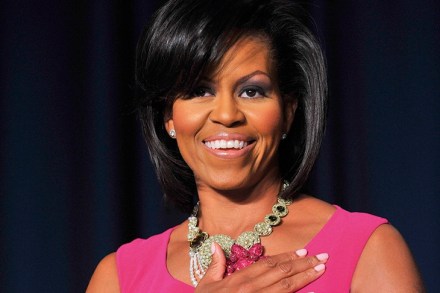
‘To me, he was sort of like a unicorn,’ writes Mrs Obama, looking back on her courtship days with Barack. He was affectionate, loving, secure and brainy. Very brainy. ‘He consumed volumes of political philosophy as if it were beach reading.’ He was laid back but his sense of purpose was strong. ‘Barack was serious without being self-serious. He was breezy in his manner but powerful in his mind. It was a strange, stirring combination.’ In a languid late-night moment, she asks a penny for his thoughts. ‘Oh, I was just thinking about income inequality.’ This book takes you right back to those days when we all fell in love with Obama.

Blood and bile

Are books becoming an adjunct to TV? Both of these are good reads, but both feel influenced by — and yearning for — television. Medieval Bodies could be the script for a landmark BBC Four series, while the author of How to Behave Badly in Renaissance Britain came to prominence as farthingale consultant on programmes such as Tudor Monastery Farm. She can tell you everything you never wanted to know about codpieces. Medieval Bodies skips between English, Welsh, Hebraic and Islamic medicine with ease, touching on caliphs and kings, Mamluks and djinns. One gem here is the inventor Ismail al-Jazari, the Heath Robinson of 13th-century Baghdad.

Golden lads galore

Stephen Fry has had a go at the Greek myths, in a competitively priced hardback, just in time for Christmas. And he has done it jolly well, actually, so lower that collective eyebrow, please, all of you purists who think entertainers ought to stay away from the classics, and remember that as one of our top TV deities, Fry can do what he likes. Born wearing tweed, he was dipped by the heel in the River of Wisdom (though some say it was only the Trickle of Cleverness) and ascended via the Cambridge Footlights into the Equity-approved pantheon. He is loved, as the Greek gods were loved, not only for his talents, but for his failings and vulnerabilities too. He could get away with anything, except perhaps denim. In Mythos, he is clearly enjoying himself.

Homage to Mad Madge

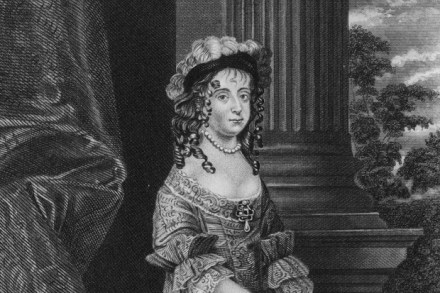
There has never previously, I believe, been a novel about Margaret Cavendish, Duchess of Newcastle, one of the 17th century’s foremost female authors, philosophers and eccentrics. But there have been several near misses. Virginia Woolf’s Orlando tips its cap to her: Orlando, just like Cavendish, is a feverishly imaginative, androgynous aristocrat afflicted by the ‘honourable disease’ of writing, filling folios with the speed of an addict. Writers from Pepys to Lamb have tended her flame, as have two recent biographies. Siri Hustvedt paid extensive homage to Cavendish in her 2014 novel set in New York’s art scene, The Blazing World — a title, devotees of the Duchess will notice, appropriated from Cavendish’s fantasy novella of 1666.

A tale of two prisons

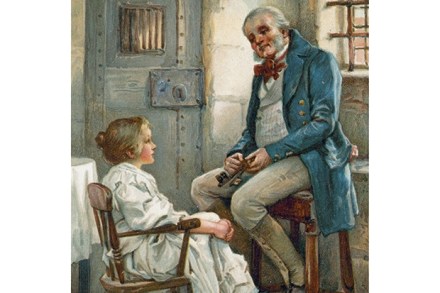
The Marshalsea was the best and worst place for a debtor to be imprisoned. From 1438 until its closure in 1842, there was dishonour in its name, contagion in its air and cruelty in its very premise: once detained, debtors could take no action to improve their lot. Instead, imprisonment was meant to serve to ‘rally friends and family’. Where none were forthcoming, many inmates died of starvation. The ancient barbarity of the system was redressed in 1729 when an inquiry revealed that medieval instruments of restraint were still in use — as well as a 3ft-long whip that terrified the debtors, fashioned out of ‘a bull’s pizzle, dried as hard as teak’. Even after the prison’s reform it was a death sentence to be on the ‘common side’.

An incurable Romantic

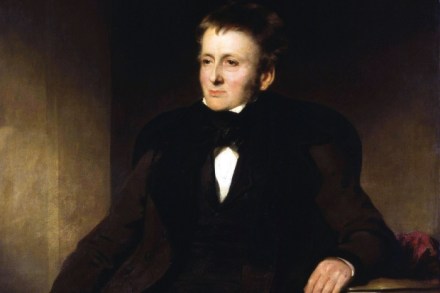
This biography of the craven Romantic and self-confessed ‘Pope of Opium’ concludes with the ominous words: ‘We are all De Quinceyan now.’ His life was shambolic but his legacy is strong. Many spores from his fevered mind have lodged in modern popular culture: his narcotic excursions inspired Baudelaire and Burroughs, his sensitivity to place influenced the psychogeographers Guy Debord and Iain Sinclair, his laconic, jaunty essay ‘On Murder Considered as One of the Fine Arts’ was deemed ‘delightful’ by Alfred Hitchcock, and his Escher-like imaginative double consciousness prompted Jorge Luis Borges to ask: ‘I wonder if I would have existed without De Quincey?’ And yet behold the man himself.

Would even Blair have put Felix Dennis in the Lords?

This is not only an authorised but a commissioned biography. Felix Dennis, the tiny, depraved, manipulative media mogul, was hardly going to let a free hand choose the adjectives that defined him. The author recalls his initial fright at being contacted: “Of course I’d be delighted to speak to Felix,” I said, my voice an octave higher than normal.

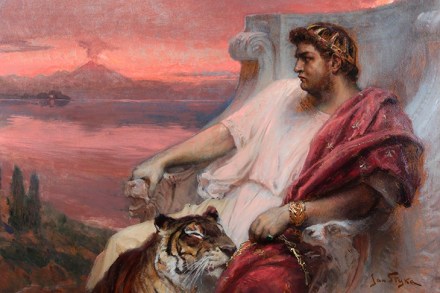
Men behaving badly: Nero, Claudius and even Seneca could be intensely cruel to women — and fish

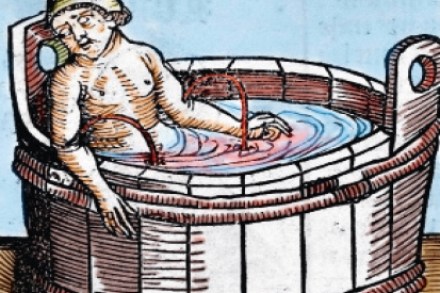
They lived in barrels, they camped on top of columns, or in caves: the lives of the sages are often inconceivable to the modern reader. Seneca, however, that rich, compromised sophisticate of the first century AD, is instantly kin, his voice weary with consumerism, his problems definitively first-world. ‘Being poor is not having too little,’ he observed. ‘It is wanting more.’ Those in need might disagree. But from where Seneca was sitting, in his personal banqueting suite with 500 ivory-legged tables (all matching, no less — matching furniture in Rome was considered staggeringly smart, due to the lack of means of mechanical reproduction) he was able to cultivate the elegant indifference to luxury that speaks to our age so vividly.

All radio drama should be as good as this Conrad adaptation

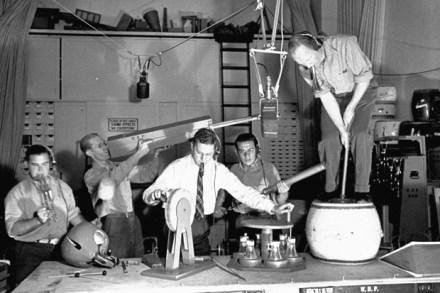
The aching hum of crickets. The susurrus of reeds. The lapping of waves. The unmistakable noise of a sound technician ripping a duster in two as the heroine’s dress was torn, thuggishly, by a character in the heat of passion... The sound effects for Harold Pinter’s adaptation of Joseph Conrad’s Victory (which started life as a screenplay and has now been dramatised by Radio Four, Saturday)transported us to a private island in the Java sea.

Politics as an aphrodisiac: the secret of the Disraelis’ happy marriage

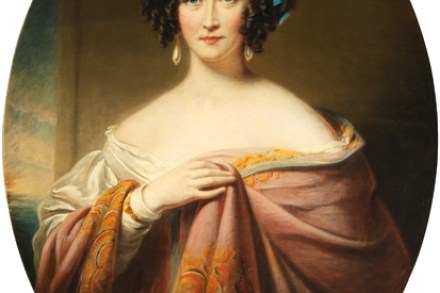
The long, happy and unlikely marriage of the great Conservative leader Disraeli and his wife Mary Anne, 12 years his senior, is analysed thoughtfully in Daisy Hay’s new book. Reading between the lines, it is possible to see the Disraelis as a Victorian power couple not unlike the Underwoods in Netflix’s remade House of Cards — he, high on his own oratory; she, a valuable campaign asset; together, a marriage that is child-free and (with his sexuality in question) built on blackberries at bedtime. Yet — here’s the twist — they truly loved one another. The Underwoods are bound together in sinister ambition, but the Disraelis make an inspiring emblem of marriage as a virtuous circle.

Mike Leigh interview: ‘A guy in the Guardian wants to sue me for defamation of Ruskin!’

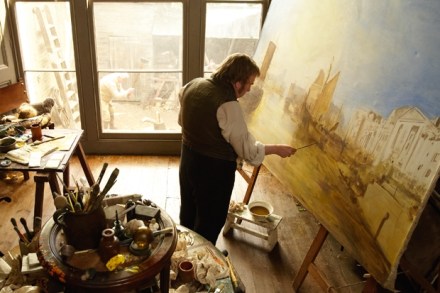
[audioplayer src="http://traffic.libsyn.com/apollomagazine/Apollo_final.mp3" title="Tom Marks, editor of Apollo magazine, talks to Mike Leigh"] Listen [/audioplayer]Mike Leigh is in a cheerfully bullish mood when I meet him at the Soho Hotel. ‘Have you read today’s Guardian?’ Dammit — I should have seen that coming. ‘A guy in G2 would like to sue me for defamation of Ruskin!’ He seems almost pleased. His characterisation of the great critic as silly and effete in his new film, Mr Turner, does seem a little ungenerous. Ruskin did more for Turner than anyone. ‘That’s true,’ says Leigh. ‘Working with the brilliant young actor Joshua McGuire, I started to think how Ruskin was incredibly spoiled and cosseted by his parents… He was a prig!