Henry Jeffreys

Why the Reggie Perrin novel deserves to be considered a classic in its own right

From our UK edition

It was eerie the first time I watched The Fall and Rise of Reginald Perrin because it all felt so familiar. Suddenly my parents’ baffling banter made sense. When I thought they were speaking gibberish they were in fact quoting Perrin. My mother would say ‘great’ and my father would say ‘super’. My father would say things like ‘I didn’t get where I am today’ and my mother would say ‘I’m not a committee person.’ If lunch was going to be late my father would say ‘bit of a cock-up on the catering front.’ It’s difficult to overstate how thoroughly Perrin has seeped into popular culture and language.

Oporto

From our UK edition

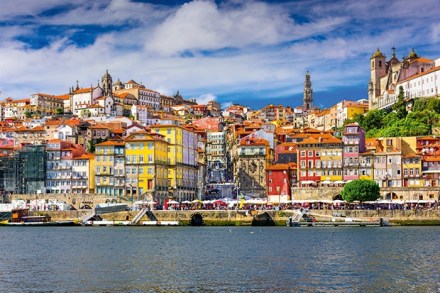
‘When he’s away, the thing he misses about Porto is the tripe.’ I was talking to Eduarda Sandeman, wife of George Sandeman, chairman of the eponymous port firm. Despite his illustrious name, George Sandeman isn’t from Oporto (as the British call it). His family are from Jerez and he was educated in England. He speaks English and Spanish fluently but he told me that he is still teased by his wife for his imperfect Portuguese. It’s a hard language to pronounce — a bit like Spanish spoken by a Russian. George’s love of tripe, though, marks him out as a true son of Oporto. The inhabitants of the city are known as Tripeiros — tripe eaters. This name dates back to 1415, when the Portuguese army were trying to take Ceuta in Morocco.

Wine tasting

From our UK edition

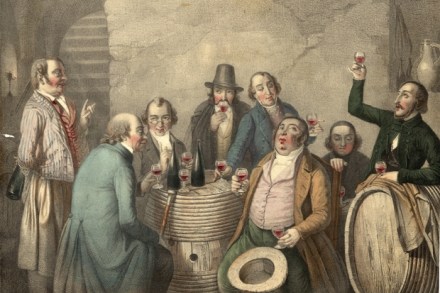
One of the great jokes of the wine trade is: ‘Have you ever confused Burgundy with Bordeaux?’ ‘Not since this morning!’ A few weeks ago, I realised it isn’t a joke. I’d been invited to take part in the Varsity Blind Wine Tasting Match. It’s sponsored by Pol Roger champagne and they thought it would be fun to have a team of journalists from The Spectator compete against the students from Oxford and Cambridge. Our crack squad was made up of the in-house drinks supremo Jonathan Ray, the sommelier and writer Douglas Blyde, Spectator adman Nick Spong, and me. As soon as I arrived at the Oxford and Cambridge Club in Pall Mall I realised I was out of my depth. The two university teams were standing in the lobby looking fit and focused. This was as important as the Boat Race.

I’ve finally found a point for St George’s Day

From our UK edition

We (the English that is) share our patron saint’s day with the Catalans. On Sant Jordi’s day Barcelona fills up with bookstalls and flower sellers. The men give their women flowers and the women their men books. I lived in Barcelona a few years ago and found the whole thing charming but also a bit sexist. How typically Latin, I thought, that the men would receive something cerebral whereas the women would get something decorative. Recently though, I’ve revised my opinion. Far from being an example of old-fashioned chauvinism, the Catalans are actually indulging in some progressive social engineering. A report by the Reading Agency commissioned for World Book Night states that almost 30 per cent of men have not read a book since leaving school.

The uneasy marriage of Jamaica’s two greatest exports

From our UK edition

Music and booze go together. Just think of Keith Richards in the 1970s with his Jack Daniel’s. There’s the love affair between hip-hop and luxury French booze: Busta Rhymes wrote a song called ‘Pass the Courvoisier’. And think of Puff Daddy and his Cristal champagne, though he later changed his name to P Diddy and started drinking Moscato d’ Asti — not so cool. What about reggae and rum? As Jamaica’s two most famous exports, you expect them to have an affinity. But they’ve had an uneasy relationship. Rums from former British territories trade on images of piracy and the Royal Navy, as if still marketing to a Victorian audience. It might have something to do with Jamaica’s third biggest export, ganja.

The fightback against wackiness starts here

From our UK edition

[audioplayer src="http://traffic.libsyn.com/spectator/TheViewFrom22_30_Oct_2014_v4.mp3" title="Henry Jeffreys and Sarah Coghlan from Movember discuss wackiness" startat=1491] Listen [/audioplayer]At Glastonbury in 2000 I noticed two young men both wearing enormous Y-fronts and carrying an even bigger pair with the word ‘pants’ written on it. They both looked miserable as you would if you’d come up with the idea while drunk and then found yourself stuck like that for the duration of the festival. Some of the more thuggish elements jeered and threw beer cans. Seven years later, at another festival I attended, they wouldn’t have attracted a second glance, because dressing up had become ubiquitous.

Agitprop for toddlers: the oddly strident politics of CBeebies

From our UK edition

I think I might be a bad parent; whenever my wife is out, I plonk our two-year-old daughter in front of the television. The other day we watched a rainbow nation of children marching around the British countryside singing ‘Let’s make sure we recycle every day’, and I realised that something has changed in children’s programming since I was little. These young recyclers are from a show called Green Balloon Club, which is ostensibly a wildlife programme, but the song had more in common with one of those Dear Leader dirges you see in North Korea. It wasn’t education, it was propaganda. The purpose of children’s stories has always been to educate as well as entertain. I was brought up on the Railway Stories by Revd W.

Seasonal drinking: Fortify yourself

From our UK edition

I’ve just received my latest energy bill and it appears that I’ve been living this last year in a draughty manor house rather than a three--bedroom ex-council flat. This winter, I’m going to have to choose between a warm flat and decent-quality booze. Of course it’s going to be the booze; I’ll just have to wear a woolly hat and fingerless gloves whilst drinking. At times like this, I thank God for the ingenuity of the British. Other cold countries have drinks to combat the winter — the Russians have vodka, the Swedes have schnapps and the Mongolians have fermented yak’s milk. These are drinks to achieve oblivion rather than to savour. We, however, have a whole smorgasbord of drinks to help us through the winter.

Sorry, Champagne, but cider is the original fizz

From our UK edition

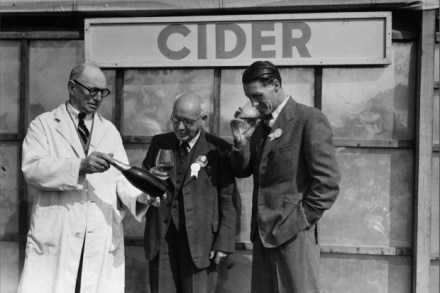
It has become a commonplace fact, beloved of pub quizzes, that an Englishman, Christopher Merret, invented Champagne. There is even an element of truth to it: Merret gave a paper to the Royal Society in 1672 outlining how to make wine fizzy. But he wasn’t the first to induce bubbles in a bottle. In the West Country, scientifically inclined gentlemen had been doing it for years — only they used cider, not wine. In the 17th century there was a wine crisis in England. Home-grown vines had been killed by prolonged cold weather — something now known as the Little Ice Age — and imports were severely curtailed because of wars with France, the Netherlands and Spain. The problem became acute when Cromwell passed the Navigation Act of 1651.

The last male space – why old-fashioned barbers are booming

From our UK edition

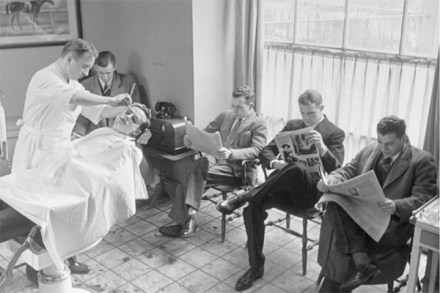
For 14 years only one man has cut my hair. Actually, that is not strictly true. Last year I went elsewhere and I felt like a husband visiting a prostitute for the first time. It made me realise how attached I’d become to my barber, Kyri, a Greek Cypriot with a shop in Kensal Rise. I’ve been with him longer than any relationship, my marriage and most of my friendships. It was the nearest barber’s to my first flat in London. Since then I’ve moved further and further away but I always make the journey back to get my hair cut. Over the years Kyri has become a friend and a confidant. When I’ve had problems with work, relationships or family, it’s with him that I talk most openly. Visits to the shop take the place of therapy.

Is it my imagination or does Pimm’s get weaker every year?

From our UK edition

Call me a terrible lightweight, but I’m a little wary of drinking cocktails when the sun is out. A summer drink should be like a good soak in the pool, but the sort of cocktails I love — martinis, manhattans etc — are all about a sharp injection of alcohol into the system, a sharp injection which can quickly turn to drowsiness or even irritability on a hot day. The fact that most cocktails need to be drunk quickly, so that they don’t warm up or become dilute, compounds the problem. Therefore what is needed during the summer is a drink that can take a little dilution from the ice melting and won’t get you drunk too quickly. Consider, for example, the negroni. I was introduced to this drink by my late Uncle Peter.