Henry Jeffreys

Inside the plot to take down Rishi Sunak

From our UK edition

42 min listen

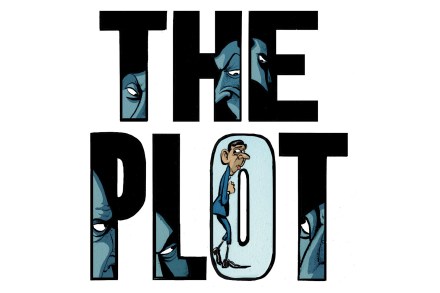
Welcome to a slightly new format for the Edition podcast! Each week will be talking about the magazine – as per usual – but trying to give a little more insight into the process behind putting The Spectator to bed each week.  On the podcast: The Spectator's political editor Katy Balls writes our cover story this week about 'the plot' to oust Rishi Sunak. When former culture secretary Nadine Dorries made the claim in her book that a secret cabal of advisors were responsible for taking down prime ministers, she was laughed at. But with shadowy backroom fixers assembling to try and take down the prime minister, did she have a point? Katy joins the podcast alongside the Financial Times' Stephen Bush to discuss what makes a successful 'plot'.

Women love flowers. Who knew?

From our UK edition

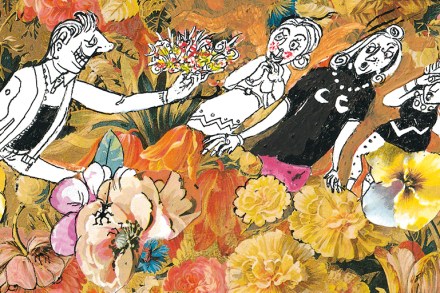
It’s funny how long it can take a man to learn a simple lesson. For example, for years I had assumed that women couldn’t really love flowers, that it was all some sort of conspiracy created by Big Florist in league with Big Greetings Card that everyone, apart from me, had fallen for. On Valentine’s Day I would look pityingly at the men on the Tube clutching a dozen red roses, or the girls in the office with big bouquets pretending to like them. I knew better. ‘She’d much prefer a nice bottle of dry sherry,’ I’d think to myself – and then wonder why my girlfriend looked so cross come 14 February. My first encounter with the possible link between female satisfaction and flowers came in the 1990s.

How Britain sobered up

From our UK edition

36 min listen

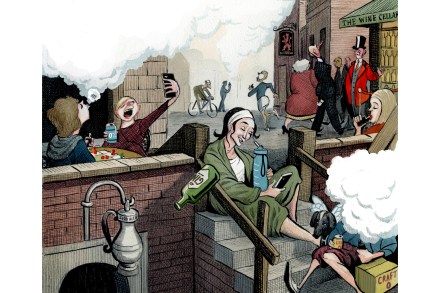
This week:  The Spectator’s cover story looks at how Britain is sobering up, forgoing alcohol in favour of alcohol free alternatives. In his piece, Henry Jeffreys – author of Empire of Booze – attacks the vice of sobriety and argues that the abstinence of young Britons will have a detrimental impact on the drinks industry and British culture. He joins the podcast alongside Camilla Tominey, associate editor of the Telegraph and a teetotaler. (01:27) Also this week: could Mongolia be the next geopolitical flashpoint?

How Britain sobered up

From our UK edition

The people of these islands have long been famous for their drinking. A Frenchman writing in the 12th century described the various races of Europe: ‘The French were proud and womanish; the Germans furious and obscene; the Lombards greedy, malicious, and cowardly; and the English were drunkards and had tails.’ By 1751, at the height of the gin craze that William Hogarth immortalised in ‘Gin Lane’, the English were drinking on average the equivalent of 20 bottles of gin per person per year. But Britain is losing its taste for alcohol. Around a quarter of 16- to 24-year-olds don’t drink at all. Gen Z said they associate alcohol with ‘vulnerability’, ‘anxiety’ and ‘loss of control’ It’s a far cry from when I was a teenager in the 1980s.

Six English sparklers to enjoy this Christmas

From our UK edition

Before I started researching my book Vines in a Cold Climate, I had a particular image of English sparkling wine as consistent but rarely that exciting. It was all a bit formulaic, like big brand champagne but leaner. I am pleased to say that I could not have been more wrong as the wines now made all over southern England are incredibly diverse, offering a wide array of styles for every palate. If you’re spending between £25 and £50 then England actually offers, on the whole, much more interesting wines than Champagne. Here are six wines that show how different English sparkling wines can be. Westwell Wicken Foy NV (Westwell £27.50) I’m a big fan of Westwell not least because it’s one of the nearest vineyards to me.

The shocking truth about adulterated wine: it was delicious

From our UK edition

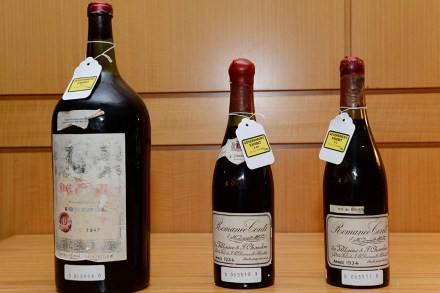
In 2012 the esoteric world of wine connoisseurship made the news when the FBI raided the Californian home of an Indonesian national called Rudy Kurniawan. They found a factory for creating fake wines with bottles, corks, labels and even recipes. According to Rebecca Gibb in Vintage Crime, Kurniawan’s counterfeit Mouton Rothschild from the legendary 1945 vintage consisted of two parts Cos d’Estournel, one part Château Palmer and one part California cabernet. Now tell me that doesn’t sound delicious. Most people don’t care about provenance as long as the wine tastes good and isn’t actually poisonous The book takes the reader on a highly entertaining tour of wine fraud from ancient times up to the present day. Gibb is a Master of Wine but wears her erudition lightly.

The cult of the gilet

From our UK edition

Last summer I attended a reunion at my prep school. The occasion was the leaving of a much-loved master. I thought that the appropriate thing to wear would be a tweed jacket in honour of prep-school masters everywhere. I found myself woefully overdressed. Pretty much all of my contemporaries were wearing gilets. It was a similar story this year at the Fortnum & Mason awards, the Oscars of the British food and drink scene. I wore a suit, but it seemed as if every other guest was casually sporting a gilet. When I was growing up the only people who wore gilets were fishermen, farmers and Michael J. Fox in Back to the Future. Furthermore, they weren’t called gilets, they were called body warmers or sleeveless coats.

The great breakfast dilemma: should baked beans be part of a full English?

From our UK edition

A popular pastime in Britain is to post one’s breakfast on social media for strangers to pass judgment on bacon crispiness, egg doneness and whether baked beans are a vital component or just spoil the whole thing. Felicity Cloake is a writer after my own heart: she is not a fan of beans with her full English. ‘I object to the way they encroach on everything,’ she writes in Red Sauce Brown Sauce, and then quotes Alan Partridge on the importance of ‘distance between the eggs and the beans. I may want to mix them, but I want that to be my decision. Use a sausage as a breakwater.

How to make a royally good Dubonnet cocktail

From our UK edition

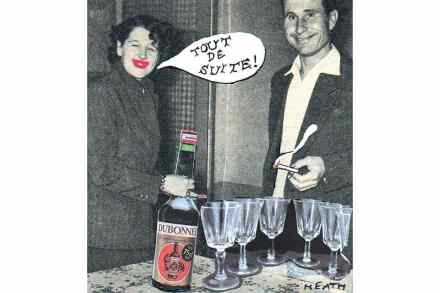
The Platinum Jubilee celebrations look like boom time for the drinks industry, with various whisky, gin and port brands all releasing special commemorative bottles. But there’s one curious omission: Dubonnet, a liqueur that is said to be the Queen’s favourite. According to a spokesman from parent company Pernod Ricard, there’s nothing planned to celebrate 70 years on the throne of its most famous fan. To be honest, I wasn’t expecting a flurry of activity. I picture the Dubonnet promotional department as two old Frenchmen asleep by a telex machine in the back of a dusty café in Béziers. But then again, who needs le marketing when you’ve got the Queen?

‘To a wine lover, it was like taking a call from God’ – remembering Anthony Barton

From our UK edition

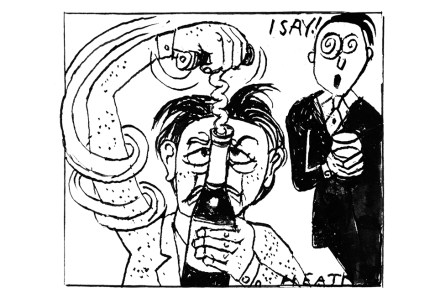
In 2014 I received a mystery phone call. It came from a French number but the voice sounded like a patrician Englishman from another age. It was a voice that you can imagine following into battle: 'Hello, it’s Anthony Barton here'. You might not know the name but to a wine lover, it was like taking a call from God. Barton, who died this week at 91, was the man behind Châteaux Léoville Barton and Langoa Barton, and his family were Bordeaux aristocracy. I was writing a book about the history of the British and wine, and had sent a message to the information at Langoa Barton email expecting at best to hear back from a PR representative, as had happened at Lynch-Bages. Instead, Anthony phoned me out of the blue.

More than one bad apple: the sorry demise of English cider

From our UK edition

Can you imagine if, in the 20th century, wine producers in France had switched from a product made (almost) entirely from grapes to something that was essentially grape-flavoured alcoholic sugar water? It’s inconceivable. In fact, they did just the opposite. To stamp out the growth of ersatz wines, the appellation contrôlée system was created, which, for all its faults, provides a guarantee that a particular wine will be made from grapes from a certain area. But there was no such regulation in England. After the second world war, large-scale cider-makers in the West Country began lowering the amount of fruit in their products, specifically characterful bittersweet cider apples, and making up the rest with dessert apples and sugar. Quality plummeted.

The romantic return of Florence’s wine windows

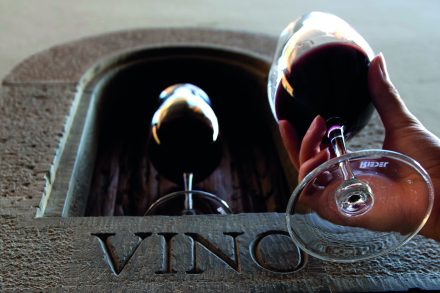
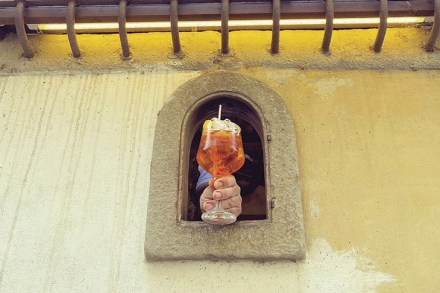
Stroll around Florence and you’ll notice little ornate openings embedded in the walls of Renaissance palazzos. They look like doorways for tiny people, though they would have to be quite athletic tiny people, as the openings are three feet off the ground. But they’re not entrances for Tuscan pixies — they’re for selling wine. There are more than 150 buchette del vino dotted around the city and they date back to the 17th century. You’d knock on the door, hand over some money and a bottle, and the mysterious person behind the wall would fill it full of wine. It wouldn’t have been just any old plonk either; the great merchant houses of the city like Frescobaldi, Ricasoli and Antinori, who still make some of Tuscany’s best wines, would sell in this way.

Wine

With Henry Jeffreys

From our UK edition

26 min listen

Henry Jeffreys is features editor of Masters of Malt, and author of The Cocktail Dictionary. On the podcast, he tells Lara and Livvy about living like the Goodfellas in Leeds, being 'portly' at university, and enjoying his mum's apple and bramble pie.

Why Florence’s ‘wine windows’ are making a comeback

From our UK edition

Stroll around Florence and you’ll notice little ornate openings embedded in the walls of Renaissance palazzos. They look like doorways for tiny people, though they would have to be quite athletic tiny people, as the openings are three feet off the ground. But they’re not entrances for Tuscan pixies — they’re for selling wine. There are more than 150 buchette del vino dotted around the city and they date back to the 17th century. You’d knock on the door, hand over some money and a bottle, and the mysterious person behind the wall would fill it full of wine.

Is this the end of the wine bottle?

From our UK edition

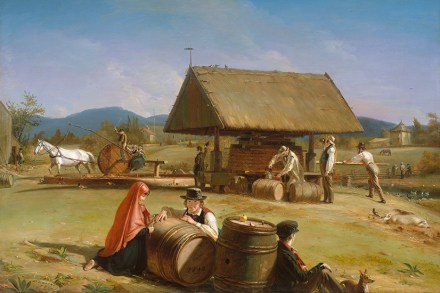
Picture the world before the invention of the bottle: if you wanted a nice glass of claret at home, you’d have to send a boy round to the tavern to fill up a jug — unless you were rich enough to have a whole barrel in your cellar. Around 1630, a new tougher glass was invented in England which, when combined with the cork, meant that wine could be transported and stored safely and inertly. We owe the amazing variety of wine available to us at the touch of a button to this invention. What’s peculiar is how little has changed in 400 years. For most of us, buying wine still means buying a bottle. This is bananas, because most wine is drunk within hours of being purchased, and the glass bottle then discarded. It’s not as if there aren’t alternatives.

Tips for Christmas tipples

From our UK edition

It’s telling that perhaps the best wine book of last year, Amber Revolution by Simon Woolf, was self-published, though you’d never guess from the quality of the design, photography or editing. Wine books are a tough slog for publishers unless they’re written by one of the big four: Clarke, Johnson, Robinson and Spurrier (sounds like a firm of provincial solicitors). Hugh Johnson wrote the first World Atlas of Wine in 1971. Since the 1998 edition he has been, in his words, ‘progressively passing the baton’ to Jancis Robinson. It’s astonishing how much has changed; early editions were little more than France, Germany, Italy, sherry and port.

Home bars

From our UK edition

When I mention to people that I have written a book about home bars, the most common response is, ‘my parents/grandparents/swinging uncle used to have one of those globe cocktail cabinets’. The other thing they mention is Only Fools and Horses. For years, having a bar in your home was seen as the height of bad taste. It’s a far cry from the home bar’s 1950s heyday. After the second world war, people were spending more time at home, but still wanted to lead the cocktail lifestyle. It was the suburban American dream: after a hard day’s work, drive home in your shiny new Chevrolet, put Frank Sinatra’s Songs for Swingin’ Lovers on your state-of-the-art hi-fi while your wife knocks you up a martini at your home bar.

Is it possible to talk about wine without sounding like a prat?

From our UK edition

There are only two British television wine presenters taxi drivers have heard of, Jilly Goolden and Oz Clarke. Who can forget their double act on Food & Drink in the 1980s and ’90s? Since then innumerable cooks have become household names but there have never been any other wine celebrities who pass the cabbie test. As a child I assumed that Oz was Johnny to Jilly’s Fanny Cradock, looking on in awe as she came up with outlandish wine descriptions. He says in his new book, Red & White: ‘people used to think we were married’. But later I discovered that Oz is a wine expert of startling erudition and eloquence. I’ve tasted with him a few times and his knowledge and recall are astonishing.

How to infuriate the French

From our UK edition

Fine wine rarely makes it into the public consciousness, but one event in 1976 has proved of perennial interest: the so-called Judgment of Paris. It heralded the arrival of wine from the New World, but also tapped into popular prejudice. Who can resist French wine snobs being made to look foolish? So these memoirs by Steven Spurrier, the man behind that notorious tasting, have been keenly anticipated. It was a glass of 1908 Cockburns port that Spurrier tried at the age of 13 that sparked a lifelong interest in wine. Rather than go to university, as expected, he worked in the cellars of a wine merchant, Christopher’s, in Soho. In his early twenties he inherited £250,000 (the equivalent of £5 million today) when the family gravel business was sold.

In praise of bangers

From our UK edition

I was collecting my daughter from school when my path was blocked by an enormous black Range Rover sitting in the middle of the road. As I squeezed past, one tyre on the pavement, I opened my window and asked, as gently as I could: ‘Why don’t you drive on your side of the road?’ The woman looked down from on high and said: ‘Why are you driving a banger?’ I’ve been trying to come up with a clever response ever since. I’d never thought of my car as a banger before. It’s a nearly 20-year-old Ford Focus, in excellent condition for its age with just a touch of rust on the boot lid. But by modern standards I suppose it is.