Henrietta Bredin

A silent exit

From our UK edition

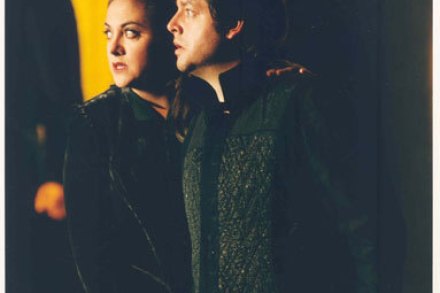
A distractingly surreal moment during an otherwise thrillingly powerful performance of Don Carlos at Opera North in Leeds last night. At a point of high dramatic intensity, the requisite explosive gunshot sound from offstage failed to materialise so Rodrigo, for whom the bullet was intended, was forced to expire dramatically for no discernible reason. A silent but deadly attack of food poisoning? A hitherto undiagnosed heart condition? Baritone William Dazeley kept going with considerable aplomb and the audience, quite rightly, gave everyone concerned its roaring approval.
A show that will be missed 

From our UK edition

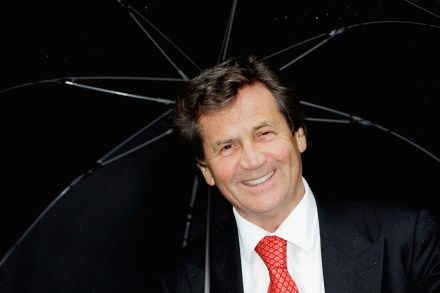
The South Bank Show has been going for a very long time - since January 1978 - and now, after being pushed further and further into the dimmest reaches of the late-night schedules, it's being axed altogether. This might not be such a cause for dismay if one could feel convinced that anything even approaching its calibre will replace it. Over the years, Melvyn Bragg has fronted a pretty breathtaking array of thoughtful, revealing, in-depth interviews with subjects ranging from Dennis Potter and Tom Stoppard; Frank Auerbach and Francis Bacon to Pete Townshend and George Michael, Ken Russell and Spike Lee. There were dancers and actors, choreographers and film and theatre directors, actors and painters, writers and singers, pianists, violinists, architects and comedians.

Alone in the wilderness

From our UK edition

Henrietta Bredin finds out what it is that draws actors to the gruelling one-man show Judi Dench says she’d never do it, Roy Dotrice didn’t do it for 40 years but started again in 2008, Joanna Lumley says that managing to do it while looking at her own reflection in a mirror made her feel afterwards as if she could handle pretty much anything. Let’s do it, it’s the one-man, or one-woman, show. Stepping on to a stage or in front of the camera to perform requires a particular brand of courage but how much more focused and intense is that experience if you undergo it entirely on your own?

Dido’s life on camera

From our UK edition

Katie Mitchell explains to Henrietta Bredin how she is creating a parallel film world with Purcell’s opera It is 350 years since Henry Purcell was born and his music is, gloriously, being played and sung all around the country. And there are a lot of different Didos about: Christopher Marlowe’s Dido, Queen of Carthage at the National Theatre; Purcell’s Dido and Aeneas pretty much all day on BBC Radio Three a couple of weekends ago; at the Royal Opera House in a joint venture by the Royal Opera and the Royal Ballet directed and choreographed by Wayne McGregor (see review page 38); and, in another joint venture, by English National Opera and the Young Vic, as After Dido, directed by Katie Mitchell.

Pronouncing the unpronounceable

From our UK edition

Has anyone else noticed how frequently and with what merry relish BBC Radio 3 announcers are saying Jiří Bĕlohlávek? (Chief Conductor of the BBC Symphony Orchestra just in case you were wondering.) I think they're so thrilled to have (pretty much) mastered the pronunciation that they just can't help themselves.

‘I have no idea what’s going on’

From our UK edition

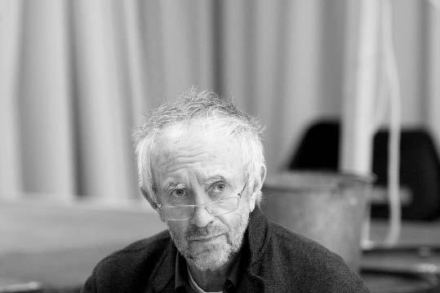
Henrietta Bredin talks to Jonathan Pryce about the difficulties he found with Athol Fugard’s Dimetos It is the end of a long day of rehearsal and Jonathan Pryce is sitting patiently at a scrubbed wooden table strewn with water glasses and roughly carved dishes, behind him a tangle of ropes and pulleys slung from an overhead beam. He’s two-and-a-half weeks into the business of putting together a performance of Dimetos, an infrequently performed play by Athol Fugard, written in 1975. ‘It’s almost like doing a new play really. Sometimes when a play hasn’t had any major revivals you think, well, there must be a reason for that. But I think the only reason for this not being done more often is its apparent difficulty.

The glasses of time

From our UK edition

Belatedly catching up with the BBC's Margaret on iPlayer. It wasn't the haircuts or the clothes that really characterised and dated the actors as politicos, it was their glasses. Huge great gig-lamps with clunkingly heavy frames and they were all wearing them, from John Sessions as a doleful Geoffrey Howe to Michael Maloney as a quietly manipulative John Major. It made it easier for the bespectacled to be convincing than, for example, Robert Hardy to make himself big and baggy and crumpled enough as Willie Whitelaw. Lindsey Duncan was compelling in the title role but just too beautiful and subtle for absolute verisimilitude.

Revealing the physicist’s soul

From our UK edition

Henrietta Bredin talks to the baritone Gerald Finley about how he portrays ‘the destroyer of worlds’ At precisely 5.30 a.m. on Monday 16 July 1945 the world entered the nuclear age. The first atomic bomb exploded in a searing flash of light and a vast mushroom cloud unfurled in the skies above New Mexico. ‘Now I am become Death, the destroyer of worlds,’ thought Robert J. Oppenheimer, the physicist who had masterminded its development. It was typical of the man and the deep contradictions within his nature that these lines from the Bhagavad Gita should have come to mind, and that he should have named the project the Trinity Test in response to poetry by John Donne.

‘It’s less risky to take risks’

From our UK edition

A new arts centre with no public subsidy? Henrietta Bredin talks to its founder Peter Millican Let’s get one thing out of the way immediately — King’s (with an apostrophe) Cross in London is the location for the new and very splendid mixed-use office building and performance space, Kings Place, which has no business letting a misguided graphic designer decide to drop the apostrophe. It should be King’s Place, please. Now, onwards. This project is the brainchild of Peter Millican, a Northumbrian developer whose work has been, until now, mostly in and around Newcastle. He has wanted for some years to combine business and the arts in a single building, with beneficial effects for both, and particularly wanted to find a site close to an international travel hub.

Giving life to characters

From our UK edition

Henrietta Bredin talks to Ian McDiarmid about turning a novel set in Scotland into a play Ian McDiarmid possesses a voice that, if he chose to let it, could curdle milk. Half-strangled and poisonously clotted it emerges in an evil flow in his portrayal of the Emperor Palpatine in the Star Wars films. As Satan in Milton’s Paradise Lost, it is all silken seduction and hidden threat. In his next stage role, his voice will be heard, not just as an actor, but as the author of an adaptation of Be Near Me, the novel by Andrew O’Hagan. He will play Father David Anderton, a Catholic priest in a small Ayrshire parish, in a joint production between the National Theatre of Scotland and the Donmar Warehouse. How had this happened?

That New Year feeling

From our UK edition

For anyone still feeling faintly the worse for wear, the zippingly clever book by S.J. Perelman and Ogden Nash for Kurt Weill's One Touch of Venus has the memorable line: 'God, I feel awful! All my teeth have little sweaters on them.' Happy 2009 to us all.

A present pour vous

From our UK edition

For anyone who's having a last-minute Christmas present panic, or who simply wants to hear something utterly delectable instead of the unending stream of noxious news being poured into our ears as if we were so many unsuspecting old Hamlets, I strongly recommend nipping out to buy Opera Rara's new recording of Offenbach rarities, Entre Nous. It's irresistibly funny, sparkling and diverting. There's a grand 'snow finale' from Le voyage de la lune, in which the singers shiver and trill in tune, a funeral oration to a parrot which has died of constipation, a rondo du paté with a chorus in praise of ham, a pair of yodelling German army colonels and numerous other ludicrous delights. Absolute bliss.

Animal magic | 12 December 2008

From our UK edition

Mozart’s Die Zauberflöte opens with the hero, Tamino, being pursued by a terrible monster. It’s always a challenge to depict such a creature on stage but for the first performances of Nicholas Hytner’s now much revived production at English National Opera, a startling image was conceived. The tenor Tom Randle (then, as now, unaverse to showing off his well-toned torso) would appear, naked, wrapped in the writhing coils of a live snake. A snake handler was duly found and turned up for rehearsal with a battered brown suitcase from which emerged yard after yard of python.

In perfect harmony

From our UK edition

It is worth remembering that the BBC, despite its recent, excessively well-aired problems, gives us a great many stimulating, well-made programmes, on both radio and television. Rather surprisingly, given its format and the yawning, ever-present potential for dumbed-down disaster, the BBC2 Maestro series, aired in August/September this year, turned out to be all of those things. How could this be? A talent contest for ‘celebrities’, in which they were required, with no previous experience, to conduct a full symphony orchestra? It could hardly fail to trivialise a skill which takes years to acquire and which even musicians find hard to analyse or describe. What actually happened was fascinatingly revealing.

How Boris got under his skin

From our UK edition

Henrietta Bredin talks to Edward Gardner, English National Opera’s music director There is a ridiculously tiny, narrow room carved out of the foyer of the London Coliseum, known as the Snuggery. I think it was originally intended as somewhere for King Edward VII to retire to for a touch of silken dalliance or simply to use the lavishly ornate mahogany facilities. At any rate it’s a handy place in which to settle for a conversation with English National Opera’s music director, Edward Gardner, who is fresh — and he does look it — from a rehearsal with the chorus for a new production of Mussorgsky’s Boris Godunov, opening on Monday. This is a challenging opera for any company to perform and the first thing to be settled is the choice of version.

A power to enthral

From our UK edition

Henrietta Bredin on how book illustrations can bring the narrative to life The illustrations in children’s books play a crucial role in expanding the imaginative horizons of the reader and fixing the story in the memory. The very best book illustration is so inextricably linked to the text that it is hard to think of one without the other.

Something a little different

From our UK edition

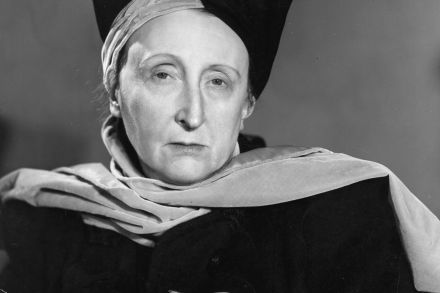
There’s an intriguing performance coming up at the Purcell Room on London’s Southbank next Tuesday. Façade, the collection of poems by Edith Sitwell set to music by William Walton, will be recited by another Sitwell (William, also known as editor of Waitrose Food Illustrated and Food Spy for the Evening Standard) for the first time since Edith herself astonished audiences with her sonorous, incantatory delivery (it has to be said that she also made some of them giggle uncontrollably). He’ll be accompanied by singer Pippa Longworth who, thanks to the family connection, has been given permission to rummage in Edith’s dressing up box to borrow some of her fabulously elaborate clothes and massive, ornate jewellery.

Poetry in motion

From our UK edition

Henrietta Bredin talks to Peter Manning about taking risks and creating opportunities There is an almost palpable forcefield of energy around Peter Manning. You expect a crackle of static to explode when he shakes your hand or wraps you in an enthusiastic hug. Concertmaster of the Royal Opera House orchestra, founder of the eponymous Manning Camerata chamber orchestra and now music director of Musica Vitae in Sweden, his relish for a challenge, for fresh stimuli, is voracious. He is a violinist, a conductor, and now a galvanising producer and artistic director. His current, most pressing preoccupation is with a fabulously multi-layered and ambitious project, the performance of a new opera he has commissioned, for the Manning Camerata to play.

Master conductor

From our UK edition

It was the final of Maestro on BBC TV last night and I have been glued to every episode. Despite being extremely wary to begin with at the thought of a bunch of amateurs plunging in to try their hand at something so complex as conducting, a skill that requires years of study to master, I became entirely fascinated by just how much the participants managed to learn and the different ways in which they approached the challenge. They all became more and more serious about it and more entranced by the music they were dealing with.

The joy of a focused book group

From our UK edition

Book groups are clearly here to stay, with little gatherings across the land busy discussing the latest Ian McEwan or Julie Myerson. These discussions may well be of great interest and hugely enjoyable but what I can highly recommend is refining the focus rather more rigorously. I am a newish recruit to a gloriously recherché reading group devoted exclusively to the works of Henry James. While it must be admitted that many of my friends find this hilarious and tease me mercilessly as a result, I stoically persevere, despite frequently feeling way out of my depth in the company of scholars and writers of the calibre of Miranda Seymour, Alan Hollinghurst, Rupert Christiansen and Jonathan Keates.