Harry Mount

Harry Mount is a barrister, editor of The Oldie and author of How England Made the English (Penguin) and Et Tu, Brute? The Best Latin Lines Ever (Bloomsbury).

Rebel angels

From our UK edition

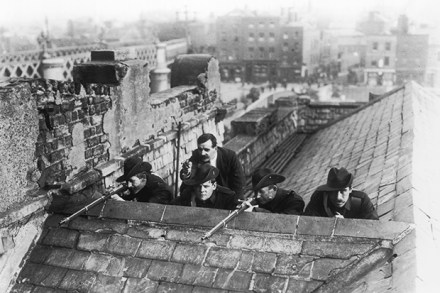
This is the first exhibition I’ve been to where the Prime Minister joined the hacks at the press view. A week after the Irish general election, the Taoiseach, Enda Kenny, came to the biggest show in Ireland devoted to the centenary of the Easter Rising. Kenny’s presence at the press launch just goes to show how the Irish rebellion against British rule at Easter 1916 is still the defining story of modern Ireland. In fact, the Easter Rising was a pretty good failure, although I didn’t suggest that to the Prime Minister at the press view. The rebellion lasted only six days before it was put down by the British army. Other attacks on British barracks in Meath, Galway and Wexford didn’t get very far either. Planned attacks in Cork, Tyrone and Donegal never happened.

Trudeau family values

From our UK edition

   Quebec City Canada is about to hit a new high. If the supercute 44-year-old prime minister, Justin Trudeau, has his way, marijuana will soon be legally available. Trudeau himself is no pothead. He last had a joint in 2010 at a family dinner party, with his children safely tucked up in bed at their grandmother’s house. Still, it is a typical policy for the Liberal leader — headline-grabbing, progressive, fashionable. To call Trudeau a press darling is an understatement. The man is a global PR sensation. Only this week, he had himself snapped with two panda cubs — ‘Say hello to Jia Panpan & Jia Yueyue,’ he tweeted — and the world tweeted ‘Awwww’ back. But not everybody thinks the new PM is quite so adorable.

Looking up an old friend

From our UK edition

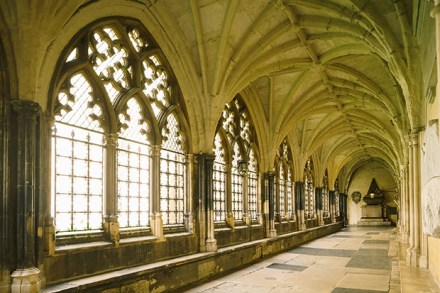
As far as I know, there’s no word in the English language for feeling both terrified and smug at the same time. That’s how I felt when I gave a recent talk to my old school, Westminster, from the pulpit in Westminster Abbey. The talk was about how guilty I felt at taking the Westminster Abbey for granted when I was a boy there in the 1980s — the abbey being the school chapel. I worked out that I’d been to the abbey 400 times when I was at school. Well, to be precise, that’s 400 minus the number of times I bunked abbey — which I began to do regularly in the sixth form. How could I have chosen not to go to one of the world’s greatest churches? I’m now obsessed with old buildings and monuments.

Diary – 25 February 2016

From our UK edition

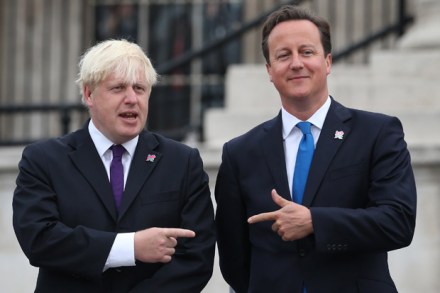
The Prime Minister is pretty angry with Boris. But the idea that they’ve competed with each other since school is wrong. Boris is two years older than Cameron — and differences in age are like dog years when you’re young. When I was 13, 15-year-olds seemed like grown-ups, 6ft tall with three days’ growth. When I interviewed Cameron last year, he said he’d hardly known Boris at Eton because he was in College — the scholars’ house — and two years above him. Cameron did remember Boris on the rugby field because he was so dishevelled and ferocious. And he watched him in a few debates at the Oxford Union. But that was as close as they got in their youth. I asked Cameron if there was anything in the idea of these two boys vying to be PM.

Remembering Harper Lee, 1926-2016

From our UK edition

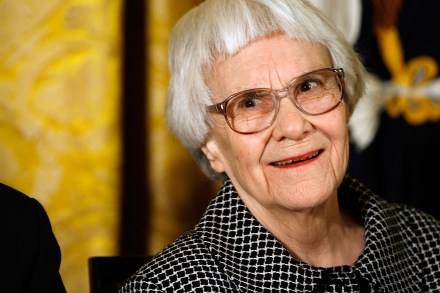
The sad news of Harper Lee’s death at the age of 89 leaves one of modern literature’s great questions unanswered. We will probably never know whether she gave permission for her second novel, Go Set a Watchman, to be published last year. Perhaps — as the rumours had it — she really was deaf and blind, and mentally incapable of sanctioning the book’s release, as she sat in a nursing home in her birthplace, Monroeville, Alabama. But I do know that — contrary to popular opinion — she hadn’t shut herself off from the world since To Kill a Mockingbird was published in 1960. Quite the contrary — over the past half-century, she was an exceptional consumer of world affairs, British affairs in particular.

Beautiful losers

From our UK edition

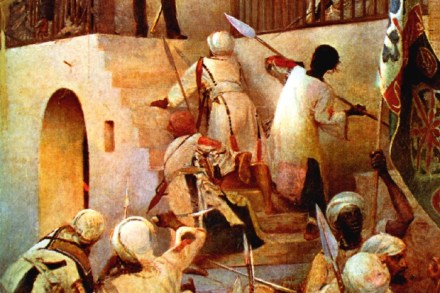
When Henry Worsley died last month attempting the first solo, unaided expedition across the Antarctic, he was 30 miles short of the finish line. He fits right in with a long British tradition of heroic failures: General Gordon killed at Khartoum; the defeat of the British by the Zulus at Isandlwana. And the most precise parallel with Worsley’s tragedy, Captain Scott, who also died in the Antarctic, just 11 miles short of the next food depot. Stephanie Barczewski, Professor of History at Clemson University in South Carolina, is on to something when she identifies a peculiarly British propensity for glorifying disaster. Where she is crashingly wrong is in her interpretation of the reason why: that it’s all down to the desire to show the British empire in a good light.

Altar, font and arch and pew

From our UK edition

John Betjeman, the patron saint of English parish churches, once warned against praising British buildings too much. Be careful before you call Weymouth the Naples of Dorset, he said. How many Italians call Naples the Weymouth of Campania? Saint John was spot on, of course. When it comes to the pure ideals of church architecture, London isn’t a patch on Rome or Florence. The Holy Redeemer Church in Exmouth Market, Islington, may be inspired by Santo Spirito in Florence, but it doesn’t match, let alone surpass, its beauties. Still, as Michael Hodges’s scatty book shows, my God, there’s an awful lot of beauty, and intrigue wrapped up in London’s 1,200 Anglican and Catholic churches. Even this hefty volume can only squeeze in 420 of them.

Jeremy Corbyn has continued his purge of the Oxbridge set

From our UK edition

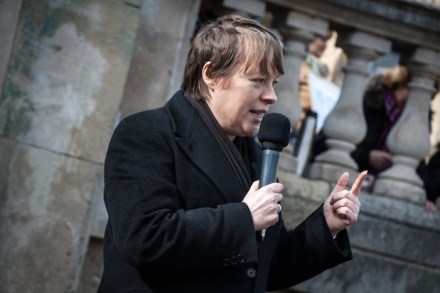
Back in October, I wrote about how Corbyn had replaced the shadow cabinet's Oxbridge and Harvard elite with red-brick university graduates. This week's reshuffle has continued the trend. Maria Eagle - alma mater, Pembroke College, Oxford - has been demoted, and replaced by Emily Thornberry, who went to the University of Kent.  Admittedly, the sacked Michael Dugher and Pat McFadden didn't go to Oxbridge, but to Nottingham and Edinburgh respectively. Still, they are both higher-achieving universities than Northumbria University, where Emma Lewell-Buck, the new shadow local government minister, did her politics and media studies undergraduate degree.  I don't want to be intellectually snobbish. There's nothing wrong with the universities attended by the new Corbyn set.

The secret brilliance of Prince Philip’s ‘gaffes’

From our UK edition

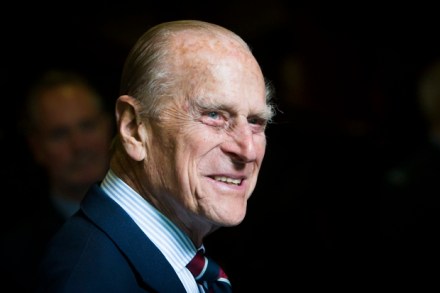
Prince Philip has died at the age of 99. Writing in 2015, Harry Mount reflected on the Duke of Edinburgh's personable style and sense of public service.I’ve just been on the receiving end of a Prince Philip gaffe, of sorts, and I loved it. It was at a lunch last week at the Cavalry and Guards Club for the Gallipoli Association — the charity that commemorates victims and veterans of that tragic, doomed campaign. For 40 years, the Duke of Edinburgh has been the association’s patron. And so, in Gallipoli’s centenary year, he came to the association’s lunch. Before lunch, he roamed at will around the cavernous drawing room, chatting to association members.

Red-brick revolutionaries

From our UK edition

‘I’d rather entrust the government of the United States to the first 400 people listed in the Boston telephone directory than to the faculty of Harvard University,’ said William F. Buckley Jr, the American conservative writer. Jeremy Corbyn’s Labour party must be hoping British voters agree. Under Corbyn, the Labour party — once the clever party — has had a brain transplant. It’s out with the Oxbridge and Harvard graduates with first-class degrees; in with the red-brick university graduates. Or, in Corbyn’s case, a non-graduate. Corbyn got two Es at A-level at Adams’ Grammar School in Newport, Shropshire. He did a year of trade union studies at the North London Polytechnic before dropping out.

Adventures on the isle that seduced Odysseus

From our UK edition

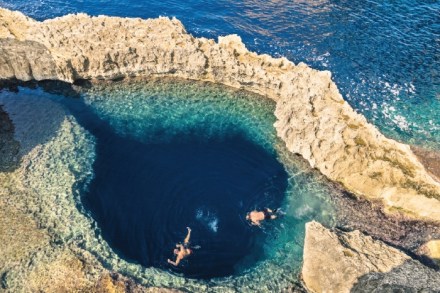
Gozo — Malta’s tiny island neighbour — was once rather a crucial spot in the Mediterranean. The Knights of Malta built a wall across Gozo’s Ramla Bay to stop Napoleon invading. The clever little Corsican attacked via the undefended gully next door instead. Homer’s island of Ogygia — ‘the navel of the sea’ in the Odyssey — is thought to be Gozo. It was in a love-cave above Ramla Bay that Odysseus caroused with the honey--voiced sea-nymph Calypso. Stranded on the beach, clinging to a plank from his shattered boat, he took refuge in her arms- — for seven years. He wasn’t that desperate to get home to his darling wife, Penelope, on Ithaca. I tracked down the love-cave — there was no seductive nymph to greet me.

Bad winners

From our UK edition

‘Jeremy Corbyn night’ at the Forum in Kentish Town on Monday should have been a scene of orgiastic pleasure for socialist Labour. Corbyn’s victory was the triumph the grand old reactionaries of north London have been waiting a generation for. But they weren’t happy; they were as angry and full of bile as ever. The scene took me right back to my childhood in Islington in the 1970s. My neighbours in the queue outside the Forum had posher voices than you hear at Annabel’s. The smart greybeards from the £2 million villas of Kentish Town and Islington were joined by a new generation of under-thirties: white, university-educated, also with upmarket voices. And how they lapped up the tide of anger pouring from the stage.

Corbyn has won. So why are the north London lefties still so angry and nasty?

From our UK edition

‘Jeremy Corbyn Night’ at the Forum in Kentish Town, on Monday night, should have been a scene of orgiastic pleasure for socialist Labour. Corbyn’s victory was the triumph the grand old reactionaries of north London have been waiting a generation for. But they weren’t happy; they were as angry and full of bile as ever. The scene took me right back to my childhood in Islington in the 1970s. My neighbours in the queue outside the Forum had posher voices than you hear at Annabel’s. The smart greybeards from the £2 million villas of Kentish Town and Islington were joined by a new generation of under-thirties: white, university-educated, also with upmarket voices. And how they lapped up the tide of anger pouring from the stage.

See no evil

From our UK edition

When I was at university, Reggie Kray was my penpal. I wrote to him in 1991, asking for an interview for The Word, an Oxford student newspaper. Kray was unavoidably detained at Her Majesty’s pleasure. But he sent me a prompt, polite letter back. ‘Thanks for your letter,’ he wrote. ‘I will see you as soon as possible. We only get three visitors a month. Could you send me a copy of The Word?’ I sent him a copy — but I never did get to be among his three monthly visitors before his death in 2000, at the age of 66. Still, I’m ashamed to say, I was thrilled enough just to get a letter from him; and to drink in his wild, scrawling handwriting — three huge, near-illegible words to a line; nine skew-whiff lines to a page of prison-issue foolscap.

On the way to the Forum

From our UK edition

It’s strange that tourists rarely visit the most famous site in Roman history. The spot in Pompey’s assembly hall where Julius Caesar was murdered on the Ides of March, 44 bc, is right in the middle of Rome, in Largo di Torre Argentina. When I was there, the tourists were only interested in the feral cats that stroll across the murder scene. Jochen Bleicken shrewdly begins this long, occasionally heavygoing but unequalled biography with that murder. It’s only because Caesar appointed his great-nephew Gaius Octavius (known later as Augustus) as his adopted son and heir that the latter rose to such heights. But for that crucial adoption, Augustus wasn’t that posh.

Antigua

From our UK edition

‘Tourism, tourism and tourism,’ said my Antiguan cab driver, when I asked what the country’s main industries were. Still, it’s easy to avoid the other tourists, even though the island’s just over 100 square miles. Take a quad-bike tour — arranged by my hotel, the Sandals Grande Antigua Resort — and you can go from one end of the island to another in a morning, without seeing another tourist. Instead, you’ll see fields of sweet potatoes, dotted with sprawling tamarisk trees; jagged cliffs and pale-yellow beaches, fringed with luminous, aquamarine water. You’ll also come across remnants of old sugar plantations; in the early colonial years, slavery was Antigua’s biggest moneymaker.

Greece Notebook

From our UK edition

At the weekend, I tried — and failed — to get some money out of an empty cashpoint near Omonia Square. The Eurobank cashpoint was covered in fresh anti-German graffiti: ‘No to the new German fascism,’ it read in Greek, ‘No to the “dosilogous”.’ That’s the Greek for Nazi collaborators in the war. For any cashpoint users who couldn’t speak Greek, the graffiti artist helpfully added, in English, GERMANY= 卐. If the new, German-led EU austerity package goes ahead, the swastikas will keep spreading through Athens. I felt sorry for a German family eating ice cream in the deserted Estia café in Plaka. The couple, with four strapping children and granny in tow, looked the picture of six-foot-tall, blond, Teutonic health.

A letter from Harper Lee

From our UK edition

Who knows whether Harper Lee, now 89, has given permission for her novel, Go Set a Watchman, to be published next week? Perhaps — as the rumours have it — she really is deaf and blind, and mentally incapable of sanctioning the book’s release, as she sits in a nursing home in her birthplace, Monroeville, Alabama. But I do know that — contrary to popular opinion — she hasn’t shut herself off from the world since To Kill a Mockingbird was published in 1960. Quite the contrary — in the past half-century, she has been an exceptional consumer of world affairs, British affairs in particular. She’s a long-time Spectator reader, for God’s sake! How do I know all this?

Greece’s crisis turns to tragedy

From our UK edition

 Athens On Sunday night, a protest in favour of staying in the euro gathered in Syntagma Square, in front of the Greek parliament building. They were quickly confronted by a group of anti-EU protestors. What could have been an ugly stand-off was avoided by an unseasonal downpour. The 28ºC heat plunged to 19ºC and the young protestors — organised by social media — fled home, as did the riot police soon afterwards. Things are in a terrible way here, but not quite terrible enough for a Greek to hang about in the rain. As one Athenian journalist told me on the roof of the Amalia Hotel, while we watched the protestors scuttling home under their umbrellas, the country is suffering crisis fatigue.

Two wheels good

From our UK edition

Bicycles — in Britain, anyway — are the Marmite means of transport. I am among the bicycle-lovers, almost religious and certainly addicted in my need to have a daily bike ride. But I can see why people — and drivers in particular — hate some of us: for our smugness, our need to keep on moving through red lights and along pavements. It isn’t like this in Holland, where bicycling is so embedded in daily life that most drivers are bicyclists and vice versa; where mutual understanding leads to mutual respect. Why do bicycles have this effect? Of intense affection among some, hatred among others; of mass use in some countries, limited use in others? Paul Smethurst could have answered the question. And his book does have some juicy little statistics in it.