Harry Mount

Harry Mount is a barrister, editor of The Oldie and author of How England Made the English (Penguin) and Et Tu, Brute? The Best Latin Lines Ever (Bloomsbury).

Feeling full of rage? Blame the summer heat

From our UK edition

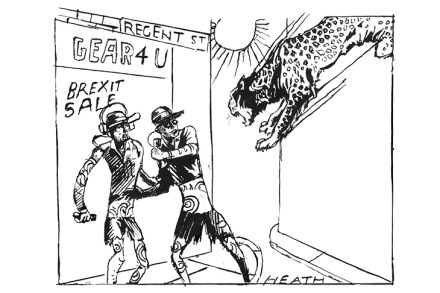
Bicycling up Regent Street in the intense June heat last week, I was cut up by a black cab driver. When I remonstrated with him, he leapt out of the cab and assaulted me, with a violent shove in the small of my back, trying to push me off my bike. It was the heat that did it. The driver wouldn’t have deserted his snug cab — and his passenger — if it had been raining. But, in the longest heatwave in more than a decade, he went stir-crazy in his confined space, as the black paint of his taxi absorbed mind-altering quantities of ultraviolet rays. He isn’t the only one who goes bonkers in this weather. When summer heat strikes the British, it morphs into summer madness.

My Prince Philip story

From our UK edition

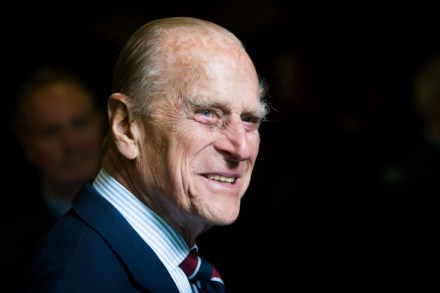
Prince Philip has died at the age of 99. When he retired four years ago, Harry Mount reflected on his meeting with the Duke of Edinburgh and his sense of public service.  A friend of mine’s father — who knows Prince Philip — calls him 'a kind of semi-deity'. I realise that’s laying it on a bit thick, when it comes to sycophancy to the Royal Family. But he’s certainly a quite extraordinary figure: a 95-year-old war hero, who has been working solidly and loyally for nearly 70 years alongside his wife. In November, he and the Queen celebrate their 70th wedding anniversary. This morning’s announcement from Buckingham Palace — that he’s retiring from royal duties this autumn — should have been utterly routine.

How the National Trust is spoiling its treasures

From our UK edition

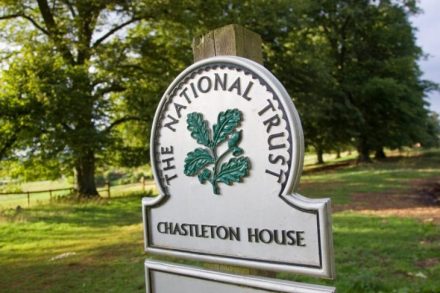
Osterley Park on the western fringes of London is a rare survival. A Robert Adam house, with splendid Adam interiors, it’s still surrounded by its Elizabethan stables, an 18th-century landscape and classical follies — in the middle of urban Hounslow. Over the past decade, this Georgian gem has been increasingly despoiled and dumbed down by the National Trust. The Trust is spending £356,000 to turn Osterley Park into a child-friendly leisure centre. As one of the huge posters strapped to the park fence says, the money will pay for ‘A new skills area for young families providing kids with a safe place to learn to cycle and gain confidence’. Why splurge this vast amount of money on something you can already easily do on the paths at Osterley, i.e. bicycle?

Dumbing down the house

From our UK edition

Osterley Park on the western fringes of London is a rare survival. A Robert Adam house, with splendid Adam interiors, it’s still surrounded by its Elizabethan stables, an 18th-century landscape and classical follies — in the middle of urban Hounslow. Over the past decade, this Georgian gem has been increasingly despoiled and dumbed down by the National Trust. The Trust is spending £356,000 to turn Osterley Park into a child-friendly leisure centre. As one of the huge posters strapped to the park fence says, the money will pay for ‘A new skills area for young families providing kids with a safe place to learn to cycle and gain confidence’. Why splurge this vast amount of money on something you can already easily do on the paths at Osterley, i.e. bicycle?

Bye bye, Buller

From our UK edition

RIP the Bullingdon Club, 1780–2017. It isn’t quite dead — but it is down to its last two members. That’s barely enough people to trash each other’s bedrooms, let alone a whole restaurant, as the Bullingdon was wont to do, according to legend — not that we ever did that sort of thing in my time in the club, from 1991 to 1993. The Bullingdon, or Buller, as it is sometimes known, just couldn’t survive 11 years of bad headlines — from 2005 to 2016, when three of its former members, David Cameron, George Osborne and Boris Johnson, were the most powerful Conservatives in the country. For more than a decade the Bullingdon exerted a totemic power so mighty that it spawned several conspiracy theories.

Surviving Trumpworld

From our UK edition

While he was on the campaign trail, Donald Trump was asked an intriguing question by Bob Lonsberry of WHAM 1180 AM, a local radio station in Rochester, New York. ‘Is there a favourite Bible verse or Bible story that has informed your thinking or your character through life, sir?’ Lonsberry said. Trump’s answer? ‘An eye for an eye.’ If you wanted a quick glimpse inside Trump’s brain, that quote’s as good as any. It captures his narcissism, his thin skin, his exponentially cranked-up aggression.

Alexander Chancellor, 1940-2017

From our UK edition

Alexander Chancellor, who died this morning aged 77, created the modern Spectator. Since 2012, he has also been a weekly columnist with his Long Life column - which darted from the vagaries of growing old, to memories of his time as editor of The Talk of the Town in the New Yorker, to the wicked foxes who nabbed his beloved ducks at his Northamptonshire house. Spectator editor from 1975 to 1984, he was responsible for giving the magazine the amusing, anarchic, clever but readable feel it has today. It was Chancellor who employed Taki - still happily with us - and had the inspired idea of pairing his High Life column with its polar opposite, Low Life, by Jeffrey Bernard.

Bridges and troubled waters

From our UK edition

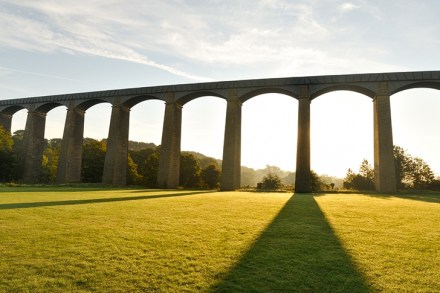
During David Cameron’s years as prime minister, an unobtrusive figure could be seen slipping out of the back entrance to Downing Street. At the end of each day, Julian Glover, then Cameron’s chief speechwriter, made his way across St James’s Park to the Institution of Civil Engineers, a Palladian palace off Parliament Square. There, burrowing around in the archives, he wrote the biography of the institution’s first president: Thomas Telford, one of Britain’s forgotten great men. In his 77 years, Telford built a huge chunk of the infrastructure of Georgian and early Victorian Britain: 17 canals, 37 docks and harbours and 93 bridges and aqueducts. His friend the poet Robert Southey called him ‘Pontifex Maximus’.

Not owning a car

From our UK edition

On two occasions, sainted members of my family have offered me a car for nothing. Both times, I turned them down — and not out of selflessness or for green reasons. I said no because I knew it would mean me sitting still in a metal box for hundreds more hours every year. If I were the only driver in London, I’d have accepted the free cars in a second. Even if I could have been transported back to 1970s London — when in my memory the streets were largely empty — I’d have said yes. But driving in London — and in British cities, generally — has now got so popular that it’s become a victim of its own success.

The sad state of Gare du Nord offers a miserable welcome to Paris

From our UK edition

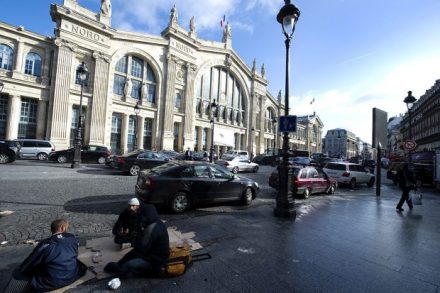
Last week I took the Eurostar to the Gare du Nord in Paris. We had lunch next to the station at the Terminus Nord brasserie, unchanged since 1925. The art deco clock on the wall has literally stopped, and everything else is frozen in the world of Fred Astaire, from the mosaic floor to the mirrored walls, to murals of dancers in tails and flapper dresses. But my God the Gare du Nord is a dump. It has a fine 1863 iron-and-glass train shed, with a classical facade lined with statues of handsome women, representing destinations from Calais to the heart-stirring battlefields of Arras and Dunkirk. The station is now a wreck, haunted by lost souls, homeless, drunk and begging. In the station loos, a graffito reads, ‘Il y’a meilleurs toilettes en prison qu’ici.

Diary – 5 January 2017

From our UK edition

On New Year’s Day I went for a swim off Broad Haven beach in Pembrokeshire. The water was 10.3ºC: pretty good agony, but not as bad as the cold on the soles of my feet as I changed on the icy sand. Cold-water swimming is on the up — 700 people took part in the Boxing Day swim in nearby Tenby, the most in its 46-year history. I can see the attraction. A freezing sea is a tremendous hangover cure. Once back indoors you glow as the blood, which rushes to the core of your body to prevent heat loss underwater, races back to your skin. A cold swim is like a hair shirt. After the indulgence of Christmas and New Year’s Eve, self-inflicted pain is a fine mental corrective.

The Marx Memorial Library

From our UK edition

There’s a small corner of Clerkenwell where the communist dream never died. The Marx Memorial Library has been in its big, classical 1738 building — originally a school for children of Welsh artisans living in poverty — for 83 years. The library was set up in 1933, the 50th anniversary of Karl Marx’s death. British Marxism and communism have faded, but the library still has a brigade of staunch supporters. Jeremy Corbyn, whose constituency is just up the road in Islington, is a regular visitor. To tour the library is to return to the 1930s when communism was at its height — when Philby, Burgess, Maclean and Blunt were full of gleaming-eyed optimism about the wonders of Soviet Russia.

Meet Boris Mark II

From our UK edition

The make-up lady at the BBC’s Millbank studio in Westminster has noticed a change in Boris Johnson’s look. ‘His hair is much smarter now,’ she told me as she slapped anti-shine talc on my pate for the Daily Politics show. ‘But he still messes it up a bit after I’ve combed it.’ Boris Mark II has entered the fray. As his conference speech this week showed, he’s still making the gags but they play second fiddle to his more serious aspirations — as a successful Foreign Secretary and, ultimately, PM. Like some rare species of blond cockroach, Boris survived the post-referendum nuclear fallout while the other Bullingdon boys and the Notting Hill Set were wiped off the face of the earth.

Bare ruined choirs

From our UK edition

We’re so used to looking at the abbeys smashed up by Henry VIII — particularly Rievaulx and Byland, in north Yorkshire — that we forget quite how odd they are. It’s not just that they’ve been preserved as ruins for 500 years, although that’s odd enough in a country that’s only saved ruins properly for a century. What’s odder is that these vast structures were built in such remote spots. It’s like finding a ruined Westminster Abbey in the middle of nowhere. When the Cistercians left Clairvaux in Burgundy, they were so desperate for peace that they came all the way north to found Rievaulx in 1132, and Byland a few years later.

The National Trust is on a mission to Disney-fy Britain

From our UK edition

The latest National Trust row highlights a depressing truth: the Trust is rapidly becoming a mammoth eco-warrior, rather than the preserver of historic houses and beautiful landscapes it is meant to be. It's just paid £200,000 over the guide price to buy land at Thorneythwaite Farm, Borrowdale in the Lake District, without buying the old farmhouse that went with it. Bang go the chances of a sheep-farmer buying the land and the farmhouse. And now the 300 acres of land enter into the National Trust's Disney-fied version of the countryside, where the eco-religion holds sway - at the expense of the farming practices that have carved out our exceptionally beautiful landscape. Chief among the eco-warriors is the National Trust's director-general, Dame Helen Ghosh.

Edinburgh Fringe has succumbed to the curse of pastiche

From our UK edition

Walking along the Brighton seafront, I was struck by posters advertising endless tribute acts; among them Suspiciously Elvis, the Small Fakers and The Kinx. The Edinburgh Fringe is much the same. Shows this summer include Dirty Harry: The Ultimate Tribute to Blondie and Billie Holliday: Tribute to the Iconic Lady Day. Or how about Gary Bland’s Mr Romantic: A Tribute to Johnny Mathis — ‘an insight into Mathis’s career, and how Mathis’s music has been a big part of Gary’s life through love, heartache and laughter’. The theatre at Edinburgh, too, is full of remakes. Fancy Dan Choo-Park’s The Song of Beast (after Hamlet), where the Prince of Denmark is teleported to a South Korean slaughterhouse?

Diary – 11 August 2016

From our UK edition

Walking along the Brighton seafront, I was struck by posters advertising endless tribute acts; among them Suspiciously Elvis, the Small Fakers and The Kinx. The Edinburgh Fringe is much the same. Shows this summer include Dirty Harry: The Ultimate Tribute to Blondie and Billie Holliday: Tribute to the Iconic Lady Day. Or how about Gary Bland’s Mr Romantic: A Tribute to Johnny Mathis — ‘an insight into Mathis’s career, and how Mathis’s music has been a big part of Gary’s life through love, heartache and laughter’. The theatre at Edinburgh, too, is full of remakes. Fancy Dan Choo-Park’s The Song of Beast (after Hamlet), where the Prince of Denmark is teleported to a South Korean slaughterhouse?

Long lives the King

From our UK edition

Elvis only ever appeared in one commercial in his life — for Southern Maid, his favourite jam doughnut shop. That commercial appeared on the Louisiana Hayride radio show in 1955. But since his death in 1977, Elvis has appeared in adverts all over the world: ‘Can’t Help Falling in Love’ has been borrowed to flog bathroom fragrances; a Greek dairy company used ‘Always on My Mind’; and Coca-Cola, BMW and Nike have all been promoted with ‘A Little Less Conversation’. Ted Harrison’s central thesis — that Elvis has been much more heavily and successfully commercialised in death than in life — is convincing. This is an odd, rambling, repetitive book, too clumsily written, even for Elvis maniacs like myself, to be worth buying.

Worlds apart

From our UK edition

Classics is a boastful subject. Even the name — classics — has an inner boast; as does the classics course at Oxford, Literae Humaniores (‘more humane letters’), and the course’s second half, Greats. Michael Scott, a classics professor at Warwick University and a telegenic media don, tries to put an end to the boastfulness in this book. It has always understandably annoyed him that, in the field of Greek and Roman studies, book titles often include the words ‘Ancient World’ — as if there were only one ancient world, and it only included Greece and Rome. And so he attempts an ambitious reordering of ancient worlds — thus the book’s title — and brings the study of Greece and Rome together with Central Asia, India and China.

Give us a break!

From our UK edition

As Boris Johnson will know from his love of Greek tragedy, hubris leads to nemesis. And it is Boris’s own hubris — in playing cricket with Lord Spencer the weekend after Brexit, and not finishing his leadership speech on time — that supposedly led to his downfall. I well know from working with Boris at the Telegraph that prompt timekeeping is not his forte. For five years, my Wednesday nights were destroyed as Boris regularly missed the 7 p.m. deadline for delivering his column. ‘It hasn’t arrived,’ I’d say to him over the phone at 7.01 p.m. ‘Ah, Christ, sorry,’ said Boris, ‘Bloody internet! It must be pinging its way down those threadbare copper wires as we speak, old man.